Best Binoculars for Opera 2026 at Every Price: What Your Money Really Gets You
Disclosure: We may earn a commission when you buy through links on this page, at no extra cost to you. As an Amazon Associate I earn from qualifying purchases. Learn more

Choosing the best binoculars for opera by price band: what each tier buys, which theatre specs matter most, and which upgrades you can skip.
Opera binoculars sell at almost every price a shopper can name, from pocket money pairs in a theatre gift shop to finely finished glasses that cost as much as a season of tickets. Knowing where the money goes keeps you from paying for power you will never use from a seat. The best binoculars for opera are rarely the strongest pair on the shelf, and the product table groups the field by the classes that matter once the house lights fall.
Stated plainly, opera viewing is a low power class of viewing. The stage sits at one fixed distance, the performers stay inside one lit frame, and your hands rest in your lap for two hours at a time. A wide field matters more than magnification, because a high power pair crops the chorus, magnifies every small shake, and turns a full stage picture into a single face. Most theatre pairs sit at 3x to 5x, and that modest figure is a deliberate feature, not a compromise.






Choosing the Best Binoculars for Opera by Seat and Price Band
Your seat decides how much glass you need before price enters the question. A front row seat and a balcony seat ask for different power, different brightness, and honestly a different budget. Match the band to the seat you book most often.
Watching From the Front Rows
From the front rows the stage already fills your view, so the lowest power class is plenty and sometimes more than enough. A 3x pair simply sharpens faces, costume detail, and the small expressions that carry a scene. Spend here on field width rather than power, because a narrow view will cut singers at the edge of a group number. Small objectives are fine at this distance, since stage lighting reaches the front rows at full strength and brightness rarely limits what you see.
Watching From the Middle Rows
The middle rows are where most regular patrons sit, and they ask for the most balanced class of theatre glass. A 4x pair brings faces and fabric detail forward without shrinking the stage picture or picking up hand shake. This is the seat range the middle price band is built for, and it is where a small step up in glass quality shows itself across a whole evening.
Watching From the Balcony
Balcony seats add real distance, and distance is the one thing that justifies spending more. Stay at 5x and resist going higher, because shake grows with power and a balcony rail is not always there to rest your elbows on. Brightness begins to matter here as well, since stage light thins across a long hall and faces sit in shadow more often. The premium band earns its keep here more than anywhere else, mostly through cleaner glass rather than stronger magnification.
What Your Money Gets You at Each Price Tier
The Entry Band: Under About $50
Entry pairs use simple glass, basic coatings, and bodies built to a strict price. Many skip a focus wheel entirely and arrive set at one distance, which suits a single familiar seat well enough. The edges of the view run dimmer and hinges feel less firm, but for two or three visits a year the class is honest value. Retail rating charts can mislead at this level, and the chart topping lists gathered under best rated binoculars reward low prices and sales volume as much as optical quality.
The Middle Band: About $50 to $180
The middle band buys coated glass, a smooth center focus wheel, and barrels and hinges that feel built rather than assembled. The center of the view turns brighter and stays comfortable through a long act, and small details like a fitted case and a proper neck strap stop being extras. Most regular attenders land in this band and stay there for years. What the extra money removes is fuss: less squinting at dim edges and less refocusing between scenes.
The Premium Band: About $180 to $400
Premium money buys refinement rather than reach. The magnification range stays at the same 3x to 5x, but the glass grows clearer to the edges, the focus action turns finer, and the finish moves to leather, brass tones, and cases worth keeping. Choose this band when the binoculars themselves are part of the pleasure of the evening, or when a balcony seat is your usual home.
Features Worth Paying For (and Ones to Skip)
Magnification and Field of View
For theatre use, power is the spec to hold down and field is the spec to protect. A wide field keeps a full chorus, a dance line, or a busy set inside one frame, so your eyes rest instead of hunting. Once power climbs past about 6x the picture narrows and every tremor in your hands shows on stage. When two pairs cost the same, take the one with the wider field and the lower power, and you will follow the story instead of a single singer.
Shoppers who also browse field glasses meet a different set of priorities. Guides to best binoculars for birdwatching favor 8x42 pairs because birds sit far off in bright daylight, and that advice reverses almost every choice a theatre seat asks for.
A companion guide to best binoculars birding compares those outdoor classes in depth, a useful contrast before you spend theatre money on field specifications.
Focus Style: Fixed, Center Wheel, and Individual
The fixed and center focus classes split the theatre classes between them. A fixed focus pair is set once for stage distances and asks nothing of you during the show, which suits one viewer returning to a familiar seat. A center wheel pair refocuses in a second, which matters when two people share one pair or when you change rows between productions. Individual eye focus turns slowly, scene by scene, and belongs to field use, so treat it as a feature to skip in a theatre pair.
Brightness in a Dim House
Theatre light is a dim class of light, so read the exit pupil figure before you judge a pair by its objective size. Exit pupil is the objective diameter divided by the magnification, so a 3x25 pair gives an exit pupil of about 8 mm, wider than your own pupil opens in the dark, and the view stays bright. Coatings that cut reflections matter more than large objectives at these short distances. Lists of best rated binoculars for hunting praise dawn brightness for open country, a demand a theatre pair never has to meet.
Size, Weight, and Features to Skip
A theatre pair should pass the coat pocket check: small enough to carry without thought, light enough to hold through a long aria without tired arms. Skip image stabilization, skip zoom levers, and skip objectives sized for star gazing, since each adds bulk that works against the seat. Small theatre pairs climb the sales charts on size alone, and the lists under best rated compact binoculars show how strongly pocket size drives scores even when the glass itself is ordinary.
Long Term Costs to Factor In
The purchase price is only the first line of the bill. A hard case protects the pair in a bag or pocket and costs little beside a replacement, and straps and lens cloths wear out on their own schedule. Hinge and focus repairs on an entry pair can approach its full price, which is one quiet argument for the middle band and its longer warranty cover. Count on cleaning solution, a spare strap, and one eventual replacement across years of attendance.
Binoculars: Your Questions Answered
What features matter most in binoculars for opera?
Field width, exit pupil, and focus simplicity matter most, in that order. A wide field holds the whole stage, a generous exit pupil keeps the view bright in a dark house, and a simple focus system stays out of your way during the performance. One point buyers miss is the interpupillary range: if a child or a narrow faced friend will share the pair, check that the barrels fold close enough for their eyes before you buy.
How much should a first pair of opera binoculars cost?
About $50 to $180 covers a first pair that will stay satisfying for years. Below that band the glass works but feels dim at the edges, and above it you pay for finish rather than a clearer view. Before spending anything, rent a pair at the theatre coat check for one evening. A single rented performance teaches you which power suits your usual seat better than any specification sheet can.
What does 8x42 or 10x42 mean on a binocular label?
The first number is magnification and the second is the objective lens diameter in millimeters, so 8x42 magnifies eight times through 42 mm front lenses. Those figures describe field glasses built for distance and daylight. They also signal weight: a 10x42 pair can weigh three times as much as a theatre pair, and that load tires your arms over a two hour performance.
Can a smartphone replace binoculars at the opera?
No, a smartphone is a poor substitute in a theatre seat. Its zoom is a digital crop that softens detail, its screen glows in a dark house, and most venues ask patrons to keep phones put away during the performance. A phone also drains its battery shooting the very thing you came to watch. A modest 4x pair shows a singer more clearly, stays dark and silent, and never interrupts the row behind you.
Are opera glasses on a handle a good buy?
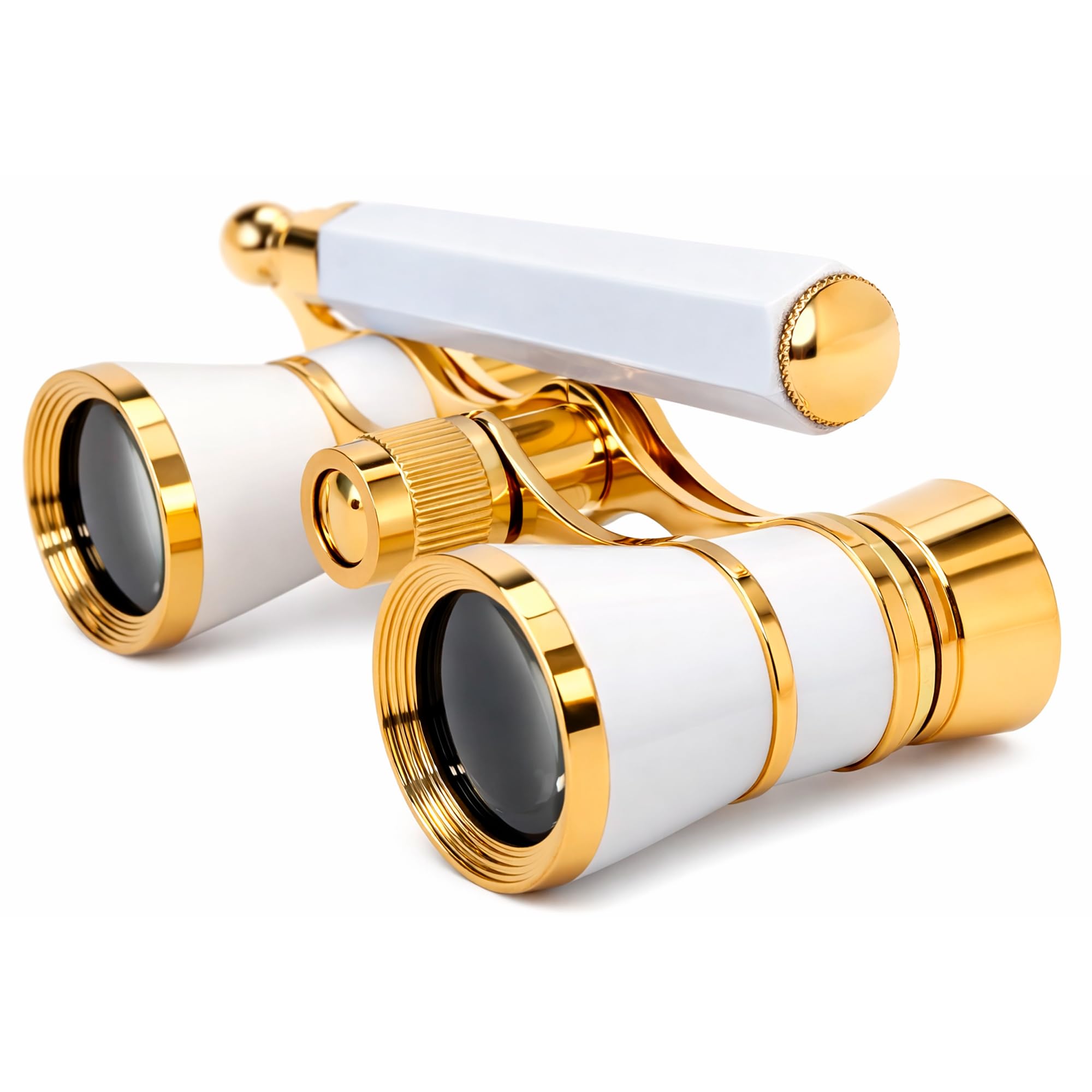
Glasses on a handle are a traditional class and they suit short scenes and formal evenings well. The handle keeps the pair at a set distance and frees you from a strap around your neck. The tradeoff is security: there is no strap to catch the pair if your grip slips, and the style usually comes with fixed focus only. Choose the handled class for style and brief use, and choose a strapped pair for long performances.
Wrapping Up
Choose power by seat, spend in the middle band unless the balcony is your home, and read the exit pupil figure before any other brightness claim. The product table above lets you compare the classes side by side on the specs that decide a theatre evening. Pick well, and the best binoculars for opera for you will be the pair whose field holds the whole stage from the seat you love.