Best Beer Keg Refrigerators for 2026: Types Compared and How to Choose
Disclosure: We may earn a commission when you buy through links on this page, at no extra cost to you. As an Amazon Associate I earn from qualifying purchases. Learn more

Compare beer keg refrigerator types by keg capacity, tap count, temperature control, placement and price, with a clear checklist for a home draft setup.
A keg refrigerator looks simple from the front, just a cold cabinet and a tap. Inside, though, keg size, gas parts and airflow decide if your pours stay cold and calm or turn foamy and flat. The best beer keg refrigerators match the kegs you actually buy, the space you have and the way you serve, and the comparison table below is easier to read once you know which factors matter most.
This guide compares types rather than naming models. You will learn who each style suits, which features deserve your money, and which setup errors cause draft problems.


Who Should Buy Which Beer Keg Refrigerator?
Start with your pouring habit, not with cabinet size. A household that finishes one keg slowly needs a different unit than a host who keeps two styles ready.
Home Hosts Who Pour One Favorite Style
You buy the same lager or ale most of the year and serve a small group at a time. A single tap unit that holds one full size keg or a couple of slim kegs will cover you well. Prioritize steady cold and a quiet compressor, because extra taps you rarely use only add lines to clean and parts to store.
Hosts Who Want Two or Three Styles on Tap
You like offering a choice, perhaps a pilsner beside an IPA, and your kegs turn over fast enough that variety stays fresh. Choose a wider cabinet that fits two or three slim kegs, with one tap per keg and gas parts for each keg. Budget for extra couplers, lines and cleaning supplies from the start.
Garage and Patio Hosts Who Serve Outdoors
You pour where the party is, and the unit may face warm air, dust and uneven floors. Choose a garage ready or outdoor rated model with a stronger compressor, a sealed back and casters or leveling feet. Allow clear space around the cabinet for heat to escape, and plan how full kegs will reach the unit.
Key Features to Compare
Five factors decide every keg refrigerator purchase. Work through them in order, because the wrong keg fit cannot be fixed by a nicer tap handle later.
Keg Capacity and Keg Formats
Capacity means which kegs fit at once, not just cubic feet on a label. A full size keg, often called a half barrel, holds about 15.5 gallons and needs a wide, tall cabinet. Slim quarter kegs and sixth barrel kegs hold about 7.75 and 5.16 gallons, and two or three can share a larger cabinet. Cornelius kegs, used by many homebrewers, are tall and narrow at about 5 gallons. Measure inside height with the coupler attached.
Number of Taps and Tower Setup
Each tap serves one keg, so tap count should match the number of kegs you pour at the same time. The tower itself should stay cold, since warm metal in the tower is a common cause of a foamy first pour, and a fan that blows cold air into the tower helps. Choose a tower with room to pull handles freely.
Temperature Control and Cooling Power
Most draft beer is served at about 36 to 38 degrees Fahrenheit. Look for an adjustable thermostat you can check against a simple cabinet thermometer, since the set point and the real keg temperature can differ. A unit that cannot get below about 38 degrees will struggle with foam. An inverter compressor can run more quietly at steady load, which suits a unit that stays plugged in all year.
Gas Tank, Regulator and Coupler Fit
Carbon dioxide pushes the beer and keeps it carbonated, so the gas parts are as important as the cold. Check whether a tank is included and whether it stores inside the cabinet, where it takes keg space, or outside, where it needs a clear hose path. The regulator sets serving pressure, often about 10 to 12 pounds per square inch for many ales and lagers. Couplers must match your kegs, since most US commercial kegs use a D system coupler, while some imports use other fittings.
Size, Placement and Ventilation
Measure the doorway, floor space and height under any counter before you order, and add tower height for freestanding units. Freestanding models vent at the back or sides and need a few inches of clear air, while front venting models can sit under a counter with little side clearance. For how undercounter appliances sit within cabinetry, see our guide to the best undercounter refrigerators.
Types of Beer Keg Refrigerators Compared
The main types fall into four groups. The best beer keg refrigerators in each group share steady cold and sound gas parts, and they differ mainly in size, tap count and venting. Prices range from about $500 to $700 for small freestanding units to about $1,500 to $3,000 for large or outdoor models.
Freestanding Single Tap Beer Keg Refrigerators
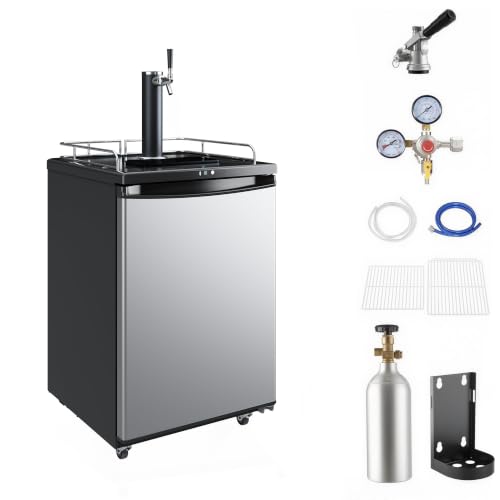
This is the standard home choice, a cabinet on casters with one tower and one tap, holding one full size keg or smaller kegs. It costs the least, moves for cleaning, and needs no changes to your kitchen or bar. The trade off is floor space and a plain look. For readers who mostly chill cans and bottles rather than kegs, see our guide to the best beverage refrigerators instead.
Multiple Tap Beer Keg Refrigerators for Variety
These wider units hold two or three slim kegs and pour each through its own tap. You pay more for the cabinet and extra faucets, and each added line is one more line to clean. Kegs turn over more slowly per tap, so this type suits busy households where beer stays fresh.
Built In Undercounter Beer Keg Refrigerators
Built in models vent at the front, slide under a counter and put the tower through the countertop for a finished bar look. They save floor space and keep taps at a comfortable height. The limits are strict size, higher prices, often about $1,200 to $2,500, and a fixed home once installed. Confirm the tower position before any holes are cut, because moving a drilled counter is costly.
Outdoor and Commercial Style Beer Keg Refrigerators
Outdoor models add weather resistant finishes, stronger cooling for hot days and locks, while commercial style units add capacity and parts built for heavy daily use. Both cost more and can be louder than indoor models. If your unit will live in an unheated garage, see our guide to the best garage refrigerators.
Common Mistakes to Avoid
- Buying by cubic feet alone leaves you with a cabinet where your keg and coupler do not fit together.
- Serving beer too warm creates heavy foam and wastes much of the first glass from each session.
- Setting gas pressure by guesswork makes pours either foamy or flat within a few days.
- Blocking the vents with walls or boxes makes the compressor work harder and shortens its life.
- Skipping line cleaning between kegs leaves old flavors and buildup in every new pour.
- Moving a full keg by lifting it alone risks a back strain and a dropped, damaged keg.
Care and Maintenance Tips for Beer Keg Refrigerators
Clean the beer lines each time you change a keg, or about every two weeks in steady use, with a draft line cleaning kit and a full rinse, since residue builds up even when pours look clear. Wash coupler and faucet parts at the same time, and replace washers that feel hard or flattened, because tired seals leak gas and beer.
Check cabinet temperature with a thermometer placed in a glass of water inside, which reads more steadily than air alone. Vacuum dust from the condenser coils about twice a year, and wipe spills promptly so doors seal well. If the cabinet cannot hold its set temperature, call a refrigeration technician rather than opening sealed cooling parts yourself. For plain cold storage without taps, see our guide to the best beer refrigerators.
Frequently Asked Questions
What size beer keg refrigerator do I need for a home bar?
Most home bars need a unit that holds one full size keg or two slim kegs. That size covers a house style plus a guest keg for events, without taking a whole wall. If you homebrew in Cornelius kegs, count height first, because they need more headroom than their narrow width suggests.
Is a built in beer keg refrigerator worth the extra cost?
A built in model is worth the cost if your bar is permanent and floor space is tight. Front venting lets the cabinet sit flush, and the counter mounted tower pours at a natural height. Renters gain little, since a freestanding unit gives the same cold beer and can move with you.
How long should a beer keg refrigerator last?
A beer keg refrigerator should last about 8 to 12 years with basic care. The cabinet and compressor usually outlast the wear parts, so expect to replace lines, washers and faucets several times during that span. A unit that cycles constantly in a hot garage ages faster than one in a cool room.
How much electricity does a beer keg refrigerator use?
Most home units use about 250 to 450 kilowatt hours per year, depending on size and room heat, and ENERGY STAR models list a tested figure you can compare directly. Estimate yearly cost by multiplying the figure by your local rate. Keeping the unit fairly full helps stability, because cold kegs hold temperature better than empty air.
Can I put a beer keg refrigerator in the garage?
Yes, you can put a beer keg refrigerator in the garage if the model is rated for the temperature range your garage reaches. In a cold garage, a standard unit may stop cooling because its thermostat reads the room as cold enough, and the beer can even freeze. In summer heat, allow extra vent space and expect more foam at first pours.
The Bottom Line
Choose by keg fit first, then by tap count and placement. A cabinet that holds your usual kegs with couplers attached, pours at about 36 to 38 degrees and vents correctly will serve you well for years. Use the product table above to compare capacity, taps and price.
When you compare best beer keg refrigerators with a tape measure in hand and your usual keg size in mind, the right type stands out quickly. Buy the simplest setup that pours cold and clean.