
Best Baking Sheet With Rack (2026): Size, Rack and Material
Disclosure: We may earn a commission when you buy through links on this page, at no extra cost to you. As an Amazon Associate I earn from qualifying purchases. Learn more

Best Baking Sheet With Rack guide: compare aluminum and stainless sets by size, rack grid, rim and price for crisp roasting and cooling.
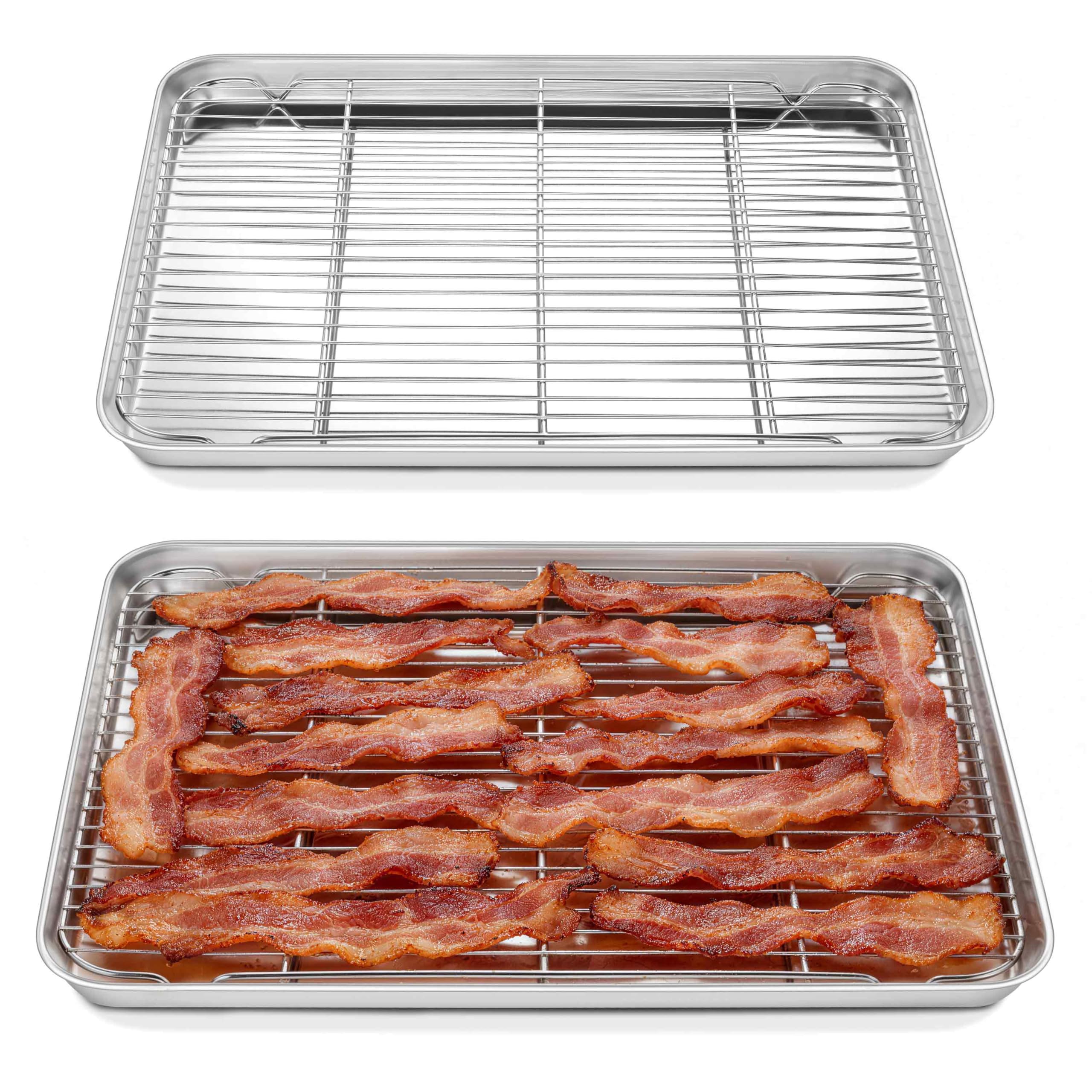
A rack that lifts food off the pan changes everyday cooking more than most people expect. Chicken stays crisp instead of sitting in its own juices, bacon cooks flat, and roasted vegetables brown on all sides. If you are shopping for the best baking sheet with rack for your home, the right choice depends on your oven size, how many people you cook for, and how much storage space you can give up.
This guide walks through sizes, materials, and rack designs in plain terms, then compares the main types side by side. Use the product table below to scan the options quickly, and use our guide to the best baking sheet if you want to compare plain pans without a rack as well.




Quick Answer: What a Baking Sheet With Rack Does Best
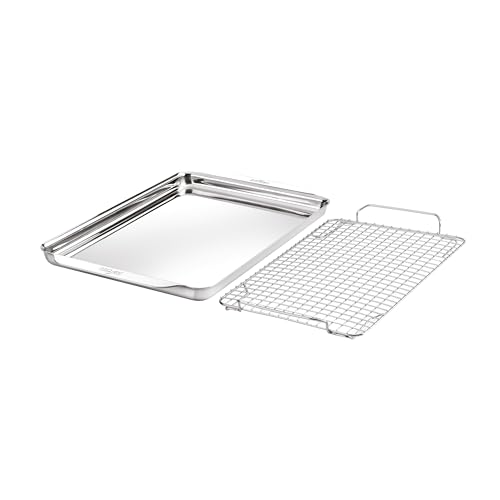
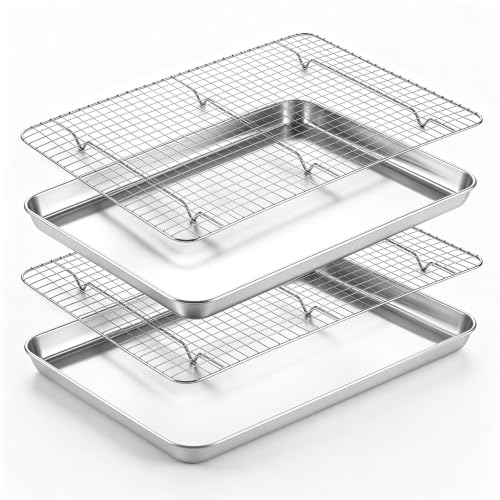
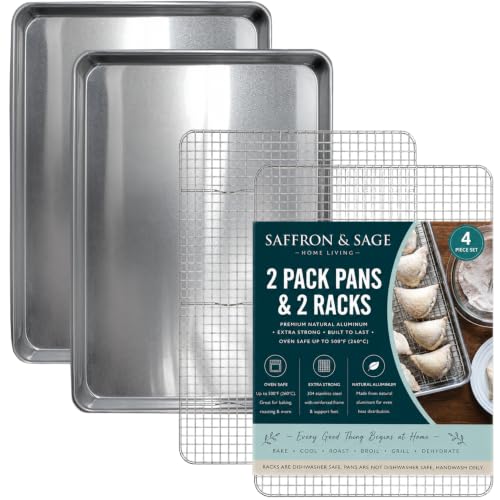
A baking sheet with rack is a rimmed pan paired with a fitted wire rack that sits inside it on short feet. Hot air moves under the food while fat and juices drip into the pan below, so surfaces crisp instead of steaming. The same rack lifts cookies off a hot counter for cooling. For most homes, a half sheet size in aluminum with a stainless steel rack covers roasting, baking, and cooling in one stored set.
Before You Buy: A Quick Checklist for Choosing a Baking Sheet
Choosing the best baking sheet with rack starts with fit, not features. Measure your oven interior and your storage shelf first, then think about material and finish. The points below cover the checks that matter most for daily use at home.
Size: Match It to Your Space
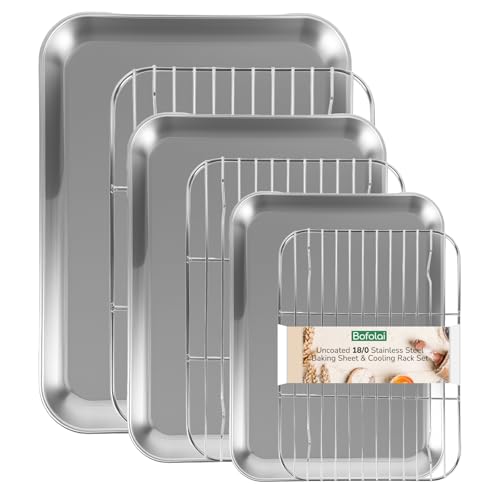
A half sheet measures about 13 x 18 inches and is the standard size for home ovens, family dinners, and full batches of cookies. A quarter sheet at about 9 x 13 inches suits one or two people, reheating leftovers, and smaller ovens, and it stores easily in a drawer. Full sheet pans are built for commercial ovens and will not fit most home ranges. Check that the rack sits flat inside the rim, and confirm the pan leaves at least an inch of space around it in your oven so air can circulate.
Which Type Fits Your Routine
Aluminum pans heat quickly and evenly, stay light to lift when full, and cost the least, though they can discolor over time. Stainless steel pans feel sturdier, resist rust, and clean up with less fuss, but they heat a bit slower and cost more. Carbon steel is heavy and needs seasoning and careful drying. If you are torn between the two most common metals, our breakdown of aluminum vs stainless steel baking sheet options walks through heat response, weight, and upkeep.
Features Worth Paying For, and Ones to Skip
A rack with a tight grid pattern is worth paying for, since wide spacing lets small items sag and makes the rack harder to scrub. Raised feet of about half an inch give drips room to fall and keep food clear of the pan surface. A rolled rim adds strength and gives you a safer grip with oven mitts. You can skip extras you will rarely use, such as a lid for a pan you only roast on.
Light vs Dark Finish and Browning
Finish changes how food browns. Light colored aluminum reflects some heat, so cookie bottoms stay pale and even, which suits delicate bakes. Dark finishes absorb more heat and brown bottoms faster, which helps roast vegetables but can overbrown sugar rich doughs before the centers set. If you bake cookies often and roast only now and then, choose a light finish. If deep browning is your main goal, a darker pan earns its place.
Oven Safe Temperature
Check the stated oven safe limit for both parts of the set, since the rack and the pan may carry different ratings. Plain aluminum and stainless steel pans usually tolerate broiler heat, while many nonstick coatings top out at lower temperatures, often around 450 degrees Fahrenheit. If you finish wings under the broiler, pick an uncoated stainless steel rack and confirm the limit on the label before you buy.
Nonstick Coating vs Uncoated
Nonstick surfaces release sticky glazes and cheesy toppings with little effort, and cleanup is gentler on busy weeknights. The trade off is lifespan, since coatings wear with metal tools, high heat, and repeated scrubbing. Uncoated pans ask for a light layer of oil or parchment, but they tolerate broilers, metal spatulas, and years of daily use. Many home cooks accept a short soak after cooking in exchange for a set that lasts.
Realistic Budget Ranges
Expect to pay about $15 to $25 for a basic aluminum pan with a plated rack, which suits occasional roasting and cooling. Sets at about $25 to $40 usually bring a heavier gauge pan and a stainless steel rack that resists rust and warping better. Paying about $40 to $60 makes sense for thick stainless steel sets you plan to use several times a week for years. Money spent on gauge and rack material pays off longer than money spent on bundled extras.
Types Compared: Three Styles of Baking Sheet With Rack
Since homes differ more than ovens do, it helps to compare the three styles below by who they serve rather than by brand. Each style uses the same basic design, but the material, size, and rack build change the daily experience of lifting, washing, and storing the set.
Aluminum Half Sheet With Stainless Steel Rack for Most Homes
This is the all purpose setup for a household of three to five people. The aluminum pan heats fast and stays light even loaded with vegetables or chicken thighs. A stainless steel rack with a tight grid resists rust and supports both heavy roasts and small items like shrimp. The set stacks flat in a cabinet or stands upright beside cutting boards. It covers weeknight dinners and weekend baking without asking for special care beyond basic washing and drying.
Stainless Steel Set for Long Term Value
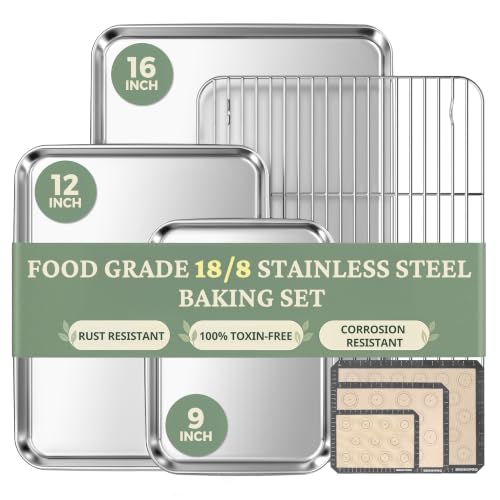
If you cook daily and want one set to keep for many years, a stainless steel pan and rack is the durable route. The surface will not react with tomato based sauces or citrus marinades, and it scrubs clean without staining worries. The pan is heavier, so check your comfort lifting it full and hot. Shoppers comparing builds can read more in our guide to the best stainless steel baking sheet for notes on gauge and rim design. Choose this style if you broil often and want no coating to protect.
Compact Quarter Sheet Set for Small Kitchens
Apartments, dorms, and couples cooking for two get more from a quarter sheet set than from a large pan that crowds the oven. The smaller footprint fits toaster ovens with room to spare, reheats two portions evenly on the rack, and rinses clean in a small sink. Storage is simple, since the set slides into a drawer. The limit is batch size, so expect to cook sheet pan dinners in two rounds. For a small home, that trade off is easy to accept.
How to Compare Baking Sheets With Rack
A fair comparison looks at the same five points for every set. Heat distribution shows in even browning across the pan. Food release depends on finish and on how flat the rack grid sits. Warp resistance comes from pan thickness, usually listed as gauge, where a lower gauge number means thicker metal. Material safety means choosing finishes rated for the temperatures you actually use. Cleaning covers the rack joints, where residue hides.
Do You Really Need a Baking Sheet With Rack?
You need the rack when crisp texture matters. Wings, bacon, breaded cutlets, and meatballs all cook better lifted, since air reaches the underside and drippings fall away instead of pooling. A plain pan alone still handles cookies, sheet cakes, and most roasting, so if you rarely fry or roast meats, a standard pan may be enough, and our picks for the best baking sheet for cookies cover that simpler need well. Many cooks use the two pieces apart as often as together.
Common Mistakes to Avoid
- Buying a full sheet pan for a home oven, then finding the door will not close with room for air flow.
- Choosing a rack with wide grid spacing, so small vegetables and shrimp sag through and stick.
- Putting a coated rack under the broiler, which can damage the coating in a single use.
- Storing the rack loose in a drawer, where its feet bend and it stops sitting flat in the pan.
- Ignoring pan gauge, so a thin pan warps with a loud pop the first time it meets high heat.
Cost of Ownership and Care
Ongoing cost is low, since the set needs no replacement parts, just parchment or oil and basic washing. Wash the rack soon after cooking, before glaze hardens in the grid, and dry both pieces fully. Our walkthrough on how to clean a baking sheet covers soaking and gentle scrubbing for stubborn spots. Store the rack inside the pan to save space and keep the feet straight. Replace a rack with peeling coating or rust at the joints.
Your Questions, Answered
How do you clean a baking sheet with rack without damaging it?
Soak the rack in hot soapy water for about 15 minutes so residue softens in the grid, then work along each wire with a soft brush rather than scrubbing across the wires. A narrow bottle brush reaches the corners where the feet join the frame, a spot flat sponges miss. Dry the rack standing upright so water drains off the joints. Avoid steel wool on coated racks, since it scratches the finish.
How long does a baking sheet with rack last?
An uncoated aluminum or stainless steel set can serve for many years of weekly use, often a decade or more with basic care. Coated pans and racks usually show wear sooner, commonly after a few years of frequent high heat cooking. Lifespan depends less on the calendar and more on habits, since broiling a coated rack, washing with harsh pads, and storing pieces wet all shorten it. Replace the rack when wires bend out of level or the finish flakes.
Is a baking sheet with rack worth it for a small kitchen?
Yes, if you pick the quarter sheet size, since the set replaces a roasting pan, a cooling rack, and a draining tray in one flat stored package. The rack earns its shelf space each time you reheat pizza or fries and want the bottoms crisp again, a job a plain pan does poorly. Store the set upright in the gap beside your cutting boards. If you cook for more than three people most nights, size up to a half sheet despite the tighter storage.
Can you use the rack from a baking sheet set for cooling cookies?
Yes, and the tight grid that helps with roasting also supports soft cookies better than the wide bars of many cooling racks. Slide the rack out of the pan and move cookies onto it after a few minutes on the hot pan. Warm air moves under the cookies, so bottoms stay dry instead of turning soggy from trapped steam. Wash the rack before cooling if it held raw meat earlier, and dry it fully.
What size baking sheet with rack fits a toaster oven?
Most countertop ovens fit a quarter sheet at about 9 x 13 inches, but measure your interior width and depth before ordering, including the curve of the door when closed. Leave about an inch on each side so heat can move around the pan. Check rack height too, since the raised food sits closer to the top heating element and browns faster. If your oven manual lists a maximum pan size, follow that figure over any general guide.
Final Thoughts
Start with fit, then pick the material that matches how you cook and clean. A half sheet aluminum set suits most families, stainless steel rewards daily cooks who broil, and a quarter sheet set keeps small kitchens uncluttered. Look back at the product table above to compare sizes and rack builds side by side, and choose the best baking sheet with rack that your oven, your storage, and your weekly menu can all agree on.


