Best Baking Sheets for Your Home (2026): A Simple Guide and Quick Checklist
Disclosure: We may earn a commission when you buy through links on this page, at no extra cost to you. As an Amazon Associate I earn from qualifying purchases. Learn more

Match the best baking sheet to your oven and cooking habits with clear advice on size, material, gauge, finish, coatings and care.
A warped pan that twists in the oven, crowds the rack, or leaves cookies pale on one side and dark on the other can turn a simple weeknight bake into extra work. Choosing the best baking sheet for your home starts with the space you actually have, the number of people you cook for, and how often the pan will go from oven to sink. The product table sums up the main types so you can narrow your choice before reading the details.
This guide focuses on fit, daily ease, and cost of ownership rather than cooking show performance. You will learn which size suits a small apartment oven or a family kitchen, which material matches your routine, and which extras are worth paying for. By the end, you should know the one or two sizes to buy first and what you can safely skip.




Quick Answer: Start With the Right Profile
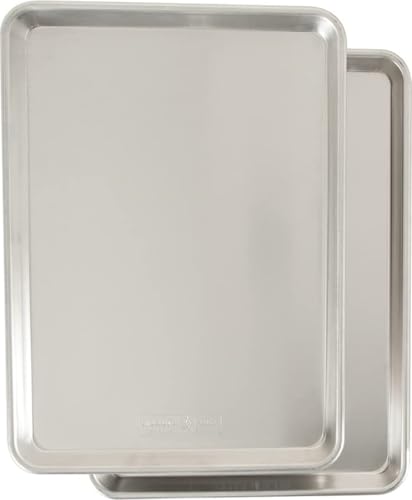
Most homes do well with a rimmed half sheet as the main pan, because it holds vegetables, cookies, and sheet pan dinners without letting juices run off the edge. Add a quarter sheet later if you reheat small portions, toast nuts, or bake for one or two people. If storage is tight, buy one versatile size first and use it for a few weeks before adding more.
Material matters as much as size. Bare aluminum heats evenly and suits most everyday baking, uncoated metal is simple to scrub, and coated pans release sticky foods with less effort but need gentler care. Match the profile to your habits first, then compare gauge, finish, and price within that type.
Before You Buy: A Quick Checklist for Choosing a Baking Sheet
Terminology causes some confusion at the store, so it helps to know the names before you compare sizes. If you are unsure how flat pans differ from rimmed pans, our guide to cookie sheet vs baking sheet explains the basic distinction. A rimmed sheet is the more flexible choice for most homes because the raised edge contains oil and batter.
Size: Match It to Your Space
Measure the inside of your oven and leave room for air to move around the pan on all sides. A half sheet at about 13 by 18 inches fits most home ovens and feeds a family, while a quarter sheet at about 9 by 13 inches suits small batches and toaster style ovens with limited depth. A full sheet is a commercial size and rarely fits a home oven, and a jelly roll pan sits between the two common sizes. Small eighth sheets are handy for reheating but too small to be your only pan.
Which Type Fits Your Routine
Aluminum is light, heats evenly, and is a sensible default for cookies, roasting, and general baking. Stainless steel is tougher and resists staining, though it can heat less evenly, so compare our guide to the best stainless steel baking sheet if easy upkeep matters most to you. Carbon steel is heavier and suits high heat roasting, ceramic coated and insulated pans are more niche, and rimless pans slide cookies off easily but cannot hold runny foods.
Features Worth Paying For and Ones to Skip
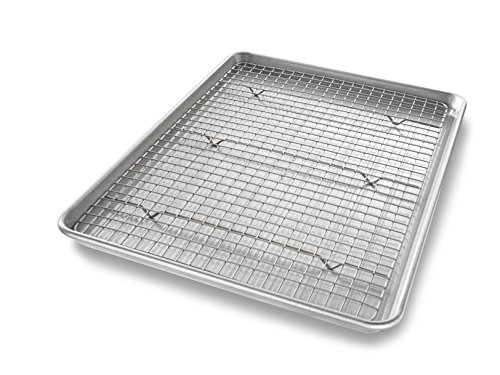
A snug fitting rack adds real value if you roast meat or want drippings to fall away from food, and a simple lid helps with storage and transport. A silicone mat can reduce sticking and cut down on parchment use, though it is an extra item to wash and store. Skip large bundle sets with several odd sizes if your cupboard is small, because two well used pans beat a stack you rarely touch.
Light vs Dark Finish and Browning
Light colored metal reflects some heat and tends to brown bottoms gently, which helps delicate cookies keep an even color. Dark finishes absorb more heat and can brown bottoms faster, so you may need to lower the oven temperature slightly or check food a few minutes early. If you bake both pale cookies and crisp roasted vegetables, a light to medium finish is the safer single choice for varied use.
Oven Safe Temperature
Check the stated oven limit before you buy, especially for coated pans and pans with silicone grips. Uncoated aluminum and steel usually tolerate higher heat than nonstick coatings, which often have a lower ceiling. Broiler use is a separate question, since many coated pans should never go under a broiler even when they are fine at normal baking temperatures. Keep the limit in mind if you finish dishes at high heat.
Nonstick Coating vs Uncoated Metal
Coated pans release sticky glazes and cheesy foods with little effort, but the surface wears over time and needs soft tools and gentle washing. Uncoated metal lasts longer, tolerates metal utensils better, and builds a natural patina of use marks that does not affect results. If you bake mostly cookies and vegetables with parchment or a light oiling, uncoated metal gives you the lowest long term cost and the fewest care rules.
Realistic Budget Ranges
At under $20 you can expect a basic single pan in a common size, suitable for light weekly use. In the about $20 to $30 range, pans usually feel sturdier, with thicker gauge metal and better warp resistance. Spending about $30 to $50 makes sense for a heavy pan you will use several times a week or for a small set with a rack, while higher prices rarely change results for simple home baking.
Three Buying Profiles and What to Prioritize
Most Homes: One Versatile Half Sheet
If you cook for three to five people and bake a few times a week, prioritize a rimmed half sheet in a medium to heavy gauge with a light finish. This profile handles family cookies, roasted potatoes, and weeknight dinners without needing a second pan on the rack. Look for rolled edges, which add strength and give you a secure grip with oven mitts. A single sturdy pan in this size covers the widest range of home tasks.
Tight Budget: Simple and Replaceable
If price is the main concern, choose a plain uncoated pan in the size that fits your oven and skip racks, lids, and mats for now. A basic pan at under $20 still bakes evenly when the gauge is not overly thin, so press the center gently in the store if you can and avoid pans that flex easily. You can add a rack later for a modest cost. This profile suits renters, students, and anyone setting up a first kitchen.
Long Term Investment: Heavy Gauge and Low Upkeep
If you bake often and want to buy once, prioritize thick metal, a rolled rim, and a surface you are happy to wash by hand. Heavier pans resist twisting at high heat and tend to keep their shape through years of daily use. Uncoated or stainless options suit this profile well because there is no coating to wear out. The higher upfront cost spreads out over many years, which lowers the true cost per use.
How to Evaluate Baking Sheets Without Guesswork
Start with the maker stated gauge, dimensions, and oven limit, since those three facts predict fit and durability better than marketing claims. Then read buyer reviews with a focus on repeated comments about warping, staining, and cleaning rather than single glowing or angry reports. Note whether complaints mention the same size and material you plan to buy. Finally, weigh the warranty and return terms, because a clear policy matters if a pan twists on its first high heat use.
Quick Guide by Household and Space
For one or two people in a small kitchen, a quarter sheet plus one half sheet covers reheating, small roasts, and the occasional full batch of cookies. Families of four or more often need two half sheets so one pan can rest or cool while the other goes back into the oven. If cookies are your main bake, our guide to the best baking sheet for cookies goes deeper on spacing and browning for that task alone.
Storage shape matters too. Flat pans stack well in a low drawer or upright in a divided cupboard, while pans with lids and racks need more vertical room. Measure the cupboard as well as the oven before ordering a set. A pan that fits the oven but not the cupboard will end up living on the counter and getting in your way.
Common Buying Mistakes to Avoid
- Buying a full sheet for a home oven, which often leaves no room for hot air to circulate and can block the door from closing.
- Choosing the thinnest pan to save money, which raises the chance of warping and uneven browning within the first few uses.
- Ignoring the cost of replacement, since a cheap coated pan that needs replacing each year can cost more than one sturdy uncoated pan.
- Ordering a large set with sizes you will not use, which wastes cupboard space and makes the right pan harder to reach.
- Forgetting to check the oven limit on coated pans, which can damage the surface when you broil or roast at very high heat.
Cost of Ownership and Care
Daily care is simple if you match the method to the material. Let the pan cool before washing so cold water does not shock hot metal, use a soft sponge for coated surfaces, and dry the pan fully before stacking it away. Our step by step guide on how to clean a baking sheet covers baked on stains in more detail. Lining with parchment on messy days saves scrubbing time and reduces wear on any finish.
Over time, the main costs are replacement parchment or mats and, for coated pans, eventual replacement when release performance fades. Uncoated pans may darken and show marks, but that is cosmetic and does not call for a new pan. Store pans flat or upright without heavy pots resting on them, since constant weight can bend thin edges. With basic care, a sturdy pan should serve through many years of weekly baking.
Your Questions, Answered
What is the most reliable baking sheet material?
Thick aluminum and quality stainless steel are both reliable choices for home use. Reliability depends more on gauge and rim construction than on the material name alone, since a thin pan of any metal can warp. Look for rolled edges and a weight that feels solid for the size. A pan that stays flat after repeated high heat cycles is the practical sign of a reliable build.
How long does a baking sheet last?
An uncoated metal pan can last well over a decade with normal home use. Coated pans have a shorter useful life because the surface slowly wears, even with careful washing and soft tools. One early warning sign is food starting to stick in the same spot despite proper greasing. Replacing a coated pan at that stage protects your food from uneven release and extra scrubbing.
Is a baking sheet worth buying if you already own a casserole dish?
Yes, a baking sheet is worth buying because its low rim lets hot air reach food directly. A deep casserole dish traps steam around food, which softens edges that a flat pan would crisp. The two tools suit different jobs, so owning both gives you better results for roasting and baking. A single half sheet is a low cost way to add that crisping ability to your kitchen.
What size baking sheet should a small household buy first?
A small household should buy a quarter sheet first if oven space is very limited. It reheats leftovers, toasts nuts, and bakes small batches without heating a large pan or wasting parchment. If you regularly bake a dozen cookies at once, step up to a half sheet instead. Choosing the size you will fill most often also reduces energy waste from heating empty pan surface.
What is the best baking sheet for a home with mixed needs?
The best choice for mixed needs is a rimmed half sheet in a medium finish with a sturdy gauge. That single pan covers cookies, vegetables, and simple dinners without special handling for each task. Add a rack later if you roast meat often, since the base pan stays the same. Starting with one flexible size keeps cost and storage low while you learn what you bake most.
Final Thoughts
Fit your oven first, pick the material that matches how you cook and clean, and buy the sturdiest gauge your budget allows. The product table can help you compare sizes and finishes side by side once you know your profile. For most readers, the best baking sheet is simply the half sheet they reach for daily, store easily, and replace rarely.