
Best Baking Sheet for Cookies: Types and Buying Tips (2026)
Disclosure: We may earn a commission when you buy through links on this page, at no extra cost to you. As an Amazon Associate I earn from qualifying purchases. Learn more

Size, material and finish decide how cookies brown. Compare three types to find the best baking sheet for cookies in your oven.
Picture a Saturday afternoon in a small kitchen. The dough is mixed, the oven is heating, and the only sheet in the cupboard is warped, stained, and big enough for just eight cookies at a time. Baking in batches of eight turns a fun hour into a whole afternoon. Choosing the best baking sheet for cookies for your home comes down to the space you have, how many people you bake for, and what you can spend.
This guide walks through sizes, materials, and finishes in plain terms, then compares the three sheet types that suit most households. The comparison table below sums up the main options, and the sections after it explain how each choice affects your cookies and your cleanup routine.


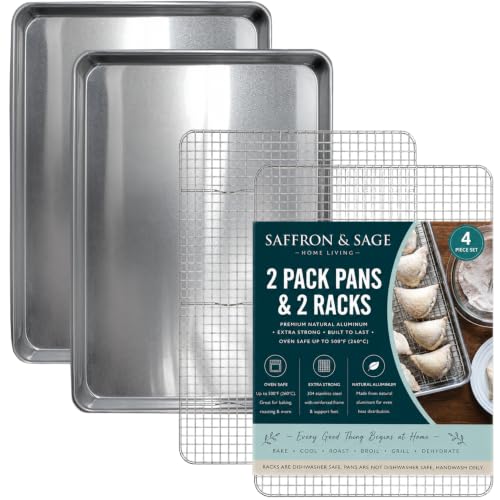


Quick Answer: The Three Types to Start With
Most home bakers do well with one of three types. A rimmed aluminum half sheet is the everyday workhorse, with even heat, low weight, and a price that suits most budgets. A nonstick sheet suits bakers who want the easiest release and the fastest cleanup. A stainless steel sheet suits households that bake often and want a pan that can last for many years.
Before You Buy: A Quick Checklist for Choosing a Baking Sheet for Cookies
Size: Match It to Your Space
The half sheet, about 13 by 18 inches, is the standard size in most home ovens and holds about a dozen standard cookies per batch with room to spread. A quarter sheet, about 9 by 13 inches, suits small ovens, toaster ovens, and bakers who cook for one or two people. A jelly roll pan, about 10 by 15 inches, fits some compact ranges where a half sheet will not slide in. A full sheet is a commercial size and will not fit most home ovens. Measure the inside of your oven and your cupboard shelf before you order, and leave about an inch of space on each side of the pan so hot air can move around it.
Which Type Fits Your Routine
Aluminum heats evenly and browns cookie bottoms gently, which is why most bakeries rely on it. Stainless steel heats a little less evenly but shrugs off scratches, acidic foods, and years of hard use. Nonstick sheets release delicate cookies with almost no effort, though the coating wears over time. Insulated sheets have an air layer that slows browning, which helps soft cookies but can leave thick dough pale. Carbon steel is heavy and durable, and ceramic coated pans release well but need gentle handling. For a fuller look at the base options, our guide to the best baking sheet covers the wider category.
Features Worth It (and Ones to Skip)
A rim is worth having. Rimmed sheets stop cookies and melted butter from sliding off, and the raised edge gives you something solid to grip with an oven mitt. A cooling rack that fits inside the sheet is worth it if you bake often, since cookies can cool in place without a second tool. A silicone mat can replace parchment and cuts waste over time. A lid is rarely needed for cookies, and oversized sets with many small pans usually sit unused. If you are unsure how a rimmed sheet differs from a flat cookie sheet, the comparison in cookie sheet vs baking sheet explains the trade offs clearly.
Light vs Dark Finish and Browning
Finish changes your results more than many bakers expect. A light silver surface reflects some heat, so bottoms brown slowly and evenly, which suits sugar cookies and shortbread that should stay pale. A dark surface absorbs more heat and browns bottoms faster, which can give chewy cookies crisp edges but can also scorch delicate dough before the centers set. If you switch from a light pan to a dark one, check your cookies a few minutes early on the first batch.
Oven Safe Temperature
Check the rated limit before you buy, since it varies by material and coating. Plain aluminum and stainless steel sheets handle the highest heat and can go under a broiler. Most nonstick coatings are rated lower, often around 450 degrees Fahrenheit, and high heat shortens the life of the coating. Cookie dough rarely needs more than 375 degrees, so any of these ratings works for cookies, but the limit matters if you plan to roast vegetables on the same sheet.
Nonstick Coating vs Uncoated
An uncoated aluminum or steel sheet, lined with parchment, releases cookies reliably and never has a coating to wear out, which makes it the lower cost choice over many years. A coated sheet releases sticky doughs like meringues and lace cookies with less fuss and washes clean in seconds. The trade off is lifespan, since coatings thin with metal tools and high heat. If easy release is your top priority, compare the options in our guide to the best nonstick baking sheet.
Realistic Budget Ranges
Spending under $20 usually buys a single uncoated aluminum sheet of decent weight, which is enough for most homes. About $20 to $30 covers a heavier gauge sheet, a two pack, or a sheet bundled with a fitted rack. About $30 to $50 covers stainless steel sheets and premium coated options that aim for a longer working life. Spending more mainly buys thicker metal that resists warping and finishes that clean up faster, so set your budget by how often you bake.
Three Types Compared: Which Baking Sheet Suits Your Cookies
The product table above lists current options side by side. Here is how the three main types differ in daily use.
Rimmed aluminum half sheet. This is the type to choose if you bake a wide mix of cookies for a family. It heats evenly, stays light in the hand even when loaded, and costs the least per year of use when lined with parchment. Its weakness is that bare aluminum can stain, though that does not affect cookies. Households that want one sheet for nearly everything usually land here.
Nonstick sheet. This type suits bakers who make sticky or delicate cookies often and who value fast cleanup over a long lifespan. Cookies lift off with a thin spatula and the surface rinses clean without soaking. Expect to replace it sooner than a plain metal sheet, so count the replacement cost when you compare prices.
Stainless steel sheet. This type suits frequent bakers who want a single sheet to last and who do not mind a little extra weight. It tolerates metal tools, high heat, and scrubbing, and it will not rust. The surface is less even in heat than aluminum, so rotating the sheet halfway through a batch helps. If this sounds like your kitchen, the roundup of the best stainless steel baking sheet models goes deeper on gauge and finish choices.
Our Selection Process for the Best Baking Sheets for Cookies
The types and traits in this guide were chosen against five criteria that matter for cookies: even heat across the surface, clean food release, resistance to warping in a hot oven, material safety for everyday food contact, and how much effort cleaning takes. We weighed published maker specifications and patterns in verified buyer feedback, such as repeated reports of warping or coating wear. The angle here is daily life at home: storage space, household size, and total cost over years of use.
Living With It: What Really Matters in a Baking Sheet for Cookies
Daily use raises questions that spec lists ignore. Storage comes first: a half sheet needs a flat slot or a wide drawer, and in a small kitchen a quarter sheet that stacks inside a roasting pan may get used far more. Weight matters when you bake with kids or for older hands, since a loaded steel sheet is noticeably heavier than aluminum. Think about batch rhythm too. Two half sheets let one tray cool while the next bakes, which halves the time for a big holiday batch in a family kitchen. One sheet plus parchment works fine for a small household baking a dozen cookies on a weeknight.
Common Buying Mistakes to Avoid
- Buying a full sheet or an oversized pan without measuring the oven, then finding it will not fit at all.
- Choosing a dark pan for pale cookies and blaming the recipe when the bottoms brown too fast.
- Paying for a large bundle of pans when one good half sheet and one quarter sheet cover nearly every batch.
- Ignoring replacement cost on coated pans, which need swapping years before a plain metal sheet wears out.
- Grabbing the thinnest sheet on the shelf, which warps in the heat and bakes cookies unevenly.
Cost of Ownership and Care
A baking sheet uses no power and has no parts to service, so ownership cost comes down to liners and replacements. Parchment adds a small cost per batch, while a silicone mat costs more up front and pays for itself over many bakes. Wash plain metal sheets with hot soapy water and dry them fully so steel edges do not spot. A paste of baking soda and water lifts baked on sugar stains without harsh scrubbing. For stubborn buildup and full routines, see how to clean a baking sheet. Store sheets flat or upright in a divider so the surface stays straight.
Your Questions, Answered
Is a rimmed baking sheet or a flat cookie sheet better for drop cookies?
For drop cookies like chocolate chip, a rimmed sheet has a small edge over a flat one in most homes. The rim keeps rounded dough balls from rolling when you carry the tray, and it contains butter that melts during baking. A flat sheet still wins for sliding finished cookies off in one motion. If your kitchen is tight on storage, pick the rimmed sheet, since it also handles roasting jobs that a flat sheet cannot.
How long does a baking sheet last in a home kitchen?
A plain aluminum or stainless steel sheet can serve for a decade or more, and it usually leaves service because of deep stains or a lost shape rather than true failure. A coated sheet tends to give about three to five years of regular use before release fades. One habit stretches any sheet: let it cool on the stove top before washing, since running cold water over hot metal encourages warping that no amount of care can undo later.
Should I grease a baking sheet or use parchment for cookies?
Parchment is the more reliable choice for most cookies, since it prevents sticking without adding grease that can make dough spread and bottoms fry. Greasing suits sturdy doughs and recipes that ask for it directly, and a light coat is plenty. Butter can brown and leave flavor behind, so a neutral oil or baking spray is safer for delicate cookies. The step by step in how to grease a baking sheet shows how thin the coat should be when you do grease.
Why do my cookie bottoms burn on a new baking sheet?
A new sheet often burns bottoms for a simple reason: its finish is darker or thinner than the one you replaced, so it pushes more heat into the dough. Lower the oven temperature by about 25 degrees for dark pans and check a few minutes early. Placing the rack in the center of the oven also helps, since the lowest position sits closest to the heating element. If only one corner burns, your oven likely has a hot spot, and rotating the sheet halfway through fixes it.
What is the best baking sheet for cookies for a small household?
For one or two people, a quarter sheet is usually the smartest single purchase. It fits toaster ovens and compact ranges, heats fast, and holds six to eight cookies, which matches small batch baking without leftovers going stale. It also stores in a drawer that could never hold a half sheet. If you host family holidays, add one half sheet later for big batches.
Final Thoughts
Start with your space and household size, then pick the type that fits your routine: aluminum for all round value, nonstick for easy release, or stainless steel for a long working life. The product table above can help you compare current options against the criteria in this guide. Whichever you choose, the best baking sheet for cookies is the one that fits your oven and gets used week after week without fuss.


