Best Air Purifier for Smoke: A Wildfire and Indoor Smoke Buying Guide
Disclosure: We may earn a commission when you buy through links on this page, at no extra cost to you. As an Amazon Associate we earn from qualifying purchases. Learn more
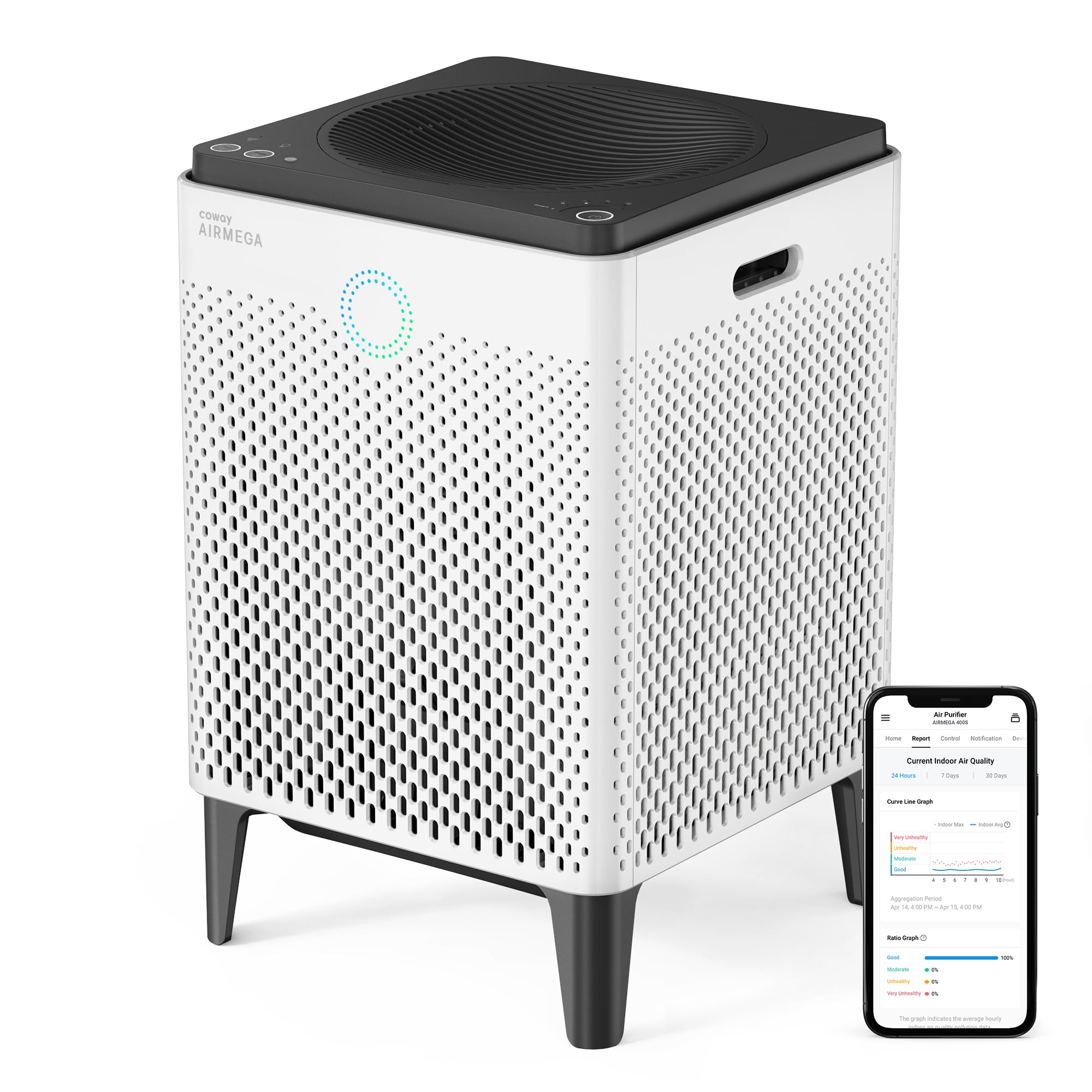
Do you live with a roommate who smokes? Or you have neighbors who are smokers and you can smell the secondary smoke seeping into your home? With an efficient air purifier for smoke lie the Hathaspace Smart True, you can rest assured that the air in your home or office is completely free of any...
Smoke finds its way indoors more easily than most people expect, whether it drifts in from a wildfire miles away, clings to curtains after a backyard cookout, or lingers in a room where someone smokes. Ordinary dust filters were never built for it. A good air purifier for smoke has to catch particles smaller than a strand of hair while also pulling gaseous odors out of the air, which is a different job than trapping pollen or pet dander. This guide covers what actually separates a purifier that keeps up with smoky conditions from one that just moves stale air around, including CADR ratings, carbon filter depth, sizing, and the maintenance habits that matter most when air quality outside, or in your kitchen, takes a turn for the worse.




Why Smoke Is a Tougher Filtration Job Than Dust or Pollen
The Particle Size Problem
Smoke particles, especially the fine soot from wildfires and burning wood, tend to fall in the 0.09 to 1 micron range. That is smaller than most pollen and even smaller than a lot of household dust, which puts it right in the hardest zone for any filter to trap consistently. A true HEPA filter, the same standard covered in our HEPA filter explainer, is designed to capture at least 99.97 percent of particles down to 0.3 microns, which does include most smoke particulate. The catch is that not every purifier marketed for smoke actually uses a true HEPA filter, so it pays to confirm the filter class before assuming it can handle fine soot.
The Part HEPA Filters Can't Handle
Smoke isn't just particles. It also carries volatile organic compounds and gaseous byproducts that pass straight through a HEPA filter, since HEPA media is built to trap solid particulate, not gas molecules. That's why a unit can score well on particle removal and still leave a smoky smell behind. If your main concern is pollen or pet dander rather than lingering smoke odor, filtration priorities look a little different, which our best air purifier for allergies and pets guide breaks down in more detail.
Reading CADR Smoke Numbers and Sizing the Unit to Your Room
What the Smoke Number on a CADR Rating Actually Measures
Clean Air Delivery Rate, or CADR, is usually listed as three separate numbers, one each for smoke, dust, and pollen. The smoke figure is tested against the smallest, most stubborn particle range, so it's typically the lowest of the three and the one worth paying closest attention to. A higher smoke CADR means the unit clears fine particulate faster, which matters far more during an actual smoke event than a strong pollen number does.
Matching Capacity to Square Footage and Ceiling Height
Sizing an air purifier for smoke starts with the CADR smoke number specifically, not the overall room coverage printed on the box. Manufacturers list a coverage area, but that number usually assumes a handful of air changes per hour under normal conditions, not heavy smoke. For a smoky day, look for a unit rated for a room noticeably larger than the one it will actually sit in, or plan to run it on a higher fan speed than you would for everyday use. Ceiling height matters too, since a tall great room holds more air volume than a standard bedroom of the same footprint. If you're trying to cover more than one room at once, a whole house air purifier setup may end up being more practical than running several portable units.
Why Carbon Filter Depth Determines Whether the Smell Actually Disappears
Activated carbon is what handles the odor and VOC side of smoke that HEPA media can't touch. The catch is that a thin ring of carbon dust sprinkled onto a pre-filter behaves very differently from a dense, several-pound bed of activated carbon granules. Thin carbon layers saturate quickly and stop adsorbing odor within days during a heavy smoke event, even while the HEPA layer keeps particles in check. When you're comparing units, look for actual carbon weight or filter thickness rather than just a marketing claim of "carbon filtration," since that phrase covers products with wildly different real-world performance against smoke odor. That's a big part of why a well-built air purifier for smoke leans on carbon mass, not just filter class, to get the smell out along with the particulate.
Keeping Performance Up During Wildfire Season, Cooking, or Cigarette Smoke
An air purifier for smoke needs a maintenance rhythm that keeps pace with how much smoke it's actually processing, since a filter schedule built for average dust and pollen falls behind fast once heavy smoke enters the picture.
Wildfire and Heavy Smoke Events
During a stretch of bad outdoor air quality, keeping an air purifier for smoke running continuously, rather than cycling it on and off, matters more than almost any other habit. Pre-filters and HEPA filters load up with soot far faster than they would on a normal week. Check the pre-filter every few days during an active smoke event rather than waiting for the usual monthly schedule, and be ready to replace the main filter sooner than the box suggests if you've been running it around the clock.
Daily Sources Like Cooking and Cigarette Smoke
Smaller, repeated exposure adds up too. A kitchen that sees regular high-heat cooking or a home with an indoor smoker puts a steady odor and particulate load on the carbon filter, which tends to need replacing every few months rather than once a year. Cigarette smoke in particular carries a strong VOC load, so odor returning before the particle count rises again is usually a sign the carbon has already saturated, not that the whole unit has failed.
Placement and Sealing Habits That Change How Well It Works
Where you place an air purifier for smoke changes how well it performs almost as much as what's inside it. For cooking odor, placing the purifier closer to the kitchen, rather than tucked in a far corner of an open floor plan, cuts down the distance smoke has to travel before it gets pulled in. During wildfire smoke events, closing windows and exterior doors and running the purifier continuously does far more than opening a window periodically to "air things out," since outdoor air is the actual source of the problem on those days. For a bedroom, running the unit overnight raises different priorities around noise at lower fan speeds, which our best air purifier for bedroom picks address in more depth.
Frequently Asked Questions
Do air purifiers actually help with wildfire smoke indoors?
Yes, a properly sized unit with HEPA and a substantial carbon filter measurably reduces indoor particulate and odor during a smoke event. It won't offset a home with poor sealing or windows left open, so pairing it with closed windows and doors makes the biggest difference.
What CADR rating do I need for smoke?
Look at the smoke-specific CADR number rather than the pollen or dust figures, and choose a unit rated for a room size larger than the space you'll actually use it in. That extra headroom keeps the unit effective even at heavier smoke loads.
Can an air purifier get rid of cigarette smoke smell completely?
It can reduce airborne odor significantly, but smoke residue that has already settled into carpets, upholstery, and walls needs separate cleaning. An air purifier for smoke addresses what's in the air going forward, not what has already absorbed into fabric and surfaces.
How often should the carbon filter be replaced during a smoke event?
Check it more frequently than the standard schedule, since heavy smoke saturates carbon much faster than everyday use. If odor starts coming back even though the unit is running, that's usually the clearest sign it needs replacing.
Should the purifier run all day when outdoor air quality is poor?
Running it continuously on a moderate fan speed generally works better than cycling it on and off, since it keeps indoor particulate low instead of letting it climb back up between sessions. Continuous operation is part of why sizing and noise level both matter.
Are ozone generators a safe way to deal with smoke odor?
No. Ozone-generating devices can irritate the lungs and are not recommended as a smoke odor solution, regardless of how they're marketed. A HEPA and activated carbon combination is the approach most air quality experts point to instead.
Choosing an Air Purifier That Can Actually Keep Up With Smoke
The units that perform well against smoke share a few traits: a true HEPA filter, a substantial bed of activated carbon rather than a thin coating, a smoke CADR that comfortably covers the room, and a filter replacement routine that speeds up when smoke exposure does. Match those basics to how and where you'll actually run it, whether that's a bedroom overnight, a kitchen during cooking, or a whole house during wildfire season, and the rest comes down to fitting it into your space and budget. A capable air purifier for smoke doesn't have to be complicated once you know which numbers actually matter.