Best Air Purifier for Allergies and Pets: A Complete Buying Guide

Choosing the best air purifier for allergies and pets means looking past marketing claims and focusing on what actually pulls dander, hair, and odor out of your air. Pet owners with allergies face a tougher challenge than average shoppers: dander particles are smaller than dust, they cling to fabric and fur, and litter boxes or wet-dog smell add an odor problem most machines aren't built to handle. A purifier built for this job needs a true HEPA filter, a washable pre-filter for hair, and an activated carbon layer for smell, all sized correctly for the room it sits in. This guide walks through the filtration specs, sizing math, maintenance habits, and certifications that separate a purifier that actually helps your allergies from one that just moves air around.



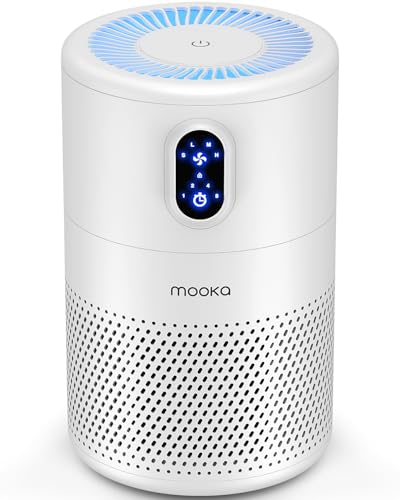

Filtration Features That Matter Most for Pet Dander and Allergens
Not every filter labeled "HEPA" performs the same. True HEPA media is tested to capture 99.97% of particles down to 0.3 microns, which covers most dander flakes, pollen grains, and dust mite debris. Some budget units use "HEPA-type" or "HEPA-like" filters that trap far less and won't give allergy sufferers the relief they're after. Check the spec sheet for the words "True HEPA" before anything else.
CADR, or Clean Air Delivery Rate, tells you how much filtered air a unit pushes out each minute, and it's the most useful number for comparing machines that all claim to fight allergens. Look at both the smoke and dust CADR figures, since dander behaves more like smoke than like larger dust particles. A pre-filter matters just as much in a pet household. Fur and hair clog a HEPA filter fast if nothing catches it first, so a washable outer layer that traps hair extends the life of the expensive filter underneath.
Finally, an activated carbon stage handles what HEPA can't: odor. Litter boxes, wet fur, and pet bedding release gases that pass straight through a particle filter, so a purifier without a carbon layer will look clean on paper while your house still smells like your pets. If you want a deeper breakdown of how HEPA ratings work, our guide to HEPA filtration covers the testing standards in more detail.
- True HEPA filter rated for 0.3-micron particles (avoid "HEPA-type")
- Smoke and dust CADR figures listed separately
- Washable pre-filter designed to catch pet hair
- Activated carbon layer for odor control
Matching Coverage Area to Your Home's Layout
A purifier's CADR only means something in relation to the room it's cleaning. As a rule of thumb, look for a dust CADR that's roughly two-thirds of your room's square footage; a 300-square-foot living room calls for a dust CADR near 200. Undersized units run at full speed constantly and still fall behind, which shortens filter life and adds to your energy bill.
Multi-pet households usually need more capacity than the coverage number on the box suggests, since more animals mean more dander entering the air at once. If your cat sleeps in the bedroom and your dog has the run of the living room, a single purifier rarely covers both effectively. Two smaller units placed in the rooms your pets use most will usually outperform one oversized machine parked in a hallway. For tighter spaces like a nursery or home office, our small-room air purifier picks cover sizing in more detail.
Open floor plans complicate the math further. Air has to travel and mix before a purifier can capture it, so a unit rated for a large open kitchen and living area may still leave corners and adjoining rooms noticeably dustier. When your square footage sits near a size threshold, size up rather than down, especially in a home with multiple pets and an allergy sufferer.
Keeping Filters Effective in a Multi-Pet Household
The best air purifier for allergies and pets only works as well as its filters, and pet homes put more strain on those filters than average machines ever see.
Plan on replacing a true HEPA filter every six to eight months in a home with one or two pets, closer to six if you have a heavy-shedding breed or more than two animals. Waiting longer doesn't just reduce filtration, it can also let trapped allergens off-gas back into the room. The activated carbon layer typically needs replacing on a similar or slightly faster schedule, since odor-absorbing capacity runs out well before the carbon looks visibly dirty.
The washable pre-filter is the piece pet owners tend to forget. Rinsing or vacuuming it every two to four weeks keeps hair and larger debris from choking airflow and forcing the HEPA filter to work harder than it should. A quick brush-off between full cleanings takes less than a minute and noticeably extends how long the main filter lasts. Set a reminder rather than relying on a filter-change light, since many indicator lights are tied to runtime rather than actual filter condition and can miss how much extra load pets add.
Certifications and Safety Features Worth Checking
A few certifications do a lot of the vetting work for you. Independent lab verification of CADR claims matters, since a lot of advertised coverage numbers on unverified listings turn out to be inflated. Look for a spec sheet that references third-party testing rather than manufacturer-only numbers before trusting any advertised coverage area.
Asthma and Allergy Friendly certification, issued jointly by allergist and asthma advocacy groups, goes a step further by testing how well a unit reduces actual allergens in real rooms, not just particle counts in a lab chamber. It's a useful shortcut if you or a family member has diagnosed asthma alongside pet allergies.
Ozone output deserves attention too. Some ionizing and "ozone-generating" purifiers produce a byproduct that irritates lungs and can make asthma worse, the opposite of what an allergy sufferer needs. Choose a unit with an ozone-free certification and skip anything marketed primarily as an ionizer without that certification.
Allergy-and-Pet Models vs. General-Purpose Air Purifiers
General-purpose air purifiers aren't built wrong, they're just built for a different job. Many are optimized for wildfire smoke or general dust and skip the pre-filter and carbon stages that pet households rely on most.
Without a dedicated pre-filter, hair and fur reach the HEPA filter directly and shorten its life dramatically, sometimes cutting months off the replacement schedule. Without activated carbon, a general-purpose unit can score well on particle counts while doing almost nothing about litter box or wet-fur odor, which is exactly why the best air purifier for allergies and pets is rarely the cheapest all-purpose model on the shelf.
That doesn't mean every pet owner needs a specialty unit. A single cat in a well-ventilated home with no allergy symptoms may do fine with a general-purpose purifier and a bit more frequent vacuuming. But once allergy symptoms, multiple pets, or a litter box in a shared living space enter the picture, the extra filtration stages earn their keep quickly.
Frequently Asked Questions
Do I need a HEPA filter specifically for pet allergies?
Yes. True HEPA media captures the tiny dander particles that trigger allergic reactions, something basic filters and ionizers can't reliably do. Confirm the listing says "True HEPA" rather than "HEPA-type," which often performs well below the certified standard.
Will an air purifier get rid of pet odor completely?
It significantly reduces odor when paired with an activated carbon filter, but it won't replace regular litter box cleaning, vacuuming, or laundering pet bedding. Think of it as reducing lingering smell, not eliminating the source.
How many air purifiers do I need for a multi-pet home?
Most multi-pet households do better with two smaller units placed in the rooms pets use most, such as a bedroom and living room, rather than one large unit trying to cover the whole floor plan.
Can I run an air purifier all day with pets around?
Yes, continuous operation on a low or auto setting is normal and typically more efficient than turning it on and off, since it keeps allergen levels steady instead of letting them spike between uses.
Are air purifiers safe for cats and dogs in the room?
Standard HEPA and carbon filtration units are safe around pets. Avoid ozone-generating ionizers, since ozone can irritate the respiratory systems of animals just as it does people, especially in smaller rooms.
How loud are air purifiers strong enough for pet dander?
On higher fan speeds needed for heavy shedding or larger rooms, expect noticeable fan noise similar to a box fan. Most units run much quieter on low or sleep settings, suitable for bedrooms overnight.
Does a bigger air purifier always work better for allergies?
Not necessarily. A unit sized well above your room's square footage runs at lower fan speeds most of the time, which can actually improve both noise levels and long-term filter life compared to an undersized unit working overtime.
Making the Right Call for Your Household
The right choice comes down to matching filtration stages, coverage area, and maintenance habits to your specific home rather than chasing the highest-rated model overall. A studio apartment with one cat has very different needs than a house with two dogs and a litter box in a shared hallway. Focus on true HEPA filtration, a washable pre-filter, activated carbon, and a CADR that fits your actual room size, and the rest of the decision gets much easier.