Best Air Purifier for Dog Hair (2026): Size, Features and Buying Tips
Disclosure: We may earn a commission when you buy through links on this page, at no extra cost to you. As an Amazon Associate I earn from qualifying purchases. Learn more

What matters when choosing the best air purifier for dog hair: size, features, budget and the mistakes to avoid.
Dog hair rarely stays where it lands. It lifts off the sofa when your dog shakes, drifts across the room, and settles on bedding, curtains, and your clothes. A purifier cannot pull hair off the floor, but the right one captures the hair and dander that stay airborne, and that is where choosing well matters. This guide to the best air purifier for dog hair compares three types by coverage, filtration, noise, and running cost, so you can match a unit to your room and your dog.
Start with the comparison table below, then use the sections that follow to check filter design, sizing, and upkeep before you spend anything.





Types at a Glance
Most purifiers sold for pet homes fall into three broad types. A compact unit suits one small room and light shedding. A tower or console unit with a washable prefilter suits a main living space where a dog spends most of the day. A large room smart unit suits open plans and homes with several dogs.
Three Types Worth Comparing for Dog Hair
The Everyday Console for a Main Living Room
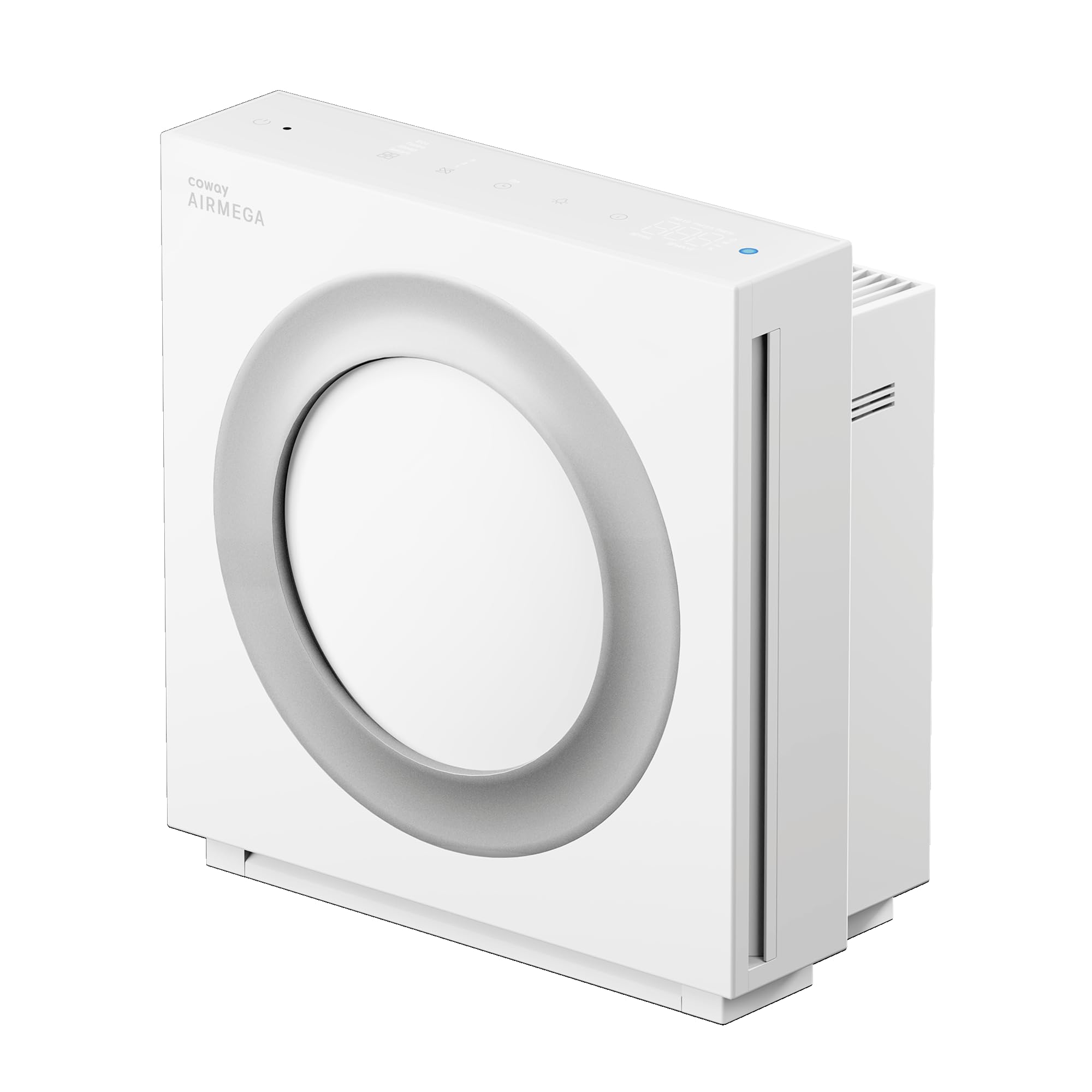
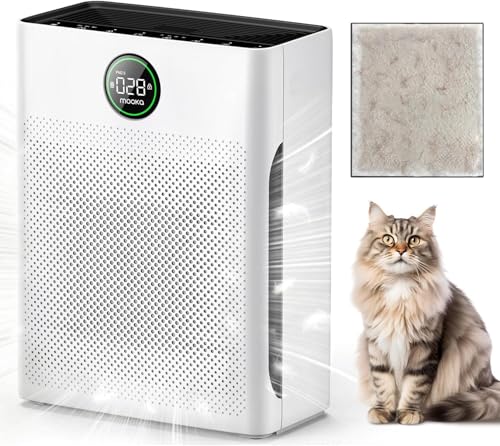
This is the type most dog owners should consider first. It pairs a washable prefilter that catches visible hair with a true HEPA filter that traps the fine dander hair carries. Airflow is strong enough for a living room, and the body is usually a low console or tower that sits against a wall. The trade off is size, since it takes more floor space than a desktop unit and its filters cost more to replace. Choose it if your dog naps, plays, and sheds in one main room.
The Compact Unit for One Small Room
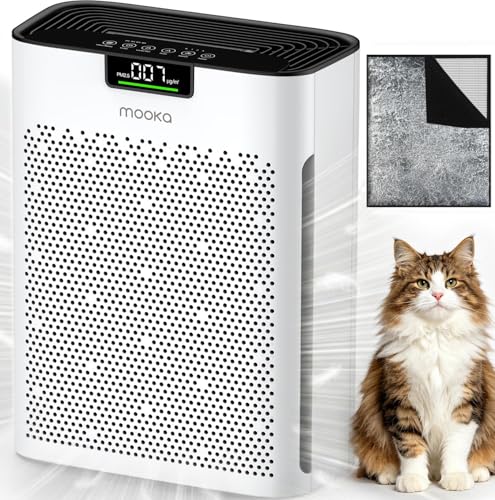
A compact purifier is built for a bedroom, nursery sized space, or a small home office where a dog sleeps beside you. It costs the least to buy and to run, and it is easy to move when you clean. Its limits are real, though. The prefilter is small, so heavy shedding fills it fast, and coverage ratings only suit a single closed room. It works as a second unit for the room where you sleep, but it will not keep up with a large shedding dog in an open living area.
The Large Room Smart Unit for Busy Pet Homes
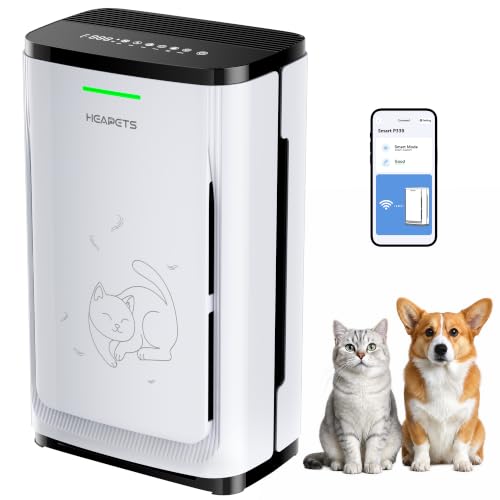
Homes with two or three dogs, or one large breed that sheds all year, often need more airflow than a standard console provides. Large room smart units add a bigger filter area, an air quality sensor that raises fan speed when particles spike, and app or voice control. The bigger filter area also means hair spreads across more surface, so suction stays stronger for longer between cleanings. You pay more up front and more for each filter set, and the unit is heavier to move for vacuuming.
How We Chose the Factors in This Guide
We ranked the buying factors that matter most for hair rather than for smoke or pollen alone. Coverage and clean air delivery rate come first, because hair loads a filter faster than fine dust does. Filter design comes next, followed by noise, energy use, and the cost of replacement filters. Sensor and control features rank last, since they add convenience but cannot fix a unit that is too small. If you want a broader view across every use case, see our guide to the best air purifier for a wider comparison.
How to Choose the Right Air Purifier for Dog Hair
Size and Form Factor
Form follows the room the unit will serve. A desktop model suits a desk or nightstand in a small room. A tower fits a corner and leaves a slimmer footprint in a hallway or beside a sofa. A console on wheels suits a large room you rearrange often. Whole house coverage from one unit is rare, so plan on one purifier per closed room where your dog spends real time. Measure the floor space before you order, because a unit that blocks a walkway gets unplugged and forgotten.
Type of Filtration
True HEPA is the filter standard to look for, because it captures the tiny dander particles that ride on shed hair. A washable or vacuumable prefilter in front of it matters just as much for dog owners, since it stops large hair before it mats over the HEPA surface. Carbon layers help with the smell that clings to coats and bedding. Treat ionic and UV features as extras rather than the main cleaning method, and pick an ozone free model if you run it in a bedroom around the clock.
Features Worth Paying For
An air quality sensor earns its cost in a pet home, because it reacts when your dog shakes out a cloud of hair and dander. A washable prefilter saves money over a season of shedding. WiFi control is worth it only if you will actually adjust the unit from another room. Skip built in humidifier combos unless you have compared an air purifier vs humidifier and know you need both jobs done, since combo tanks add cleaning work and can crowd out filter space.
Room Size and Coverage Ratings
Match the rated coverage to the room, then check the clean air delivery rate, often shortened to CADR, behind that rating. A higher CADR means the unit moves and cleans more air each hour. Ratings assume a closed door and a standard ceiling, so an open plan kitchen and living area counts as one large space, not two small ones. When your room sits between two sizes, pick the larger rating. Hair and dander build up all day, and a unit working at its limit has no reserve for a shedding burst after a walk or a game.
Running Cost and Energy Use
The purchase price is only part of what a purifier costs you. Add the electricity for running the fan most of the day and the price of one full filter set each year. Most home units draw about as much power as a small lamp on medium speed, so filters usually cost more than electricity over a year. Before you buy, price the exact replacement filter set and check how many pieces it includes. A low priced unit with costly filters can pass a pricier model within two years of ownership.
Noise Levels for Bedrooms
Manufacturers list noise in decibels for each fan speed, and the lowest speed is the number that matters at night. A quiet sleep setting sits near the sound of a soft whisper, while the top speed on many units is loud enough to compete with conversation. If the purifier will share your bedroom, run it on a higher speed while you are out, then drop it to the sleep setting before bed. Dogs can be startled by a sudden fan surge too, so a sensor mode that climbs gradually suits nervous sleepers, both human and canine.
Filters and Maintenance
Every purifier for dog hair lives or dies by its filter stack. Hair should meet the prefilter first, and you should be able to reach that prefilter without tools. Check whether the carbon layer is a thin sheet or a deeper bed of pellets, because the deeper bed handles pet smell for longer. Note whether replacement filters are sold widely or only from one maker, since a filter you cannot find in stock leaves the unit useless. Keep the intake clear of curtains and dog beds so airflow stays even.
How Much Should You Spend?
Models under $100 suit one small closed room, with a small filter you will clean often. Spending about $100 to $250 covers the console models that suit most living rooms, with true HEPA filtration and a washable prefilter. Spending about $250 to $500 adds large room coverage, sensors, and quieter top speeds. Spending more mainly buys capacity for open plans and multi dog homes, not cleaner air in a small room. Put your money toward the right size and affordable replacement filters before paying for app features.
What Matters Most in an Air Purifier for Dog Hair
Hair itself is easy to filter. The challenge is volume and what travels with it. A large shedding breed can load a prefilter in weeks, and every strand carries dander and dried saliva that trigger sneezing in sensitive people. That is why prefilter access and filter surface area matter more for dog owners than for someone filtering city dust. If your main concern is reactions rather than visible hair, read our guide to the best air purifier for allergies alongside this one, and talk with your doctor if symptoms are severe or getting worse.
Placement matters almost as much as the machine. Put the unit in the room where your dog spends the most hours, near the bed or crate but not pressed against it, with space around the intake. A purifier in a spare room does nothing for the living room air. For problems that go beyond hair, such as litter dust or pet birds, our guide to the best air purifier for pets covers the wider range of animal households.
FAQ
What is the best air purifier for dog hair?
For most homes it is a console or tower unit with a washable prefilter in front of a true HEPA filter, sized one step above your room. That pairing handles both visible hair and fine dander without clogging fast. Homes with several large dogs may need the large room type instead. There is no single model that fits every room, so match the type to your space, your dog, and the filter cost you can live with each year.
Do air purifiers work on dog hair?
They work on the hair and dander that stay in the air, and that is a real share of what you breathe and what lands on bedding. Hair that has already settled on floors and sofas stays there until you vacuum or wipe it up, because a purifier can only clean air that passes through it. If you want the fuller picture of what these machines can and cannot do, our explainer on do air purifiers work walks through the evidence.
How long does an air purifier take to clean a room?
It depends on how many times the unit can process the room air in an hour. A correctly sized purifier usually turns over the air in a closed room about two to four times an hour, so you may notice less floating hair within the first hour of running it. Opening doors, high ceilings, and a dog moving through the room all slow the result. Continuous running on a low or automatic setting holds the gains better than short bursts on the top speed.
What size air purifier do I need for a room with a dog?
Start with the room area in square feet, then adjust for the details the rating ignores. Add capacity if your ceiling is higher than the standard the rating assumes, if the room opens into another space, or if two dogs share it. A dog bed near the unit also argues for the next size up, because hair enters the air right there in a steady stream. When a model lists two coverage numbers, use the smaller one, which usually assumes more air changes per hour.
How often should you change an air purifier filter in a dog home?
Check the prefilter every few weeks and vacuum or rinse it whenever hair mats across the surface, which can be weekly during heavy shedding. The HEPA filter behind it typically lasts about 6 to 12 months, but dog homes often land at the shorter end. Trust the signs over the calendar. If cleaned air smells stale, airflow feels weaker, or the indicator light stays on after you service the prefilter, the main filter is due even if the schedule says otherwise.
Final Thoughts
The right choice is rarely the biggest or the cheapest unit. It is the one sized for your room, with a prefilter you can clean in a minute and a HEPA filter you can afford to replace on time. Compare the types in the product table above against your dog, your floor plan, and your budget, and the best air purifier for dog hair for your home becomes a straightforward pick. Keep it running where your dog actually lives, and the air will stay noticeably clearer between cleanings.