Best 8 Quart Stock Pots (2026): Builds, Sizes and Buying Tips
Disclosure: We may earn a commission when you buy through links on this page, at no extra cost to you. As an Amazon Associate I earn from qualifying purchases. Learn more

A practical guide to the best 8 quart stock pot: build types, stove compatibility, handles and care for soups, pasta and stock.
A pot of chicken soup sounds simple until your current pot crowds the burner, crowds the cabinet, and still leaves no room for a second batch to freeze. That is the gap an 8 quart size fills for many homes. Choosing the best 8 quart stock pot comes down to your storage space, your household size, and how you cook week to week, not to chasing extra features you will rarely touch.
This guide walks through sizes, materials, lids, handles, and realistic budgets so you can match a pot to your kitchen and routine. The comparison table below sums up the main build types side by side. If you are still weighing capacity against other sizes, our overview of the best stock pot range gives useful context before you narrow in on this one.


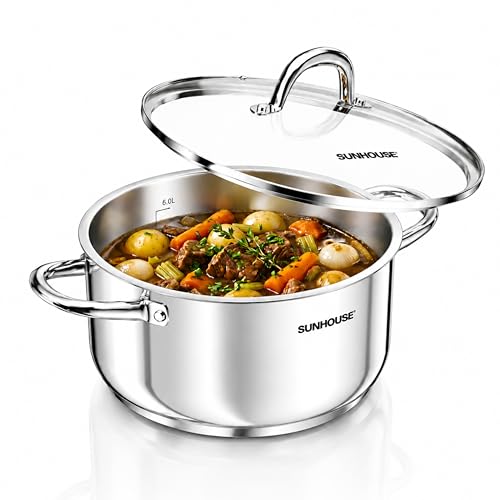


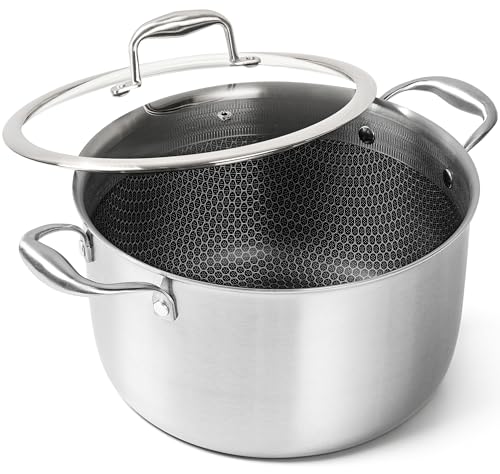
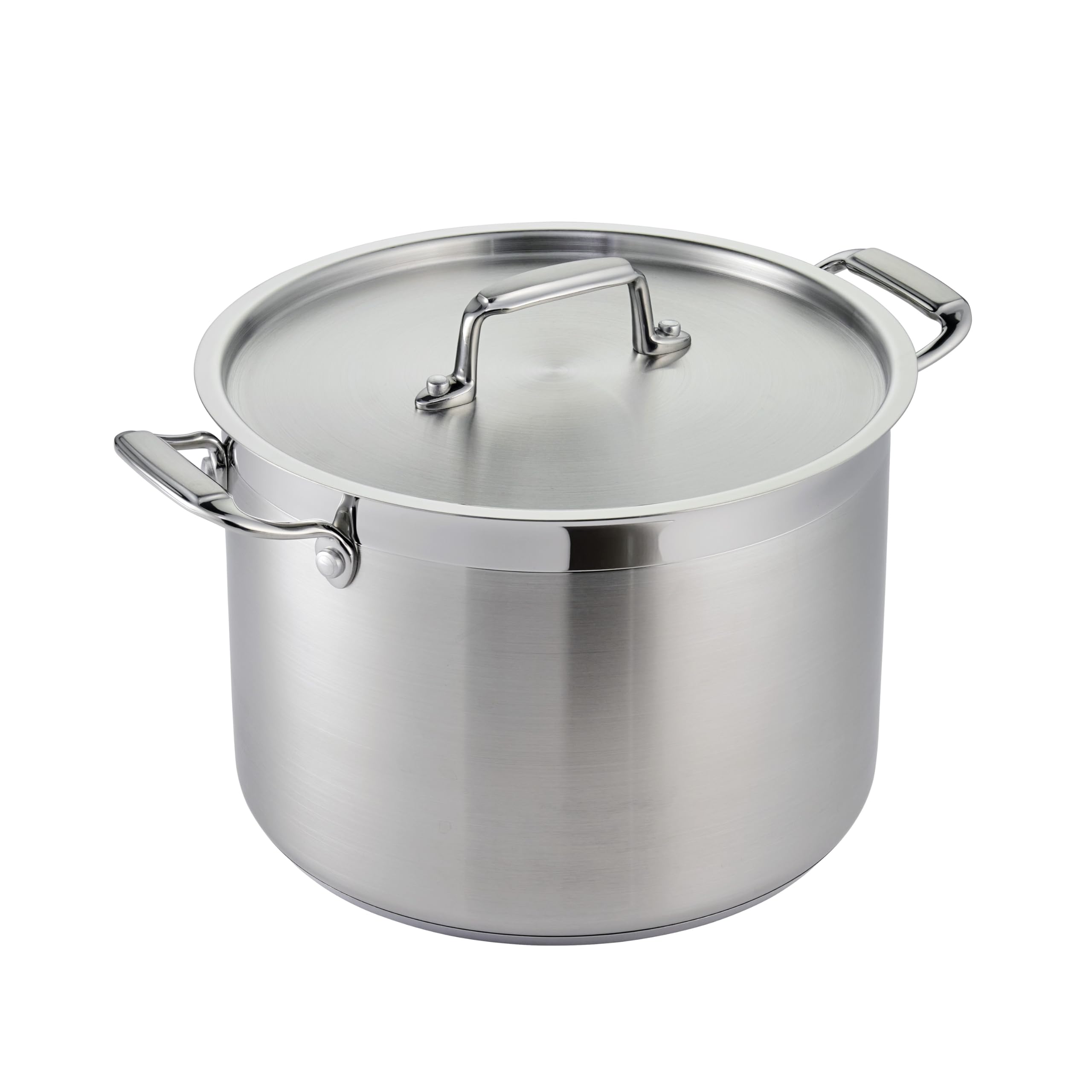


Quick Answer: Three Build Types That Fit Most Homes
Most shoppers land on one of three builds. A clad stainless steel pot suits the widest range of homes and recipes. A light single layer pot in stainless steel or aluminum costs less and stores easily in small kitchens. A heavy clad pot with a thick base costs more up front, but it holds heat evenly and stands up to years of weekly use.
Before You Buy: A Quick Checklist for Choosing a Stock Pot
Size: Match It to Your Space
Stock pots run from about 6 quart up through 10 quart, 12 quart, 16 quart, 20 quart, 24 quart, and even 40 quart for event cooking. The 8 quart size sits in the middle, big enough for soup for a family, small enough for a standard cabinet. Check the diameter and height against your deepest shelf and your largest burner before ordering. Our sizing guide, what size stock pot do i need, walks through servings per size in more detail.
Which Type Fits Your Routine
Stainless steel resists stains and handles acidic tomato based stocks without fuss. Aluminum heats fast and weighs little, but plain aluminum can react with acidic foods and may warp on strong burners. Enameled steel cleans easily, though the coating can chip if it knocks against a sink edge. Nonstick suits gentle reheating, yet it struggles with browning and wears out sooner. For a closer look at one popular route, see our guide to the best stainless steel stock pot options.
Features Worth Paying For, and Ones to Skip
A strainer lid helps when you drain pasta water or rinse beans, and a pasta insert lifts a full load of noodles out in one motion. A steamer basket earns its keep if you steam corn or dumplings often. A spigot looks tempting for draining stock, but it adds a valve to clean and a seal that can age. If you will not use an insert at least monthly, skip it and put the money toward a thicker base and a lid that fits tightly.
Material Safety and Coating Questions
Shoppers who want to avoid PFAS and PTFE coatings usually choose stainless steel or enameled steel, since neither relies on a slick coating. Ceramic style coatings are free of those compounds, but they lose their release over time and need gentle utensils. Bare cast iron is rare at this size because a full pot would be very heavy to lift. Whatever you choose, follow the care notes from the maker, and retire a pot once a coating flakes or the surface pits.
Induction, Gas, and Glass Top Compatibility
Induction burners need a magnetic base, so look for the words induction ready in a listing, or check the base with a kitchen magnet at home. Gas burners forgive a slightly uneven base, but a flat bottom still keeps the pot steady and the flame centered. On glass top ranges, avoid dragging a heavy pot across the surface, since grit under the base can scratch the glass. A thick flat base also spreads heat across the whole bottom.
Oven Temperatures and Handles
Many stock pots can move from burner to oven to keep soup warm, but safe temperatures vary by lid and handle material. Glass lids and phenolic handles often carry lower limits than all metal builds, so read the stated limit rather than guessing. Two loop handles are standard at this size and give a balanced grip with mitts. Check that your oven has clearance for the pot plus its lid.
Realistic Budget Ranges
Pots under $30 are usually thin, light, and fine for occasional soup, though they scorch more easily. Models about $30 to $50 add a thicker base and better lids. The about $50 to $100 range brings clad bodies, sturdier handles, and steadier heat for weekly cooking. Spending about $100 to $200 buys the heaviest builds with the longest warranties. Pay for construction and heat control, not for a longer feature list.
Types Compared: Which Build Suits Your Home
Since the right answer depends on your routine, compare these three build types against how often you cook, what you cook, and where the pot will live between uses.
Best for Most Homes: Clad Stainless Steel
A clad pot bonds an aluminum or copper core between layers of stainless steel, so heat travels across the base and partway up the walls. That even heat helps when you sweat onions for a soup base or hold a broth at a gentle simmer without hot spots. The steel surface browns fond that you can loosen with stock, and it tolerates metal utensils. For households cooking soup, pasta, or chili a few times a month, this balance of control and simple care is hard to beat.
Best Value: Light Stainless Steel or Aluminum
A single layer pot with an added impact bonded base disc keeps weight and price down while still spreading heat across the bottom. It suits a first apartment, a vacation home, or anyone who makes stock only a few times a year. You give up some evenness at the edges of the base, so stir a thick chowder more often and keep the burner moderate. In return you get a pot that is easy to lift, easy to store, and cheap to replace.
Best Long Term Investment: Heavy Clad With a Thick Base
The heaviest builds use more metal in the walls and base, which smooths out burner cycles and holds a simmer with fewer adjustments. Weight is the main trade off, since a full pot of water and bones takes a firm two handed lift to the sink. These pots suit households that cook big batches weekly and want one pot to serve for many years. Strong handles, a snug lid, and a warranty that covers warping matter more at this tier than any extra accessory.
Our Selection Process for the Best 8 Quart Stock Pots
We judge pots in this size on five things: heat distribution across the base, durability of the body and handles, material safety, stovetop and oven compatibility, and how easy the pot is to clean and store. Those judgments draw on maker specifications, stated temperature limits, and patterns in verified buyer feedback about warping, staining, and lid fit.
Is an 8 Quart Stock Pot the Right Size for You?
An 8 quart pot comfortably handles soup or chili for about four to six people, a whole chicken with vegetables for stock, or pasta for a family dinner with room to stir. It fills a standard sink for washing and fits most cabinet shelves, which smaller homes will appreciate. If you regularly cook for crowds, freeze very large batches, or boil seafood for a group, step up to the best 12 quart stock pot size instead. Households cooking in bulk for events may want to browse the best large stock pot category as well.
Think about fill level too. A pot should hold food and liquid below the rim with space for a rolling boil, so the working capacity is closer to 6 or 7 quart on a busy night. If most of your cooking is for one or two people, a 6 quart pot may store better and heat faster. The 8 quart size earns its place when you want leftovers on purpose, since soup and stock freeze well for later meals.
Common Buying Mistakes to Avoid
- Buying by capacity alone, so the pot turns out too tall for your cabinet or too wide for your burner.
- Ignoring base diameter, so a wide pot sits unstable on a small burner and heats unevenly.
- Choosing a nonstick pot for stock making, so you lose the browning and deglazing that build flavor.
- Forgetting oven clearance, so the pot and lid will not fit when you want to keep a soup warm.
- Paying for inserts and valves you will rarely use, so storage gets harder and cleaning takes longer.
Cost of Ownership and Care
A stock pot has no filters, pads, or parts that need routine replacement, so ongoing cost stays low. Your main expenses are storage space and the occasional replacement lid if one is dropped and cracks. Cooking with the lid on brings water to a boil faster and uses less energy. Wash the pot warm with a soft sponge and dry it fully before storing. Our full walkthrough on how to clean a stock pot covers stuck on starch and mineral marks in detail.
Your Questions, Answered
How do you clean a stock pot after cooking beans or pasta?
Soak the warm pot in hot soapy water for about twenty minutes, then lift residue with a soft sponge or a nylon brush. Starchy films from beans and pasta release easily after soaking, so skip steel wool, which can dull a polished finish. For pale mineral lines left by hard water, simmer water with a splash of vinegar for a few minutes, let it cool, and wash again. Dry the rim and lid edge fully to avoid spots.
Is an 8 quart stock pot worth it if you already own a Dutch oven?
It can be, because the two pots do different jobs well. A Dutch oven is heavy, wide, and ideal for braises, while an 8 quart stock pot is taller and lighter, with more headroom for boiling pasta or making stock without splashing. If storage is tight and your Dutch oven already covers soups for your household, you may not need both. If you cook pasta often, the second pot earns its shelf space.
How long should an 8 quart stock pot last?
A clad stainless steel pot can serve for decades, since the surface does not wear away and the body tolerates daily washing. Coated and enameled pots usually have a shorter working life because the surface, not the metal, sets the limit. Keep the warranty paperwork or a photo of it, since coverage for warping and handle failure varies by maker and is easier to claim with proof of purchase. Replace any pot whose base rocks on a flat surface, because a warped base heats unevenly.
What size stock pot do I need for a seafood boil?
For a small boil with corn, potatoes, and sausage for four people, an 8 quart pot works if you add ingredients in stages and keep the fill below the rim. Larger gatherings with whole crabs or several pounds of shrimp need more room, since the food itself displaces a lot of water. A practical check is weight: a full 8 quart pot of water alone weighs about 17 pounds before food, so pick a size you can carry safely to the sink.
Can you use an 8 quart stock pot for canning?
You can for small batch canning, provided the pot is deep enough to cover the jars with water and leave room for a rack below them. Check jar height against pot height before you start, and follow current canning guidance from a trusted source for processing times and safety steps. Tall jars may not fit with safe water coverage, in which case a deeper pot is the right tool.
Final Thoughts
Start with your space and your routine, then choose the build that matches both. Clad stainless steel suits most homes, a light pot keeps costs down for occasional cooking, and a heavy build rewards frequent batch cooking. Check the product table above against this checklist, and the best 8 quart stock pot for your kitchen should be an easy call. Prices and availability can change, so check the product page before ordering.