
Best 5 Quart Saute Pans (2026): Types, Sizes and Buying Tips
Disclosure: We may earn a commission when you buy through links on this page, at no extra cost to you. As an Amazon Associate I earn from qualifying purchases. Learn more

A practical guide to the best 5 quart saute pan: materials, size, oven limits and care so you choose the pan that fits your cooking.
Picture a Tuesday evening in a busy kitchen. Chicken is browning in a single layer, a sauce needs room to simmer, and four people are waiting at the table. A pan that is too small crowds the food and turns browning into steaming. The best 5 quart saute pan solves that problem with tall straight sides, a wide base, and a lid that holds in moisture.
This guide helps you choose by the space you have, the number of people you feed, and the budget you want to protect. You will compare materials, sizes, and features that matter for daily cooking, and you can use the comparison table below to line up the main options at a glance. If you want the broader picture first, see our guide to the best saute pan before you narrow down to this size.


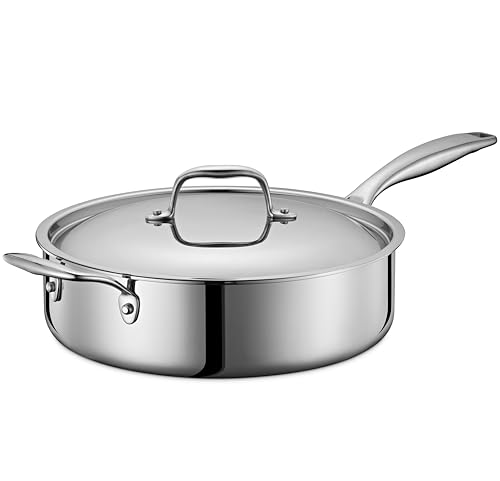


Quick Answer: What a Good 5 Quart Saute Pan Does for a Real Home
A 5 quart saute pan sits between a skillet and a stockpot. It fries, braises, simmers, and finishes dishes in the oven, all in one vessel. The three routes most homes choose between come down to material.
- Stainless steel with a clad core: the versatile default for browning, deglazing, and sauces.
- Nonstick or ceramic coated: the easiest route for eggs, fish, and weeknight meals where simple cleanup matters most.
- Cast iron, plain or enameled: the heat holding route for searing and slow braises, if you accept the extra weight.
Before You Buy: A Quick Checklist for Choosing a Saute Pan
Size: Match It to Your Space
Capacity alone does not tell the whole story, because two pans with the same volume can have very different shapes. A wider base, often around 12 inches across, gives food room to brown, while taller sides hold sauces and braising liquid. Smaller options at 3 or 3.5 quarts suit one or two people, 4 quarts covers small families, and 6 quarts can overwhelm a standard burner. If diameter is your main concern, our guide to the best 12 inch saute pan compares wide pans by footprint. Measure your burner and storage shelf before you order, since a helper handle adds length that must fit a cabinet.
Which Type Fits Your Routine
Your weekly cooking pattern should drive the material choice. Stainless steel rewards cooks who brown meat and build pan sauces, because fond forms well and deglazing lifts it into the sauce. Nonstick suits fast meals and delicate foods but its coating wears sooner. Ceramic coated pans offer easy release with a different coating chemistry. Tri ply construction bonds layers so heat spreads evenly. Copper responds fastest to heat changes but needs more polishing and costs the most.
Features Worth Paying For and Ones to Skip
Two features earn their cost on a pan this size. A tight fitting lid turns the pan into a braiser and keeps sauces from reducing too fast. A helper handle opposite the main handle makes a full pan far safer to lift, because 5 quarts of food plus the pan is genuinely heavy. Flared rims also help when you transfer sauce. Features you can skip include bundled accessory sets, decorative finishes, and extra lids in sizes you already own. Spend on base construction and lid fit first.
Is It Non Toxic? Materials and Coatings Explained
Safety questions come down to what touches your food. Bare stainless steel and cast iron have no applied coating, so nothing can flake or wear away. Ceramic coatings are made from mineral based layers and contain no PTFE or PFAS by design. Modern nonstick coatings use PTFE, and makers state they are made without PFOA. Retire a coated pan when the surface is deeply scratched or peeling, and avoid overheating an empty coated pan. If coating concerns top your list, uncoated materials remove the question.
Induction, Gas and Glass Top Compatibility
Not every pan works on every cooktop. Induction burners need a magnetic base, so bring a small magnet when you shop or check the listing for an induction ready base. Gas burners forgive almost any material and reward responsive metals. Glass top ranges need a flat smooth base, and heavy cast iron should be set down gently rather than dragged, because grit can scratch the surface. A warped base rocks on glass and heats unevenly, so check flatness on any pan you keep.
Oven Safe Temperature and Handles
Many recipes start on the stove and finish in the oven, so the oven limit matters. Stainless pans with metal handles often tolerate about 500 degrees Fahrenheit, while coated pans and pans with phenolic handles may be limited to about 350 to 400 degrees. Glass lids usually carry a lower limit than metal lids. Handles should stay cool enough to grip briefly, remain firmly attached, and give your hand room when you wear a mitt. Always confirm the stated limit for the pan and lid together.
Realistic Budget Ranges
Price tiers for this size map clearly to construction. Under about $50 you generally get a single layer pan or a coated pan with a thinner base, fine for light daily use. Between about $50 and $100 you find thicker bases, better lids, and sturdier handles. From about $100 to $200 you reach fully clad stainless, enameled cast iron, and longer warranties. Paying more mainly buys even heating and longer service life. Choose the tier that matches how often you cook.
Types Compared: How Different 5 Quart Saute Pans Suit Different Homes
Fully Clad Stainless Steel for Everyday Versatility
Clad stainless is the safest long term choice for most homes. An aluminum or copper core runs through the base and often up the sides, so sauces heat evenly without hot spots that scorch at the edges. You can sear hard, deglaze with wine or stock, and move the pan to the oven without worrying about a coating. Cleanup takes a soak and a gentle scrub for browned bits, but the surface tolerates metal utensils and lasts for decades.
Nonstick and Ceramic Coated Pans for Low Effort Weeknights
Coated pans win on busy evenings. Eggs slide out, fish keeps its skin, and cleanup is often a quick wipe rather than a soak. The trade off is lifespan, since every coating eventually wears and the pan becomes a replacement purchase. If that easy release appeals to you, our guide to the best ceramic saute pan covers the ceramic branch in detail. Choose a coated pan with a thick forged base, use wood or silicone tools, and keep heat at medium or below.
Cast Iron and Enameled Options for Heat Retention
Cast iron holds heat longer than any other common pan material, so it sears deeply and keeps braises at a steady simmer. Enameled versions skip seasoning and handle tomato based sauces without reacting, while plain cast iron costs less. The cost is weight, because a full cast iron pan is a two hand lift for many cooks. If that trade sounds right, our guide to the best cast iron saute pan explains the options. Cooks with wrist concerns often prefer clad stainless.
Our Selection Process for the Best 5 Quart Saute Pans
This guide weighs five criteria: even heat distribution, durability, material safety, stovetop and oven compatibility, and ease of cleaning. The information comes from manufacturer specifications and patterns in verified buyer feedback about warping, coating wear, and handle comfort. The goal is to match construction types to household needs, so the checklist above matters more than any single ranking.
Is a 5 Quart Saute Pan the Right Size for You?
For households of three to five people, 5 quarts is usually the most useful single size. It browns a whole cut up chicken in one layer, holds a family batch of pasta sauce with meat, and braises short ribs without crowding. It also shines at one pot meals, shallow frying, and dishes that move from burner to oven.
It may be too much pan if you cook for one or store cookware in shallow drawers. A 3 quart pan heats faster for small jobs and weighs far less when full. Frequent batch cooking for six or more pushes you toward 6 quarts or a Dutch oven. If you are still torn, our guide on what size saute pan do i need walks through household size, burner size, and storage together.
Common Buying Mistakes to Avoid
- Choosing by capacity alone: a tall narrow 5 quart pan browns poorly, so you lose the main reason for buying a saute pan.
- Ignoring the full weight: the pan plus food can exceed what one hand lifts safely, and skipping a helper handle makes draining and carrying risky.
- Forgetting cooktop compatibility: a non magnetic base on an induction range means the pan simply will not heat.
- Paying for accessory bundles: extra utensils and spare lids add cost while the base construction, which decides performance, stays thin.
- Skipping the storage check: a pan that cannot fit your cabinet or oven rarely gets used, however well it cooks.
Cost of Ownership and Care
Owning a saute pan costs little beyond the purchase when you care for it well. Dry the pan fully before storing it, and place a cloth between stacked pans so bases do not scuff coated surfaces. Check handle rivets once in a while and stop using the pan if a handle wobbles. Plain cast iron needs a thin coat of oil after washing to protect the seasoning. Avoid thermal shock by letting a hot pan cool before rinsing, because sudden cold water can warp even a thick base.
Your Questions, Answered
What is the most reliable saute pan brand?
Reliability tracks construction more than the name on the base. A pan with a thick bonded base, firmly attached handles, and a stated warranty from an established maker will outlast a thin pan from any label. Look for clear specifications on materials, oven limits, and warranty length. Makers that publish those details and honor replacements tend to earn repeat buyers.
How do you clean a saute pan?
Start while the pan is still warm by adding a cup of water and letting it simmer for a minute, which loosens browned residue so a soft sponge lifts it away. This deglazing style wash works on stainless, enameled, and cast iron alike. For coated pans, skip the simmer and use warm soapy water only. Stubborn spots on stainless respond to a paste of baking soda and water left to sit for fifteen minutes.
Is a saute pan worth it?
It is worth it if you often cook dishes that both brown and simmer, such as chicken in sauce, braised vegetables, or skillet pasta. A saute pan replaces a skillet plus a saucepan for those meals, so one purchase covers two jobs. If your cooking is mostly eggs, pancakes, and reheating, a plain skillet and a pot you already own may serve you just as well.
How long does a saute pan last?
Lifespan depends almost entirely on the surface. Stainless steel and cast iron pans commonly serve for decades. Enameled cast iron lasts nearly as long if the enamel is not chipped by impacts. Coated pans have a working life of a few years with daily use, after which release fades and replacement makes sense. Budget with that cycle in mind when you compare prices.
What is the best 5 quart saute pan?
For most homes, a fully clad stainless steel pan with a helper handle and a metal lid is the safest answer, because it browns, braises, and goes into the oven without coating limits. Homes that prize easy cleanup over lifespan should choose a thick based coated pan instead. Cooks who sear often and accept the weight gain the most from cast iron. Match the type to your routine and any of the three can be the right choice.
Final Thoughts
The right pan is the one that fits your burner, your storage, and the meals you cook every week. Use the product table above to compare the main types side by side, then weigh clad stainless for versatility, a coated pan for easy weeknights, or cast iron for deep searing. Chosen with those priorities in mind, the best 5 quart saute pan becomes the pan you reach for without thinking, meal after meal.


