
Best 8 Quart Dutch Ovens (2026): Buying Guide and Top Options
Disclosure: We may earn a commission when you buy through links on this page, at no extra cost to you. As an Amazon Associate I earn from qualifying purchases. Learn more
A practical guide to the best 8 quart dutch oven: sizes, features, budget ranges, and mistakes to avoid before you buy.
A big pot only earns its cabinet space if it matches the way your household actually cooks. If you make soup for six, braise for weekend guests, or cook once and freeze portions for busy weeks, the best 8 quart dutch oven for your home comes down to stove space, storage, and how many people sit at your table. Our guide to the best dutch oven covers the wider category, while this page focuses on the 8 quart size.
Below, you will find a checklist for size, material, lids, handles, and budget, plus a comparison of the main types. Read it alongside the comparison table below to narrow your choice.



Quick Answer: Choosing an 8 Quart Dutch Oven in 30 Seconds
An 8 quart dutch oven is a large pot for families of five or more, regular entertaining, and serious batch cooking. Enameled cast iron suits most homes because it moves from stove to oven and cleans up with little fuss. Bare cast iron costs less and tolerates very high heat, but it needs seasoning and prompt drying. Lighter stainless steel or aluminum versions are easier to lift, though they hold heat less evenly.
Before You Buy: A Quick Checklist for Choosing a Dutch Oven
Size: Match It to Your Space
Dutch ovens run from about 2 quarts for one or two people up to 9 quarts for crowds, with common stops at 3.5, 5.5, and 7.25 quarts. The 8 quart size sits near the top, so measure before you commit. Check the diameter against your biggest burner, the height against your oven racks, and the footprint against its shelf. If you are torn between sizes, our guide on what size dutch oven do i need covers servings per quart.
Which Type Fits Your Routine
Enameled cast iron is the default for daily cooking, since the smooth coating resists stains, needs no seasoning, and handles acidic tomato sauces well. Bare cast iron suits cooks who sear hard or bake over coals, and it can be restored with oil and heat. Stainless steel and ceramic coated aluminum weigh far less and suit cooks who lift a full pot often. If enamel appeals most, see our guide to the best enameled cast iron dutch oven.
Features Worth Paying For and Ones to Skip
A heavy, tight fitting lid matters most, because it traps steam and keeps braises moist without constant topping up of liquid. Wide loop handles you can grip with thick mitts come next, followed by a metal lid knob that tolerates high oven heat. A lid with small bumps underneath, often called self basting, is a modest bonus rather than a must. Skip bundled extras such as trivets or lid lifters, and put that money toward thicker walls instead.
Material Safety and Coatings
Cast iron, enameled cast iron, and stainless steel contain no PFAS or PTFE, one reason many cooks choose them for a pot they plan to keep for decades. Enamel is a glass coating fused to iron, not a nonstick film, so it will not peel in flakes the way worn nonstick pans can. Ceramic style coatings on aluminum are also PTFE free, but they tend to wear faster.
Induction, Gas and Glass Top Compatibility
Cast iron and enameled cast iron work on gas, electric coil, glass top, and induction burners, because iron responds to a magnet. Aluminum and some stainless steel pots need a magnetic base layer for induction, so check the product details if that is your stove. On glass tops, lift the pot rather than sliding it, since a full pot can scratch the surface. Match the base diameter to the burner ring so heat spreads across the bottom.
Oven Safe Temperature and Handles
Most enameled cast iron pots are rated for oven use up to about 500 degrees Fahrenheit, but the lid knob often sets the real limit. Phenolic knobs may be rated far lower than metal ones, so read the limit for the whole pot, lid included, before a high heat bread bake. Handles should feel secure when the pot is full, because 8 quarts of stew can weigh 20 pounds or more with the pot.
Realistic Budget Ranges
Under about $50, expect bare cast iron or thinner enamel with simpler handles, which can still cook well if you accept extra upkeep or a shorter finish life. Between about $100 and $200, enamel gets thicker, lids fit better, and warranties grow longer, which suits most family kitchens. Above about $300, you pay for finer casting, more color choice, and stronger warranty support rather than better soup. Decide your ceiling first, then spend on lid fit and handle comfort.
Three Types of 8 Quart Dutch Ovens Compared
Since the same capacity comes in very different materials, comparing types is more useful than comparing logos.
Enameled Cast Iron for Everyday Home Cooking
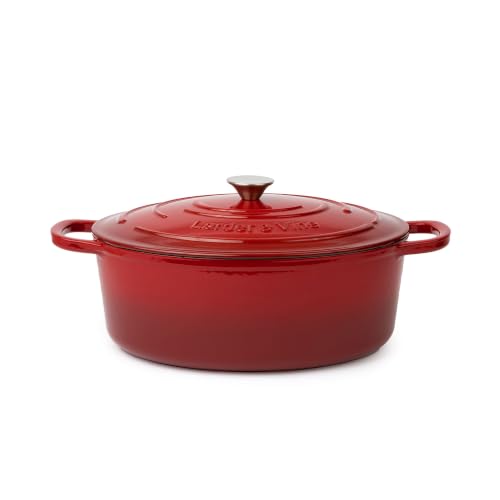
This type pairs the heat holding power of iron with a smooth glass coating that wipes clean and shrugs off tomato, wine, and vinegar based dishes. It is the easiest large pot to live with daily, and it can go straight to the table for serving. The trade offs are weight and price, plus enamel that can chip if you bang metal tools against it. For bakers, our guide to the best dutch oven for sourdough covers crust and steam.
Bare Cast Iron for High Heat and Outdoor Use
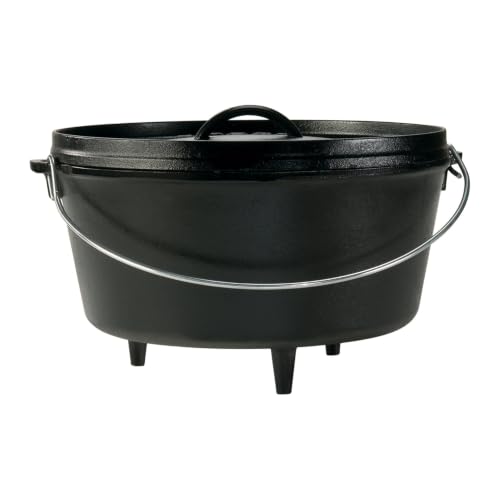
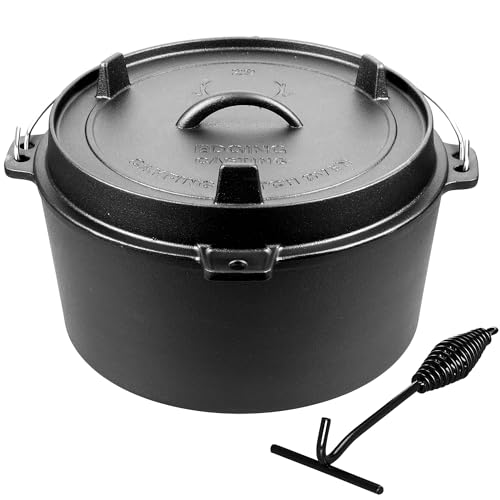
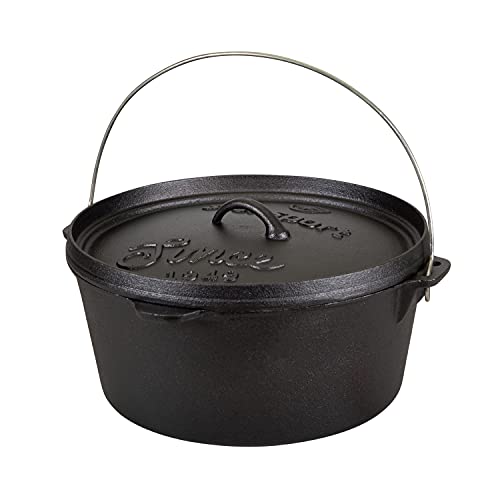
Uncoated cast iron tolerates the highest heat of the group, so it sears steaks, bakes over campfire coals, and goes under a fierce broiler without complaint. It also costs the least per quart and can be renewed at home with a thin coat of oil and a hot oven. The catch is daily care, since the pot must be dried at once and kept lightly oiled to prevent rust. Many owners keep this pot for bread, roasts, and frying instead of long acidic simmers.
Lighter Materials for Easier Handling
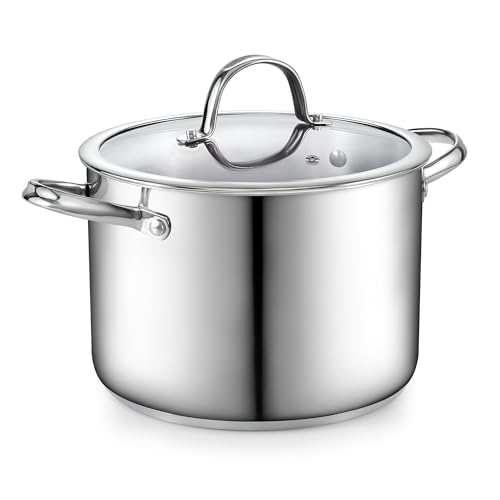
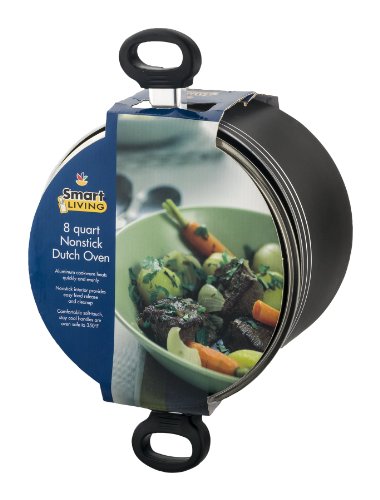
Stainless steel and hard anodized aluminum pots cut lifting weight dramatically, which matters if you move a full pot from stove to oven or pour off liquid often. Stainless steel with a thick layered base heats evenly enough for soups and stews and can go in the dishwasher, though stuck on rice still needs a soak. Aluminum heats fast but holds heat poorly off the burner, so braises may need a slightly higher oven setting. Choose this route when your wrists limit you.
How the Options Are Compared
The criteria here come from maker specifications, stated oven limits, and patterns in verified buyer reviews about chipping, lid fit, and handle comfort. We weighted heat distribution, durability, material safety, stove and oven compatibility, and ease of cleaning.
Is an 8 Quart Dutch Oven the Right Size for You?
Choose 8 quarts if you regularly cook for five to eight people, double a soup recipe for the freezer, or braise a whole chicken with vegetables in one layer. A couple who mostly cooks for two will likely find a 5.5 quart pot easier to store and heat, and it simmers faster with small amounts of liquid. Think about your largest regular meal, not the once a year holiday, because an oversized pot used one third full can cook unevenly.
Bakers have their own reason to size up, since a wide 8 quart pot gives a large loaf room to expand without touching the sides. If bread is your main goal, our guide to the best dutch oven for bread compares shapes and lid styles for baking. Weigh storage honestly too, because this pot may claim an entire cabinet shelf.
Common Buying Mistakes to Avoid
- Buying 8 quarts for a household of two, then rarely using it because it heats slowly and stores poorly.
- Ignoring the lid knob rating, then finding the pot cannot handle the heat your bread recipe needs.
- Choosing by color alone and skipping the check that the base fits your burner and oven racks.
- Assuming every metal pot works on induction, when some aluminum and stainless steel bases are not magnetic.
- Forgetting ownership costs, such as a replacement knob, when comparing prices.
Cost of Ownership and Care
Beyond the purchase price, ownership costs stay low. A replacement metal knob costs around $15 to $30, and good mitts cost about $20, and that is usually the full list for years of use. There are no filters, pads, or liners to replace. Store the pot with the lid slightly ajar or a cloth between lid and rim, because trapped moisture can dull enamel and invite rust on bare iron edges. Keep it where you can lift it with both hands.
Daily care is simple for enameled pots, which need only warm soapy water and a soft sponge once cooled a little. Bare cast iron wants a rinse, a thorough dry on low heat, and a whisper of oil while warm. Never pour cold water into a screaming hot pot, since the sudden change can crack enamel or warp the base.
Your Questions, Answered
What is the most reliable dutch oven brand?
Reliability tracks construction more than the name on the lid. Thick, even casting, a lid that sits flat with no rocking, and a warranty that covers enamel defects matter more than branding. Long established makers tend to offer stronger warranty support and spare knobs years later. Check recent buyer reviews for chipping reports on the exact size you want.
How do you clean a dutch oven?
Let the pot cool until warm, then soak it in warm water for 15 to 20 minutes so browned bits release on their own. A paste of baking soda and water lifts stubborn stains on enamel without scratching, and a brief simmer of plain water loosens anything left. Avoid steel wool on enamel. Our full walkthrough on how to clean a dutch oven covers rust removal and stains in depth.
Is a dutch oven worth it?
For cooks who make soups, braises, stews, or bread at least twice a month, yes, because one pot covers stove searing, oven roasting, and table serving with even heat. It can replace a stockpot and a casserole for many meals, which offsets the price over time. If your cooking is mostly quick stir fries and small pasta boils, a lighter pot will serve you better.
How long does a dutch oven last?
A cast iron or enameled cast iron pot commonly lasts decades, and bare iron can outlast its owner when kept dry and oiled. Enamel is usually the first thing to age, through staining or edge chips, though the pot still cooks safely while the cooking surface stays intact. Stainless steel lasts nearly as long with no coating to worry about. Ceramic coated aluminum shows wear soonest, often within several years.
What size dutch oven do I need?
Match capacity to your biggest routine meal rather than your largest party. Plan on roughly 1 quart per person for soups and stews served as a main dish, then add a quart of headroom so the pot does not boil over. That math points households of six to eight toward 8 quarts, while couples land near 3.5 to 5.5 quarts. Freezer batch cooks should size up one step.
What is the best 8 quart dutch oven?
The right answer depends on the fit between the pot and your kitchen, not on a single universal winner. For most homes, an enameled cast iron model with a metal knob, wide handles, and a lid that sits flat covers the widest range of cooking with the least upkeep. Cooks who bake at very high heat or over coals should lean toward bare cast iron. Start from the type that suits your routine, then compare the product table above.
Final Thoughts
A large dutch oven should make family cooking calmer, not add a heavy chore to your shelves. Match the 8 quart capacity to a household that will truly fill it, pick the material that fits your stove and your tolerance for upkeep, and spend on lid fit and handles you can grip with confidence. Do that, and the best 8 quart dutch oven for your home is the one you reach for every week. Prices and availability can change, so check the product page before ordering.


