
Best 8 Inch Door Speakers: Types Compared and How to Choose for 2026
Disclosure: We may earn a commission when you buy through links on this page, at no extra cost to you. As an Amazon Associate I earn from qualifying purchases. Learn more

Compare the best 8 inch door speakers by type, fit, power handling and sound with a clear buying guide for car door upgrades and replacements.
An eight inch speaker in a car door promises stronger midbass and fuller sound than the small factory units most vehicles carry, but fit is everything. This types compared guide to the best 8 inch door speakers explains how the main designs differ, what your doors must provide in depth and mounting space, and how to use the product table below to pick a type that installs cleanly and sounds right.
Many vehicles need adapter rings, door treatment, or amplifier power to get the best from this size, so we cover the full decision rather than the speaker alone.


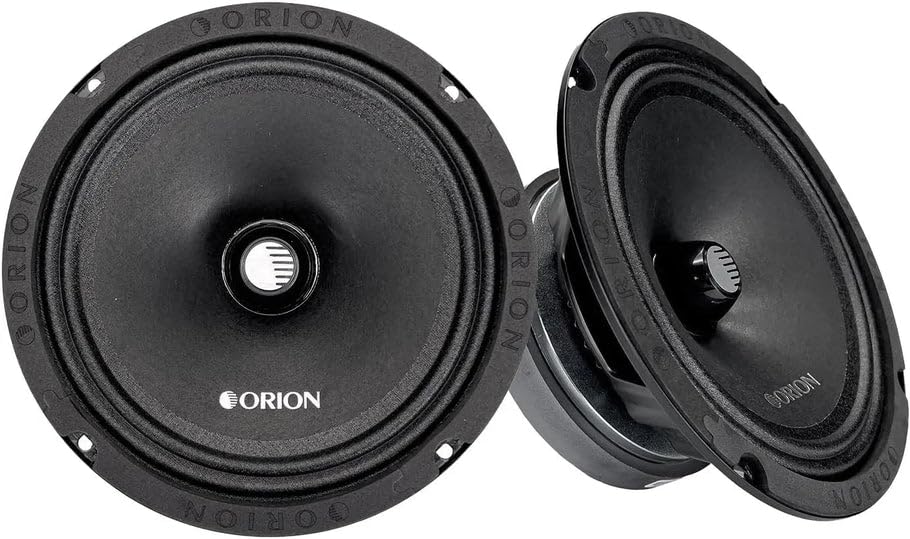


Types of 8 Inch Door Speakers Compared
Four types cover nearly every door upgrade. Coaxial models combine woofer and tweeter in one unit for simple installs. Component sets separate the tweeter for better imaging. Dedicated midbass drivers focus on low and midrange punch and need a separate tweeter, while midrange focused drivers serve three way systems. Prices range from under about $100 per pair for basic coaxial models to about $400 or more for serious component and midbass sets.
Coaxial Models
Coaxial speakers mount a small tweeter in front of the woofer, so one cutout and one wiring run complete the job. They are the easiest upgrade from factory speakers and work acceptably on head unit power, though an amplifier still helps at this size. Sound staging sits low in the door, which is their main compromise.
Choose coaxial models if you want a single afternoon install, a stock appearance, and a clear step up in fullness. They suit rear doors and daily drivers where simplicity beats the last degree of imaging precision. Check that the protruding tweeter clears your door panel and grille.
Component Models
Component sets place the tweeter separately, often at the sail panel or A pillar, with an external crossover dividing frequencies between drivers. Raising the tweeter lifts voices and detail toward ear level, giving the most natural stage of any door type. The cost is a longer install with more wiring and mounting decisions.
Choose components if sound quality is the priority and you are comfortable removing trim and routing wires, or paying an installer to do so. They reward amplifier power and careful tweeter aiming, and they are the type most owners keep satisfied through several vehicles.
Dedicated Midbass Models
Midbass drivers are built for the roughly 60 to 500 Hz region that gives kick drums, bass guitars, and male voices their weight. They have stiff cones, strong motors, and high power handling, but they play no high frequencies, so a system must add midrange and tweeter drivers plus crossovers to cover the full range.
Choose dedicated midbass if you are building a serious system, often called a three way front stage, and you have amplifier channels and processing to manage it. In a simple two speaker door upgrade they are the wrong tool, because used alone they will sound muffled and incomplete.
Midrange Focused Models
Midrange focused eight inch drivers, common in high volume custom builds, emphasize loud and clear mids over deep bass extension. Some are designed for show systems that play at very high volume with doors open, using high sensitivity and shallow baskets. Their tuning can sound forward or harsh for relaxed daily listening if chosen carelessly.
Choose this type for competition or demonstration style builds where sheer output is the goal, and pair it with proper crossovers to protect it from low bass it cannot reproduce. For a private daily driver, coaxial or component types almost always give a more balanced result. Shoppers researching driver roles can compare our guide to the best 8 inch midrange speakers alongside this one.
Coaxial vs Component Models: Which Should You Choose?
Compare the two mainstream types on five points. On install effort, coaxial wins clearly, often using factory locations and wiring. On sound staging, components win because the raised tweeter places voices at dash height. On cost, coaxial sets are cheaper and need no crossover mounting. On power, both improve with an amplifier, but components scale further as you add power and tuning. On resale and transfer, coaxial speakers are easier to remove and refit elsewhere.
Our advice for the best 8 inch door speakers is simple. If this is your first upgrade and the car is a daily driver, start with coaxial and door sound treatment. If you already know you care about imaging and plan to keep the car for years, go straight to components and skip the intermediate step. Either way, budget for adapter rings and a roller applied layer of sound deadening, which improves midbass from any type.
How to Choose the Right 8 Inch Door Speaker
Head Unit and Amplifier Features
Door speakers are passive, so extra features live in your head unit or amplifier, including app based equalization, time alignment, and crossover control. A processor or a head unit with per channel tuning can transform an eight inch install by aligning arrival times from each door. Check that your electronics offer the channels and crossover slopes your chosen type requires.
Firmware updates apply to those electronics rather than the speakers. Keeping the head unit updated maintains phone compatibility for CarPlay and Android Auto, which is the feature most drivers actually touch daily, long after the speaker install is forgotten.
Wiring and Connectivity
Speaker wire carries the signal to your doors, and that wired connection delivers full power without compression. Bluetooth version and codec support belong to the head unit and your phone connection, so evaluate them there. For the speakers, wire gauge and solid connections are the real connectivity specs that affect sound.
Use oxygen free copper wire of suitable gauge for long runs, solder or crimp connections properly, and avoid factory thin wiring when adding serious amplifier power. A practical know how point is to check door boot wiring carefully, since chafed wires in the hinge area are a common cause of intermittent door speaker faults.
Placement and Mounting Depth
In a car, the cabin is the room, and the door is the enclosure. Measure mounting depth from the window glass at its lowest point, the cutout diameter, and the space for adapter rings before ordering, because eight inch drivers are far larger than most factory door speakers. Some doors need a shallow design or a spacer to clear the glass.
Seal the adapter to the door and cover large access holes where practical, because leaks between the front and back of the cone cancel bass. Even basic sealing and deadening often improves sound more than a price jump between speaker tiers, a point installers repeat for good reason. For marine cousins of this size, see our guide to the best 8 inch marine speakers.
Sound Quality and Tuning
Judge sound on midbass punch, midrange clarity, and tweeter smoothness together. Frequency response charts help, but sensitivity around 90 dB or higher is a strong everyday indicator that the speaker will play loudly on modest power. A harsh tweeter will tire you on long drives, so favor silk or soft dome designs if you prefer relaxed listening, and metal domes if you like extra sparkle.
Set crossovers correctly after installation. Sending deep sub bass to a door speaker wastes power and invites rattles, so a high pass filter near 60 to 80 Hz is standard practice when a subwoofer handles the lows. Without a subwoofer, you can run doors lower, but watch for distortion at volume.
Fit and Weight
Fit here means the speaker living happily in your door for years. Confirm the frame clears the window mechanism through its full travel, the magnet clears braces, and the panel refits without bulging or new rattles. Check the window and door locks before you reinstall every clip and screw.
Heavy magnets add stress to adapter rings, so use rigid adapters and thread locking hardware where vibration is likely. If you are comparing this upgrade with home or general eight inch options, our guide to the best 8 inch speakers puts the door category in a wider context.
How to Make Your 8 Inch Door Speaker Last Longer
Keep head unit firmware updated, protect drivers from door water leaks by refitting the factory moisture shield or adding speaker baffles, and clean dust from grilles gently. Most door speaker deaths come from water intrusion, overdriven distortion, or wiring faults rather than age. Play clean power at sensible volume, fix door seal leaks promptly, and inspect connections if a channel starts to crackle. For bass focused alternatives in other locations, some builders also review the best 8 inch midbass speakers when planning a full system.
8 Inch Door Speakers: Your Questions Answered
Do 8 inch door speakers need an amplifier?
They work on head unit power, but an amplifier makes them sound fuller and cleaner at volume. Match the amplifier RMS output to the speaker rating, and set the gain conservatively so the speakers never clip. Coaxial models are the most forgiving on factory power.
Will 8 inch speakers fit my car doors?
Only if the door has room. Many vehicles ship with 6.5 inch or 6 by 9 inch speakers, so an 8 inch driver often needs adapter rings, a shallow basket and clearance from the window glass. Measure the cutout and depth at the lowest window position before you order.
Do I need sound deadening in the door?
It is not required, but it is one of the best value additions. A layer of deadening material on the outer door skin cuts rattles and road noise, and sealing the inner panel tightens midbass. Many installers spend as much effort on the door as on the speaker.
Wired or wireless: which sounds better for door speakers?
Wired sounds better and is the only practical choice for door speakers, since they need real amplifier power that wireless links cannot deliver to a passive driver. Wireless applies to the source connection to your head unit. Once the signal reaches the amplifier, copper wire to each door gives the most stable and full power delivery.
How long do 8 inch door speakers last?
Quality speakers commonly last five to ten years in a daily driver. Moisture resistant cones, rubber surrounds and clean amplifier power extend that life, while water leaks and chronic distortion shorten it. Crackle, rattles at moderate volume or a dead channel usually mean it is time to inspect connections and the driver.
Our Verdict
Decide the type first, coaxial for simplicity or component for staging, then verify depth and cutout fit, and reserve part of the budget for adapters and door treatment. Those steps decide success more than small spec differences between brands. Check the product table above against your measurements, and choose the best 8 inch door speakers that fit your doors, your amplifier, and the way you actually listen every day.


