Best 10 Inch Midbass Speakers for 2026: What Actually Matters Before You Buy
Disclosure: We may earn a commission when you buy through links on this page, at no extra cost to you. As an Amazon Associate I earn from qualifying purchases. Learn more

A clear checklist for choosing the best 10 inch midbass speakers, covering power, sensitivity, fit and crossover setup for clean, punchy bass.
A midbass driver has one job, covering the range between the subwoofer and the midrange so drums, bass guitar, and vocals keep their weight and snap. Choosing the best 10 inch midbass speakers is less about brand names and more about a short checklist of measurable traits. This guide gives you that checklist with clear pass and fail thresholds.
You will learn how to judge frequency response, power handling, mounting fit, and crossover needs before you spend anything. Use the product table to shortlist candidates, then check each one against the criteria that follow.
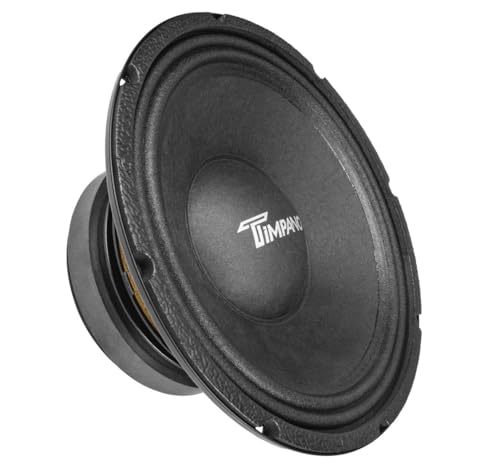


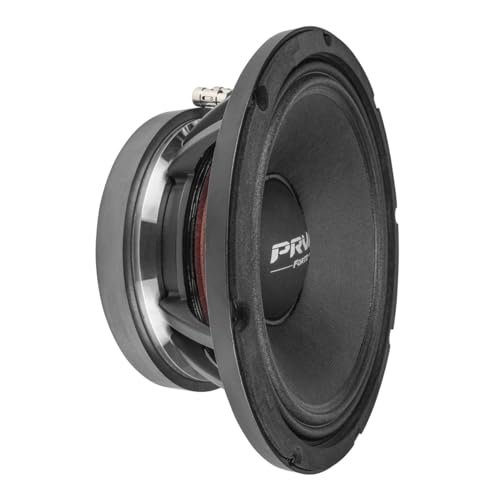
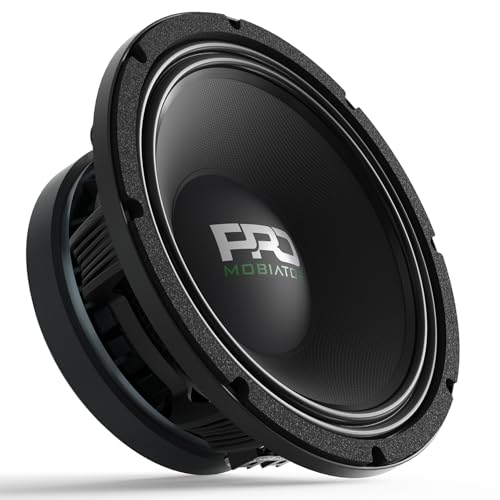


How to Evaluate the Best 10 Inch Midbass Speakers
Treat each criterion below as a gate. A driver that fails one gate, such as mounting depth, will disappoint you no matter how strong it looks on the others.
Sound Quality and Tuning
Look for a published frequency response that stays fairly flat from about 60 Hz to 500 Hz, the heart of the midbass range. A driver that peaks hard near 100 Hz may sound boomy in a door or small enclosure, while one that rolls off early will sound thin. Cone material shapes tone, with treated paper sounding warm and polypropylene sounding cleaner and more neutral. Check the response graph if one is offered. Smooth curves with no sharp dips usually mean easier tuning and fewer crossover headaches later.
Power Handling and Sensitivity
Judge power by the RMS rating, not the peak number printed in large type. For most car and home builds, about 75 to 200 watts RMS per driver pairs well with a mid sized amplifier. Sensitivity matters just as much. A rating of 90 dB or higher means the driver plays louder on the same power, which helps in noisy cars. Match amplifier output to the RMS range with a little headroom, and never run a small amp at full gain to compensate, since distortion damages drivers faster than clean power does.
Enclosure Fit and Mounting Depth
A 10 inch driver needs real space, so measure before you order. Check mounting depth, cutout diameter, and the air volume the maker recommends for a sealed or ported enclosure. Many midbass drivers sound best in a small sealed box rather than free air in a door, because the box controls cone movement at low frequencies. If your install space is tight, compare against the smaller options in our guide to the best 8 inch midbass speakers before forcing a fit that harms sound.
Durability and Weather Resistance
Durability starts with the surround and the voice coil former. Rubber surrounds outlast foam in heat and sunlight, and they keep their flex for years. A vented voice coil handles heat better during long loud sessions. For door installs or outdoor cabinets, look for water resistant cones and rust resistant terminals. An IP67 style sealed rating is rare on raw drivers, so treat splash resistance claims carefully and keep direct spray off the cone whenever you can.
Wiring, Impedance and Crossover Connections
Most midbass drivers come in 4 ohm or 8 ohm versions, and your amplifier must match the load you wire. Two 4 ohm drivers wired in parallel present 2 ohms, which many amps cannot handle safely. You also need a crossover, either active from a processor or passive parts, to keep deep bass and high notes away from the driver. Plan a band pass setup, roughly 60 Hz to 500 Hz, and budget for it. A driver without proper filtering will distort early and can fail.
Amplifier Matching and System Tuning
A midbass driver only performs as well as the system around it. You need a subwoofer below it and a midrange or horn above it, with clean handoffs between them. If your upper driver cannot reach down near 500 Hz, read our guide to the best 10 inch midrange speakers to plan the pairing. Time alignment and level matching in a processor make a large difference here. Even modest drivers sound strong when levels are balanced and each driver stays inside its comfort zone.
Three Buyer Profiles That Pass Our Checklist
Instead of chasing a single winner, match the driver to your build. These three profiles describe the trait bundles that work, and what each bundle usually costs.
Balanced All-Rounder Profile
This profile is a balanced driver with about 100 to 150 watts RMS handling, sensitivity near 92 dB, and a smooth response to 500 Hz. It uses a rubber surround, a sturdy cast or stamped basket with good venting, and clear published specs including an enclosure recommendation. Expect to pay around $120 to $200 per driver. It suits most three way car systems and home party cabinets where clean, punchy midbass matters more than extreme volume records.
Budget Profile
The budget profile trades a little output for a much lower price, usually around $60 to $110 per driver. Look for honest RMS ratings near 75 to 100 watts, a treated paper or polypropylene cone, and a sensitivity of at least 88 dB. The basket may be simpler and the spec sheet shorter, but response and impedance should still be published. This profile suits budget builds, garage systems, and anyone adding midbass support to an existing setup without replacing the amplifier.
Heavy Use Profile
The heavy use profile is built for long loud sessions, with 200 watts RMS or more, a large voice coil of 2 inches or wider, and strong cooling vents. Surrounds are reinforced rubber and terminals are heavy duty spring or binding posts. Prices often run around $200 to $320 per driver. This profile suits competition style car builds and DJ cabinets that play for hours. The trade off is weight, depth, and amplifier demand, so confirm your space and power supply first.
Quick Buyer Checklist
Run through these questions before you buy any driver. A no answer means you should pause and solve that point first.
- Is the RMS power rating published, and does my amplifier fall inside that range?
- Is sensitivity at least 88 dB, and higher if my amplifier is small?
- Does the mounting depth and cutout fit my door, box, or cabinet?
- Do I know the sealed or ported air volume the maker recommends?
- Does the impedance match how I plan to wire one or two drivers per channel?
- Do I own a crossover or processor that can band pass the driver?
- Does my subwoofer and upper driver meet this driver cleanly at both ends?
Red Flags to Watch For
Weak drivers reveal themselves on the spec sheet long before they reach your system. Watch for these warning signs and walk away when several appear together.
- Only a peak power number is shown, with no RMS rating anywhere.
- No frequency response range or graph is published at all.
- Mounting depth and enclosure volume are missing, making fit a gamble.
- The warranty is under one year on a driver sold for heavy use.
- Sensitivity is not listed, which often hides an inefficient design.
Choosing 10 Inch Midbass Speakers for Your Situation
Your vehicle, room, and listening habits shape the final call. A door install favors shallow depth and moisture resistance, while a home cabinet favors enclosure tuning and raw output. Think about your exact space first, then apply the checklist.
Best 12 Inch Midbass Speakers: What to Check
If you are also weighing best 12 inch midbass speakers options, know that the larger cone moves more air and plays the lowest midbass notes with less effort. The cost is a bigger cutout, deeper mounting, and a larger enclosure. Check that your door or cabinet can fit the extra size and that your crossover plan still works, because a 12 inch driver usually hands off to the midrange a little lower. Choose the 12 inch size only when space and amplifier power are both plentiful.
Setup and Care Tips
Break in new drivers gently with moderate volume for the first several hours so surrounds loosen evenly. Keep terminals tight and check them after the first week, since vibration loosens connections. Wipe dust from cones with a soft dry brush and keep enclosures sealed tight, because small air leaks change tuning and waste output. If you are still comparing sizes and formats, our guide to the best 10 inch speakers gives useful background on how driver roles differ.
Frequently Asked Questions
Do 10 inch midbass speakers need an enclosure?
Most 10 inch midbass speakers sound best in an enclosure, yes. A small sealed box controls cone movement, tightens the punch, and protects the driver from over excursion at low frequencies. Some drivers are designed for door installs and can work free air, but they usually give up low end strength. Check the maker spec sheet for a recommended volume, and treat that number as part of the purchase, not an optional extra.
What crossover point works best for midbass speakers?
A common starting point is a band pass from about 70 Hz to 400 Hz, adjusted to your subwoofer and midrange. Cross too low and the driver strains on deep bass it cannot reproduce cleanly. Cross too high and vocals turn thick and muddy. Use slopes of 24 dB per octave when your processor allows it, since steeper slopes protect the driver and clean up the handoff. Always confirm by listening at your normal volume.
How much amplifier power do midbass speakers need?
Most midbass speakers need an amplifier channel that delivers close to their RMS rating, often about 75 to 200 watts. Too little clean power tempts you to raise gain, which adds distortion and heat. A slightly larger amp run at moderate gain is safer than a small amp at its limit. Match impedance as well, because an amp rated at 4 ohms may overheat or shut down when wired to a 2 ohm load.
Can midbass speakers replace a subwoofer?
No, midbass speakers cannot replace a subwoofer for deep bass. They are built for roughly 60 Hz and up, so notes below that range come out weak or distorted. A subwoofer handles the lowest octaves with a larger excursion design. Think of midbass as the bridge that gives kick drums and bass lines their attack. Systems that skip either the subwoofer or the midbass driver tend to sound unbalanced at real listening volumes.
Do midbass speakers work well in car doors?
Yes, midbass speakers can work well in car doors when the door is prepared properly. Seal the large access holes with sound deadening material so the door acts more like an enclosure, and use a moisture shield above the driver. Confirm depth clearance with the window down before you cut anything. Doors that rattle will mask the punch you paid for, so budget time for deadening as part of the install.
Wrapping Up
Judge every candidate on RMS power, sensitivity, and fit before you think about price. Those three traits decide whether a driver will play loudly, cleanly, and at all in your space. Match one of the profiles above to your build, confirm your crossover plan, and the best 10 inch midbass speakers for your system become an easy call. Use the product table to compare your shortlist side by side.