
Best 6 Quart Saute Pans (2026): Sizes, Types and Prices
Disclosure: We may earn a commission when you buy through links on this page, at no extra cost to you. As an Amazon Associate I earn from qualifying purchases. Learn more

Choosing the best 6 quart saute pan? A 6 quart pan gives families room to brown, braise and finish sauces.
Picture a Sunday sauce for six people, or a weeknight dinner where the chicken, peppers, and pasta all need to land in one pan. A standard skillet crowds fast at that volume, and crowded food steams instead of browning. That gap is where the best 6 quart saute pan earns its shelf space, with straight sides, real depth, and a lid for finishing sauces and braises.
This guide helps you choose by the things that matter in a real home: storage and burner space, how many people you feed, and what you can comfortably spend. If you are still weighing pan styles in general, our broader guide to the best saute pan is a helpful starting point. For this size, use the comparison table below to scan the main types side by side.
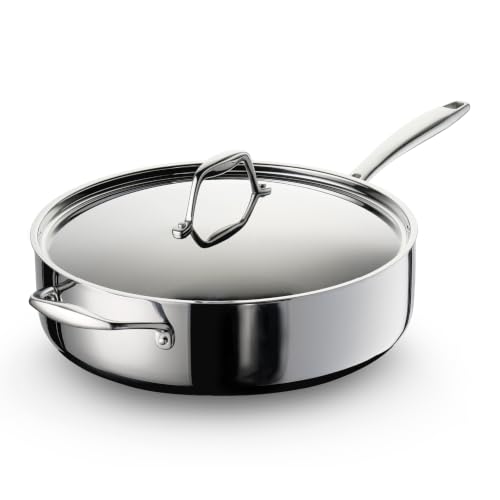


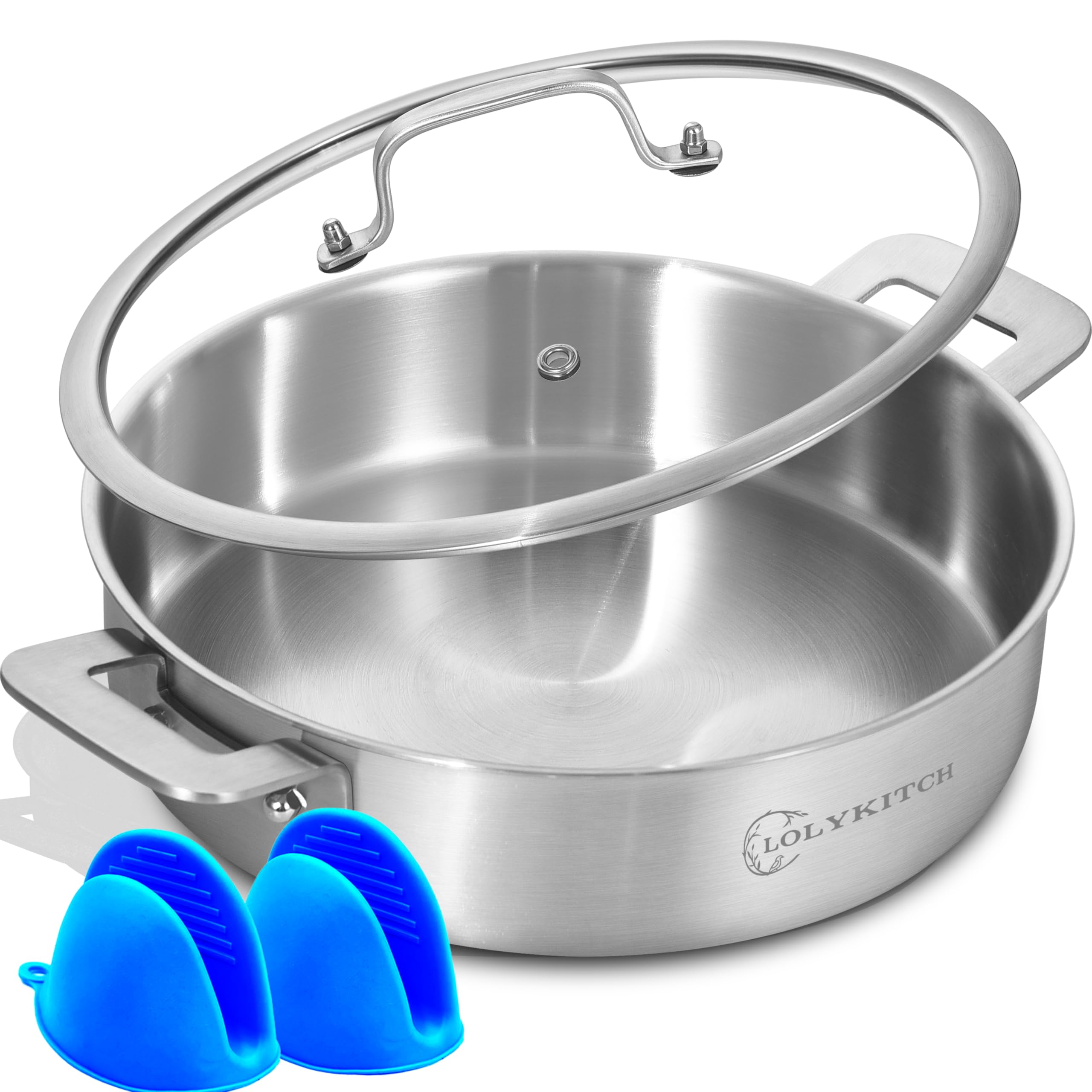
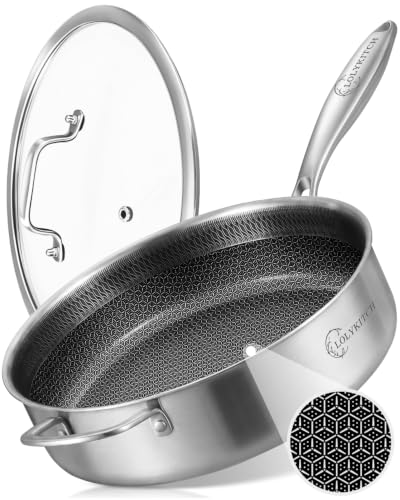
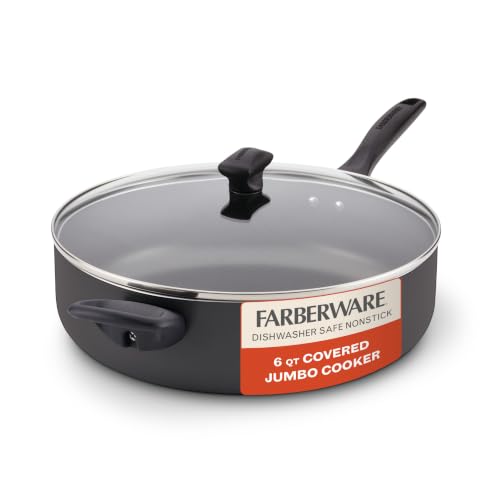
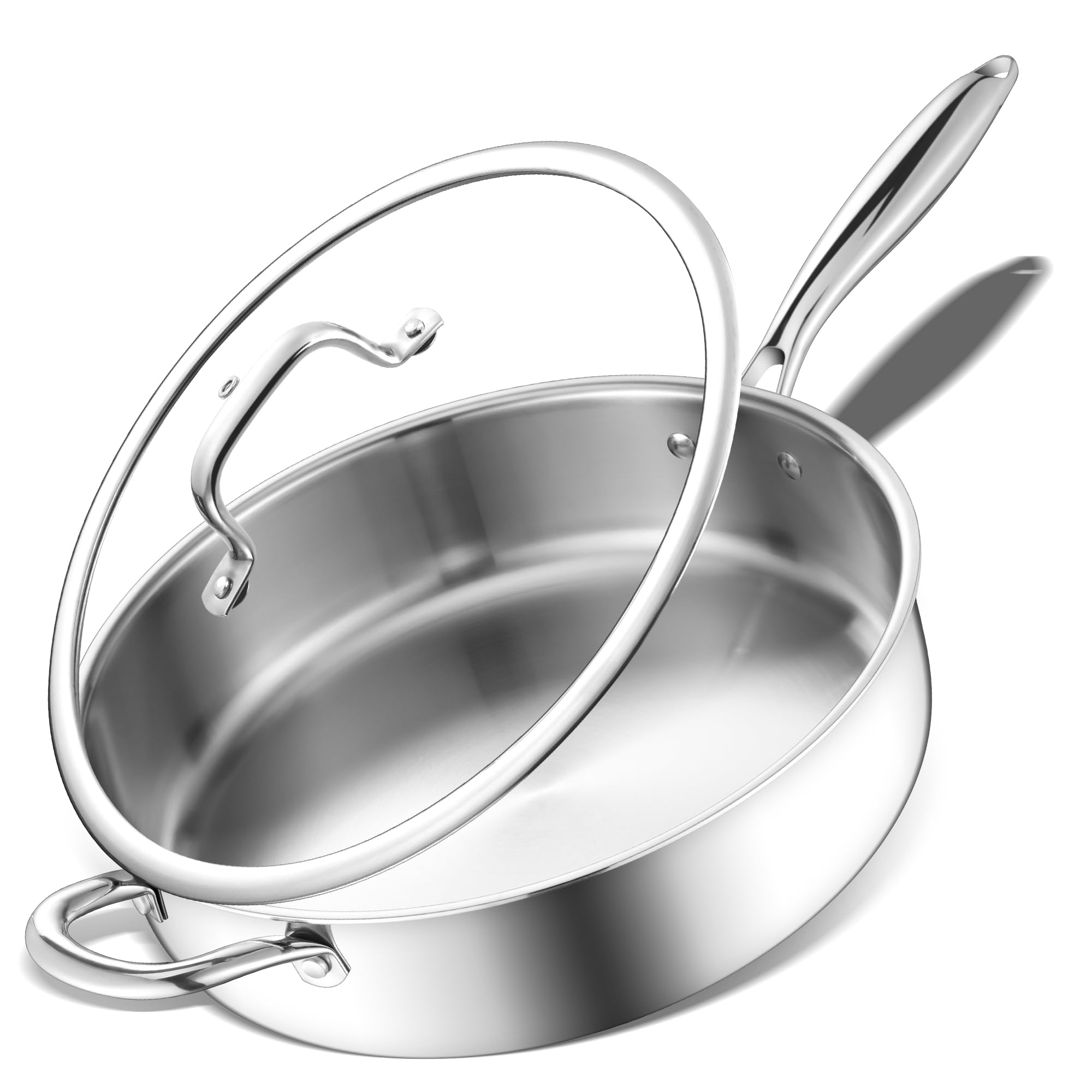
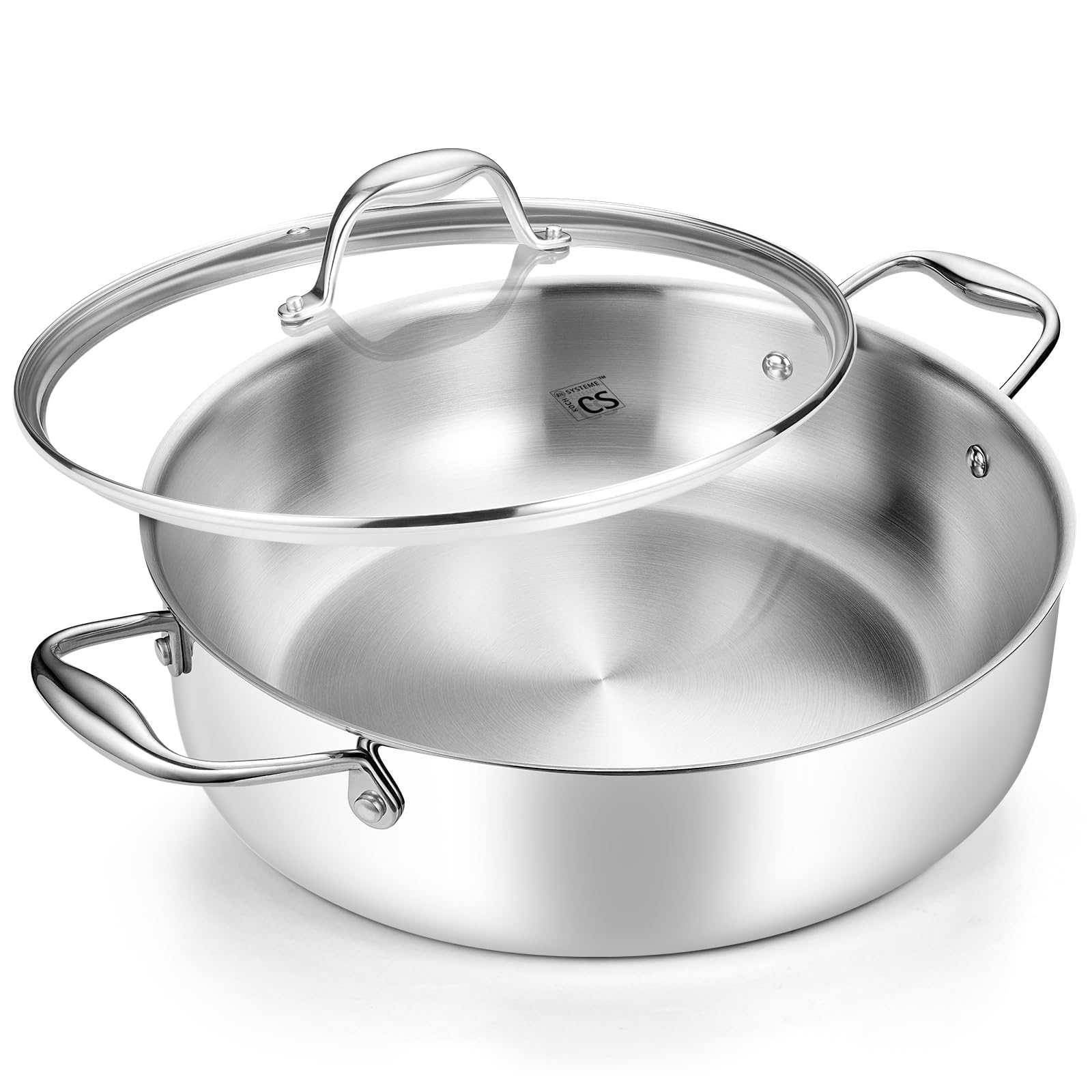
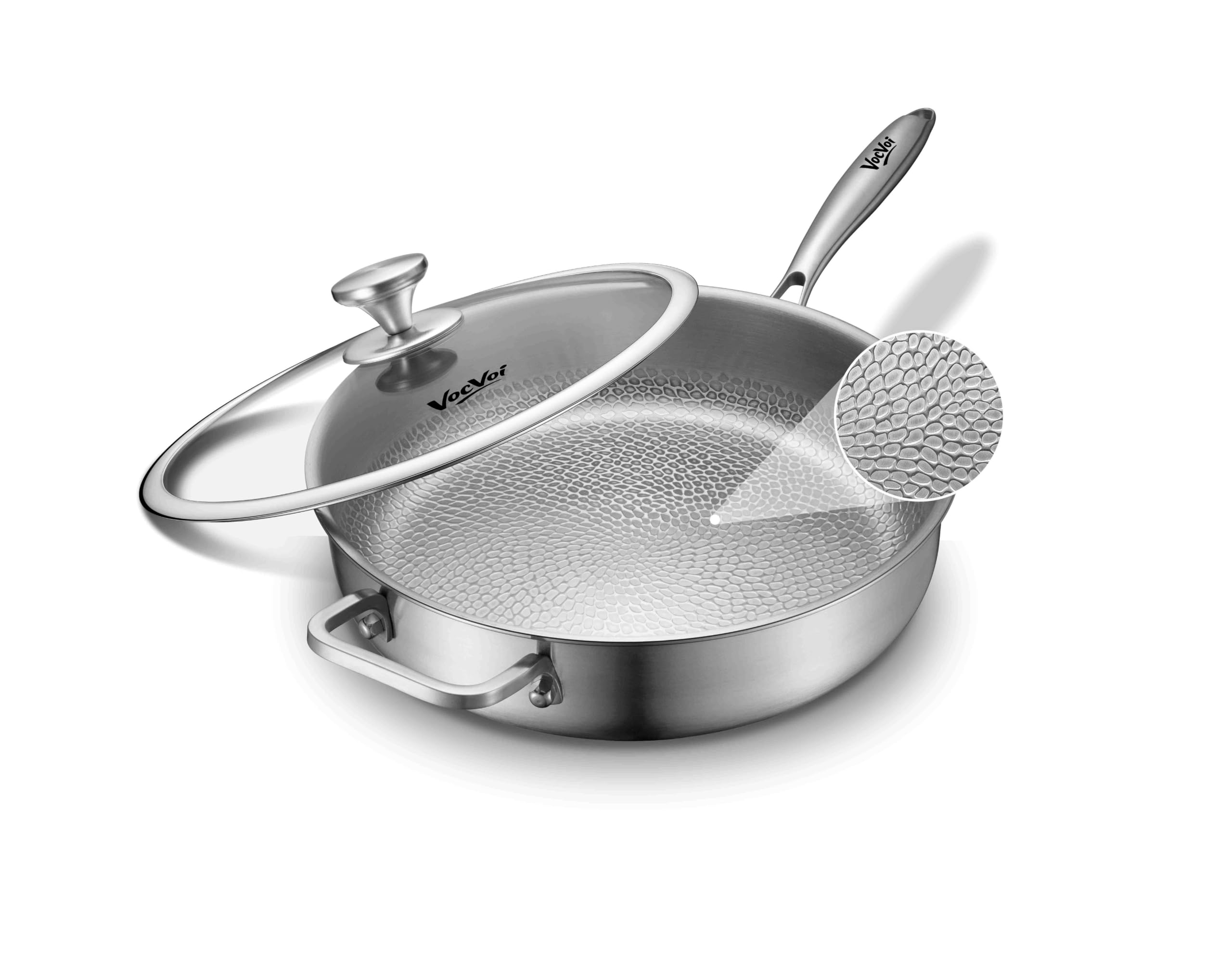
Quick Answer: What a Good 6 Quart Saute Pan Looks Like
A good 6 quart saute pan has a wide flat base for browning, straight sides tall enough to hold sauce without spilling, a fitted lid, and a helper handle opposite the main handle, since a full pan is heavy. Stainless steel tri ply suits cooks who sear often, coated pans suit gentle everyday cooking, and cast iron suits cooks who value steady heat.
Before You Buy: A Quick Checklist for Choosing a Saute Pan
Size: Match It to Your Space
Most 6 quart saute pans measure about 12 to 13 inches across with sides roughly 3 inches deep, so measure your largest burner, your sink, and the cabinet where the pan will live before you order. Smaller sizes such as 3 quart, 4 quart, and 5 quart pans suit one or two people and take less room, while the 6 quart size gives a family room to brown in a single layer. If width matters more than depth, compare shapes in our guide to the best 12 inch saute pan before you decide.
Which Type Fits Your Routine
Stainless steel browns meat well and tolerates metal utensils and high heat. Nonstick releases eggs and fish with little effort but asks for gentle tools and moderate heat. Ceramic coated pans offer slick cooking without a traditional nonstick coating, though the surface usually wears sooner. Tri ply construction bonds layers of metal for even heating, hybrid pans mix a steel body with a coated interior, and copper responds to heat changes fastest but needs polishing and costs the most.
Features Worth It, and Ones to Skip
A lid is worth it, since it lets you braise, steam vegetables, and finish sauces in the same pan. A helper handle is also worth it, because six quarts of food and liquid can weigh well over ten pounds. You can usually skip bundled utensil sets and decorative finishes, since neither changes how the pan cooks and both add cost and clutter.
Is It Non Toxic?
If avoiding coatings matters to you, plain stainless steel and cast iron have no applied coating at all, so there is nothing to wear off into food. Traditional nonstick uses PTFE, a material in the PFAS family of chemicals, and some shoppers prefer to avoid it for that reason. Ceramic coatings are made without PTFE, though they lose slickness over time. Our guide to the best ceramic saute pan explains how those coatings age.
Induction, Gas, and Glass Top Compatibility
For induction, the base must be magnetic, so check the listing for an induction ready note or test a magnet against the pan bottom. Gas burners suit almost any pan, though a very wide base on a small burner heats unevenly at the edges. On glass top stoves, choose a flat, smooth bottom and lift the pan instead of sliding it, since rough cast iron bases can scratch the surface.
Oven Safe Temperature and Handles
Many stainless and cast iron pans can move from burner to oven for braises and gratins, but the lid often carries a lower temperature limit than the pan itself, and glass lids are usually rated lower than metal ones. Handles matter too: bare metal handles tolerate high oven heat, while handles with silicone or plastic grips often cap out much lower. Compare the stated limit for both pan and lid, and use the lower number as your ceiling.
Realistic Budget Ranges
For under $50, expect a single material pan, often aluminum with a coating or basic stainless, with a thinner base and a shorter warranty. Around $100, you step up to thicker tri ply bodies, better fitting lids, and sturdier handles. At about $200, you are paying for premium construction and longer warranty coverage rather than dramatically different cooking. For most homes, the middle range offers the strongest balance of performance and cost.
Three Types Compared: Which 6 Quart Saute Pan Style Suits You?
Instead of chasing individual models, start with the three construction styles below. Each cooks the same meals, but they differ in care, weight, and lifespan.
Stainless Steel Tri Ply for Searing and Sauces
A tri ply pan bonds an aluminum core between stainless steel layers, so the base heats evenly and the surface sears meat to a deep brown that becomes the base of a pan sauce. It tolerates metal utensils, high burner heat, and the oven, and it has no coating to replace, so a well made one can serve for decades. The trade offs are weight, a higher price, and food that sticks until you learn to preheat the pan and give proteins time to release. Choose this style if you cook sauces and braises often and want a pan that rarely needs replacing.
Nonstick and Ceramic Coated for Gentle Everyday Cooking
Coated pans shine at the gentle end of cooking: eggs, fish, reheated leftovers, and vegetables in sticky glazes all release with almost no scrubbing afterward. That ease suits busy households and anyone who dislikes soaking pans. The limits are real, though. Coatings dislike high heat and metal tools, and even careful owners should expect the surface to wear within a few years of daily use, which makes the price a recurring cost rather than a one time cost. Choose this style if easy cleanup matters more than searing power or lifespan.
Cast Iron and Enameled Cast Iron for Steady Heat
Cast iron heats slowly but holds its temperature through a full load of chicken thighs, and it moves from stovetop to oven without complaint. Bare cast iron needs seasoning and prompt drying, while enameled versions skip the seasoning and resist acidic sauces such as tomato, at a higher price and with a surface that can chip if knocked hard. Both are the heaviest option here, so the helper handle matters even more. If this style sounds like your kitchen, our guide to the best cast iron saute pan goes deeper.
How to Judge a 6 Quart Saute Pan Before You Buy
Judge any listing against five factors: heat distribution, durability, material safety, stovetop and oven compatibility, and cleaning effort. Pull the specs from the manufacturer page, since base thickness, oven limits, and coating details are stated there in plain terms. Then read verified buyer reviews for patterns rather than single opinions, watching for repeated notes about warping, loose handles, or rattling lids. A pan that scores steadily across all five factors beats one that excels at a single feature.
Is a 6 Quart Saute Pan the Right Size for You?
The best 6 quart saute pan fits households of about four to six people, batch cooking for the freezer, and one pot meals where protein, vegetables, and sauce finish together. It handles a whole cut up chicken, a large batch of braised short ribs, or shallow frying with room for pieces to sit in a single layer. Couples who cook small amounts will likely find a 4 quart pan easier to lift, wash, and store. If you are torn between sizes, the sizing guide at what size saute pan do i need walks through capacity by meal type. The honest test is your biggest regular meal: if your current skillet forces two batches, 6 quarts will feel like a relief.
Common Buying Mistakes to Avoid
- Buying for capacity alone and skipping the burner check, so the wide base overhangs a small burner and heats unevenly at the edges.
- Ignoring the weight of a full pan, then struggling to drain pasta water or move a finished braise to the table.
- Choosing a coated pan for high heat searing, which shortens the life of the coating and weakens browning at the same time.
- Forgetting replacement cost, because a cheap coated pan bought every few years can cost more over a decade than one durable steel pan.
- Skipping the lid to save money, then losing the braising and steaming jobs that make this pan shape so useful.
Cost of Ownership and Care
The purchase price is only part of what a pan costs you. Coated pans carry a built in replacement cycle, while steel and cast iron mostly ask for time instead of money: occasional polishing for steel, light seasoning upkeep for bare cast iron. Store the pan with a cloth or paper layer between it and anything stacked on top, and hang it if your cabinets are tight, since a 12 inch pan eats shelf space quickly.
Your Questions, Answered
What is the most reliable 6 quart saute pan brand?
Reliability shows up less in a name than in the support behind the pan. Look for a clear written warranty of at least several years, replacement lids and parts that are easy to order, and consistent specifications across the product line. Brands that publish base thickness and oven limits openly tend to stand behind their cookware. A long record of honored warranty claims, mentioned repeatedly in buyer reviews, is a stronger signal than any single award.
How do you clean a 6 quart saute pan?
Let the pan cool slightly, then wash it in warm soapy water with a soft sponge. For browned bits stuck after searing, add a cup of water to the warm pan and simmer for a minute or two, which loosens the residue so it lifts away with a wooden spoon. Dry cast iron on a warm burner so no moisture sits on the surface. Avoid cold water in a ripping hot pan, since the sudden change can warp a base.
Is a 6 quart saute pan worth it?
It is worth it if you regularly cook for four or more people or make one pot meals that finish in sauce, because the depth and lid do jobs a skillet cannot. It is harder to justify if you mostly cook single servings, own a large Dutch oven you already love, or have limited storage, since the wide footprint is awkward in small kitchens.
How long does a 6 quart saute pan last?
Stainless steel and cast iron pans commonly serve for decades, often outlasting the stove they sit on. Enameled cast iron also lasts for many years, though chips can appear if it is dropped or knocked. Coated pans are the short lived option: expect roughly three to five years of regular use before the surface loses its release, sooner if you cook over high heat often. Retire a coated pan once food starts sticking in patches.
What size saute pan do I need for my household?
A useful test is to fill the pot you cook your biggest weekly meal in with measured water up to the level the food usually reaches. That volume is your true working size, and your pan should hold it while staying about two thirds full at most, since bubbling sauces need headroom. One or two people usually land near 3 quarts, families near 5 to 6 quarts. Measuring once beats guessing from box labels, which count capacity to the rim.
Final Thoughts
The right choice comes down to fit: a pan that matches your burner, your storage, your household size, and the way you cook on a Tuesday night. Compare the types in the product table above, weigh coating life against durability, and the best 6 quart saute pan for your home will be the one that removes friction from meals you already make. Prices and availability can change, so check the product page before ordering.


