Best 30 Inch Monitors: Every Type Explained Side by Side 2026
Disclosure: We may earn a commission when you buy through links on this page, at no extra cost to you. As an Amazon Associate I earn from qualifying purchases. Learn more

Compare the best 30 inch monitors by panel, resolution, refresh rate, and price, with the pros and cons of each type for desk work, films, and console play.
Thirty inches is where a monitor stops feeling like a basic desk accessory and starts shaping the whole setup. At this size the panel technology matters as much as the resolution, and the wrong type can leave you with washed out colour, a cramped desk, or a screen your console cannot use properly. This guide walks through the best 30 inch monitors by type, and the comparison table below lays out the field before the detail starts.
Think about the room as well as the desk. A glossy panel in a bright room reflects lamps and windows, while a matte panel in a dark room can look flat for films. Your main use, light, and viewing distance narrow the field fast.
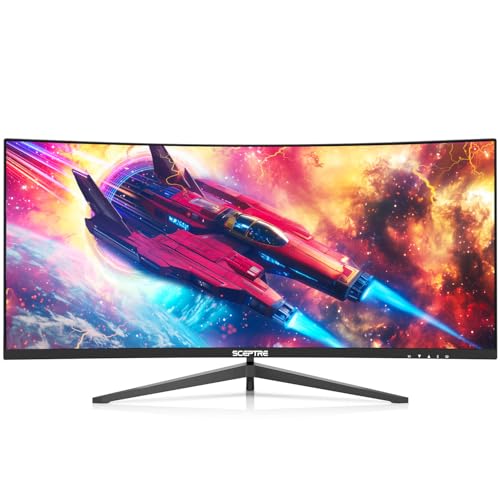


Types of 30 Inch Monitors Compared
The panel is the right place to begin, because a panel class governs a viewing angle class and a colour class across the whole life of the screen. IPS keeps colour steady when you lean or share the screen, VA trades some of that steadiness for much deeper blacks, and OLED removes the backlight so each pixel makes its own light. Every type below is built on one of those panels, and our guide to the best 30 inch computer monitors covers the desk focused side of this market.
| Type | Best For | Pros | Cons | Typical Price |
|---|---|---|---|---|
| Gaming Monitors | Console and PC play | Fast refresh, low input lag | Colour tuned for speed | About $260 to $500 |
| OLED Monitors | Films and dark room use | Perfect blacks, instant response | High price, care needed | About $600 to $900 |
| Large Format Monitors | Shared viewing and media | Big shared picture | Takes real desk space | About $240 to $420 |
| Budget Monitors | Spare rooms, second desks | Very low cost, light | Dimmer panels, few ports | About $140 to $230 |
Gaming Monitors
Gaming monitors at 30 inches favour speed: refresh rates of 144 Hz or higher, response times near one millisecond under maker test settings, and adaptive sync to keep motion clean. Many are gently curved VA panels, which wrap the wide picture a little and add contrast for dark scenes. Input lag is low, and most accept a 120 Hz signal from current consoles over HDMI. Our roundup of the best gaming monitors covers the sizes around this class.
OLED Monitors
OLED monitors light every pixel individually, so black areas of the picture are truly dark and contrast looks endless. Pixel response is effectively instant, which makes fast motion unusually clean even at modest refresh rates. The costs are real: prices start around $600 in this size, peak brightness is lower than good LCD models, and a static desktop left on all day can leave a faint retained image over time. Choose OLED when films and games in a dim room are the main event.
Large Format Monitors
Large format monitors push the 30 inch class toward shared viewing, with brighter panels, wide stands or wall mounting, and sometimes better built in speakers. They suit a bedroom desk that doubles as a TV corner, or a small meeting space. The trade is footprint, since these are the heaviest screens in the class and the least happy on a shallow desk. If the screen will mostly serve one person at a desk, the standard types are easier to live with.
Budget Monitors
Budget monitors keep the size and cut almost everything else: 1080p resolution, brightness near 250 nits, a tilt only stand, and two ports if you are lucky. Many use LCD panels of the older TN kind or entry level VA. Readers researching that panel family can start with the best 30 inch lcd monitors for the full LCD picture. As a second screen for documents or a spare room setup the value is hard to argue with, but as your only screen the limits show quickly.
Gaming Monitors vs OLED Monitors: Which Should You Choose?
These two types overlap in audience but split on price and picture first. Gaming models run about $260 to $500 while OLED runs about $600 to $900, and gaming LCD panels are brighter and better in lit rooms. OLED wins every dark scene with true blacks, and its pixels respond faster, though gaming models offer higher refresh rates for the money.
Care splits them further, since a gaming panel can show the same spreadsheet all day without worry while OLED asks for varied content and pixel refresh cycles. Pick the gaming type if you play competitively, work on the screen all day, or want to stay under $500. Pick OLED if the screen is mainly for films and story driven games in a controlled light room and the budget stretches.
How to Choose the Right 30 Inch Monitor
Your main use class governs a resolution class more than any other choice: text work rewards pixels, films reward contrast, and games reward refresh rate. Decide which of those three you do most, then use the factors below to pick inside the type. One comfort note applies to every type: no monitor class treats an eye strain class, so regular breaks and a screen top near eye level still matter more than any comfort badge. Shoppers who find 30 inches too wide can step down to the best 27 inch monitors, while those wanting more canvas can step up to the best 32 inch monitors.
Refresh Rate and Response Time
A 60 Hz screen redraws sixty times a second, which is fine for documents and video because films are shot at far lower rates. Games benefit from 120 Hz and above, where motion looks steadier and aiming feels more direct. Response time figures come from maker tests with overdrive pushed hard, so compare them loosely and value adaptive sync more. If you split time between work and play, 144 Hz with sync is the balanced point in this size class.
Connectivity and Ports
Look for at least two HDMI ports and one DisplayPort, so a computer and a console can stay plugged in together. The newest HDMI standard matters if your console should run at 120 Hz in full resolution, while older HDMI versions cap that mode. USB C with video and charging suits laptop users who dock at the desk. A headphone socket and built in speakers save desk clutter, though serious listeners will still add separate speakers or headphones.
Panel Technology
Beyond the three main panels in the types section, Mini LED backlights deserve a mention, since hundreds of small dimming zones behind an IPS or VA panel lift HDR contrast close to OLED levels without the retention worry. Check the stated colour coverage if you edit photos. Look for a matte finish in bright rooms. Viewing angles matter at 30 inches because the edges of the screen already sit at an angle to your eyes.
Stand Adjustment and VESA Mounting
A stand with height and tilt adjustment keeps the top of the screen near eye level, which your neck will thank you for. Many budget models skip height adjustment entirely, so read the stand spec as carefully as the panel spec. Nearly all screens in this class carry a 100 by 100 VESA pattern on the back, letting you fit an arm or a wall bracket later. Weigh the screen before choosing an arm, since large format models can pass twenty pounds without the stand.
Care and Maintenance Tips
Wipe the panel with a dry microfiber cloth and light pressure, because paper towels and household sprays can strip the surface coating. Set brightness for the room rather than leaving the vivid mode on. On OLED models, run the pixel refresh the screen offers and vary what you display during long work days. Once a season, clear dust from the rear vents and reseat the cables.
Questions Answered
What resolution should a 30 inch monitor have?
For a desk monitor, 2560 by 1440 or 2560 by 1600 is the practical floor, giving text enough pixels to stay smooth at arm length. A 4K model is sharper and suits photo work, but at 30 inches you will likely scale the interface up, which spends the extra space. Plain 1080p belongs on budget and media screens viewed from farther away, where the softness stops being obvious.
Can a 30 inch monitor replace a small TV?
For one or two viewers at close range, yes, especially a large format or OLED model with decent speakers. You give up a built in tuner and the streaming apps a TV carries, so most people pair the monitor with a small streaming stick or a console. Viewing distance is the real limit, since past about six feet a 30 inch picture feels small for films. A proper TV serves better at that range.
How far should you sit from a 30 inch monitor?
About 28 to 40 inches works for most people, with the closer end suiting work and the farther end suiting films. A quick test is to sit normally and check that you can read the corners without leaning or turning your head much. If you keep scooting back, the desk is too shallow or the screen sits too high. Monitor arms help here because they let you fine tune the distance after the desk is set.
Do 30 inch monitors work well with games consoles?
Yes, provided the HDMI ports are recent enough for a 120 Hz signal and the panel supports adaptive sync in the form your console uses. VA and OLED models in this size are popular console picks because their contrast flatters game worlds. Watch one detail: some ultrawide models letterbox a console picture, since consoles output a 16 by 9 image. A standard wide shape avoids that problem entirely.
What does a good 30 inch monitor cost?
Expect about $140 to $230 for a serviceable budget screen, about $260 to $500 for a gaming model with high refresh, and about $600 to $900 for OLED in this size. Sales move these bands a lot, so a model one tier up often lands in the tier below. Spend first on the panel and resolution you will stare at daily. Spend last on extras like decorative lighting.
Final Thoughts
Choose the panel first, because it fixes your contrast, colour behaviour, and price band in one decision. Then confirm the resolution suits your main use and the ports match your machines. With those three checks done, the best 30 inch monitors narrow to a short list quickly, and the product table above lets you compare the current candidates side by side. If two models tie, take the one with the better stand, because you will notice it every single day.