
Best 10x Binoculars of 2026: Complete Buying Guide
Disclosure: We may earn a commission when you buy through links on this page, at no extra cost to you. As an Amazon Associate I earn from qualifying purchases. Learn more

The best 10x binoculars explained: exit pupil, field of view, coatings, weight, and price bands to help you choose with confidence.
Ten power is where most buyers land after comparing options, because it pulls distant detail close while staying manageable to hold. The catch is that dozens of pairs share the same 10x label while differing in glass, coatings, and build. This guide explains how to choose the best 10x binoculars for your eyes, your hands, and your budget, and the product table lines up shortlisted pairs for comparison.
You will learn what the exit pupil does to brightness, why a 10x image shakes more than an 8x image, and which features deserve your money. By the end, you can read a spec sheet and know what matters.







Who Should Buy Which 10x Binoculars
Birders and Wildlife Watchers
Birders ask the most from a 10x pair: fast focus for birds that move, a wide field for tracking flight, and close focus for warblers in nearby brush. If that sounds like your weekends, our guide to the best binoculars for birdwatching goes deeper on birding features. Look for a focus wheel that turns smoothly with one finger. Faithful color matters too, since similar species often differ only in subtle tones.
Hunters and Open Country Glassers
Hunters glass for long stretches at dawn and dusk, so brightness and a steady hold matter more than power. Hunting camps trade favorites by word of mouth, and lists of best rated binoculars for hunting simply collect those opinions rather than measured light transmission. A rubber armored body, a quiet focus wheel, and a chest harness suit this group best.
Travelers and Event Goers
Travelers and sports fans trade a little brightness for size. A 10x32 or 10x25 pair slips into a jacket pocket or daypack and still shows facial expressions across a stadium or detail on a distant landmark. The smaller objectives collect less light, so expect a dimmer image at dusk than a full size pair gives. For trips mixing sightseeing with wildlife stops, a midsize 10x32 often hits the sweet spot.
How to Choose the Best 10x Binoculars
Spec sheets tell you more than scores do. Ratings and ranked lists gather owner opinions, not optical measurements, so treat any list of best rated binoculars as a popularity signal and verify the numbers below instead. Five factors decide whether the best 10x binoculars for you feel bright, steady, and sharp.
Exit Pupil and Brightness
The exit pupil is the beam of light that reaches your eye, and it governs how bright the image looks, especially at dawn and dusk. Divide the objective size by the magnification to find it: a 10x42 pair gives about 4.2 millimeters, a 10x50 gives about 5 millimeters, and a 10x32 gives about 3.2 millimeters. In daylight your pupil is smaller than all of these, so every size looks bright. In low light your pupil opens wider, and the 10x50 pulls ahead.
Hand Shake and Steady Viewing
At 10x, every small movement of your hands is magnified ten times, which puts this class near the limit most people can hold steady. Bracing your elbows on your knees, a fence rail, or a car roof calms the image more than any feature on the spec sheet. For long sessions from one spot, a tripod adapter also helps. If your hands are naturally unsteady, an 8x pair may serve you better than any 10x.
Field of View and Scanning
Field of view describes how wide a scene you see at once, and it governs how easily you can scan a hillside or follow a moving bird. Most 10x42 pairs show about 300 to 340 feet at 1,000 yards. A wider field makes finding subjects faster and keeps fast movers in frame longer, and readers who follow flocks in flight often pair this section with our guide to the best binoculars birding for species specific tips. Treat anything under about 280 feet as a compromise, because narrow fields feel tunnel like.
Prism Design and Lens Coatings
Most 10x pairs use roof prisms for a slim, straight body, while Porro prism designs use an offset shape that gives a strong sense of depth at the cost of bulk. Coatings decide how much light survives the trip through the glass: fully multicoated means every air to glass surface carries multiple layers, and phase coatings on roof prisms keep contrast and colors true. ED glass, short for extra low dispersion, reduces colored fringes around high contrast edges such as branches against a bright sky.
Focus Wheel, Eye Relief, and Fit
A good center focus wheel moves smoothly through its full range in about one to one and a half turns, so you can follow subjects from a nearby branch to a distant ridge. Eye relief of about 15 to 18 millimeters lets glasses wearers see the whole field with the eyecups twisted down. Check the interpupillary distance range too, usually about 56 to 74 millimeters, so the barrels match your eye spacing. Twist up eyecups with firm stops hold settings better than fold down cups.
Weight and Weather Sealing
A typical 10x42 weighs about 1.3 to 1.8 pounds, light enough for a neck strap on short walks, better on a chest harness for long days. Sealed bodies purged with nitrogen resist internal fogging when you step from a warm car into cold air, and rubber armor shrugs off knocks. Waterproof ratings in this class generally mean a pair survives rain and brief splashes, not long submersion.
Types of 10x Binoculars
Full Size 10x42 and 10x50 Pairs
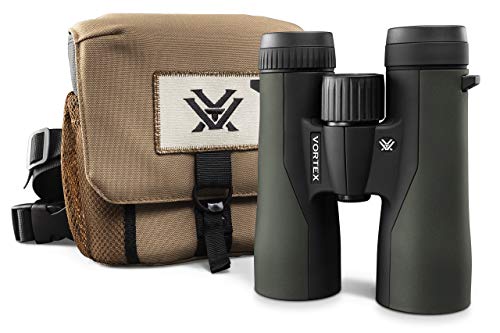
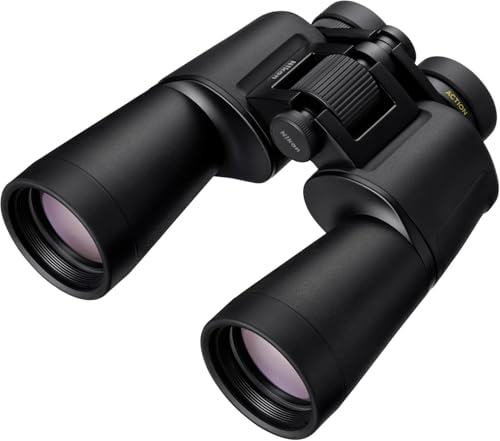
Full size pairs match 10x magnification with 42 or 50 millimeter objectives, giving the brightest images in this guide. They are the default for hunting, birding, and boat use where size is secondary. Expect the most weight of any type listed here.
Midsize 10x32 Pairs
Midsize pairs shrink the objectives to 32 millimeters, cutting weight and bulk while keeping a usable 3.2 millimeter exit pupil. They suit hikers and travelers who still want real low light ability. Many walkers find this the easiest size to carry all day.
Compact 10x25 Pairs
Compacts fold down to pocket size and weigh under a pound, which makes them the pair you actually bring along. Owner scores for small pairs reflect taste more than measurement, so rankings of best rated compact binoculars are opinion roundups. Judge a compact by its 2.5 millimeter exit pupil and narrower field, and expect it to struggle at dusk.
Stabilized 10x Pairs
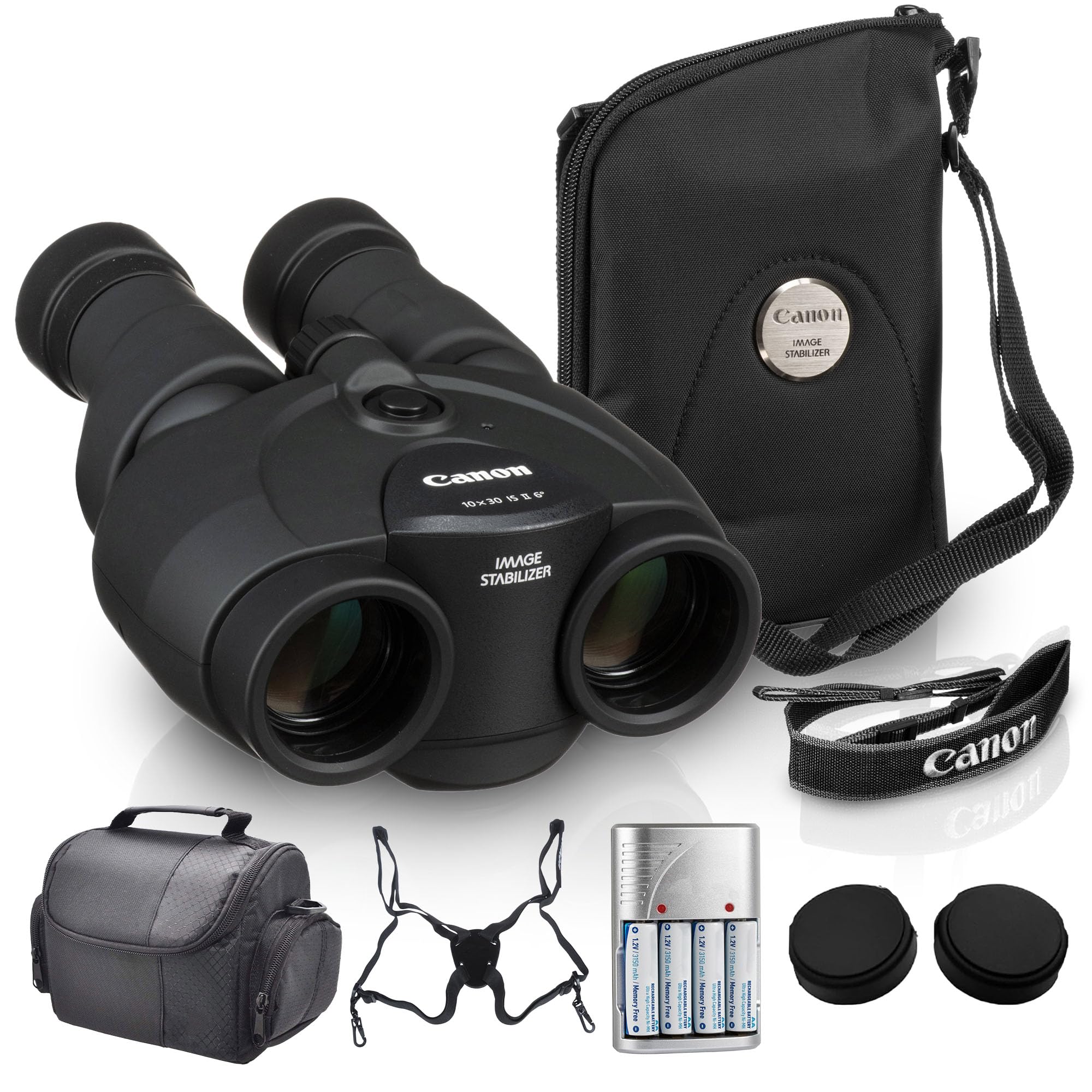
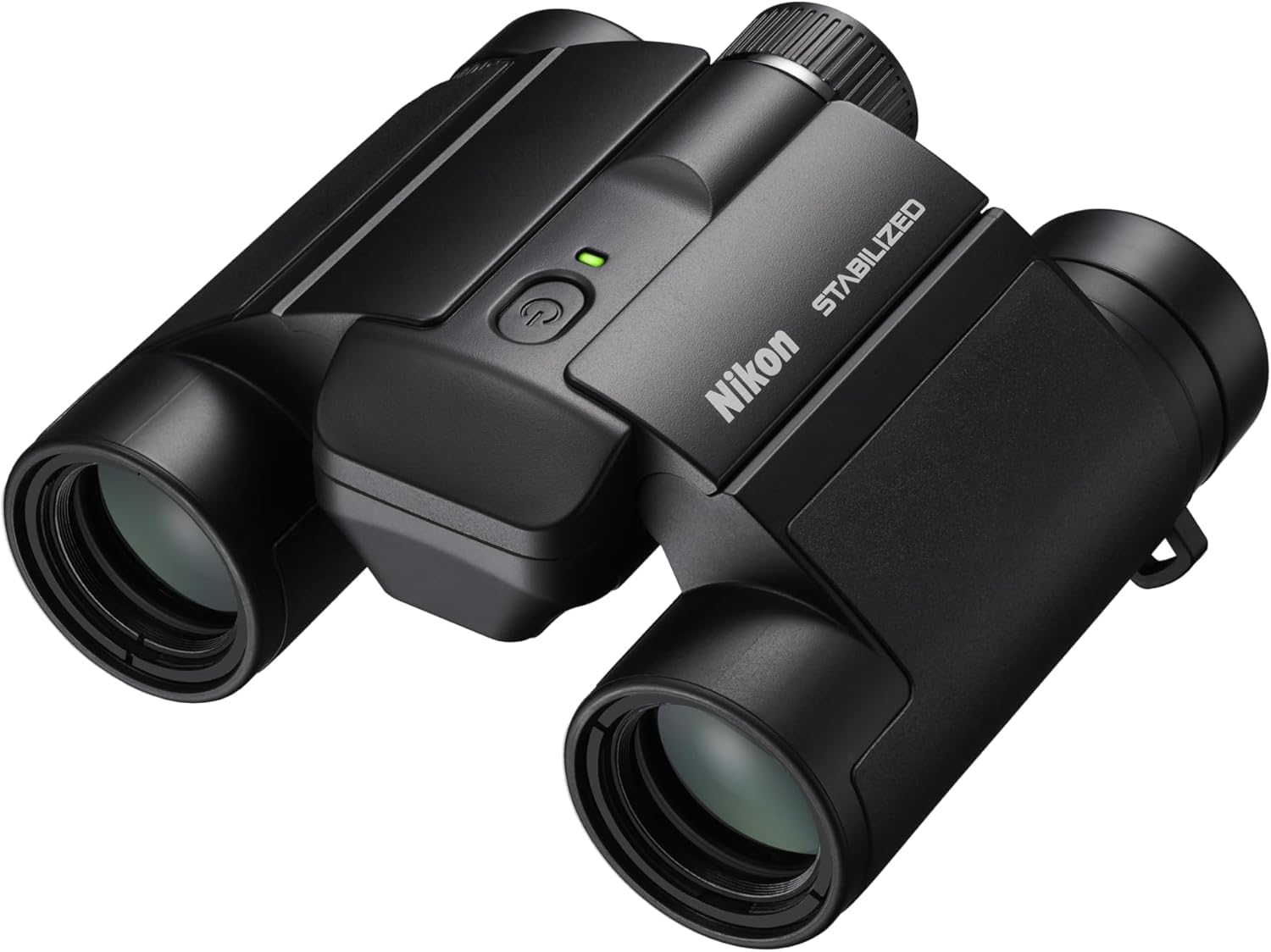
Image stabilized pairs use powered electronics to cancel hand shake, producing an unusually calm view from boats, stands, and windy ridges. They cost more than conventional pairs, need batteries, and weigh more. For viewers whose hands shake, they can be the difference between usable and frustrating.
Common Mistakes to Avoid
- Buying 10x for a young child or unsteady hands, because the magnified shake makes the image swim.
- Ignoring eye relief when you wear glasses, because a short relief pair cuts off the edges of the field.
- Choosing by magnification alone, because coatings and glass quality decide sharpness far more than the 10x number.
- Skipping the focus wheel check, because a gritty wheel makes tracking moving subjects tiring within minutes.
- Forgetting that bigger objectives add weight, because a heavy pair left at home has the worst optics of all.
How to Make Your 10x Binoculars Last Longer
- Clean lenses with a blower and a microfiber cloth, never a shirt tail, because grit on fabric scratches coatings.
- Store the pair in a dry, padded case with the lens caps on, away from damp basements.
- Keep the strap or harness attached at all times, because most binocular damage comes from drops.
- Avoid leaving the pair in a hot car, because heat stresses seals, lubricants, and coatings.
- Rinse salt spray off a sealed pair with fresh water and let it dry before casing it.
10x Binoculars Questions Answered (FAQ)
What do the numbers in 10x42 mean on a pair of binoculars?
The first number is the magnification and the second is the objective lens diameter in millimeters, so 10x42 magnifies a scene ten times through 42 millimeter lenses. Another useful figure is the twilight factor, found by multiplying the two numbers and taking the square root, about 20 for a 10x42. A higher value hints at better detail in dim light, although coatings matter as much.
Are 10x binoculars a good choice for low light viewing?
Yes, provided the objectives are large enough, with 10x42 as the practical floor and 10x50 brighter still. One factor rarely printed on the box is your own eyes: pupils open to about 7 millimeters in youth but often only about 5 millimeters after age fifty, so older viewers gain less from large exit pupils. Put money into coatings and a 42 millimeter or larger objective rather than more magnification.
What specs matter most for a first pair of 10x binoculars?
Start with exit pupil, field of view, and eye relief, then check weight and sealing. One control beginners often overlook is the diopter adjustment, a small ring on one eyepiece that compensates for strength differences between your eyes. Set it once by focusing on a distant sign with the main wheel for one eye, then fine tuning the ring for the other. Without it, the image never looks sharp to both eyes.
How much should a beginner spend on 10x binoculars?
About $80 to $150 buys a serviceable first pair with real multicoating and a sealed body, while about $150 to $300 brings better glass and focus wheels. Reserve around $30 to $50 for a chest harness, because carrying comfort decides how often the pair leaves the house. Pairs under about $50 usually skimp on coatings and alignment, and a misaligned pair causes eyestrain.
Can a smartphone camera replace 10x binoculars?
No, not for sustained viewing, because phone zoom is mostly digital cropping and the screen washes out in bright sun. Binoculars show both eyes a live, detailed view with real depth, which matters when tracking movement. A phone still earns its place after spotting: adapters can hold it against an eyepiece to record what you found, a trick called digiscoping. Treat the phone as an accessory, not the optic itself.
Final Thoughts
Choosing well in this class comes down to three checks: an exit pupil that suits your light, a field wide enough for scanning, and a focus wheel you enjoy turning. Match those to your main use and use the product table above to compare shortlisted pairs. Pick the best 10x binoculars for your hands and habits, and they will earn their place in your pack for years.

