
Aranet4 Review (2026): Is It Worth the Money?
Disclosure: We may earn a commission when you buy through links on this page, at no extra cost to you. As an Amazon Associate I earn from qualifying purchases. Learn more
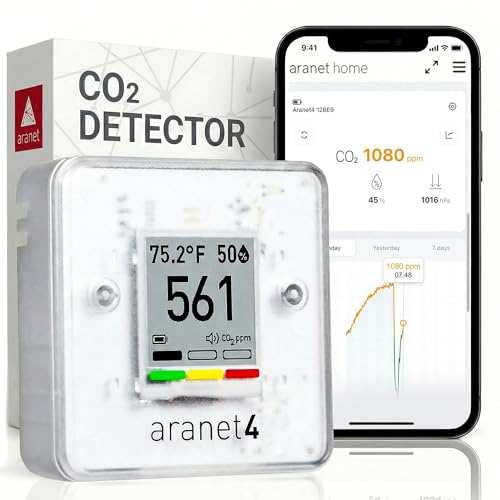
Our Aranet4 review covers performance, design, cleaning, pros and cons, and who should buy it. Plus the best alternatives and where to get the best price.
The Aranet4 is a small portable monitor that tracks carbon dioxide, temperature, relative humidity, and atmospheric pressure, built for people who want to judge ventilation at a glance. This aranet4 review walks through the specs, design, accuracy factors, app, and running costs so you can decide whether it fits your home, office, or classroom.
Use the comparison table below to see how the Aranet4 stacks up, then read on for the details. If you are still weighing the wider category, our guide to the best air quality monitor options explains how CO2 only devices compare with broader monitors that track particles and gases too.

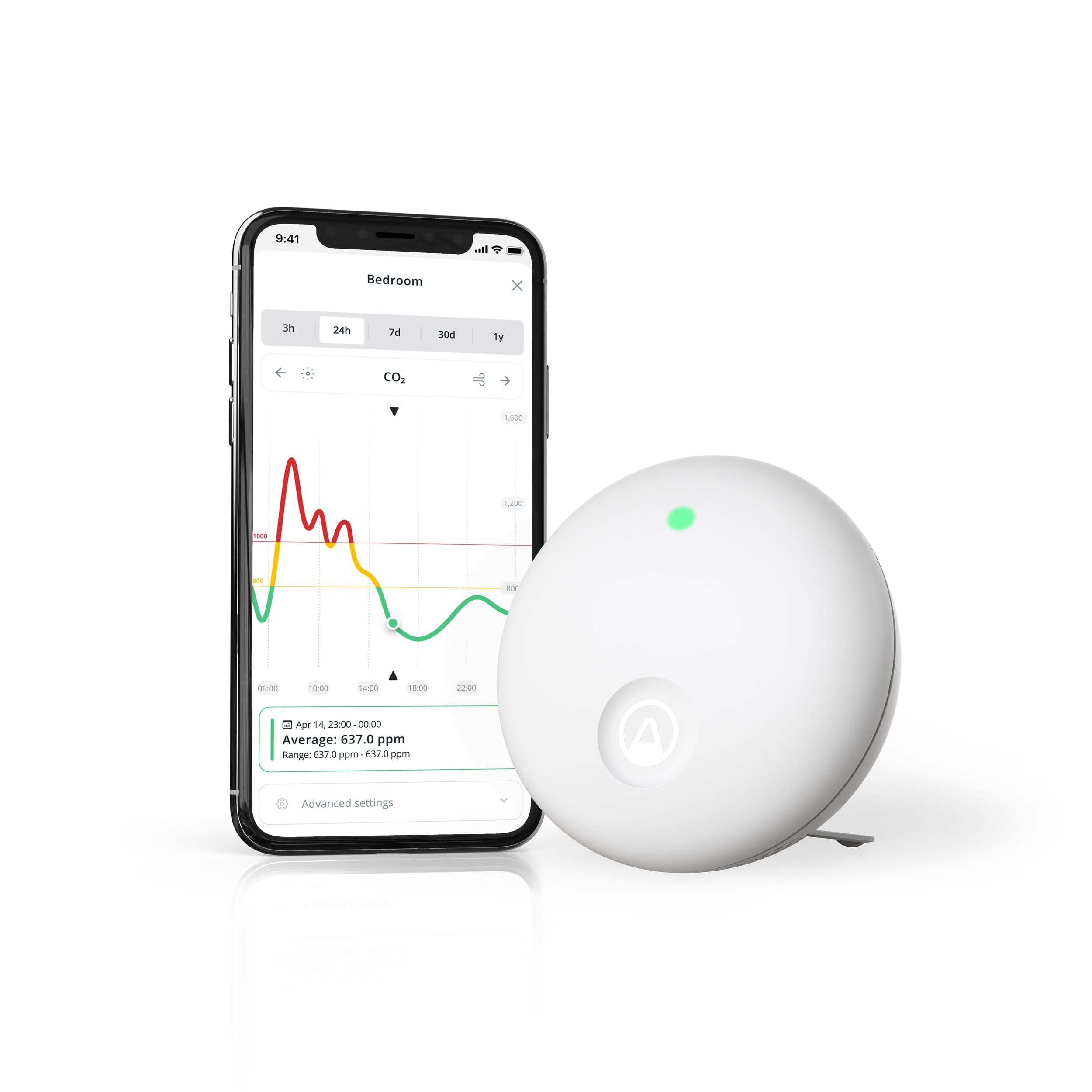
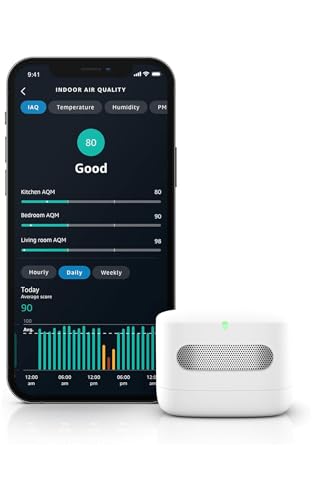


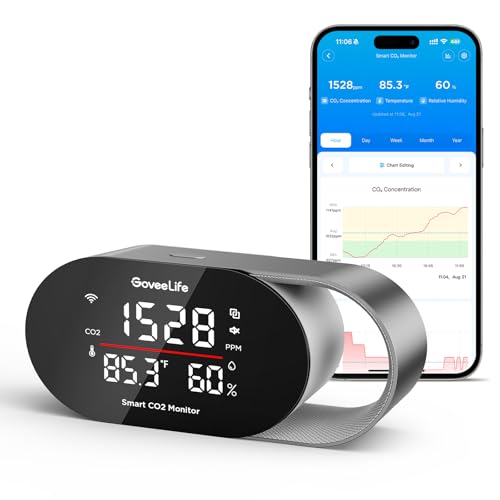
Aranet4 Specs at a Glance
The Aranet4 centers on one job, and the spec sheet reflects that focus:
- Measurements: carbon dioxide, temperature, relative humidity, and atmospheric pressure
- CO2 sensor: NDIR sensor, the type known for stable readings over time
- Display: e ink screen showing current readings
- Connection: Bluetooth to a phone app, with no WiFi radio on board
- Power: two AA batteries, lasting up to about four years at the default measurement interval
- App: free companion app for live values, history graphs, and settings, with no subscription
- Size: pocket sized and light, made to move from room to room
Notice what is missing. There is no particle sensor, no radon sensor, and no WiFi. Those gaps are deliberate choices that trade breadth for battery life and simplicity.
Design and Build Quality
The Aranet4 uses a plain, boxy case with rounded edges and a front face that is almost all screen. There are no buttons or menus on the device itself, since nearly every setting lives in the phone app. That restraint suits a product you glance at rather than operate, and the uncluttered look sits comfortably on a desk, a shelf, or a classroom wall.
The e ink screen is the standout choice. It stays readable in bright light, draws almost no power, and holds the last reading on screen between updates, much like an e reader. The trade off is refresh speed, since values update at the measurement interval you choose rather than every second. Build quality is sensible rather than luxurious, with a plastic case, an easy opening battery cover, and no fragile moving parts.
Performance
Reliability and Accuracy
The Aranet4 uses an NDIR sensor, which measures how much infrared light a CO2 sample absorbs. This is the reference approach for indoor CO2 monitoring because it responds to carbon dioxide specifically and drifts far less than the estimation methods used in some budget monitors. Its accuracy band is tight enough to judge ventilation, which is the real purpose of the device.
For context, outdoor air sits at roughly 420 parts per million. Indoors, readings under about 800 suggest good ventilation, and sustained readings above about 1,400 point to stale air where opening a window helps. The monitor earns its keep by making those shifts visible, since you cannot smell or feel CO2 building up.
One habit protects accuracy more than any spec. Calibration routines assume the sensor sees fresh outdoor level air regularly, so a unit in a sealed, always occupied room can drift over time. Taking it outside now and then, or running a manual calibration in fresh air through the app, keeps readings honest.
Compatibility
Compatibility is the clearest limit of this design. The Aranet4 connects by Bluetooth to its phone app, and that is the whole ecosystem. There is no built in support for Alexa, Google Assistant, HomeKit, or Matter, and no WiFi link for cloud dashboards. You check readings on the screen or in the app within Bluetooth range, and history syncs when you come back into range.
For many buyers that is enough, because the screen is the main interface anyway. But if you want voice queries, phone alerts while you are away, or CO2 data feeding a smart ventilation system, this is the wrong architecture. The airthings wave plus review shows how a WiFi based design with radon sensing handles remote access.
Installation
There is almost nothing to install. You fit the batteries, download the app, pair the monitor, and place it where you spend time. Placement matters, though. Keep the unit at about breathing height, away from direct breath, open windows, and heat sources, since sitting right beside you can spike the reading when you exhale toward it. Give a new unit a day to settle before judging it, since early readings can wander.
Subscription Costs
There are none, and that is a genuine selling point. The app, history graphs, and firmware updates come with the purchase, so the checkout price is the full cost of ownership apart from replacement batteries. Several connected monitors reserve long term history for a paid plan, which quietly raises their real cost over a few years.
Key Features
Adjustable measurement interval. You can set the monitor to measure every 1, 2, 5, or 10 minutes. Shorter intervals track a filling room more closely but use more power, while longer intervals stretch battery life in a stable space. This one setting lets you tune the same hardware for a busy classroom or a quiet spare room.
History and data export in the app. The app stores your readings and draws them as graphs over hours, days, and longer spans, so you can see how a meeting or a night with the bedroom door closed changed the air. You can also export the data for your own records. Patterns teach you more than single readings, because you learn which habits actually move the number.
Threshold alerts and color cues. The app can flag when CO2 crosses a limit you set, and readings carry color cues that shift as levels climb from good to poor. That matters in shared spaces, where a quick color check tells a teacher or office manager to air the room without anyone having to interpret raw numbers.
Portability. Because it runs on batteries and needs no cable or hub, the Aranet4 moves easily between home and office, into meeting rooms, or into a hotel room. A fixed monitor can only judge one room, while a portable one answers how the air behaves wherever you happen to be that day.
Ease of Use, Cleaning and Maintenance
Daily use could hardly be simpler. You read the screen, open the app when you want history, and change the batteries when the low battery indicator appears, which at the default interval can be up to about four years away. There are no filters to wash and no consumables of any kind, so the running effort stays close to zero.
Cleaning means wiping the case with a soft, dry or slightly damp cloth and keeping dust out of the sensor vents. Never spray liquid into the openings, and avoid solvents that could cloud the screen. Keep the unit out of steamy bathrooms and away from cooking grease, since heavy moisture and aerosols are hard on any optical sensor over time.
Aranet4 Pros and Cons
Pros
- Dedicated NDIR CO2 sensing, the method known for stable, trustworthy readings
- Very long battery life with no cables, hub, or subscription fees
- Clear e ink display that is easy to read at a glance in bright rooms
- Small and portable, so one unit can check many rooms
- Useful app history and data export at no extra cost
Cons
- No WiFi, so no remote checks or alerts while you are away from home
- No support for Alexa, Google, HomeKit, or Matter smart home platforms
- Measures CO2 and basic climate only, with no particles, radon, or chemical gases
- Costs more up front than basic indoor monitors with fewer capabilities
- Needs occasional fresh air exposure to keep calibration honest
Who Should Buy the Aranet4 (and Who Should Not)
Buy it if ventilation is your main concern. Home workers, parents checking a nursery or a child bedroom, teachers watching classroom air, and anyone who sleeps with the door closed will all get clear value from seeing CO2 trends on a screen and in the app. It also suits renters, since nothing mounts permanently.
Skip it if you need remote monitoring or a broad air quality picture. Landlords checking a property from afar, smart home fans who want automation, and households worried about smoke particles, radon, or chemical gases need a different category of device. Our aranet4 alternative guide covers those directions.
Aranet4 vs Alternatives
The honest comparison is about design philosophy rather than a single winner. The Aranet4 bets everything on one accurate measurement, a screen you can read across the room, and years of battery life. Broader monitors spread their budget across several sensors and app dashboards, and usually need mains power or far more frequent charging in return.
The head to head breakdown in our aranet4 vs airthings comparison works through that trade in detail. As one example of the connected route, the airthings view plus review looks at a mains powered monitor that adds particles and chemical gases plus remote access. Choose the focused tool if CO2 drives your decision, and the connected hub if you want alerts and automations.
Where to Buy and Best Price
The Aranet4 typically sells for about $150 to $200, and prices move with seasonal sales events, so checking during the big discount periods is worthwhile. Buy from the maker or an authorized retailer so the warranty stays simple, and be wary of listings far below the usual range, since lookalike CO2 gadgets with lesser sensors crowd the budget end of this market.
Factor the full cost into your aranet4 price check. With no subscription and batteries lasting up to about four years, ongoing spend is close to zero. Prices and availability can change, so check the product page before ordering.
FAQs
Is the Aranet4 worth it?
It is worth it if CO2 is the measurement you care about and you value accuracy, battery life, and a clear screen over smart home features. The price buys a proper NDIR sensor and years of running with no fees. It is not worth it if you need remote alerts, voice control, or particle and radon data, because no discount fixes missing hardware.
What are common Aranet4 problems?
Most complaints trace back to expectations rather than faults. Owners are surprised that readings only sync within Bluetooth range, that the screen refreshes at the set interval rather than instantly, and that early readings wander while the sensor settles. Drift in rooms that never see fresh air is another gripe, and the fresh air calibration routine addresses it.
How long does the Aranet4 last?
The batteries last up to about four years at the default interval, and longer if you stretch the interval to 10 minutes in a stable room. The device has no consumable parts, so its working life runs to many years of indoor use, limited mainly by slow sensor ageing. Keep it out of steamy or greasy air and there is little to wear out.
What is a cheaper alternative to the Aranet4?
Cheaper CO2 monitors exist, but most cut cost in the sensor, using estimation methods that infer CO2 from other gases and drift as a room changes. That trade is fine for a rough sense of stuffiness and poor for decisions about ventilation. If budget is tight, a basic monitor with a true NDIR sensor is the safer step down, even if its screen and app are plainer.
How do you clean the Aranet4?
Wipe the case with a soft cloth that is dry or barely damp, and keep the sensor vents free of dust with a gentle brush. Never spray cleaner into the vents or soak the unit, since liquid near the optical sensor can damage it. Clean the screen with a plain microfiber cloth only, and store the monitor in a dry spot away from steam.
Final Verdict
The Aranet4 does one job with unusual focus. It measures CO2 with a proper sensor, shows the result on a screen you can read at a glance, runs for up to about four years on a set of batteries, and charges nothing extra for its app. In exchange you give up WiFi, smart home links, and every measurement beyond CO2 and basic climate.
If that trade matches your needs, this aranet4 review lands on a clear yes, so compare the current listings in the product table above and pick the setup that fits your rooms. If it does not, the alternatives linked in this guide point to connected monitors that cover the gaps.

