
Best Telescopes for Beginners in 2026: Which Type Is Right for You?
Disclosure: We may earn a commission when you buy through links on this page, at no extra cost to you. As an Amazon Associate I earn from qualifying purchases. Learn more

The best telescopes for beginners by type: refractors, reflectors, Dobsonians and smart telescopes compared.
Seeing Saturn's rings or the craters of the Moon with your own eyes for the first time is unforgettable, and a good beginner telescope makes it possible from your backyard. But telescope listings are full of confusing numbers, and many cheap scopes promise huge magnifications they cannot deliver. Beginner telescopes range from $90 portable refractors to $700 smart telescopes that find objects and take photos for you. This guide to the best telescopes for beginners compares the main types side by side, so you can choose a scope that you will actually enjoy using.
You will find a comparison table, a look at refractors, reflectors, Dobsonians and smart telescopes, a direct comparison of two common choices, how to choose and care tips. Every telescope in the table above is sold new on Amazon US. Safety first: never point a telescope at the Sun without a certified solar filter that covers the front of the telescope, since direct sunlight can cause instant, permanent eye damage.






Types of Telescopes Compared
Refractors suit beginners who want simple, low maintenance views of the Moon and planets, reflectors suit those who want more light gathering for the money, tabletop and full size Dobsonians suit easy point and look observing and smart telescopes suit people who want automated finding and astrophotography. Here is how they compare.
| Type | Best For | Pros | Cons | Typical Price |
|---|---|---|---|---|
| Refractors | Moon, planets, travel | Simple, low maintenance, quick setup | Small aperture for the price | around $90 to $240 |
| Reflectors on tripods | Planets and brighter deep sky | More aperture per dollar | Occasional mirror alignment | around $250 to $290 |
| Dobsonians (tabletop and full size) | Easy point and look, deep sky | Large aperture, simple mount | Bulky in larger sizes | around $270 to $630 |
| Smart telescopes | Automated viewing, photos | App controlled, captures images | Higher cost, view on screen | around $420 to $700 |
Your observing location shapes the choice too. In bright cities, the Moon and planets look great in any type, while faint galaxies need dark skies or smart telescopes that stack images.
Refractors
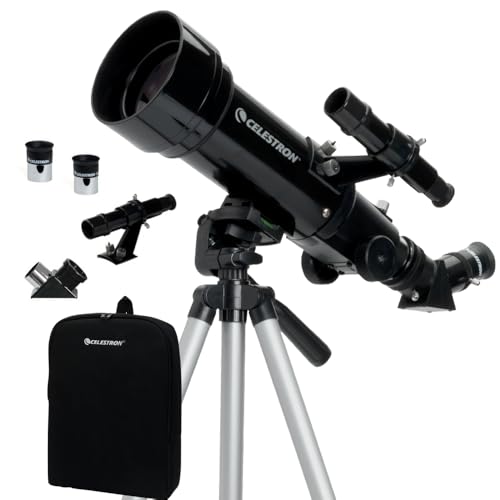
Refractors use lenses to gather light in a sealed tube, so they need little maintenance and are ready to use quickly. Beginner refractors like the Celestron AstroMaster 70AZ, Celestron Travel Scope 70 with a backpack, Gskyer 70mm and 80 to 90mm models from Celticbird, MEEZAA and Hawkko show the Moon and bright planets clearly.
Their strengths are simplicity, portability and sharp views of bright objects. The limitation is aperture; 70 to 90mm lenses gather less light than larger reflectors, so faint galaxies and nebulae look dim. Refractors suit kids, travelers and Moon and planet viewers.
Many budget refractors include smartphone adapters, which let you snap simple Moon photos through the eyepiece.
Short tube refractors are especially easy to take camping or to a dark sky site. The Celestron Travel Scope 70 comes with a backpack, which makes it a popular grab and go choice for families.
Diagonal mirrors or prisms included with most refractors make viewing objects high in the sky more comfortable on your neck.
Reflectors on Equatorial Mounts
Reflectors use mirrors, which give more aperture for the money. The Celestron AstroMaster 130EQ is a 130mm (5 inch) Newtonian reflector on a German equatorial mount with slow motion controls, two eyepieces (20mm with image corrector and 10mm), a StarPointer red dot finder and a 2 year US warranty, according to Celestron.
The extra aperture shows more detail on planets and brighter deep sky objects. Equatorial mounts track objects smoothly once aligned, but they take practice to set up. Reflectors may need occasional mirror alignment, called collimation.
Learning to balance and align an equatorial mount takes a few sessions. Practicing during daylight, pointing at distant objects like treetops, helps you learn the controls before your first night out.
Once aligned, a slow motion knob keeps a planet centered as Earth rotates, which is handy at higher magnifications.
Dobsonian Telescopes
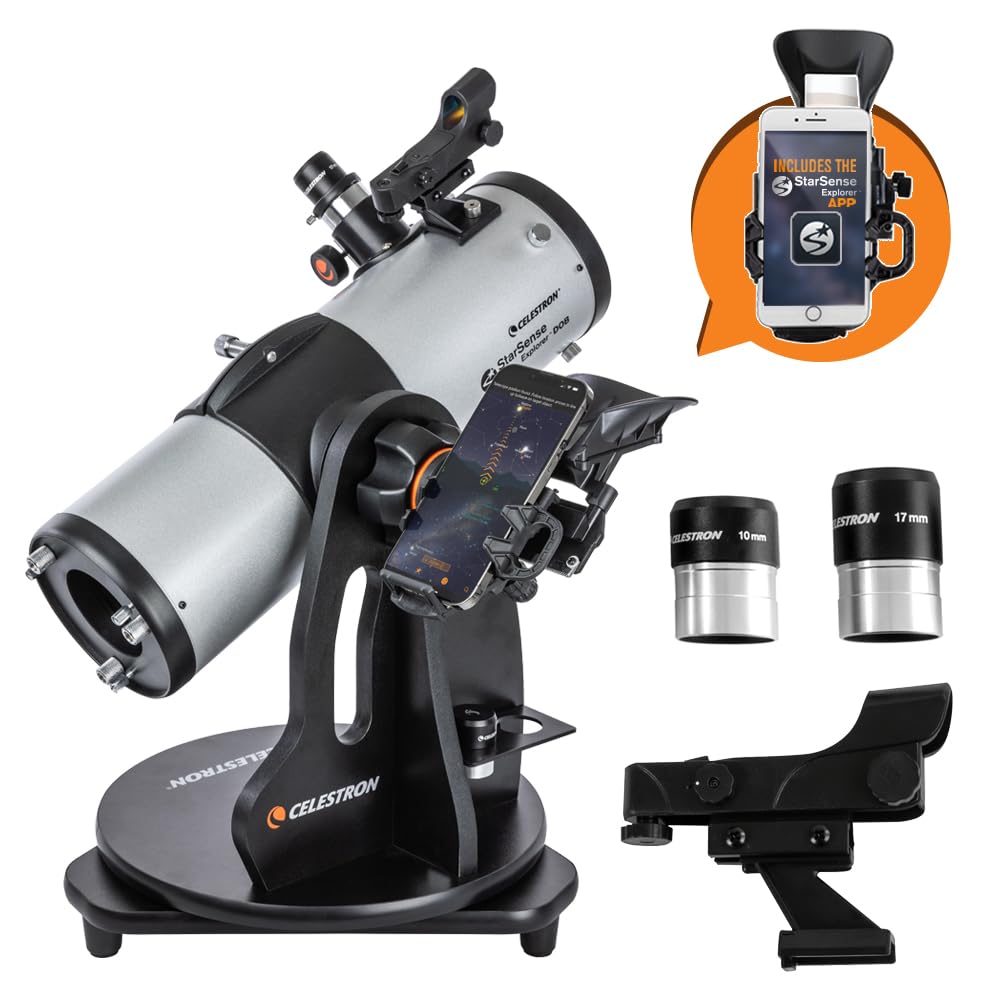
Dobsonians combine a reflector with a simple rocker box mount that you push to aim. Tabletop Dobsonians, like the Sky-Watcher Heritage 130 and Celestron StarSense Explorer 114AZ with app guidance, are compact and beginner friendly. Full size Dobsonians, like the Sky-Watcher Classic 200, offer 8 inch apertures for impressive deep sky views.
They deliver the most aperture for the money and are intuitive to use. Larger models are bulky and heavy, so consider storage and transport. Celestron's StarSense Explorer line uses your smartphone to help find objects.
Tabletop Dobsonians need a sturdy table, stool or crate to sit on. Placing them on a stable surface at a comfortable height makes observing much more pleasant.
Many observers keep a red dot or reflex finder aligned with the main tube for quick aiming.
Smart Telescopes
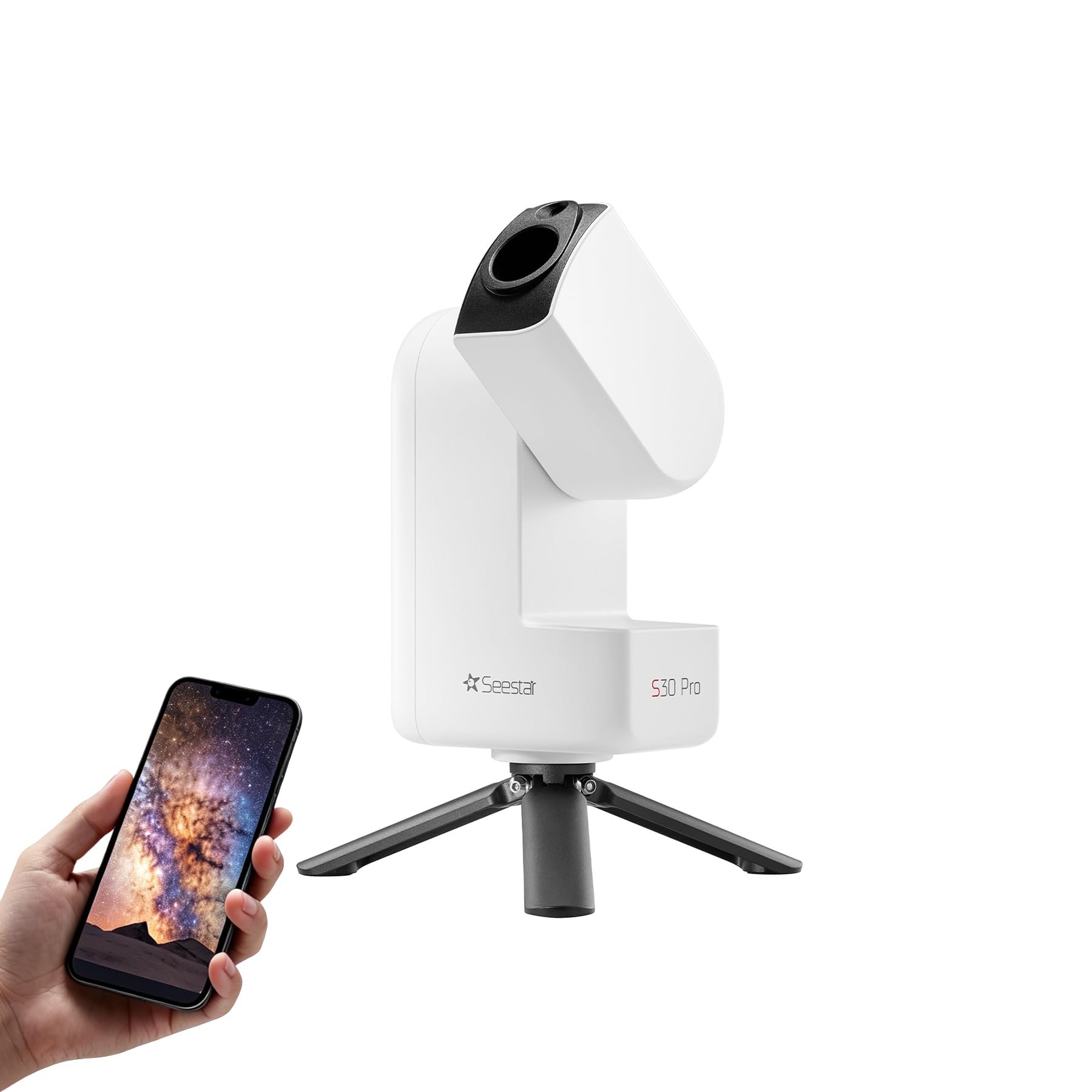
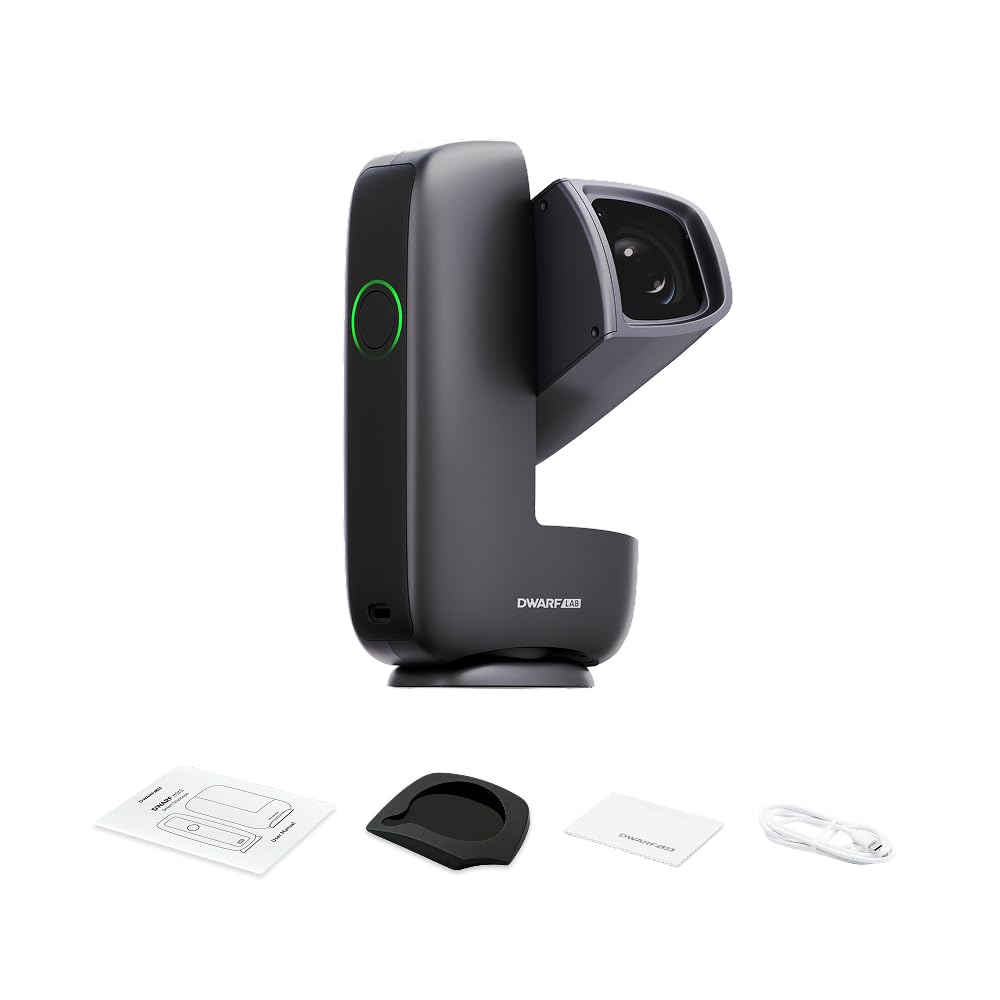
Smart telescopes, like the ZWO Seestar S30 Pro and DWARFLAB Dwarf Mini, are app controlled devices that find objects automatically and capture images, stacking exposures to reveal galaxies and nebulae on your phone or tablet. The Dwarf Mini weighs about 1.85 pounds according to its listing.
They are ideal for beginners in light polluted cities and for astrophotography without complex gear. The trade off is that you view mostly on a screen rather than through an eyepiece, and prices are higher.
Smart telescopes also make it easy to share views with family, since everyone can watch the image build on a phone or tablet at the same time.
Battery life matters for long sessions; bring a power bank if the smart telescope supports external charging.
Refractors vs Dobsonians: Which Should You Choose?
Choose a refractor for simple, portable Moon and planet viewing, and a Dobsonian for more light gathering and deep sky objects. Here is how they compare.
- Aperture: Dobsonians offer much larger apertures for the price.
- Setup: Refractors on simple mounts are quick; tabletop Dobsonians are also very easy.
- Portability: Small refractors and tabletop Dobsonians travel well; large Dobsonians do not.
- Maintenance: Refractors need almost none; Dobsonians need occasional collimation.
- Best targets: Refractors excel on the Moon and planets; Dobsonians shine on star clusters and galaxies.
For many adult beginners, a tabletop Dobsonian offers the best mix of aperture, ease and price.
How to Choose the Best Telescopes for Beginners
The best telescopes for beginners have enough aperture, a stable mount and simple setup. Use these factors to choose.
Aperture and Light Gathering
Aperture, the diameter of the main lens or mirror, is the most important spec. Larger apertures gather more light and show more detail. A 70mm refractor shows the Moon and planets, 114 to 130mm reflectors add more detail and 200mm Dobsonians reveal many galaxies and nebulae.
Ignore claims of extreme magnification; useful magnification is limited by aperture and atmospheric conditions.
Doubling the aperture gathers four times as much light, which is why an 8 inch Dobsonian reveals so much more than a 70mm refractor on faint objects.
Aperture also improves resolution, letting you split close double stars and see finer planetary detail.
Mount Stability and Ease of Use
A wobbly mount ruins views. Alt azimuth (AZ) mounts move up and down and side to side, which is intuitive. Equatorial (EQ) mounts track the sky but need alignment. Dobsonian mounts are simple and stable. App assisted systems, like StarSense Explorer, help you find objects.
Choose a stable, simple mount for your first telescope.
Go to computerized mounts, like the Celestron NexStar 5SE, find thousands of objects automatically after a simple alignment, but they cost more and need batteries or power.
Adding weight, like a bag of stones hung from the tripod's center, can reduce vibration on lightweight tripods.
Eyepieces and Magnification
Magnification equals the telescope's focal length divided by the eyepiece focal length. Beginners use low power eyepieces most, since they show wider views and are easier to aim. The AstroMaster 130EQ includes 20mm and 10mm eyepieces.
A good quality low power eyepiece improves views more than a high power one.
A rough guide is that the highest useful magnification is about 50 times the aperture in inches, or about twice the aperture in millimeters, under steady skies. A 130mm telescope tops out around 260x on the best nights.
A Barlow lens doubles or triples the magnification of each eyepiece, which effectively expands your eyepiece collection at low cost.
Beginner Friendly Features That Matter
Red dot finders make aiming easy, tool free setup saves time and smartphone apps help identify objects. Lightweight, portable designs encourage frequent use. Warranties and support from established brands, like Celestron's 2 year US warranty, help beginners.
The best telescope is one you will set up often, so prioritize ease over specs.
A sturdy carrying case or backpack, like the one included with the Celestron Travel Scope 70, protects the telescope and encourages trips to darker skies.
Care and Maintenance Tips
Keep lens and mirror caps on when not in use, store the telescope in a dry place and let it cool to outdoor temperature for 20 to 30 minutes before observing for sharper views. Clean optics only when needed, using a blower and lens tissue, and avoid touching lenses or mirrors. Check collimation on reflectors occasionally using the manual's instructions.
Your First Night Out
Start with the Moon, which is bright, easy to find and full of detail, especially along the line between light and dark. Use your lowest power eyepiece first, center the object, then switch to higher power. Let your eyes adapt to the dark for 20 minutes and use a red flashlight to read charts. Free astronomy apps help you find planets and constellations. Dress warmly, since you will be standing still for long periods.
FAQs
What makes telescopes for beginners different?
Beginner telescopes focus on easy setup, simple mounts, helpful finders and included eyepieces. Many add smartphone apps or adapters. They balance aperture, portability and price, avoiding complex mounts and accessories that frustrate new observers.
Many beginner telescopes also come with planetarium software or app downloads that help you plan what to observe.
What can I see with a beginner telescope?
Beginner telescopes show the Moon's craters, Jupiter and its moons, Saturn's rings, Venus's phases, star clusters and brighter nebulae and galaxies. Larger apertures and dark skies reveal more. Smart telescopes capture faint objects in images.
Joining a local astronomy club gives you access to experienced observers, star parties and dark sky sites.
Refractor or reflector: which is better?
Refractors are simpler and low maintenance, ideal for the Moon and planets. Reflectors and Dobsonians offer more aperture for the money, better for deep sky objects. Many beginners start with a tabletop Dobsonian or a quality 70 to 90mm refractor.
If portability matters most, refractors and tabletop Dobsonians are easiest to carry outside quickly.
What specs matter most for beginners?
Aperture, mount stability and ease of setup matter most. Ignore huge magnification claims. A stable mount, good finder and quality eyepieces make observing enjoyable.
Be wary of listings that advertise magnifications like 500x or more on small telescopes; those numbers are not usable in practice.
Is a smartphone enough instead?
Smartphones capture the Moon and bright planets only roughly without a telescope. Using a phone adapter on a telescope improves photos, and smart telescopes use apps to capture impressive images. For real views of planets, you need a telescope.
Many beginners enjoy combining both: a telescope for live views and a phone adapter for quick snapshots of the Moon.
Final Thoughts
The best telescopes for beginners are easy to use and have enough aperture for the objects you want to see. Refractors like the Celestron AstroMaster 70AZ suit Moon and planet viewing, the AstroMaster 130EQ and tabletop Dobsonians like the Sky-Watcher Heritage 130 add more light gathering and smart telescopes like the ZWO Seestar S30 Pro automate finding and photos. Start simple, observe often and never look at the Sun without proper filters.
For more beginner guides, see the best cameras for starter photography, the best quality cameras for beginners, the best skateboard for beginners and the best childrens watches. Then compare current prices in the product table above.


