
Best Stovetop Popcorn Maker: A Complete Buying Guide
Disclosure: We may earn a commission when you buy through links on this page, at no extra cost to you. As an Amazon Associate I earn from qualifying purchases. Learn more
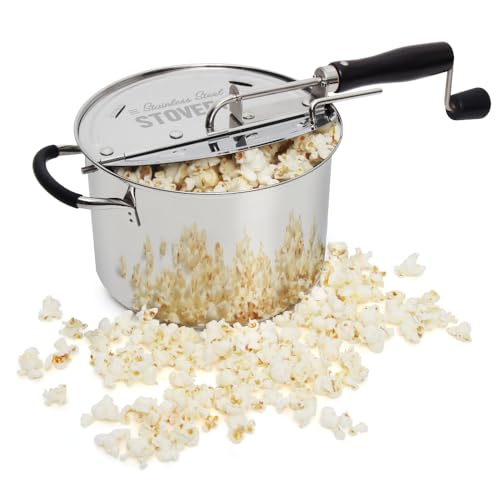
A good batch of popcorn starts before the kernels ever hit the pan. The right stovetop popcorn maker controls heat directly, coats every kernel in oil, and turns out a bowlful with a richer, toastier flavor than a microwave bag ever manages. It also asks a little more of the cook: the wrong size, material, or stirring mechanism can leave you with scorched kernels stuck to the bottom. Here's what actually separates a popper worth keeping in the cabinet from one that ends up in a donation box.

Pot Material, Size, and Handle Design: What Really Matters
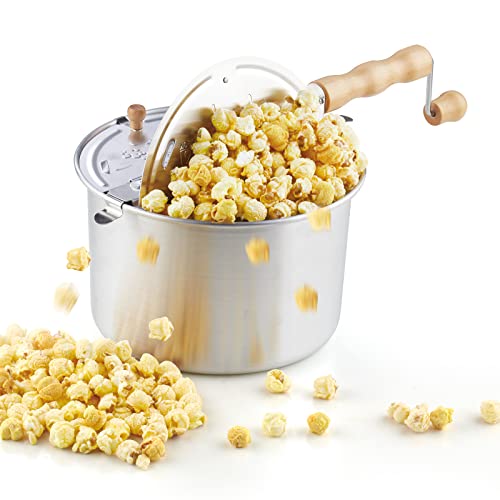
Material decides how evenly a popper heats and whether it works on your stove at all. Aluminum conducts heat quickly and pops kernels fast, but it will not work on an induction cooktop unless the base has a magnetic layer bonded in. Stainless steel runs a bit slower to heat but holds up to years of scraping and stirring, and most induction-compatible poppers are built from it; if induction matters to your kitchen, pair that pot with cookware from our guide to induction-compatible cookware so the whole set works on the same burner.
Capacity matters more than shoppers expect. A popper sized around 4 to 6 quarts turns out roughly 8 to 16 cups of popped corn, which covers a family movie night without a second batch. Anything smaller is fine for one or two people but gets tedious if you host regularly, and anything larger can be awkward to lift and pour once it is full and hot.
Handles and lids round out the short list of things worth checking before buying. Wood or silicone-wrapped handles stay cool during a five-minute pop, and a lid with small vent holes lets steam escape so the popcorn stays crisp instead of going soft from trapped moisture. A well-built pot in heavy-gauge stainless steel also doubles as general kitchen cookware; browse our roundup of stainless steel cookware sets if you would rather invest in pieces that pull double duty.
- Aluminum for speed, stainless steel for induction and durability
- 4 to 6 quarts for most households
- Heat-resistant handles and a vented lid
Simple Shake Pots vs. Crank-Stirred Poppers
Not every stovetop popcorn maker works the same way, and the split matters more than most buying guides let on. A simple shake pot is just a heavy-bottomed pot with a fitted lid; you shake it by hand over the burner every few seconds so kernels do not sit still long enough to burn. It is inexpensive, easy to clean since there are no moving parts, and perfectly capable in the hands of someone willing to keep moving the pot.
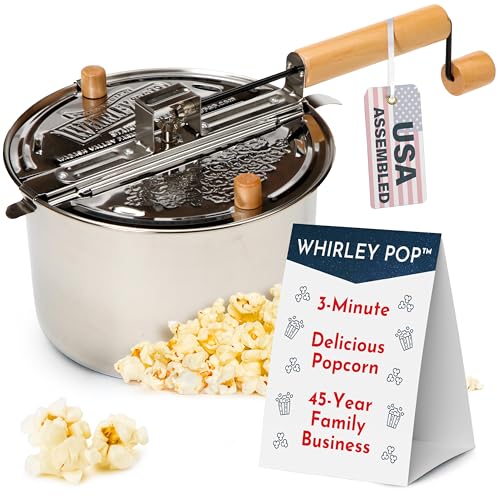
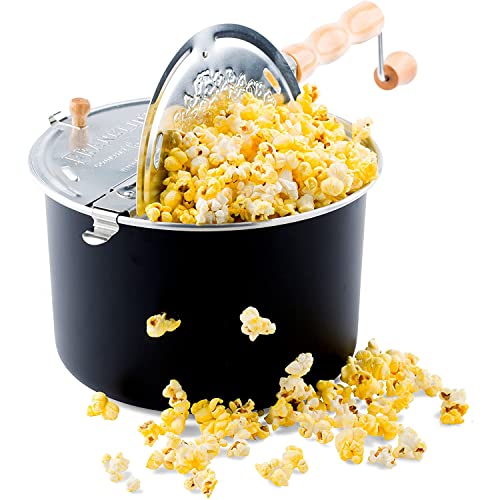
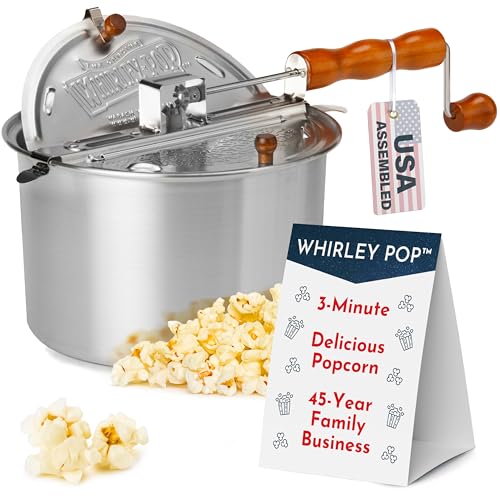
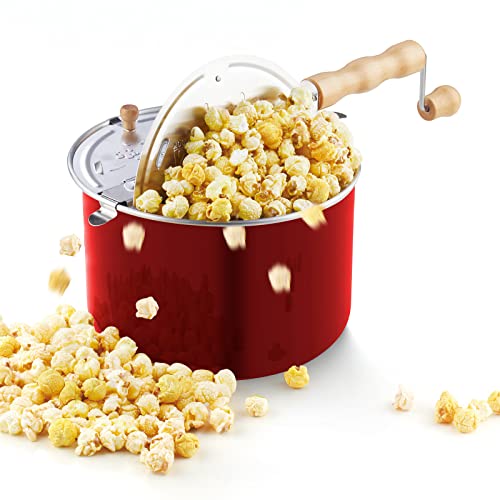
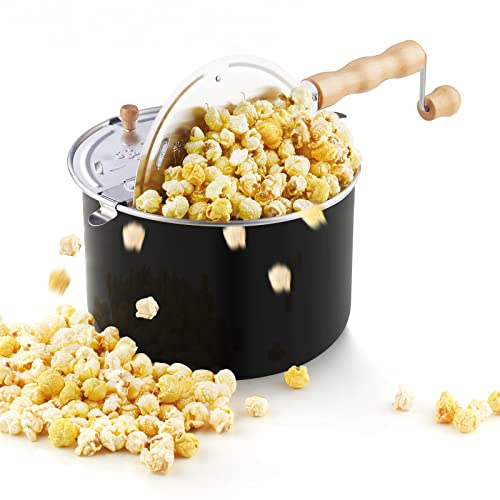
A crank-stirred popper adds a metal or wooden paddle inside the pot, turned from a handle on the lid. Cranking keeps kernels in constant motion without lifting the pot off the heat, which tends to produce a more even pop with fewer scorched pieces. The tradeoff is a mechanism with gears that can jam if kernel husks or oil residue build up, so it asks for a bit more care during cleanup than a plain shake pot does.
Neither style is objectively better; the choice comes down to how hands-on you want the process to be. Cooks who make popcorn often and want consistent results lean toward the crank. Cooks who only pop a bag once in a while, or who like the ritual of shaking the pot themselves, do fine with the simpler design.
Getting Consistent Batches and Keeping the Crank Working Smoothly
Technique affects results as much as equipment does. A thin coat of oil with a high smoke point, such as coconut or refined vegetable oil, spread evenly across the pot bottom before the kernels go in helps prevent hot spots that scorch a handful of kernels while others stay unpopped. Test a few kernels first over medium heat; once they spin and sizzle, the whole batch is ready to go in.
Medium heat, not high, produces the most even results. High heat pops corn faster but burns the bottom layer before the top layer finishes, while medium heat gives every kernel roughly the same amount of time to reach popping temperature. Once popping slows to a couple seconds between pops, pull the pot off the burner so residual heat does not scorch the last few kernels.
Cleanup is where crank mechanisms need attention. Let the pot cool, then wipe out loose kernels and oil before washing so nothing dries into the gears. A soft brush reaches into the crank housing and vent holes better than a sponge, and steel wool or abrasive pads should stay in the drawer since they scratch both aluminum and stainless steel finishes.
Stovetop, Electric, or Air Popper: How They Actually Differ
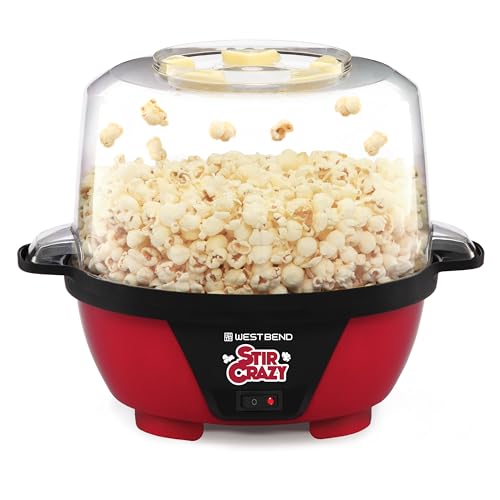
A stovetop popcorn maker gives the most control over the process because the cook manages heat directly on the burner, adjusting up or down as the batch pops. Electric poppers automate that heat, which is more hands-off but less flexible if a batch is popping too fast or too slow. Air poppers skip oil entirely and use hot air alone, which cuts calories but also produces a drier texture that some cooks find less satisfying than oil-popped corn.
Flavor is the biggest reason people stick with a stovetop version. Kernels popping directly in oil pick up seasoning and butter more evenly than air-popped corn, where dry seasoning tends to fall to the bottom of the bowl instead of coating each piece. If flavor and texture matter more than convenience, stovetop stays the better bet.
Households without a dedicated popper are not out of luck. A heavy-bottomed pot or Dutch oven with a tight-fitting lid can pop corn just as well as a purpose-built model, since the mechanism is really just heat, oil, and a lid that traps steam without sealing it in completely.
Frequently Asked Questions
Is stovetop popcorn healthier than microwave popcorn?
Generally yes, since home cooks control the type and amount of oil and salt, while many microwave bags rely on processed oils and higher sodium. Portion size still matters more than the popping method for overall calories.
Can you use a stovetop popcorn popper on an induction stove?
Only if the pot has a magnetic stainless steel or induction-ready base. Plain aluminum pots will not heat on an induction cooktop, so check the material before buying if that is your stove type.
What kind of oil is best for stovetop popcorn?
Oils with a high smoke point work best, including coconut oil, refined vegetable oil, and clarified butter. Extra virgin olive oil and regular butter tend to burn before the kernels finish popping.
How much popcorn does one stovetop popper make?
A typical 4- to 6-quart popper turns half a cup of kernels into about 8 to 16 cups of popped corn, enough for two to four people depending on appetite.
Why do some poppers have a hand crank?
The crank turns a stirring paddle that keeps kernels moving constantly, which reduces scorching and produces a more even batch than shaking the pot by hand every few seconds.
Can you make stovetop popcorn without a special popper?
Yes, a large heavy-bottomed pot with a lid works fine. Shake or stir occasionally and keep the heat at medium so kernels near the bottom do not burn before the rest finish popping.
Why does popcorn burn on the stovetop?
Burning usually comes from heat that is too high, too little oil, or kernels sitting still for too long in one spot. Medium heat and regular stirring or shaking solve most scorching problems.
Making the Right Call for Your Kitchen
Choosing between a simple shake pot and a crank-stirred popper mostly comes down to how often popcorn happens in your kitchen and how hands-on you want to be. Material decides whether the pot works on your stove, and size should match how many people usually share the bowl. Get those three details right, and the rest of the process rewards itself in better, more consistent batches.


