Best Stone Lain Dinnerware Sets: A Buying Guide
Disclosure: We may earn a commission when you buy through links on this page, at no extra cost to you. As an Amazon Associate I earn from qualifying purchases. Learn more
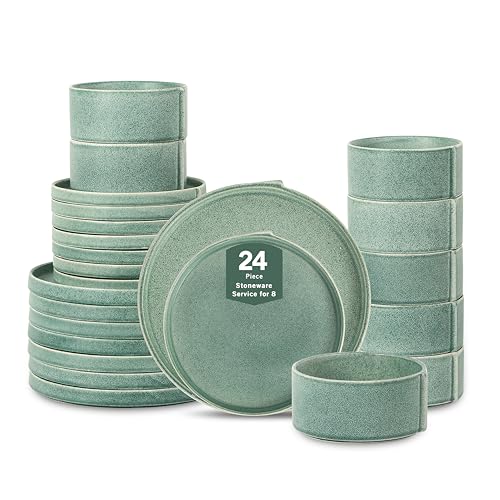
If you have been comparing everyday dinnerware and keep landing on the same name, you already know Stone Lain dinnerware sets show up everywhere from Amazon to Walmart to Bed Bath and Beyond. The brand has built its whole lineup around stoneware, which means every collection shares the same basic material but looks and feels different depending on the glaze, shape, and finish. That makes picking the right set less about comparing materials and more about matching a pattern and size to how you actually eat. This guide walks through what makes Stone Lain's stoneware distinctive, how to choose a style you will still like in a few years, and how many pieces to actually buy.





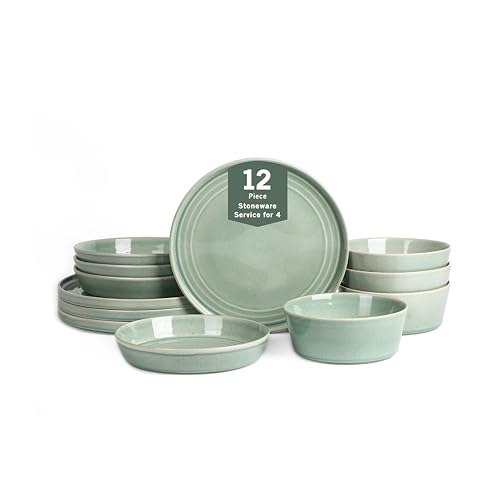


What Makes Stone Lain's Stoneware Different
Stoneware gets its name from how it is made. The clay is fired at a much higher temperature than earthenware, which drives out more moisture and leaves behind a denser, harder body. That density is the reason stoneware plates and bowls feel noticeably heavier in your hand than a thin porcelain piece, and it is also why they tend to resist chipping better than lighter, more delicate dinnerware.
How Dense, High-Fired Clay Holds Up to Daily Use
Because the clay body is so tightly packed, stoneware is naturally less porous than earthenware. That matters day to day because it resists absorbing moisture, oils, and food odors, so pieces stay easier to keep clean over years of use rather than months. It is part of why stoneware has become a go-to choice for households that want dinnerware that can survive a busy kitchen instead of sitting in a cabinet reserved for special occasions.
Reading Glaze Variation as a Feature, Not a Flaw
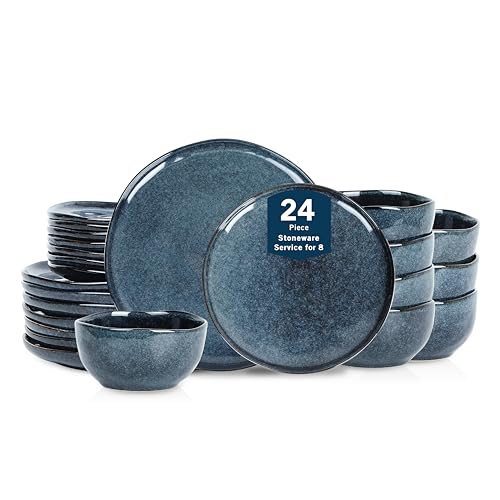
Reviewers who buy into Stone Lain stoneware consistently mention that no two pieces look perfectly identical, and that is intentional rather than a manufacturing slip. The glazes are applied in a way that mimics handmade pottery, so you will see subtle differences in speckling, color depth, or texture from plate to plate within the same set. Shoppers who want that artisan, slightly imperfect look tend to love it. If you want dinnerware where every plate matches exactly, it is worth knowing that going in.
Choosing a Style and Color Across the Lineup
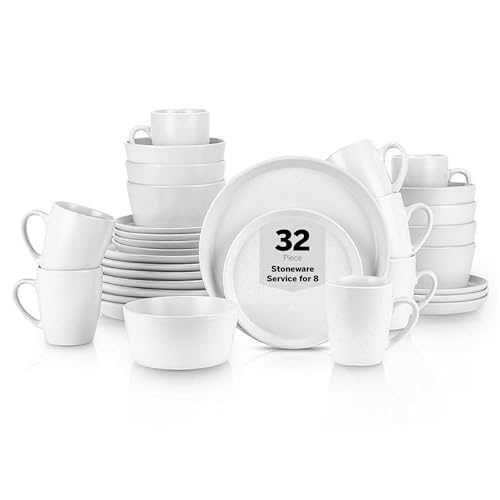
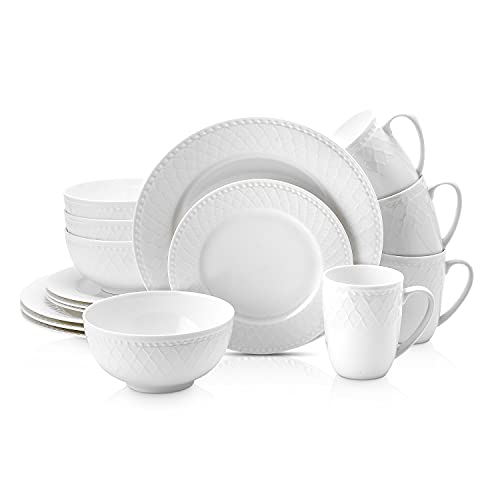
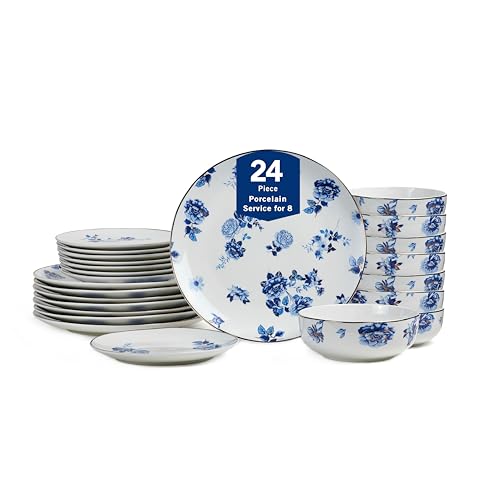
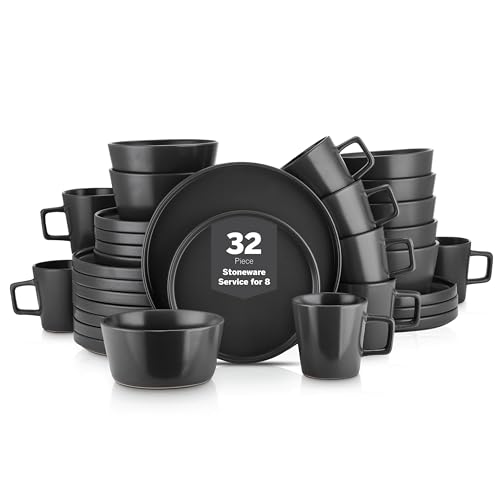
One of the trickier parts of shopping this brand is that Stone Lain sells its stoneware through several distinctly named collections rather than one master pattern, so the real decision is which visual direction fits your table.
Rustic and Farmhouse-Leaning Collections
Several collections lean into an earthy, hand-finished look with visible texture, ridged rims, or speckled glazing. These sets tend to photograph beautifully on a wood table and pair naturally with woven placemats, linen napkins, and warm-toned glassware. If your kitchen already skews farmhouse or cottage-core, this is the direction to browse first.
Clean, Modern Matte-and-Gloss Pairings
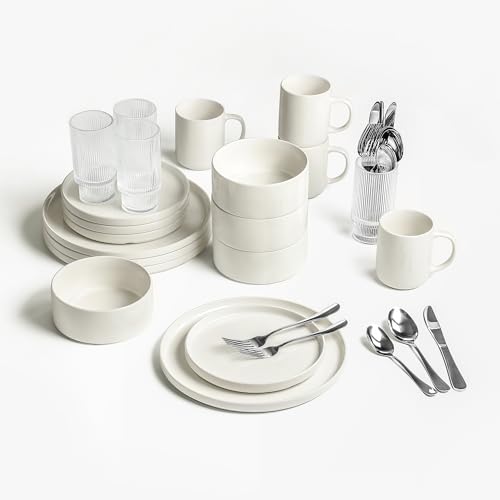
Other collections take a more contemporary route, mixing a matte exterior with a glossy interior, or pairing a coupe shape (a plate with no raised rim) with simple, understated motifs. These read as more streamlined and work well if your table setting leans minimal or coastal rather than rustic. Since the underlying stoneware performs the same way regardless of finish, this choice really comes down to which look you want on your table, not which one is more durable.
If your taste actually runs toward a lighter, more formal look rather than casual stoneware, it may be worth browsing porcelain and bone china dinnerware instead, since those materials are thinner and dressier by design.
Sizing Your Set to Your Household
Once you have a style in mind, the next decision is how many place settings to buy, and that is where a lot of shoppers either overspend or come up short.
What's Actually in a Place Setting
A standard place setting typically includes a dinner plate, a smaller salad or dessert plate, and a bowl. Some sets also add a mug or a rimmed soup bowl. Before you buy, check exactly what counts as one setting in the listing, since the number of total pieces can look inflated if the brand is counting a set of four mugs as part of the total rather than four separate settings.
How Many Settings You Really Need
For most households, four to six place settings hits the sweet spot. Four settings covers a typical family's everyday meals with a little room for a guest, while six gives you enough buffer for casual entertaining without buying a formal, oversized set you will rarely use in full. If you host larger dinners a few times a year, it is usually cheaper and more practical to buy an open-stock add-on later than to size up your everyday set just for occasional use.
Living with Stone Lain Stoneware Day to Day
Stoneware earns its reputation as an everyday material, but a few habits make the difference between a set that looks good for years and one that shows wear fast.
Dishwasher and Microwave Habits That Protect the Glaze
Most Stone Lain stoneware is dishwasher and microwave safe, which is a big part of its appeal for busy households. That said, wide, ridged rims that look great on the table can be awkward to slot into a dishwasher rack designed for plain round plates, so it is worth test-fitting a single piece before running a full load. Loading plates so the glazed surfaces do not rub against each other also helps preserve the glaze's finish over repeated washes.
Stacking and Storing Wide-Rimmed Pieces
Because the pieces are thick and, on some collections, slightly uneven by design, they do not always stack as tightly or evenly as machine-uniform porcelain. A common piece of advice from people who already own these sets is to avoid stacking more than about six plates at a time, since taller stacks put more pressure on the bottom pieces and can lead to chipping at the rim. Storing plates on a shelf with a little breathing room, rather than one tall tower, keeps the glaze looking newer for longer.
These same everyday-durability habits apply broadly across dinnerware sets, but they matter more with thicker, handcrafted-style stoneware than with thin, machine-uniform pieces.
Frequently Asked Questions
Is Stone Lain dinnerware oven safe?
Stoneware generally tolerates heat better than earthenware, but oven safety varies by specific collection and glaze, so it is worth checking the listing or packaging for that particular set before putting a piece in a hot oven. When in doubt, treat it as microwave and dishwasher safe rather than oven safe.
Why do some Stone Lain pieces look slightly different from each other?
The glazes are designed to mimic handmade pottery, so subtle variation in color, speckling, or texture between pieces is expected rather than a defect. If you receive a set with an obvious crack, warp, or major flaw, that is different and worth addressing with the seller.
How many place settings should I buy?
Four settings covers most everyday households, while six gives you a bit of room for guests without committing to a large, formal set. Base your number on how often you actually host rather than the biggest set available.
Does stoneware chip more easily than porcelain?
Generally, no. Stoneware's denser, high-fired clay body tends to resist chipping better than thinner, more delicate porcelain or bone china. It is also heavier, which some people find reassuring for everyday use with kids or a busy kitchen.
Is Stone Lain dinnerware dishwasher and microwave safe?
Most Stone Lain stoneware sets are dishwasher and microwave safe, which is part of why the brand markets itself as everyday dinnerware rather than special-occasion china. Wide or ridged rims can be a tighter fit in some dishwasher racks, so loading them carefully helps avoid chips.
Is stoneware heavier than other dinnerware?
Yes, noticeably. The denser clay body that makes stoneware chip resistant also makes it heavier in the hand than porcelain or bone china of similar size. Most shoppers see that weight as a sign of sturdiness rather than a downside, though it is worth knowing if you are outfitting a set for someone who prefers lighter dishware.
Making Your Decision
Picking among Stone Lain dinnerware sets really comes down to two questions: which finish matches your table, and how many settings your household actually uses. The material itself performs consistently across the lineup, so once you settle on a rustic or modern look and a realistic place setting count, you are choosing a set that should hold up to years of daily meals without babying it.