Best Roman Tub Faucet With Handshower: A Complete Buying Guide
Disclosure: We may earn a commission when you buy through links on this page, at no extra cost to you. As an Amazon Associate I earn from qualifying purchases. Learn more

Shopping for the best roman tub faucet with handshower? Learn hole count, spacing, flow rate, and tub compatibility before you buy.
Filling the tub is the easy part. Rinsing shampoo out of your hair, washing the tub down after a soak, or cleaning off a wet dog is where a plain spout falls short, and that gap is exactly what a roman tub faucet with handshower is built to close. Before you shop by finish or price, though, you need to know whether the fixture will actually fit the tub you have.
Unlike a filler that lives inside the wall, this style mounts straight onto the tub deck through several drilled holes, so hole count and spacing decide what will and will not work. This guide covers how it differs from a wall-mount filler, what the handshower is really for, how to measure your deck correctly, and which handle and hose details hold up over years of daily use.


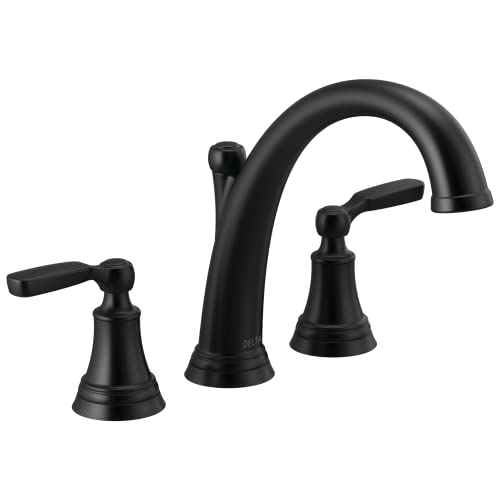
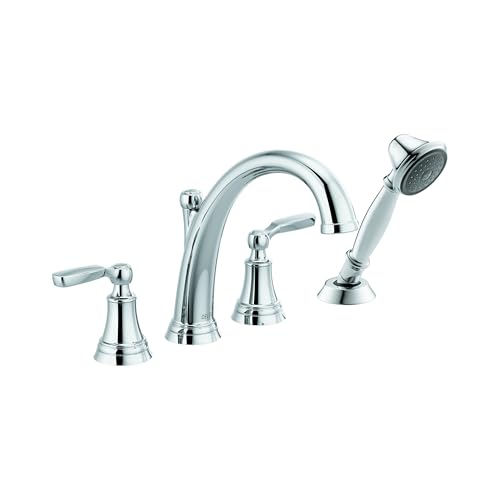
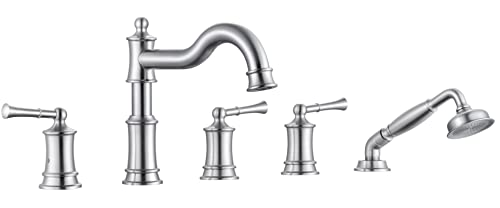
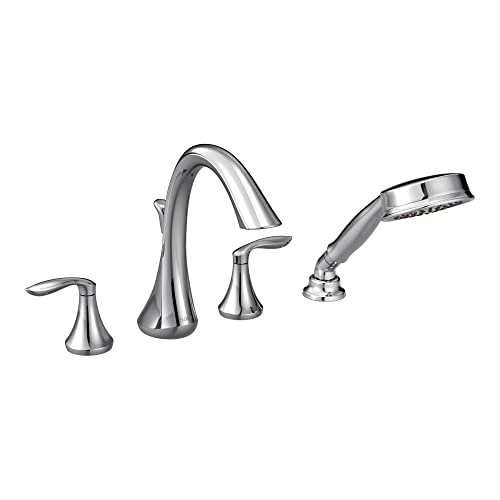
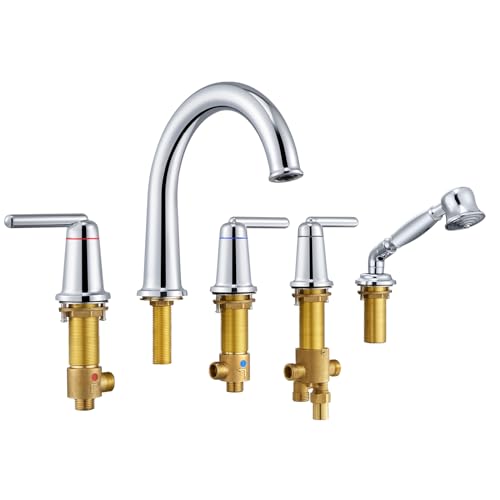
Roman Tub Faucet vs. Wall-Mount Filler: Know the Difference
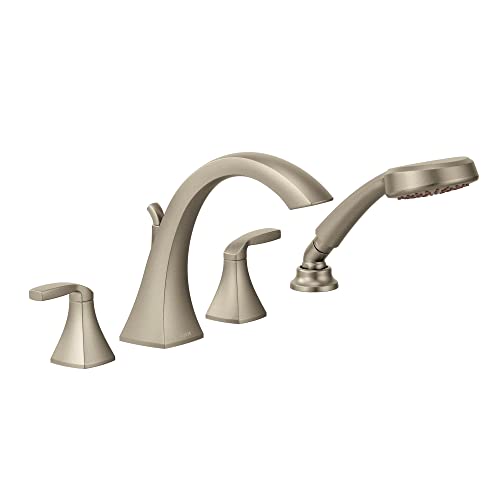
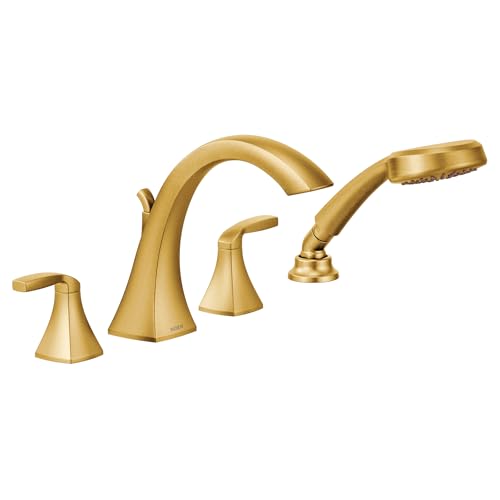
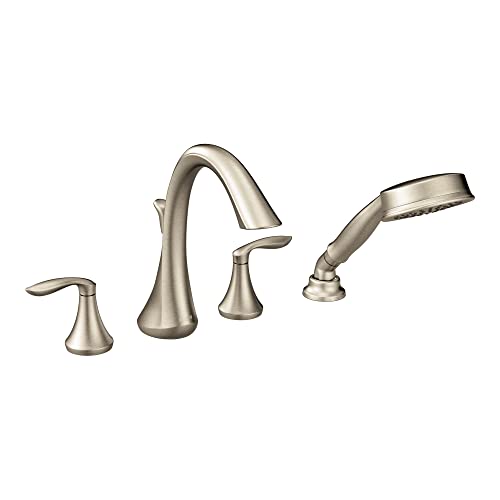
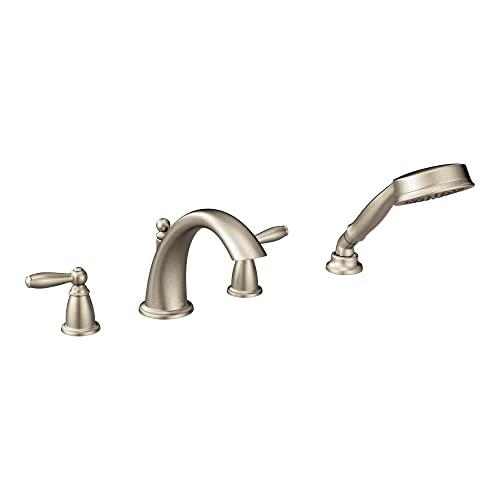
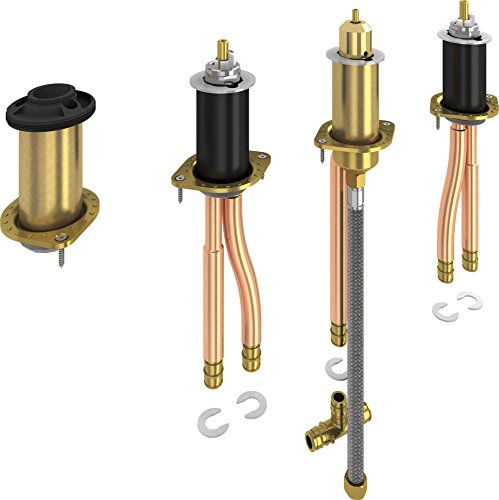
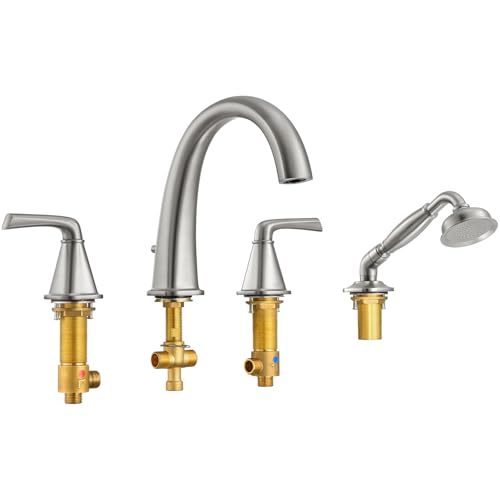
A roman tub faucet sits on top of the tub deck or surrounding ledge, with the valve body hidden underneath and only the spout, handles, and handshower holder visible above the surface. Everything connects through holes drilled straight into that horizontal deck, which is why it is sometimes called a deck-mount tub filler.
A wall-mount filler works differently. Its valve is roughed into the wall above the tub, and the tub itself needs no holes at all. That makes a wall-mount option better suited to a remodel where you are opening up the wall anyway, while a deck-mount roman faucet is the more direct upgrade when you already have a tub with a usable ledge and do not want to touch the wall. If you are weighing both routes for a renovation, a look at wall-mount tub filler options is worth doing side by side before you commit to drilling anything.
Why the Handshower Earns Its Keep
The handshower is a handheld wand on a flexible hose, usually parked in its own holder on the deck or built into the spout assembly. People underestimate how often it gets used once it is there: rinsing conditioner, wiping down the tub walls after bath time, cleaning kids or pets, and reaching corners a fixed spout simply cannot aim at.
It draws water through the same supply as the spout, so check how the switch between the two is handled. A diverter built into the spout keeps the setup to fewer holes and switches with a simple pull or twist, while a separate dedicated valve for the handshower gives independent control but typically adds one more hole to the deck. Neither is objectively better; it comes down to how many holes your deck can accommodate and whether you want to run the spout and handshower at the same time.
Getting the Hole Count and Spacing Right
This is the step most people skip, and it is the one that determines whether the faucet you order actually fits.
How Many Holes You Actually Need
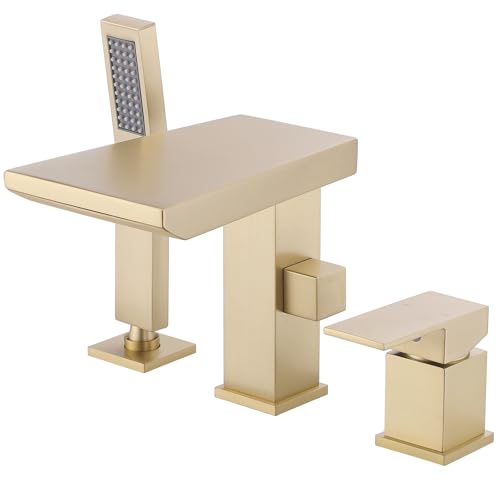
A 3-hole layout is the simplest to retrofit: one hole for a single-handle valve, one for the diverter spout, and the handshower sharing that same supply. Step up to four holes and you usually gain either a second handle or a dedicated handshower holder while still keeping a shared diverter. A full 5-hole widespread setup gives the hot handle, cold handle, spout, handshower, and holder each their own hole, which is the most traditional look but also the least forgiving if you are trying to reuse an existing pattern.
Measuring Center-to-Center Spacing
Measure from the center of one existing hole to the center of the next, not edge to edge. Spacing on widespread setups commonly falls somewhere between 8 and 16 inches, but manufacturers are not standardized on this, so the number on the box has to match your tub, not just fall in that general range. Even a half-inch mismatch means the handles will not line up with the spout the way they should.
Deck Thickness and Sealing
Thicker decks, especially stone or solid-surface composite, sometimes need longer mounting shanks than a standard kit includes, so confirm the deck thickness before ordering. Once everything is set, sealing each hole properly matters just as much as the faucet itself; a bead from a tube of the best caulk for bathtub work around the base plates keeps water from creeping underneath and softening the deck over time.
Does Your Tub Deck Have Room for One?
A roman tub faucet only works if there is an actual deck to drill into, and that rules out entire categories of tubs before you even look at hole spacing.
Drop-in tubs set into a built surround are the natural fit, since the platform gives you a flat, stable area with room for the full hole spread. Standard alcove tubs can work too, though their rim is often narrower than a drop-in platform, so a widespread 5-hole set may not have enough room. If you are still shopping for the tub itself and want a shape that pairs well with a deck-mounted fixture, a guide to luxury bathtub styles is a useful place to check deck width before you commit.
Freestanding tubs are the exception. Most do not have a deck wide enough for multiple holes, which is why a floor-mounted or wall-mounted filler is the more common route for that style. Anyone set on keeping a handshower with a freestanding tub should look at freestanding tub faucet options built specifically for that mounting style instead of trying to force a roman setup onto a tub that was not made for one.
Handle Style, Valve Quality, and Hose Durability
Once the fit is settled, the internal components decide how the faucet performs day to day. A single-handle valve blends hot and cold in one motion and tends to use fewer holes, while a two-handle widespread version gives finer temperature control and a more classic look at the cost of extra deck space. Neither style is more reliable than the other; what matters is what sits inside the valve body. Solid brass with a ceramic disc cartridge resists mineral buildup and holds up far longer than budget assemblies built around plastic internals.
Flow rate is worth checking too, since it decides how long you stand around waiting. Standard tubs are comfortable with 4 to 6 gallons per minute, while larger soaking tubs benefit from something closer to 7 to 10 gallons per minute. Your home's water pressure needs to support that; most of these faucets want 20 to 60 psi to perform as rated.
The handshower hose material is easy to overlook but affects how long the fixture lasts. A metal braided hose resists heat and pressure better than rubber or PVC and generally has a longer service life, though the spiral grooves can trap limescale and occasionally scratch a tub surface if it drags across it. A smooth rubber or PVC hose is gentler on the tub finish and simpler to wipe clean, but it is more prone to cracking after repeated exposure to hot water over several years. If your household runs the tub often, the braided option tends to be the safer long-term pick.
Frequently Asked Questions
How many holes does a roman tub faucet with handshower need?
Most setups need three to five holes, depending on whether the handshower shares a diverter with the spout or has its own dedicated valve and holder. Count the holes already in your deck before you shop.
What's the difference between a roman tub faucet and a wall-mount tub filler?
A roman tub faucet mounts on the tub deck through drilled holes, while a wall-mount filler has its valve roughed into the wall and needs no holes in the tub at all. The right choice depends on whether you already have a usable deck or are opening up the wall anyway.
How do I measure hole spacing correctly?
Measure center to center between existing holes, not edge to edge, and compare that number directly against the spacing listed for the faucet you're considering. Spacing varies by manufacturer, so match your own measurement rather than assuming a common range applies.
Can I put one on a freestanding tub?
Only if the tub has a deck wide enough for the required holes, and most freestanding tubs do not. A floor-mounted or wall-mounted filler is the more practical option for that style.
Is a metal or rubber handshower hose better?
Metal braided hoses generally last longer and handle heat and pressure better, while rubber or PVC hoses are gentler on the tub surface and easier to keep clean. Households that use the tub heavily tend to get more life out of the braided option.
What water pressure does this type of faucet need?
Most roman tub faucets with a handshower are rated for 20 to 60 psi, and a half-inch supply line is the practical minimum for anything above a modest flow rate. Check your home's pressure before assuming a higher-flow model will perform as rated.
Making the Right Call for Your Tub
Choosing the right roman tub faucet with handshower comes down to matching hole count and spacing to the deck you actually have, deciding whether a shared diverter or an independent handshower valve suits how you use the tub, and picking hose and valve materials built to last. Measure first, then shop, and the fixture will handle filling and rinsing without ever fighting your tub deck.