The Best Freestanding Bathtub Faucets of 2026
Disclosure: We may earn a commission when you buy through links on this page, at no extra cost to you. As an Amazon Associate I earn from qualifying purchases. Learn more

A freestanding tub deserves a faucet that matches its statement-piece status, not an afterthought bolted to the floor beside it. The right freestanding bathtub faucet becomes part of the room's design while still delivering the flow rate and durability a daily-use fixture needs.
Here's what actually separates a well-built floor-mount tub filler from one that corrodes or leaks within a year, followed by three standout picks and a full lineup of other strong options to compare.

What to Look for in a Freestanding Bathtub Faucet
Material and construction determine how well a faucet holds up in a humid bathroom over the years. Solid brass with a proper electroplated finish resists corrosion far better than cheaper zinc-alloy bodies, even when the finish looks similar in photos.
Flow rate, measured in gallons per minute, affects how long it takes to fill the tub. Standard freestanding fillers run around 6 GPM, while high-flow models can reach close to 12 GPM, cutting fill time significantly for a large soaking tub.
Valve type is worth checking even though it's rarely mentioned in product photos. A ceramic disc cartridge lasts far longer and resists dripping better than cheaper valve mechanisms, and it's the single biggest factor in whether a faucet still works smoothly five years from now.
Handle configuration comes down to personal preference between a single lever, which offers one-handed temperature and flow control, and dual cross handles, which lean more traditional and give separate hot and cold adjustment.
Height and reach need to match your specific tub. Most freestanding faucets sit between about 31 and 42 inches off the floor, with a spout reach of at least 9 inches over the rim, so measure your tub's dimensions before ordering rather than assuming a standard size fits.
Installation requirements are more involved than a standard sink faucet. Freestanding fillers need a floor-mounted rough-in valve installed before the finished floor goes down, plus a stable base, typically bolted through the subfloor, so factor in a plumber if you're not doing a full bathroom renovation yourself.
Included accessories vary more than shoppers expect. Many models bundle a handheld shower with a diverter valve, which adds real versatility for rinsing or bathing a child, while others sell the trim kit and rough-in valve as separate purchases, so check exactly what's included before comparing prices across brands.
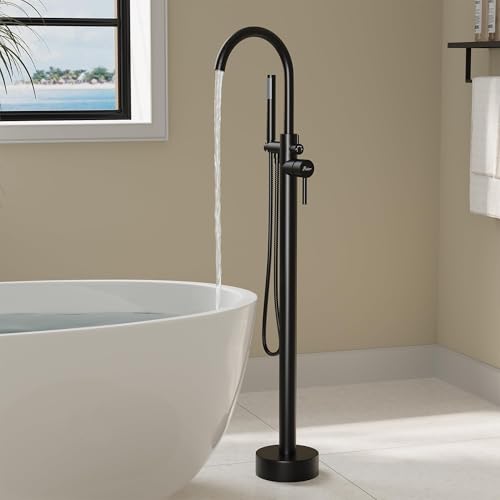
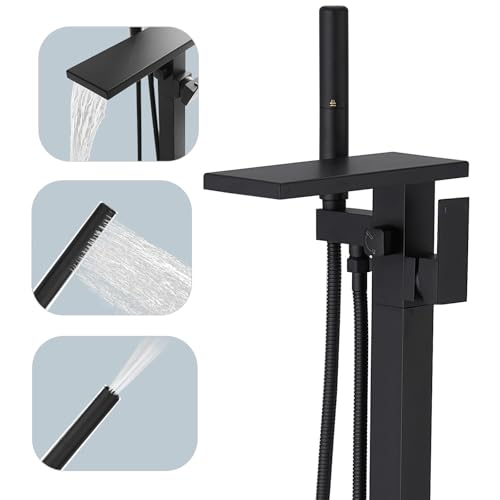
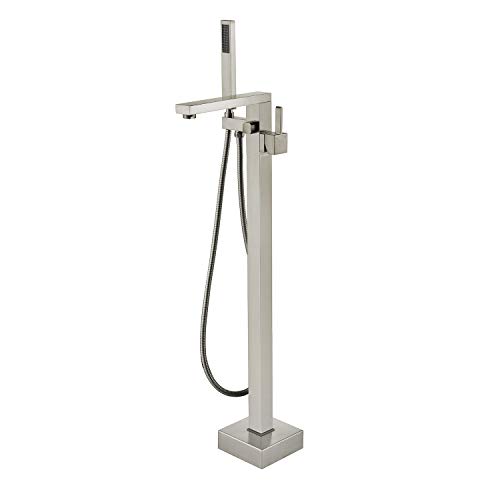
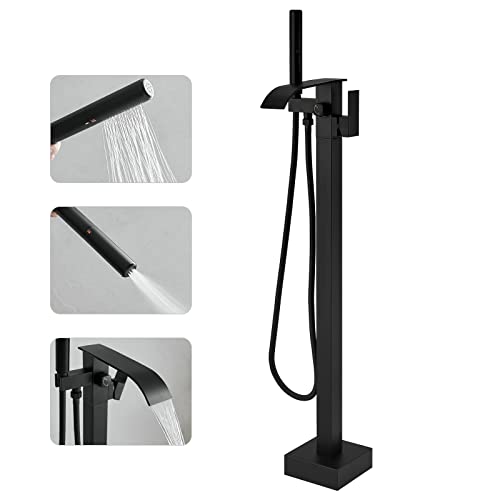
Best Overall: Wowkk Waterfall Tub Filler Freestanding Bathtub Faucet
This freestanding bathtub faucet earns its review count with a genuinely solid build: solid brass construction, a Sedal ceramic cartridge for long-term smooth operation, and a stable tripod bracket base that bolts securely to the floor. The 360-degree swivel spout and included hand shower add real everyday flexibility.
- Material: Solid brass, black finish
- Valve: Sedal ceramic cartridge
- Best for: Buyers wanting proven reliability at a mid-range price
Pros:
- Ceramic cartridge is built for smooth, long-lasting operation
- Tripod bracket base provides genuine floor stability
- Backed by a lifetime limited warranty from the manufacturer
Cons:
- Standard 1/2-inch hoses may need customization for some setups
- Installation still requires floor-bolt mounting, not a quick DIY job
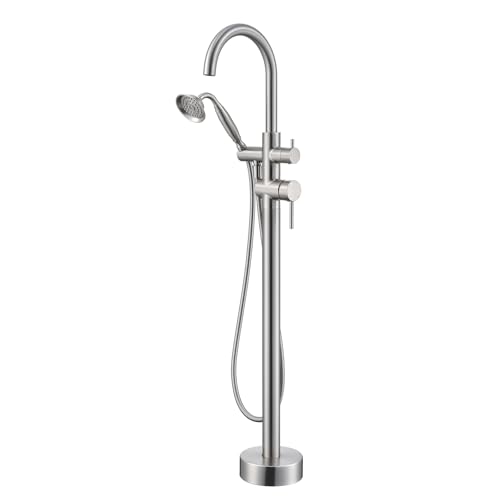
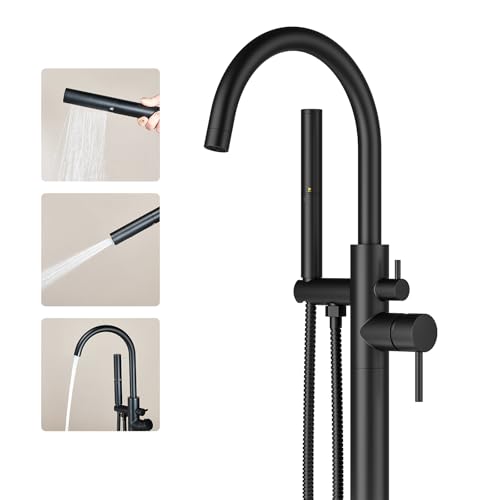
Best Budget: HAWKROWN Freestanding Bathtub Faucet
A 7.4 GPM max flow rate is genuinely fast for this price point, filling a standard 55-gallon single-person tub in around seven minutes. The multi-layer baking paint finish is specifically built to resist the corrosion that cheaper finishes succumb to in a humid bathroom.
- Material: Brass connectors with ceramic valve core
- Flow rate: Up to 7.4 GPM (spout), 2.8 GPM (hand shower)
- Best for: Budget renovations that still want fast fill times
Pros:
- Fast fill rate that outperforms many pricier competitors
- All mounting hardware included for floor-standing installation
- Diverter knob makes switching to the hand shower simple
Cons:
- Fewer finish options than premium brand alternatives
- Newer brand with a shorter reliability track record
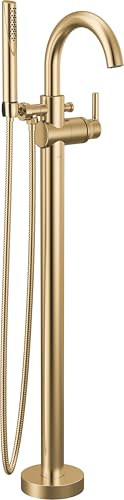
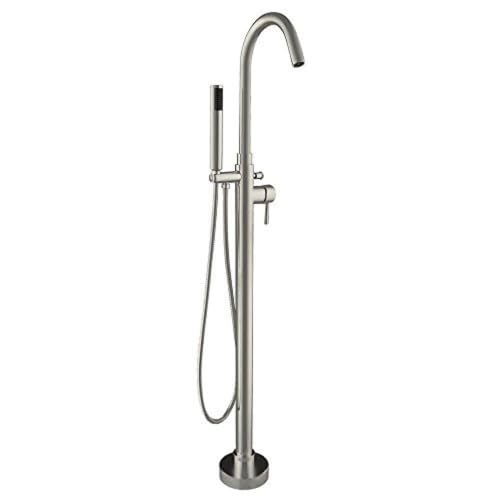
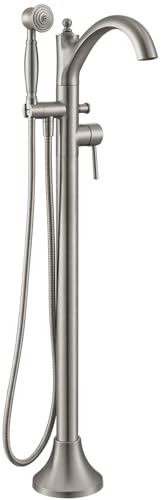
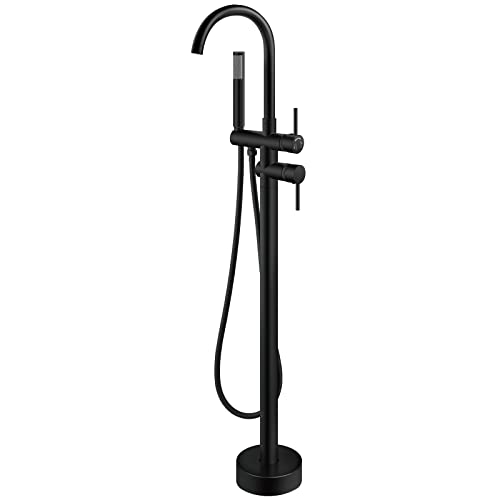
Best Premium: Delta Faucet Trinsic Floor Mount Tub Filler
Delta's Trinsic line is one of the most recognized names in freestanding tub fillers, and this model's high-arc swivel spout and full-body spray handheld shower reflect that reputation. One important note before buying: this is the trim kit only, and it requires the separate R4700-FL rough-in valve to actually function, which is standard for premium fixtures but easy to miss.
- Design: High-arc swivel spout, modern freestanding profile
- Included: Flexible handheld shower with double check valves
- Best for: High-end bathroom renovations prioritizing brand reliability
Pros:
- Trusted brand with widely available parts and support
- Full-body spray handheld shower is a genuine upgrade over basic sprayers
- Backed by Delta's official limited warranty
Cons:
- Rough-in valve must be purchased separately, adding to the total cost
- Significantly more expensive than the rest of this lineup
Single-Handle vs. Dual-Handle: Which Fits Your Bathroom?
A single-lever faucet lets you adjust temperature and flow with one hand, which is convenient for daily use and gives a cleaner, more minimalist look that suits modern bathroom design. It's the more common choice in newer freestanding faucet lines for exactly that reason.
Dual cross or lever handles separate hot and cold control, which some homeowners prefer for precise temperature dialing, and they tend to read as more traditional or classic, pairing naturally with a clawfoot or vintage-style tub.
Neither option is objectively better; it comes down to whether your bathroom's overall design leans modern and streamlined or traditional and detail-oriented.
Finish choice can reinforce either direction. Matte black and brushed gold tend to read as modern and pair naturally with single-lever designs, while polished nickel and chrome sit comfortably in both modern and traditional settings, and antique brass or oil-rubbed bronze lean firmly toward the classic, dual-handle side of the spectrum.
Frequently Asked Questions
How far should a freestanding faucet sit from the tub?
Most manufacturers recommend a minimum of about 3 inches between the faucet base and the tub's edge, with 13 to 22 inches of clearance from the nearest wall being typical for comfortable installation. Always check your specific faucet's spec sheet, since reach and height vary between models.
Do I need a plumber to install a freestanding tub faucet?
Unless you're comfortable running supply lines and bolting a rough-in valve securely to the subfloor before the finished floor goes down, hiring a plumber is strongly recommended. Getting the rough-in valve position wrong is difficult and expensive to correct once the floor is finished.
How long does a freestanding bathtub faucet typically last?
A solid brass faucet with a ceramic disc cartridge can easily last 10 to 15 years or more with normal use, while cheaper zinc-alloy models with lower-quality valves may start dripping or corroding within just a few years. The valve cartridge, more than the exterior finish, is usually what determines real lifespan.
Conclusion
The Wowkk Waterfall Tub Filler is the best all-around choice for most bathroom renovations, combining a genuinely durable ceramic cartridge with a stable base and strong warranty. If budget is the priority, the HAWKROWN delivers surprisingly fast fill rates without cutting corners on materials. And for anyone renovating a high-end bathroom, the Delta Trinsic brings the reliability of a major plumbing brand, provided you budget for the separate rough-in valve. Whichever you choose, the right freestanding bathtub faucet should look as good in ten years as it does on installation day.