
Best Rechargeable Flashlight: Everything to Know Before Your First Purchase
Disclosure: We may earn a commission when you buy through links on this page, at no extra cost to you. As an Amazon Associate I earn from qualifying purchases. Learn more

The best rechargeable flashlight explained for first time buyers: lumens, runtime, charging and durability.
A good flashlight belongs in every kitchen drawer, glove box, toolbox and backpack, and rechargeable flashlights have made disposable batteries feel old fashioned. Plug one in with a USB-C cable like a phone, and it is ready for power outages, late night dog walks, camping trips and car trouble. But flashlight specs can be confusing: lumens, candela, beam distance, runtime, battery types and waterproof ratings. This guide to the best rechargeable flashlight options is written for first time buyers, explaining the terms in plain English, comparing options and helping you avoid rookie mistakes.
We cover the basics, the key specs, rookie mistakes, setup and first use and answers to common questions. Every flashlight in the table above is sold new on Amazon US. Never shine high output flashlights into anyone's eyes, keep them away from children and store spare lithium batteries in a case so they cannot short circuit.




Rechargeable Flashlights 101: The Basics
Rechargeable flashlights use built in or removable lithium ion batteries that charge from USB, a magnetic cable or a charging dock. LEDs produce bright light efficiently, and electronics control brightness modes from a dim moonlight setting for reading a map to a burst of thousands of lumens for searching a yard.
Flashlights fall into a few common styles: everyday carry (EDC) lights that fit a pocket, tactical lights with tail switches for quick activation, larger high output search lights and work lights with magnets and folding heads. Choose a style based on where you will use it most.
A rechargeable flashlight saves money on batteries and is always ready if you top it up every few months.
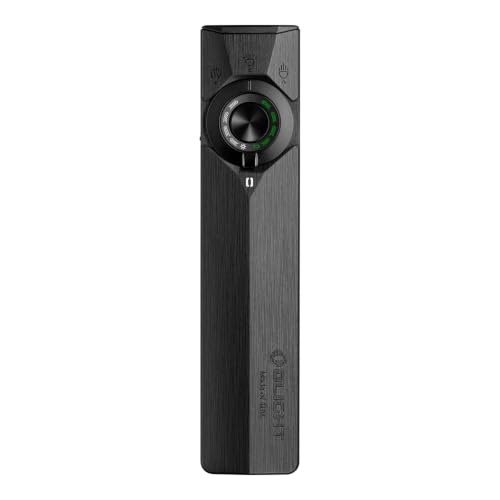
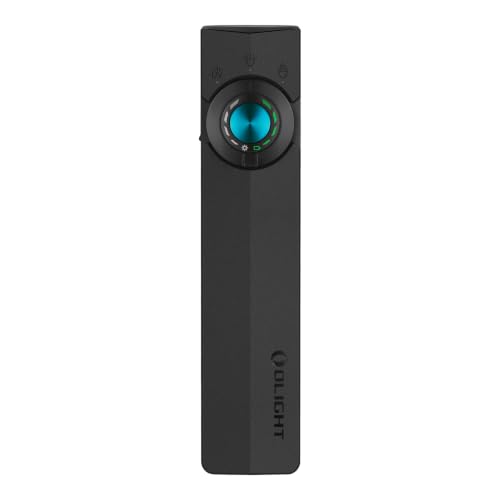
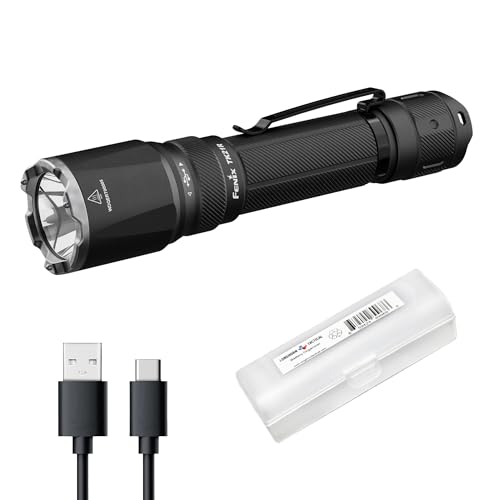
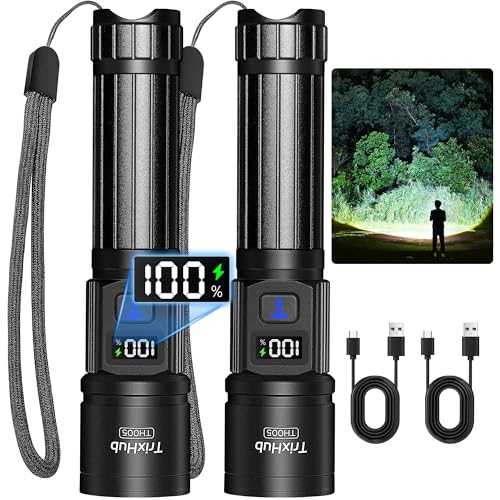
Prices span a wide range. Basic multi packs like the TrixHub 2 pack cost around $16, everyday carry lights like the OLIGHT ArkPro cost around $100, and high output or premium lights like the Fenix TK21R, OLIGHT Seeker 4 Pro, Nitecore P27iX and MagLite ML150LRX run from around $135 to $170. For most homes, one quality light plus a couple of inexpensive backups covers power outages and everyday tasks.
Choosing the best rechargeable flashlight starts with where it will live: a pocket, a nightstand, a glove box or a toolbox. A light you actually carry and keep charged beats a brighter one that sits dead in a drawer.
Key Specs Explained in Plain English
The key specs are brightness, beam distance, runtime, charging, battery, durability and controls. Here is what each means.
The best rechargeable flashlight for you balances these specs instead of maxing out one. A pocket light with good runtime, simple controls and USB-C charging will serve most households better than a giant light with an extreme lumen claim.
Brightness and Output (Lumens and Candela)
Lumens measure total light output. Around 100 to 300 lumens suits household tasks, 500 to 1,500 lumens suits outdoor use and 3,000 lumens and more suits searching large areas. Candela measures beam intensity, which affects how far light reaches. Streamlight lists 500 lumens and 6,800 candela with a 165 meter beam for the ProTac 2L-X, while Fenix lists up to 3,600 lumens and a 524 yard beam for the TK21R.
The OLIGHT ArkPro Ultra combines a 1,700 lumen flood, an 800 lumen spotlight, a 365nm UV light and a green beam in one flat EDC light, according to OLIGHT. The Nitecore P27iX reaches up to 5,000 lumens with spot, flood and mixed beams.
Beam shape matters as much as brightness. A flood beam spreads light wide, which suits campsites, garages and walking a dog. A spot beam reaches far, which suits searching a backyard or trail. Lights with both, like the OLIGHT ArkPro with a 1,500 lumen flood and an 800 lumen spotlight that reaches 205 meters, give you flexibility in one body. MagLite lists 1,082 lumens and a 458 meter beam for the ML150LRX.
Efficiency and Real World Runtime
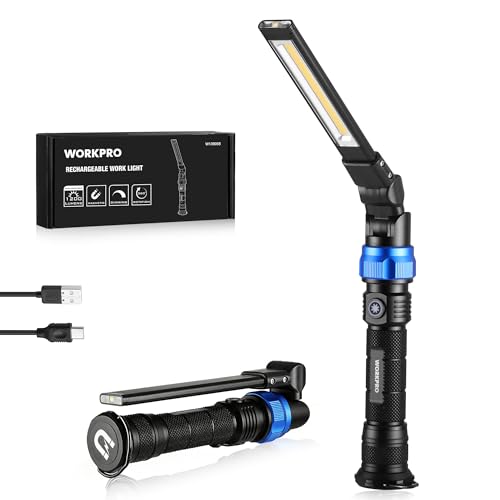
Runtime drops as brightness rises. Turbo modes often step down after a few minutes to manage heat. Fenix lists up to 72.5 hours of runtime on the TK21R's lowest setting, OLIGHT lists up to 14 days of continuous moonlight on the ArkPro Ultra and WORKPRO lists up to 28 hours for its magnetic work light with a 3,200mAh battery. Medium modes give the best balance of brightness and runtime.
When comparing runtime claims, look at the mode the figure refers to. A claim of several days usually means the lowest moonlight setting, which is handy for finding your way at night but too dim for working. For real tasks, compare runtimes on medium or high modes, which makers often list in charts on the box or in the manual.
Charging Options and Speed
USB-C charging is the most convenient, letting you use phone chargers and power banks. Fenix says the TK21R recharges in about 1.5 hours through a hidden USB-C port. OLIGHT offers a magnetic USB cable or USB-C on the ArkPro Ultra. Some lights, like the Streamlight ProTac 2L-X, accept USB rechargeable or standard batteries for flexibility.
Battery level indicators, like TrixHub's LCD display and Nitecore's power indicator, show when to recharge.
Magnetic chargers, like OLIGHT's, snap on easily and avoid open ports that can collect dust and pocket lint. Charging docks, like the one included with the MagLite ML150LRX, keep a light topped up in a set spot, which suits a kitchen counter or a work truck. Some lights can also act as a small power bank for a phone in an emergency.
Durability and Water Resistance
Aircraft grade aluminum bodies, used by Streamlight, TrixHub and others, resist drops and scratches. OLIGHT says its O-aluminum is 1.73 times as hard as standard 6061 aluminum. Waterproof ratings matter outdoors: Fenix lists IP68 and 1 meter impact resistance for the TK21R, and Streamlight lists IPX7 for the ProTac 2L-X.
In simple terms, IPX4 resists splashes and rain, IPX7 survives brief submersion around 1 meter and IP68 adds dust protection plus deeper or longer submersion as the maker specifies. Drop ratings show how far a light can fall onto a hard surface without damage. For camping, boating and car kits, IPX7 or IP68 is a good target.
Safety Features and Lockout
Lockout modes prevent accidental activation in bags and pockets, which can drain batteries and cause heat. Nitecore lists a physical lockout on the P27iX. Low voltage protection and temperature regulation protect batteries. Note that green laser beams on some lights, like the ArkPro Ultra's class 3R green beam, should never be aimed at people or aircraft.
Bright lights get hot on turbo. Most quality lights reduce output automatically to manage heat, but avoid covering a light that is on high or leaving it lit in a pocket or bag. Keep high output lights away from young children, who may look directly into the beam.
Controls and Modes
Tail switches, like the Fenix TK21R's dual rear switches and Nitecore's two stage tail switch, give quick, one handed access, which suits tactical and outdoor use. Side switches suit casual use. Programmable switches, like Streamlight's TEN-TAP, let you choose which modes you want. Zoomable heads, like TrixHub's, adjust beam width.
For family flashlights, simple is better. A single button that turns on to a medium mode and cycles through a few levels is easiest for kids and older relatives during a power outage. Strobe and SOS modes, found on lights like the TrixHub, help signal for help but can be confusing if they are too easy to reach.
Warranty and Support
Established brands like Streamlight, Fenix, OLIGHT, Nitecore and MagLite offer warranties and support. Check warranty length and what it covers, especially for built in batteries, which wear out over time.
Register your light after buying if the maker asks, keep the receipt and save the manual, which explains modes and lockout. Good support makes it easier to replace a charging cable, battery or clip later.
Rookie Mistakes to Avoid
The most common mistake is chasing the highest lumen number, which often means short runtimes and lots of heat. Another is buying a light with a confusing interface for family members who need it during a power outage; simple controls matter in emergencies.
Many people forget to charge flashlights for months and find them dead when needed. Using turbo mode for long periods drains batteries and heats the light. Finally, buying unbranded lights with exaggerated specs can lead to disappointment and poor battery safety.
Another common mistake is buying one flashlight for the whole house. Keeping several lights in fixed spots means you can grab one in the dark without searching. People also overlook the size and weight of large, very bright lights, which can be tiring to carry on a walk; check weight, like the TK21R's listed 7.81 ounces, before buying.
Getting Started: Setup and First Use
Charge the flashlight fully before first use and note how the indicator shows charge level. Learn the modes and how to lock it out for carrying.
Store one light in each key spot: kitchen drawer, bedside, car and toolbox. Set a reminder to top up charge every two to three months. For lights with removable batteries, use only the recommended battery type.
Practice turning the light on and off in the dark so you know the controls by feel. Show family members how to use it and where it lives. Clip the light inside a bag or pocket with the head facing up or down as the maker recommends, and turn on lockout before packing it. If the light came with a holster or lanyard, attach it so you can hang the light while you work.
Rechargeable Flashlights: Your Questions Answered
How long will a rechargeable flashlight run?
Runtime depends on the brightness mode. Low modes can run for days, like OLIGHT's up to 14 days on moonlight and Fenix's up to 72.5 hours, while turbo modes may run only minutes before stepping down.
How long do rechargeable flashlight batteries last?
Lithium ion batteries typically last several hundred charge cycles before capacity drops noticeably. Lights with removable batteries let you replace them easily; built in batteries may need service.
Store lights at a partial charge if you will not use them for months, and avoid deep draining the battery to zero.
How many lumens do I need?
Around 100 to 300 lumens suits household use, 500 to 1,500 lumens suits camping and outdoor tasks and 3,000 lumens and more suits searching large areas. Higher isn't always better indoors, where bright light can be blinding.
For a home emergency kit, a light with at least 300 lumens on medium and a long runtime is usually more useful than a very bright light that runs for only an hour.
Are solar flashlights worth it?
Solar flashlights can be handy in emergency kits, but they charge slowly and depend on sunlight. A USB rechargeable flashlight paired with a power bank or solar charger is usually more reliable.
What is the best flashlight for a car?
A durable, compact light with a long runtime and a magnetic base, like the WORKPRO Magnetic LED Work Light, suits roadside repairs. Keep it charged and store it in the glove box or trunk.
Avoid leaving lithium battery lights in a hot car for long periods in summer, since heat shortens battery life. A small backup light in the glove box is also handy for reading maps or finding dropped items.
The Bottom Line
The best rechargeable flashlight matches how you use it. EDC lights like the OLIGHT ArkPro Ultra suit everyday carry, tactical lights like the Fenix TK21R, Nitecore P27iX and Streamlight ProTac 2L-X suit outdoor and duty use, affordable lights like the TrixHub 2 pack suit homes and cars and work lights like WORKPRO's suit repairs. Choose sensible brightness, check runtime and keep it charged.
For more lighting guides, see the best edc flashlights, the best tactical flashlights, the best rechargeable aa batteries and the best outdoor solar lanterns. Then compare current prices in the product table above.


