
Best EDC Flashlights: Which One Fits the Way You Carry?
Disclosure: We may earn a commission when you buy through links on this page, at no extra cost to you. As an Amazon Associate I earn from qualifying purchases. Learn more

The best EDC flashlights for your pocket: value, keychain, gift and high performance lights compared.
An everyday carry (EDC) flashlight lives in your pocket, on your keys or clipped to your bag, ready for dark parking lots, power outages, dropped items under car seats and late walks with the dog. The best ones are small enough to forget about until you need them, bright enough to be useful and easy to recharge. EDC lights range from $12 keychain lights to $160 compact powerhouses with thousands of lumens. This guide to the best EDC flashlights matches styles to real users, so you buy the right light the first time.
We group lights by type of buyer, explain the features worth comparing, list common mistakes and share care tips. Every light in the table above is sold new on Amazon US. Never shine bright flashlights into people's eyes or at drivers, and keep lights with green laser or high output modes away from children.




Who Should Buy Which EDC Flashlights?
Value seekers do best with compact rechargeable lights around $17 to $21, first time buyers with simple flat lights or keychain lights, gift shoppers with stylish, well packaged lights and performance seekers with high output lights with long throw. Here is how each group differs.
Choosing among the best EDC flashlights starts with where you carry it: on keys, in a pocket, clipped to a bag or in the car. Size and carry method rule out many options quickly.
For Value Seekers
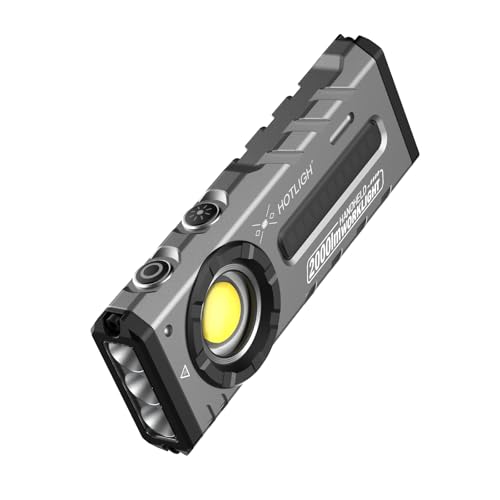
Budget EDC lights now deliver impressive features. The WUBEN G5, at around $17, is a flat pocket light with a 400 lumen maximum, an 82 meter beam distance, a 180 degree rotatable head and clip, a magnetic base and USB C charging that takes about 1.5 hours, according to WUBEN. The HOTLIGH magnetic rechargeable light offers high output at a similar price.
Value lights suit car glove boxes, junk drawers and backpacks. Their build quality and runtime may trail premium lights, but they cover everyday tasks well.
Look for USB C charging, a pocket clip and a lockout mode that prevents accidental activation.
Budget lights are ideal as backups too. Keeping a cheap rechargeable light in each car and a couple at home means you are never searching in the dark during a power outage.
The HOTLIGH magnetic light is marketed with a 2000 lumen maximum and a magnetic base for hands free use, which suits car repairs and home projects.
Budget lights with rotating heads, like the WUBEN G5, double as small work lights when clipped to a cap brim or pocket.
For First Time Buyers
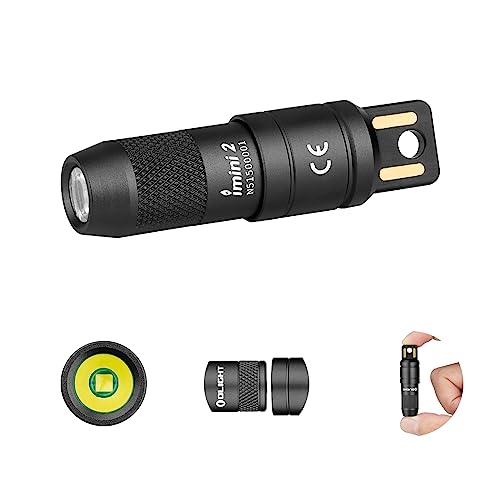
First time buyers should start with a simple, reliable light. The OLIGHT IMINI 2 keychain light is only 55mm long and weighs 19.5 grams, turns on by detaching its magnetic cap, gives 50 lumens with an 80 degree beam and charges through an integrated USB plug, according to OLIGHT. It is perfect for keys and quick tasks.
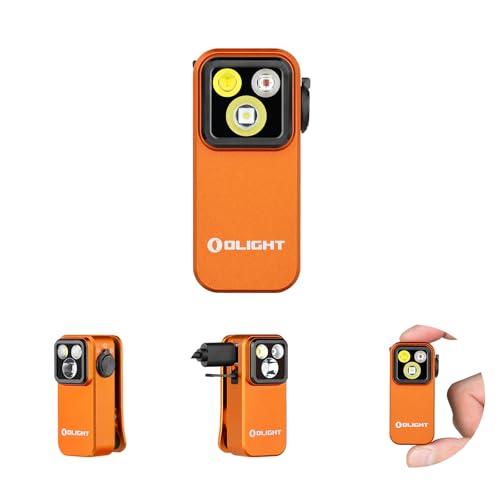
Clip on lights, like the OLIGHT Oclip Pro, attach to a jacket or bag strap for hands free use on walks.
Simple user interfaces matter for beginners. Lights with a single button that cycles low, medium and high are easy to learn, while complex modes like strobe and SOS hidden behind multiple clicks keep things simple for daily use.
Rechargeable lights with built in batteries remove the hassle of buying disposable batteries, which is a big plus for first time owners.
Start with one light and learn its modes before adding more gear.
For Gift Shoppers
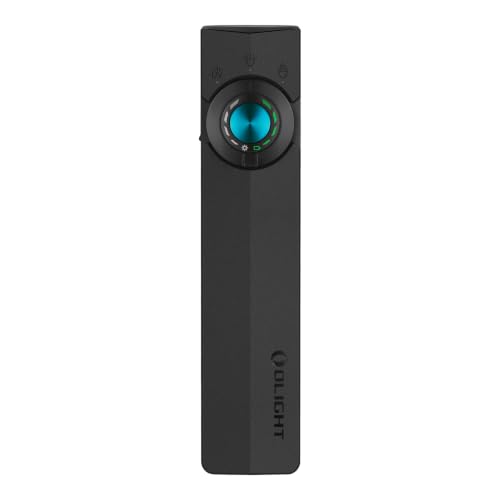
EDC flashlights make practical gifts for commuters, campers and anyone who likes gear. Premium flat lights, like the OLIGHT ArkPro, come in several colors and look sleek. Keychain lights make great stocking stuffers. Choose rechargeable lights with clear charging methods so the recipient does not need special batteries.
Include a short note about charging and lockout so the recipient can start using it right away, and consider a matching keychain or pocket clip accessory.
The OLIGHT ArkPro Ultra comes in colors like olive green, black and amber orange, which makes it a stylish choice for gear lovers.
For People Who Want the Best Performance
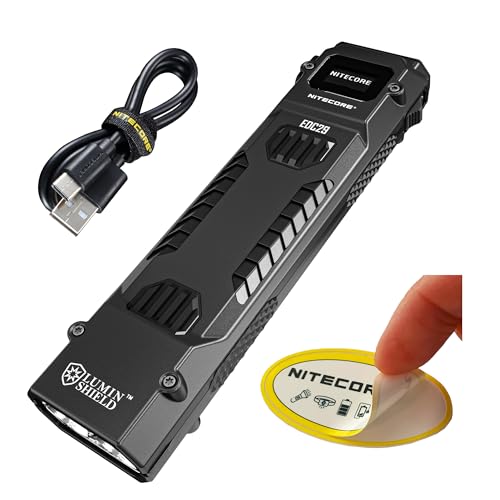
Performance seekers want high output, long throw and multiple light sources. The OLIGHT ArkPro combines a 1,500 lumen floodlight, an 800 lumen spotlight with a 205 meter reach, a UV light and a green laser, with USB C and magnetic charging and up to 14 days on its moonlight mode, according to OLIGHT. The Nitecore EDC29 and EDC35 offer very high lumen outputs in compact flat or tactical bodies.
High output lights get hot at maximum brightness and step down to protect themselves, so check sustained output if you need long periods of bright light.
Tactical style lights, like the Nitecore P27iX and Fenix TK20R, offer very high output and long throw for outdoor work, search and security, but they are larger than typical EDC lights and better suited to bags or belts.
The Nitecore EDC29 is listed at 6500 lumens in a flat body, showing how much output modern compact lights can deliver in short bursts.
Key Features to Compare in the Best EDC Flashlights
Runtime, safety, charging and output matter most. Here is how each affects daily carry.
Also consider weight and size; anything much over 100 grams starts to feel heavy in a pants pocket all day.
Efficiency and Real World Runtime
Runtime depends on brightness mode. Maximum lumens may last only minutes before stepping down, while low modes run for days; OLIGHT lists up to 14 days on moonlight mode for the ArkPro. Look at runtimes for medium modes, which you will use most often.
The ANSI FL1 standard defines how makers measure lumens, beam distance and runtime, which helps compare lights fairly when listed.
Cold weather reduces battery performance, so keep your light in an inside pocket in winter for better runtime.
Moonlight modes, often 1 to 5 lumens, are perfect for reading in a tent or moving around at night without waking others.
Safety Certifications and Features
Safety features include lockout modes to prevent accidental activation in pockets, thermal protection that lowers output when hot and battery protection circuits. Lasers on EDC lights carry laser class labels; OLIGHT notes its green beam is class 3R at 5mW or less, which should never be aimed at eyes or aircraft.
Water resistance ratings, such as IPX4 to IPX8, indicate how well lights handle rain and submersion.
Flat EDC lights with textured sides and concave buttons, like the ArkPro, are easier to operate with gloves and less likely to slip from your hand.
Drop resistance ratings, like the IMINI 2's 1.5 meter rating, indicate how well a light survives falls onto hard surfaces.
Charging Options and Speed
USB C charging is now standard and convenient, letting you share cables with phones. Magnetic chargers, like OLIGHT's, are quick to connect. Integrated USB plugs, like the IMINI 2's, need no cable. Charging time varies from about 1 to 3 hours.
Lights with replaceable batteries let you carry spares for long trips, while built in batteries keep designs compact.
Battery level indicators, like the ArkPro's green status lights, show remaining charge so you are not surprised by a dead light.
Some lights can act as small power banks, charging a phone in a pinch, though capacity is limited compared with dedicated power banks.
Capacity and Output (Wh, mAh, Watts, Lumens)
Lumens measure total light output, while beam distance or candela shows how far light reaches. Battery capacity in mAh affects runtime. For everyday tasks, 100 to 500 lumens is plenty; higher outputs help outdoors and in emergencies.
A good EDC light offers a low mode for close work, a medium mode for walking and a high burst for long distance.
Beam color matters too. Neutral or warm white light shows colors more naturally and causes less glare in fog or rain, while cool white looks brighter. Some lights offer red light, which preserves night vision.
A wide flood beam lights up close surroundings evenly, while a focused spot beam reaches farther; many EDC lights balance both.
Common Mistakes to Avoid When Buying EDC Flashlights
- Chasing lumens alone. Very high peak lumens drop quickly; runtime and comfort matter.
- Ignoring size. A light too big for your pocket gets left at home.
- Skipping lockout. Lights that turn on in pockets drain and can get hot.
- Buying odd batteries. Choose USB C rechargeable or common battery sizes.
- Misusing lasers. Never point laser features at people, animals or aircraft.
Also avoid lights with no clip or lanyard point if you plan to carry them in pockets, since they slide around and are easy to lose.
Choosing a Carry Style
Keychain lights, like the IMINI 2, are always with you but offer modest output. Pocket clip lights, like the WUBEN G5 and ArkPro, balance size and power. Clip on lights, like the Oclip Pro, attach to clothing or bags for hands free walking. Larger tactical lights belong in bags, cars or on belts. Many people carry a keychain light daily and keep a brighter light in the car.
Care and Maintenance Tips
Recharge lights every few weeks even if unused, since batteries slowly discharge, and avoid storing them fully empty. Wipe lenses clean with a soft cloth, keep charging ports free of lint and dust and check pocket clips and screws occasionally. Store lights away from extreme heat, like hot car dashboards, which shortens battery life.
For lights with magnetic charging, keep the charging contacts clean and dry, and store magnetic tail caps away from credit cards and electronics that magnets could affect.
If a light flickers, clean the contacts with a cotton swab and a little isopropyl alcohol, which often fixes poor connections.
FAQs
Are solar options worth it?
Solar flashlights can be useful for emergency kits, but small solar panels charge slowly and are rare on compact EDC lights. For daily carry, USB C rechargeable lights are more practical. Keep a power bank for charging during outages.
Crank powered lights are another off grid option for emergency kits, though they are bulky for daily carry.
A small USB power bank in your emergency kit keeps rechargeable lights running during outages.
How long do rechargeable batteries last?
Lithium ion batteries in EDC lights typically last hundreds of charge cycles before capacity noticeably drops, often several years of normal use. Avoid deep discharges and heat to extend life.
Storing lights around half charge during long periods of non use helps battery health.
How long will it run?
Runtime varies by mode: high modes may run under an hour, medium modes several hours and low modes days. Check the maker's runtime chart and plan around the modes you use most.
Running a light on turbo heats it quickly, so most lights step down automatically after a short burst.
How many lumens do I need?
For keys, locks and bags, 50 to 150 lumens is enough. For walking and general use, 200 to 500 lumens works well. For outdoor searching and emergencies, 1,000 lumens or more helps, though only in short bursts.
More lumens also mean shorter runtime, so balance brightness against how long you need light.
For dog walks in dark neighborhoods, 300 lumens or more helps you spot obstacles and makes you visible to drivers.
Our Verdict
The best EDC flashlights fit your pocket and your routine. The WUBEN G5 offers outstanding value, the OLIGHT IMINI 2 is a simple keychain start, the OLIGHT ArkPro delivers premium performance with multiple light sources and Nitecore's EDC lights suit those who want maximum output. Focus on size, runtime and charging, and use lights responsibly.
For more gear guides, see the best tactical flashlights, the best self defense flashlights, the best rechargeable flashlight and the best emergency flashlight. Then compare current prices in the product table above.
Many people carry two lights: a tiny keychain light for everyday tasks and a brighter pocket light for walks and emergencies. That combination covers almost every situation.


