Best Rated Sous Vide Cooker: A Complete Buying Guide
Disclosure: We may earn a commission when you buy through links on this page, at no extra cost to you. As an Amazon Associate we earn from qualifying purchases. Learn more
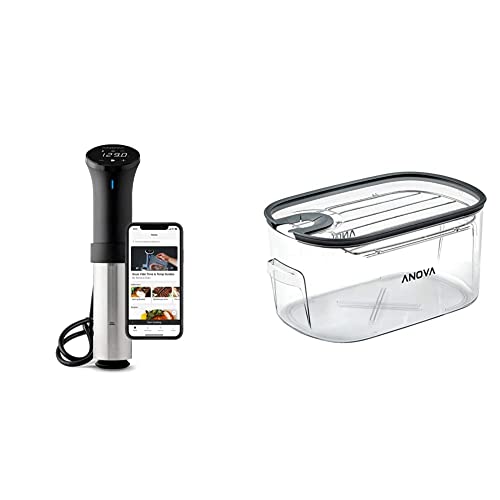
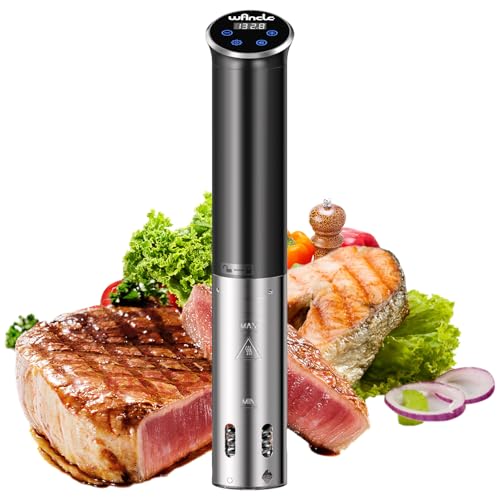
A sous vide cooker, more accurately called an immersion circulator, is a small heating and pumping unit that clips onto the side of a pot or plastic bin and holds water at an exact temperature while it circulates around your food. It is not the same thing as a slow cooker or a pressure cooker, and it is a completely different product from a sous vide rack, which is just an accessory that keeps bagged food submerged rather than a heating device at all. If you already own a rack or are shopping for one separately, this guide is about the machine that actually heats and moves the water.
Picking the right circulator comes down to a handful of practical questions that reviewers and long-time home cooks keep coming back to: how fast it heats a full pot, how tightly it holds its target temperature, whether the clamp actually fits your cookware, how loud it is running on the counter for hours, and whether the WiFi features are worth paying extra for. Below is what the research actually shows on each of those points, plus recommendations broken out by the way people tend to use these machines.

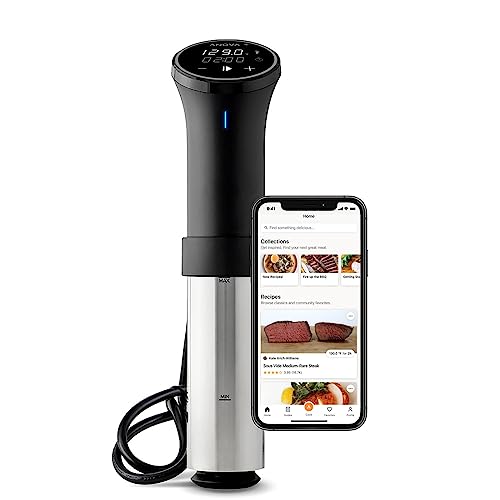
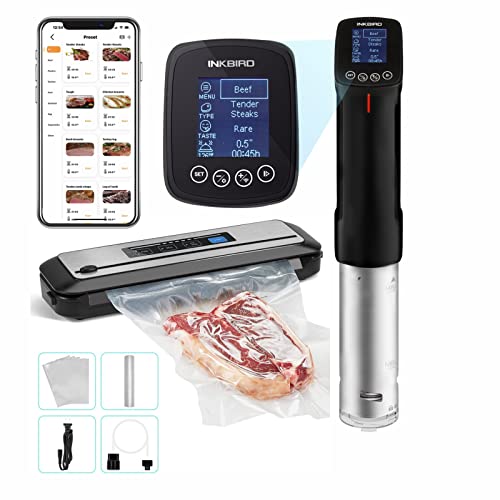
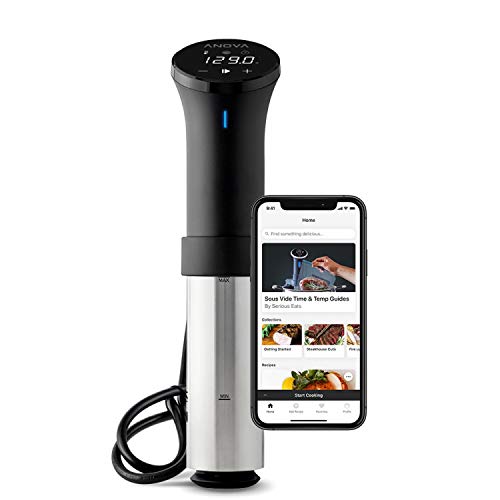
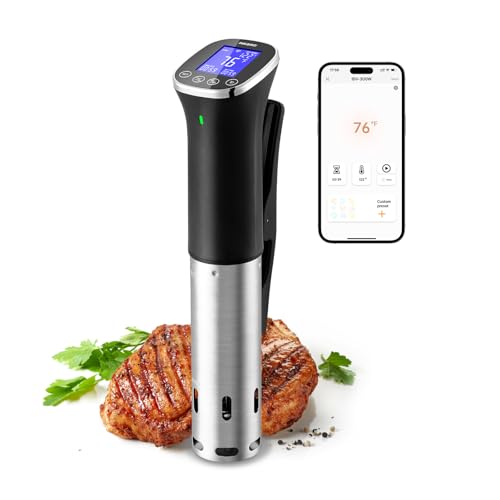
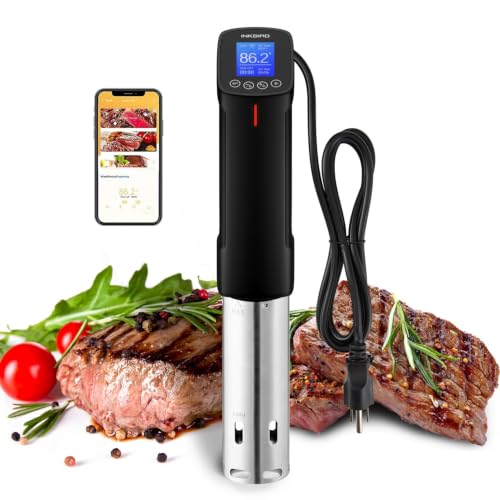
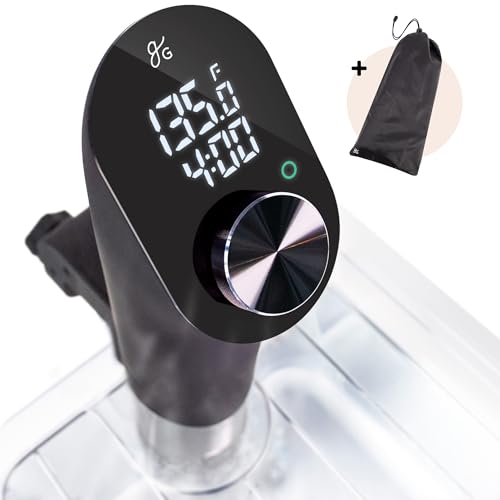
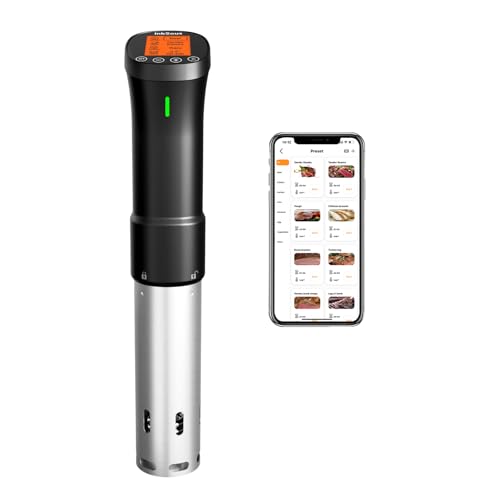
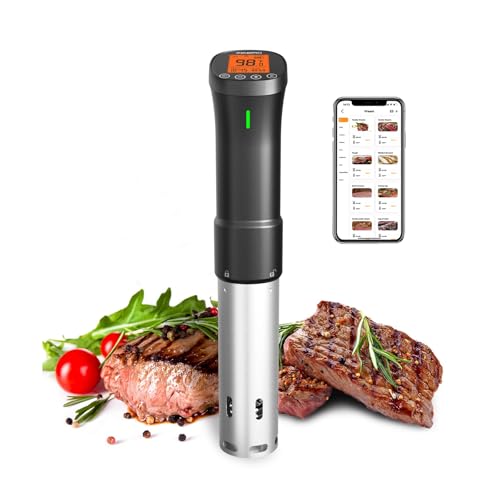
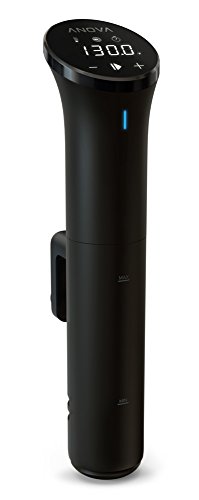

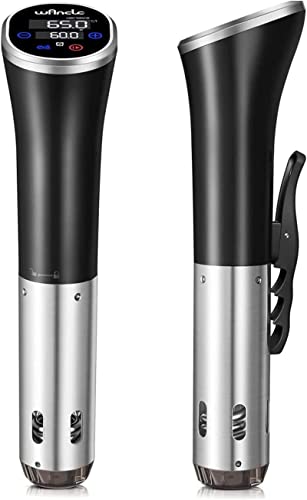
It also helps to know what to skip. Most people don't need a 60-liter commercial unit at home, and features like custom cook programs or recipe libraries built into an app tend to matter far less day to day than whether the machine holds a steady temperature and clamps onto the pot you already own. Spending on the wrong feature is a common regret in owner reviews, so it's worth reading through the sections below before comparing specific models side by side.
Wattage and Heat-Up Time: How Much Power You Actually Need
Every immersion circulator lists a wattage figure, and it matters more than most first-time buyers expect. An 800-watt unit typically needs around 20 minutes to bring a full pot of tap water up to a typical cooking temperature like 135°F. Step up to 1000 watts and that drops to roughly 15 to 18 minutes for about 10 liters of water. At 1100 watts, the same job takes closer to 14 or 15 minutes, and commercial-oriented models running 1200 to 1400 watts can do it in 12 minutes or less.
For someone cooking a single steak or a couple of chicken breasts a few nights a week, an 800 to 1000-watt circulator is genuinely fine; the extra wait is a few minutes at most. Where wattage starts to matter is batch cooking, large stockpots, or anyone who preheats a big Cambro-style bin for a dinner party. If that sounds like your kitchen, look at 1100 watts or higher so you are not standing around waiting for the bath to come up to temperature before the actual cook even starts.
Temperature Accuracy: Why a Fraction of a Degree Matters
Precision is the entire reason sous vide exists, so accuracy claims deserve more scrutiny than most spec sheet numbers. Marketing copy often advertises something like ±0.1°C, but that number describes the sensor and heating element under ideal lab conditions, not a home kitchen. Once you factor in an uninsulated pot losing heat to the room, real-world swings tend to run a bit wider, and enough drift to notice shows up around ±1°F to ±0.5°C, which is enough to push a soft egg or a piece of fish out of its ideal window.
A couple of things reduce that gap in practice. Covering the pot with a lid, a fitted cover, or even foil cuts down on evaporative heat loss and keeps the reading closer to what the display actually shows. It's also worth periodically sanity-checking a unit against ice water (32°F) and boiling water (212°F), since probes and heating elements can drift over months of use, especially if the unit has been dropped or the probe swapped out. If you're already tracking internal temperatures for other cooking, a separate instant-read or probe thermometer, like the picks in our meat thermometer guide, is a useful cross-check rather than relying on the circulator's display alone.
Clamp and Container Fit: Will It Actually Stay Put
This is one of the more common complaints in owner forums and it rarely shows up in spec sheets at all. Fixed clamps are built around a fairly narrow range of pot wall thickness, and they work well on a standard stainless stockpot but can fail to grip thicker-walled containers or wide, shallow braisers. Adjustable clamps with a wider hinge range handle a broader mix of cookware and tend to be the feature that separates mid-range and premium units from entry-level ones.
Fit matters most on long cooks. A clamp that feels secure for a 90-minute steak can start to loosen or let the unit "walk" during a 24 to 48-hour short rib or brisket cook, especially if the container gets bumped. Before buying, check the clamp's stated wall-thickness range against whatever pot or bin you actually plan to use, and if you're running long braises regularly, consider a dedicated tall container built for sous vide rather than a repurposed stockpot.
Pump Noise and the WiFi Question
A circulator runs for anywhere from one to 48 hours at a stretch, so the sound of its pump becomes part of your kitchen's background noise whether you like it or not. Brushless motor designs are consistently called out as noticeably quieter than older brushed motors, and it's worth checking whether a unit auto-shuts-off the pump when lifted out of water, since that also cuts down on idle noise between cooks.
WiFi and app control get a lot of marketing attention, but the actual usefulness varies. Dual-band WiFi models tend to hold a more reliable connection than the single-band 2.4GHz radios found on cheaper units, which is the practical reason premium circulators charge more for the feature. That said, plenty of experienced users report that after the novelty wears off, they set the temperature directly on the unit and only use the app occasionally for a remote start. If app control isn't a priority for you, it's a reasonable place to save money.
Which Sous Vide Cooker Fits Your Kitchen
Matching wattage, accuracy, and clamp fit to how you actually cook is more useful than chasing the single "best" model on a spec sheet. A few patterns worth keeping in mind when comparing options:
- Occasional home cook, single portions: An 800 to 1000-watt compact unit with a standard clamp is enough; you won't notice the extra heat-up time on a weeknight.
- Batch cooking or frequent entertaining: Prioritize 1100 watts or more and an adjustable clamp rated for wider containers, since you'll likely be filling larger pots more often.
- Budget-conscious first-timers: A sub-$50 basic circulator without WiFi is a reasonable way to confirm you'll actually use the technique before spending more.
- Anyone doing long braises regularly: Fit and clamp security matter more than wattage here; check the wall-thickness range and consider pairing the circulator with vacuum-sealed bags, which hold up better than zip-top bags over a 24-plus hour cook. Our vacuum sealer guide covers options that pair well with longer sous vide sessions.
None of these factors work in isolation. A powerful, accurate circulator with a clamp that doesn't fit your pot will still give you inconsistent results, and a perfectly secure unit that heats slowly will just make you wait longer for the same outcome. Match the wattage to your typical batch size, confirm the clamp actually fits the container you already own, and treat the accuracy spec as a starting point rather than a guarantee, and the rest of the decision comes down to how much you want to spend on WiFi convenience.