
Best Mechanics Creepers: Every Type Explained Side by Side (2026)
Disclosure: We may earn a commission when you buy through links on this page, at no extra cost to you. As an Amazon Associate I earn from qualifying purchases. Learn more

Every type of mechanics creeper compared, from plastic boards and Z creeper seats to low profile and big wheel designs.
Shopping for a creeper quickly gets confusing. Molded plastic boards, padded steel frames, folding seats that convert into creepers, ultra low bone style designs and even rolling mats all claim to be the right choice. This guide to the best mechanics creepers compares every main type side by side so you can see how each works, what it does well and who should buy it.
The right type depends on your vehicle's ground clearance, your floor, your budget and how long you spend under the car. Below you will find a comparison table, a closer look at each type, a direct budget versus convertible comparison and a full buying checklist.



Types of Mechanics Creepers Compared
| Type | Best For | Pros | Cons | Typical Price |
|---|---|---|---|---|
| Molded plastic creeper | Most home garages | Light, easy to clean, built in trays | Small casters struggle on cracks | Around $40 to $65 |
| Padded steel frame creeper | Long sessions, comfort | Cushioned, adjustable headrest | Higher profile, vinyl can tear | Around $45 to $70 |
| Convertible Z creeper seat | Brakes, wheels plus underbody work | Two tools in one, folds for storage | Heavier, more moving parts | Around $43 to $70 |
| Heavy duty low profile creeper | Low cars, heavy users | High capacity, very low deck | Costs more, larger to store | Around $85 to $140 |
| Large wheel premium creeper | Rough floors, gravel, daily pro use | Big wheels roll over debris | Expensive | Around $240 to $260 |
| Rolling creeper mat | Tight storage, occasional checks | Rolls up small, very cheap | Little padding, slow to move | Around $25 to $31 |
Budget Options: Molded Plastic Creepers
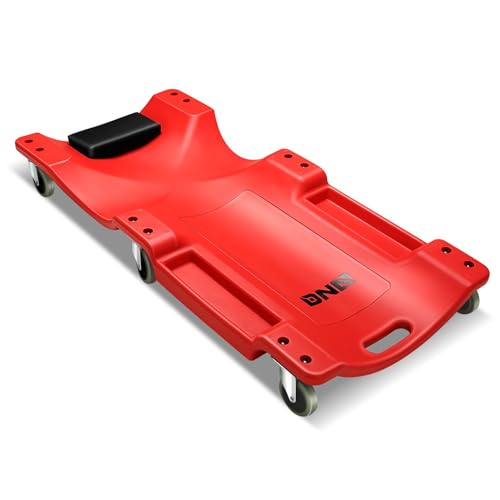
Molded plastic creepers are a single blow molded board made from HDPE or ABS plastic with a padded headrest and six swivel casters. The Pro-LifT 40 inch creeper and DNA MOTORING 40 inch creeper are typical: both weigh around 13 pounds, hold 350 pounds and use 3 inch casters, and the DNA model adds dual side tool trays and a shoulder recess.
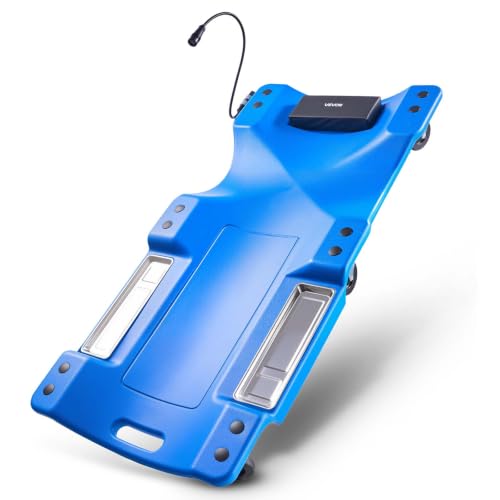
Their strengths are low cost, low weight and easy cleanup, since oil and grease wipe straight off. The tradeoff is that small casters can catch on cracks, zip ties or bolts on rough concrete. They suit most home mechanics doing oil changes, inspections and exhaust work on a smooth garage floor. The VEVOR 40 inch model adds a magnetic LED work light on a flexible arm, which helps in dark undercarriages.
Compact Options: Convertible and Folding Creepers
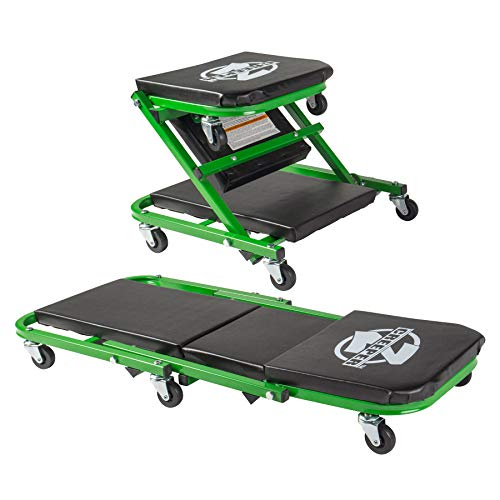
Convertible creepers fold from a flat creeper into a low rolling seat, often called a Z creeper. The VEVOR 36 inch Z creeper seat and Magshion 36 inch Triplex folding creeper both work this way, with six casters and 300 to 330 pound capacities. The Pro-LifT padded creeper converts from creeper to seat with a retractable pin, uses thick vinyl cushions and holds 300 pounds.
The benefit is one tool for both underbody work and jobs at wheel height, such as brakes, tire rotation and detailing, plus compact storage when folded. The drawbacks are extra weight, more joints that can loosen over time and a deck that sits slightly higher than a one piece board. These suit DIYers with limited garage space who want both a seat and a creeper.
Mid Range Options: Heavy Duty Low Profile Creepers
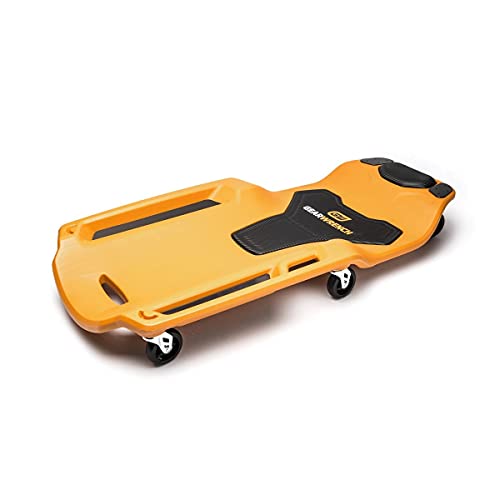
Heavy duty creepers raise capacity and lower the deck. The AFF Viking 42 inch creeper uses high density polyethylene, holds 440 pounds, stands 4.65 inches tall with 2.16 inches of ground clearance, and adds U channels for airflow, shoulder relief and molded parts trays. The BESTOOL 44 inch creeper uses a reinforced metal frame rated for 450 pounds and sits about 2 inches off the ground, with non marring polyurethane casters. The GEARWRENCH 41 inch creeper adds magnetic trays, metal plates for magnetic lights and industrial 3 inch casters.
These suit people working on lowered cars, frequent users and larger mechanics who want more capacity. For even lower designs, see our low profile creepers guide.
Premium and Specialty Options
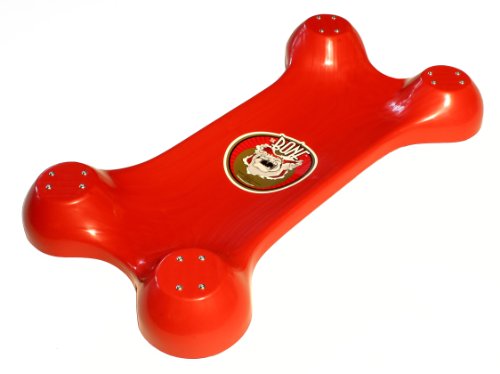
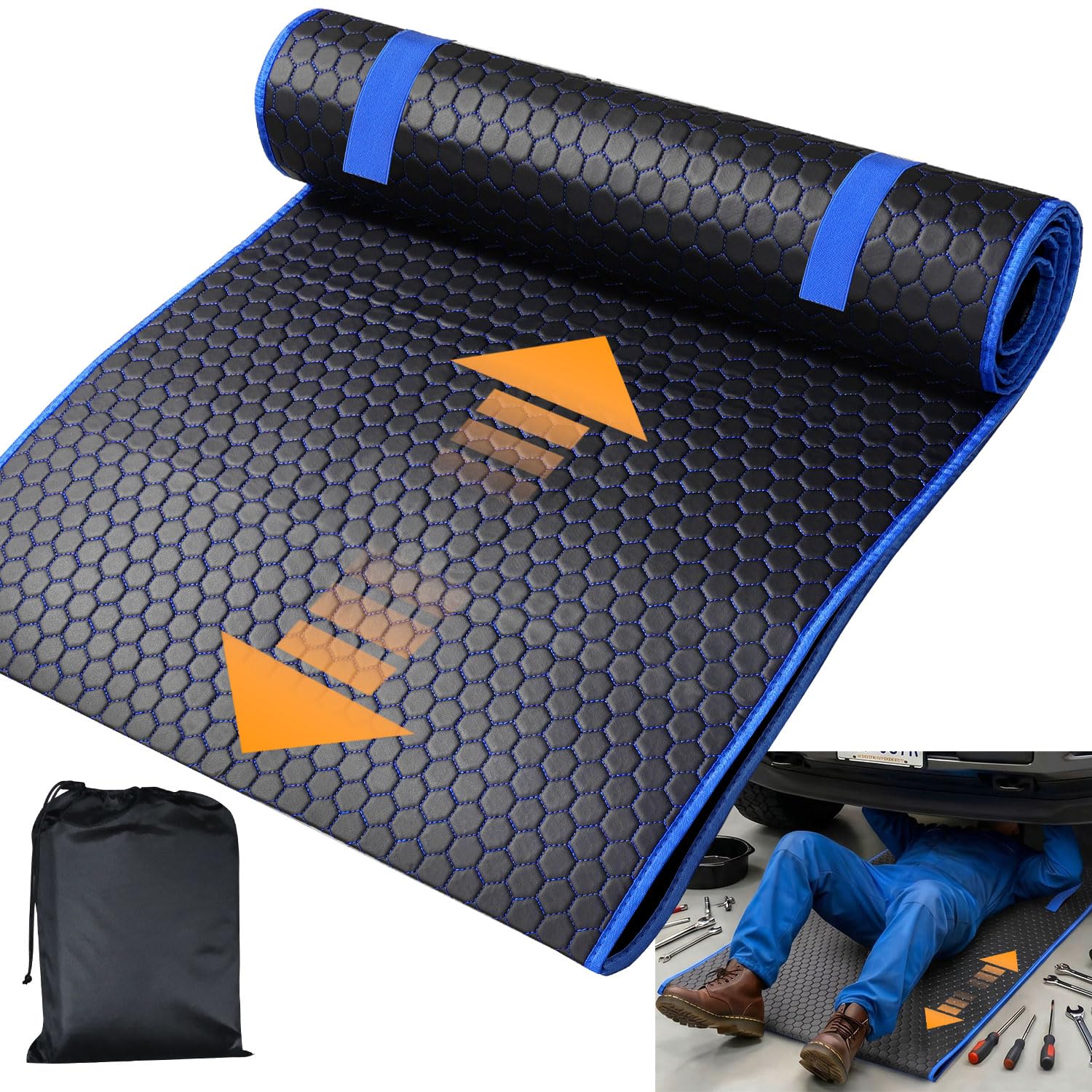
At the top end, The Bone 6031 from Dale Adams Enterprises uses huge 5 inch wheels that roll over debris and rough floors where small casters stop, with a 300 pound capacity and a limited lifetime warranty on the wheels. It is made in the USA and aimed at daily professional use. At the other end, rolling creeper mats like the Magic Rolling Creeper Mat roll up for storage and suit occasional quick checks, but offer little padding.
Budget Options vs Compact Options: Which Should You Choose?
Comparing a one piece plastic creeper with a convertible Z creeper on the points that matter most:
- Clearance: One piece plastic boards usually sit lower, which matters on cars and low SUVs. Convertible models sit a little higher because of their hinges and frame.
- Versatility: Convertibles win, since they double as a rolling seat for brakes, wheels and bodywork.
- Weight and handling: Plastic boards around 13 pounds are easier to carry and hang on a wall.
- Storage: Convertibles fold smaller, though plastic boards hang flat.
- Durability: One piece plastic has no joints to loosen, while convertibles need occasional bolt checks.
Choose a plastic creeper if you mostly work underneath on a smooth floor and want the lowest cost. Choose a convertible if you also do wheel and brake jobs and want one tool that covers both.
How to Choose From the Best Mechanics Creepers
Once you know which type fits, use the criteria below to compare specific models.
Build Quality and Materials
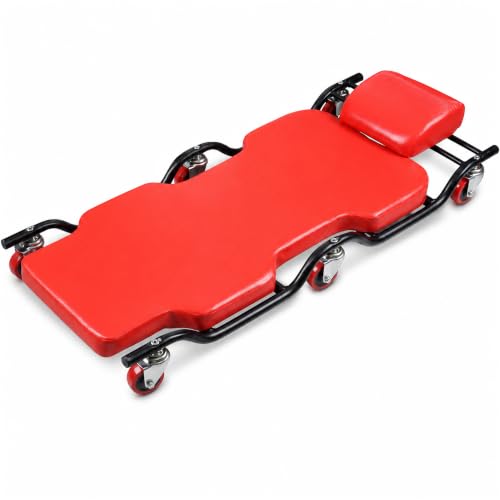
One piece HDPE or ABS plastic bodies resist oil, grease and impact, and will not rust or rip. Steel frame creepers with padding, like the BIG RED TR6452 with heavy duty tubular steel, feel more cushioned but rely on vinyl that can tear if dragged across sharp edges. Look for tight caster mounts, solid welds on steel frames and thick, stitched padding. Avoid creepers with thin plastic that flexes when you sit on one end, or casters attached with small screws instead of bolts.
Key Performance Specs
Three specs matter most. First, height and ground clearance: a lower deck gives more working room under the car, with good low profile models sitting around 2 to 4.65 inches tall overall. Second, weight capacity: choose a rating well above your body weight plus the tools you hold, with 300 to 450 pounds common. Third, caster size: 3 inch casters roll better over cracks than 2 or 2.5 inch casters, and 5 inch wheels like those on The Bone handle rough floors best.
Price vs Value
Budget creepers around $40 to $65 cover most home garage needs well. Midrange models around $85 to $140 add higher capacity, lower decks, metal frames, magnetic trays or better casters, which pay off for frequent users and low vehicles. Premium creepers around $240 to $260 earn their price with large wheels, long warranties and heavy daily use. Most DIYers get the best value in the budget or lower midrange tier.
Ease of Use and Setup
Most creepers arrive ready to use or need only the casters threaded in. Convertible models take a minute to switch modes, so check that the locking pin or latch feels secure. Tool trays and magnetic trays keep bolts from rolling away, and a padded, adjustable headrest helps on long jobs. Lights add convenience, but a separate LED work light often gives brighter, better aimed light.
Intended Use and Who It's For
Weekend DIYers who change oil and inspect brakes do well with a molded plastic creeper. People with small garages or those who also do wheel work should pick a convertible Z creeper. Owners of lowered cars and larger mechanics benefit from a heavy duty low profile model. Professionals working daily on rough or dirty floors get the most from a large wheel premium creeper.
Floor Surface and Caster Type
Your floor matters as much as the creeper. Smooth sealed concrete or epoxy works with any caster, while cracked, rough or debris covered floors need larger casters. Polyurethane casters, as on the BESTOOL creeper, roll quietly and avoid marking finished floors. Oil, grease and chemical resistant casters, as on the Pro-LifT plastic creeper, last longer in busy shops.
Safety Under the Vehicle
A creeper only makes under car work comfortable; it does not make it safe by itself. Always support the vehicle on rated jack stands on solid, level ground, and never work under a car held only by a jack. Chock the wheels, keep the creeper path clear and let someone know when you are working underneath. Our portable car jack guide covers lifting gear.
How to Make Your Mechanics Creeper Last Longer
- Read the manual before first use. Check the weight rating and how to lock convertible models in each position.
- Clean and inspect regularly. Wipe off oil and brake fluid, which can degrade vinyl and plastic, and pull hair and debris from the casters.
- Lubricate and tighten casters. A light spray of lubricant and a quick bolt check every few months keeps wheels rolling smoothly.
- Store in a dry place. Hang plastic creepers on a wall hook and keep padded models away from damp floors and sharp tools.
FAQs
Are expensive mechanics creepers worth it?
They are worth it for frequent users, low cars and rough floors. Premium creepers add large wheels, metal frames, higher capacity and longer warranties, which make daily work easier and last longer. For occasional oil changes and inspections on a smooth floor, a well made plastic creeper around $40 to $65 does the job just as well.
How long does a mechanics creeper last?
A good creeper often lasts many years in a home garage. One piece plastic creepers have few parts to fail, while casters are usually the first thing to wear and can often be replaced. Padded creepers may need new vinyl or foam sooner. Cleaning off fluids and keeping casters free of debris extends the life of any type.
What features matter most when buying mechanics creepers?
The most important features are a low deck height, a weight capacity well above your body weight, casters sized for your floor and a comfortable headrest. After those, tool trays, magnetic trays, shoulder relief and convertible seat designs add convenience. Built in lights are a bonus but not essential if you have a good work light.
How do I maintain a mechanics creeper?
Wipe it down after each use, especially after oil or fluid spills. Clean hair and debris from casters, spray them with a light lubricant every few months and tighten caster bolts if they loosen. For convertible models, check hinge pins and latches. Store the creeper off the floor or hanging on a wall to keep it clean and dry.
How much should I spend on a mechanics creeper?
Most DIYers do well spending around $40 to $70, which buys a solid plastic, padded or convertible creeper. Around $85 to $140 makes sense if you work on low vehicles, need a higher weight capacity or work often. Spend around $240 or more only for daily professional use or very rough floors.
What is a low profile creeper?
A low profile creeper has a deck that sits very close to the floor, giving more room between you and the vehicle. Models like the BESTOOL 44 inch creeper sit about 2 inches off the ground. They suit sports cars, lowered vehicles and anyone who wants extra working space under the car.
Wrapping Up
Three things matter most when choosing a creeper: deck height for your vehicle, casters that suit your floor and enough weight capacity with comfortable support. Most home mechanics are well served by a molded plastic creeper, those with small garages benefit from a convertible Z creeper, and heavy users or owners of low cars should step up to a heavy duty low profile model. Keep your garage organized with good tool boxes for the garage, then check the product table above to choose from the best mechanics creepers for your workspace.


