
Best Handheld CB Radio: Our 2026 Checklist and Top 3 Picks
Disclosure: We may earn a commission when you buy through links on this page, at no extra cost to you. As an Amazon Associate I earn from qualifying purchases. Learn more

A clear checklist for handheld CB radios, with Midland 75-822, Uniden PRO401HH and President Randy III picks.
A handheld CB radio keeps you talking with truckers, convoy partners and trail groups when cell service drops out, with no license or monthly plan required in the United States. Choosing the best handheld cb radio comes down to a short checklist: legal power output, noise filtering, power options, build quality and how well the radio connects to an external antenna in a vehicle.
This guide explains each criterion with clear good and poor thresholds, then names three radios from the product table above that pass. A buyer checklist, red flags and care tips follow, so you can judge any listing yourself.






How We Evaluate Handheld CB Radios
Every handheld CB sold legally in the US works on the same 40 channels at the same maximum power, so the differences come from receiver quality, features, power flexibility and build. These are the criteria we score each radio against.
Measuring for Size and Portability
Handheld CB radios are bigger than typical walkie talkies because the 11 meter band needs a longer antenna and the radio needs room for a battery pack. A good handheld weighs around a pound and fits a belt clip or a door pocket.
The Uniden PRO401HH, for example, weighs about one pound. Check the overall length with the antenna attached, since a full height rubber antenna can add many inches. Poor choices are radios so bulky that they stay in the truck, which defeats the purpose of a handheld.
Intended Use and Who It's For
Define the main use before comparing models. Drivers and truckers mostly use the radio inside a vehicle, so they need a radio that runs from a 12V socket and connects to a roof antenna.
Off road groups and campers carry the radio outside, so battery life and a sturdy case matter more. Emergency preppers want NOAA weather channels and simple controls that anyone in the family can use. A radio that converts between handheld and mobile use, like the Midland 75-822 or President Randy III, suits people who split time between all three.
Warranty and Customer Support
Established radio brands such as Cobra, Midland, Uniden and President sell replacement antennas, battery packs and speaker mics, and they publish manuals and support contacts. A good score here means a clear warranty term, available spare parts and a US support channel. A poor score is a generic listing with no warranty details and no way to buy a replacement battery tray or antenna. Keep the receipt and register the radio, because coverage often depends on proof of purchase.
Key Performance Specs
Four specs matter most. First, power: a legal CB transmits at 4 watts on AM, and a high and low power switch saves battery when the other radio is close. Second, noise filtering: look for ANL (automatic noise limiter), a noise blanker or a dedicated system such as the Cobra Soundtracker.
Third, squelch: manual or automatic squelch control keeps static quiet between transmissions. Fourth, channels: all 40 CB channels plus instant access to emergency channel 9 and trucker channel 19. AM and FM capability, found on newer FCC approved radios like the President Randy III and Midland 75-822, adds clearer FM audio when both radios support it.
Build Quality and Materials
Handheld radios get dropped, so a solid case, tight battery door and firm antenna connector matter. A BNC antenna connector is the standard on handhelds and makes it easy to swap antennas or add an adapter for a vehicle antenna. Check that buttons have clear tactile feedback and that the display has a backlight for night use. Poor builds show loose battery covers, flimsy belt clips and antenna mounts that wobble after a few weeks.
Price vs Value
Handheld CB radios fall into three tiers. Budget models sit around $50 to $70 and cover the basics of 40 channels, 4 watts and noise limiting.
Midrange models around $100 to $120 add NOAA weather alerts, dual watch and mobile conversion kits. Premium models around $160 to $180 add AM and FM, color displays, VOX hands free talk, programmable channels and charging docks. Value means paying only for features you will use; a trucker may need the mobile kit, while a hiker may not.
Range and Antenna Performance
Range depends far more on the antenna and terrain than on the radio itself, since every legal handheld transmits at the same power. With the short rubber antenna, expect roughly a mile or two in open country and less in hills, forests or cities. Connecting the radio to a vehicle mounted antenna can extend that range noticeably. Radios that include a magnetic roof antenna or an external antenna adapter score higher here, because they make that upgrade easy.
Power Options and Battery Life
Most handheld CB radios run on AA batteries, either alkaline or rechargeable Ni-MH, and the count ranges from six to nine cells. A cigarette lighter adapter is a big plus for vehicle use, and some models charge Ni-MH cells through that cable. Low power mode at 1 watt stretches battery life when you are close to the other radio. Premium models like the President Randy III add a desktop charging dock and a mobile charge module, which simplifies daily charging.
3 Picks for the Best Handheld CB Radio
These three radios come from the product table above and each meets our thresholds for legal power, noise control and build quality.
Best Overall: Midland 75-822
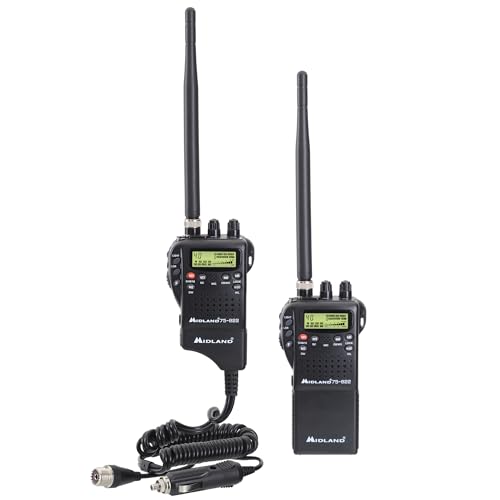
The Midland 75-822 suits drivers, campers and preppers who want one radio for the car and the trail. It covers all 40 CB channels at 4 watts and adds 10 NOAA weather channels with dual watch that keeps an ear on channel 9. Its strongest point is flexibility: the box includes an AC wall adapter, an alkaline battery tray, a rechargeable battery tray and a cigarette lighter adapter, so it converts into a mobile radio with the right accessories.
A large backlit LCD and ANL with squelch control round out the package. The main limitation is the six AA battery pack, which adds weight on long hikes. It sits around $120.

Best Value: Uniden PRO401HH
The Uniden PRO401HH is the pick for budget buyers and anyone who wants a simple backup radio. It covers all 40 channels with a 4 watt high power setting and a low power mode to save battery, plus automatic noise cancellation. It weighs about one pound, places its controls on the top and sides for one hand use and includes a flexible BNC antenna, belt clip and strap.
A switch inside the battery compartment lets you choose rechargeable or alkaline AA cells. The limitation is the lack of weather channels, and the nine AA batteries are not included. It sits around $50 to $70.

Best for Heavy Use: President Randy III
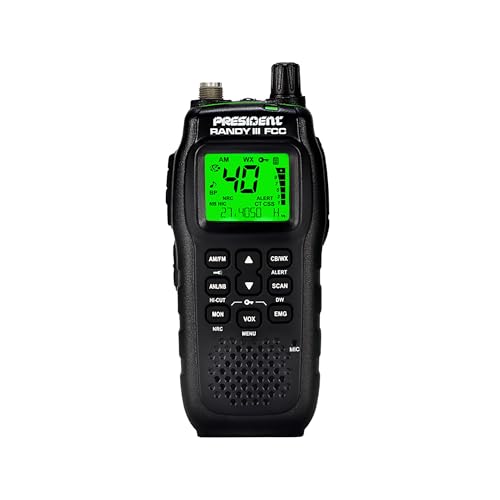
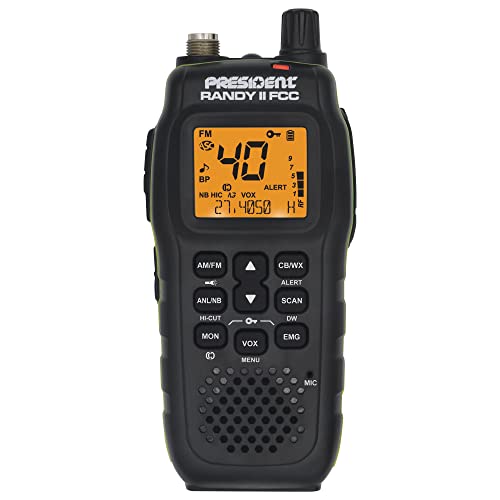
The President Randy III is the radio for daily users such as truckers, off road leaders and event crews. It is FCC approved for AM and FM, with five preset P channels, a noise reduction circuit, ANL, noise blanker and Hi Cut filters to clear up audio in noisy places.
Built in VOX allows hands free talk, and a key lock prevents accidental channel changes. It includes a desktop dock and a mobile charge module, which makes daily charging easy, and adds a weather channel, a 7 color display and an LED flashlight with an SOS setting. The limitation is price, around $179, which is more than casual users need.

Quick Buyer Checklist
- Does the radio cover all 40 CB channels with instant access to channels 9 and 19?
- Does it transmit at the legal 4 watts with a low power option?
- Does it include ANL, a noise blanker or another noise reduction system?
- Does it have NOAA weather channels if you travel or prepare for emergencies?
- Can it run from a 12V vehicle socket as well as batteries?
- Does it use a BNC connector or include an adapter for an external antenna?
- Is the display backlit and easy to read at night?
- Are spare parts such as battery trays and antennas sold by the maker?
Red Flags to Watch For
- Power claims above 4 watts on AM. Legal CB radios are limited to 4 watts AM output, so higher claims suggest a non compliant radio or exaggerated marketing.
- Confusing CB with GMRS or ham radios. Many listings mix CB with GMRS or amateur radios, which work on different bands and may need a license. Make sure the listing says 27MHz or 40 channel CB.
- No FCC approval listed. Look for FCC certification, especially on AM and FM models.
- Vague specs. Listings that skip power output, battery type or antenna connector details often hide weak points.
- No warranty or support details. A missing warranty term usually means no help if the radio fails.
Care and Maintenance Tips
- Read the manual before first use. Learn the squelch, power and dual watch controls so you can use them quickly.
- Clean and inspect regularly. Wipe the case and check the antenna connector and battery contacts for dirt or corrosion.
- Store in a dry place. Remove batteries before long storage to prevent leaks that damage the contacts.
- Never transmit without an antenna attached. Doing so can damage the transmitter.
Frequently Asked Questions
How do I maintain a handheld cb radio?
Keep the radio clean, dry and charged. Wipe the case after outdoor trips, check the antenna connector for looseness and clean battery contacts if they look dull or green. Remove alkaline batteries before storing the radio for more than a few weeks. Make a quick radio check with a friend every month or so, so you know the radio works before you need it.
Are expensive handheld cb radios worth it?
They are worth it for daily or demanding use. Premium radios add AM and FM, stronger noise filtering, VOX, programmable channels and charging docks, which make a real difference for truckers and group leaders. Occasional users and people who want a backup in the glovebox get most of the value from a budget model, since every legal handheld transmits at the same 4 watts.
How long does a handheld cb radio last?
A well kept handheld CB radio often lasts many years, frequently a decade or more. The parts that wear first are antennas, battery trays, belt clips and rechargeable batteries, which are usually cheap to replace from established brands. Protecting the radio from drops, moisture and battery leaks is the best way to make it last.
What features matter most when buying handheld cb radios?
The most important features are full 40 channel coverage, legal 4 watt output with a low power mode, good noise filtering and squelch, and a way to connect a vehicle antenna. After those, NOAA weather alerts and 12V power support add the most value for travel and emergency use. AM and FM and VOX are useful extras for heavy users.
How much should I spend on a handheld cb radio?
Most buyers do well spending around $100 to $120, which buys weather channels, dual watch and mobile conversion options. Around $50 to $70 covers a basic backup radio. Spend around $160 to $180 only if you use the radio daily and want AM and FM, VOX, programmable channels and a charging dock.
Do I need a license to use a handheld CB radio?
No. In the United States, CB radio does not need an individual license as long as you use an FCC approved radio within legal power limits. GMRS radios, by contrast, require a license, and amateur radios require an exam. Check local rules if you travel outside the US.
Can I use a handheld CB radio in my car?
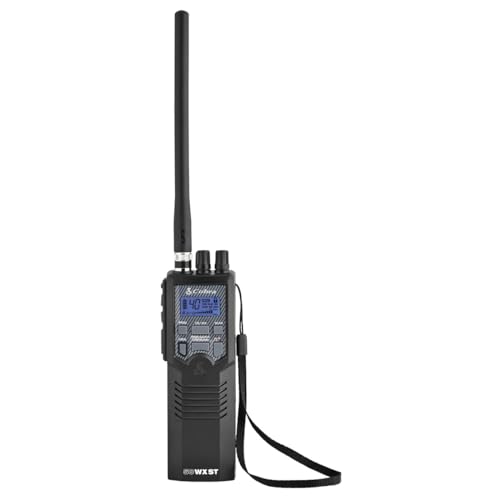
Yes. Most handheld CB radios include or support a cigarette lighter power cable and an external antenna adapter. Connecting the radio to a roof mounted magnetic antenna, like the one bundled with the Cobra HHRT50, gives much better range than the short rubber antenna inside a car body. Keep a dash cam and other gear wired neatly so cables do not tangle.
The Bottom Line
The three criteria that matter most are noise filtering, power flexibility and an easy path to a vehicle antenna. The Midland 75-822 is the best all round radio for car, camp and emergency kits. The Uniden PRO401HH is the smart budget backup, and the President Randy III suits heavy daily users who want AM and FM and a charging dock. Pair your radio with the gear in our emergency radios, emergency preparedness supplies and car jump starters guides, then check the product table above to choose the best handheld cb radio for your needs.


