
Best Long Distance Binoculars: Our 2026 Checklist and Top 3 Picks
Disclosure: We may earn a commission when you buy through links on this page, at no extra cost to you. As an Amazon Associate I earn from qualifying purchases. Learn more

The best long distance binoculars from Vortex, Bushnell and Canon, with a buyer checklist and red flags to avoid.
Spotting an elk on a far ridge, reading a ship's name offshore or following a hawk across a valley takes more than high magnification. Push power too far and the image shakes, darkens and narrows until you cannot find your subject at all. This guide to the best long distance binoculars lays out the checklist we use to judge them, from magnification and lens size to glass quality and stability, and then names three picks that pass.
We explain each criterion, share our picks, add a quick buyer checklist, red flags, setup tips and answers to common questions. Never look at the sun through binoculars, even briefly, since magnified sunlight can cause permanent eye damage, and keep your footing in mind when glassing from cliffs, boats or tree stands.


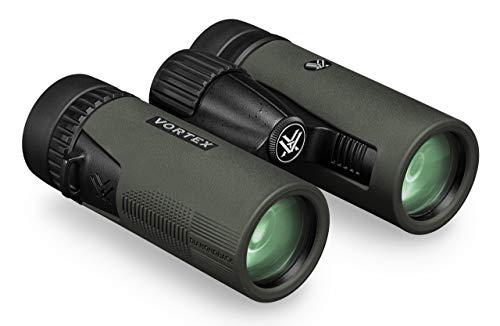

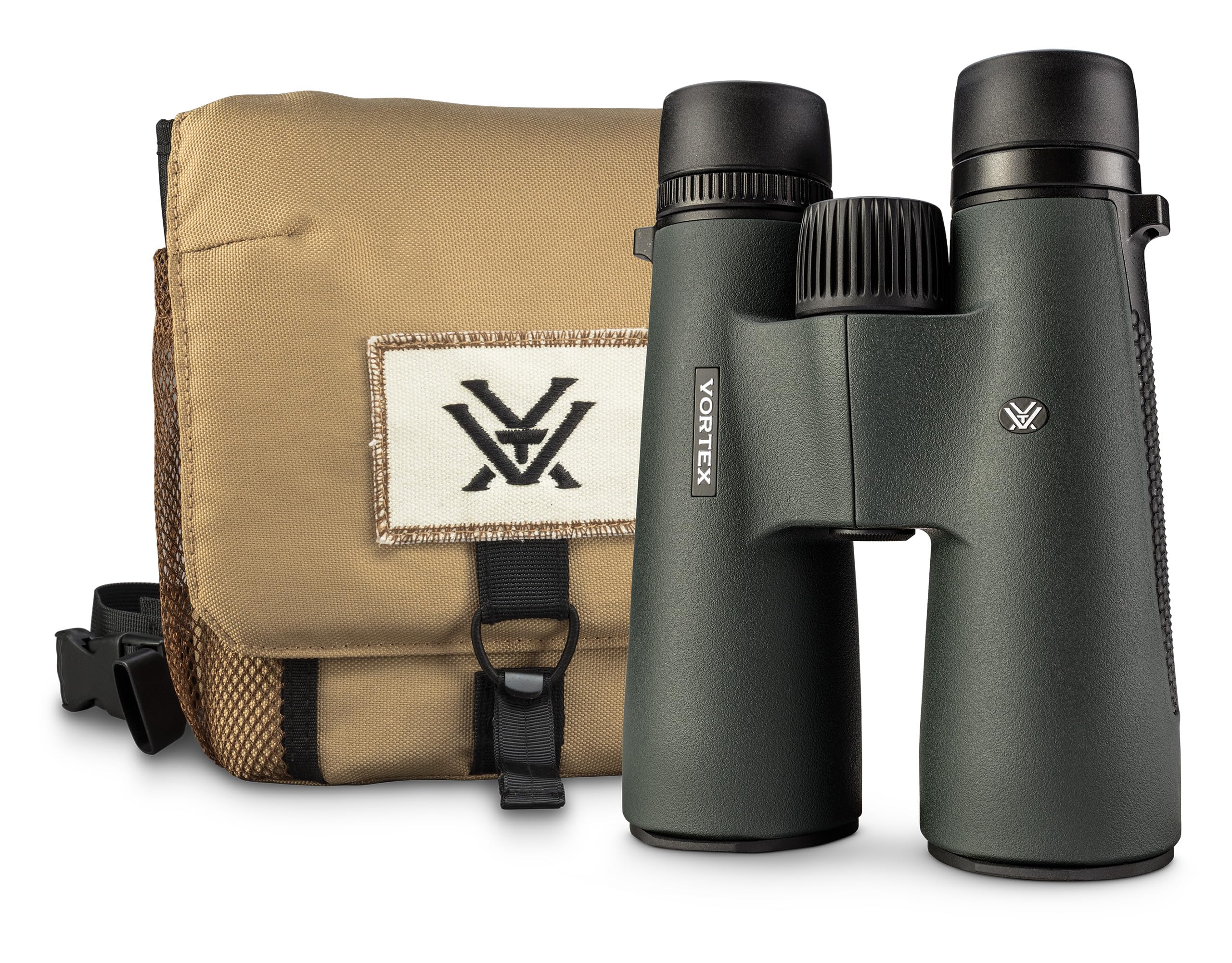


How We Evaluate the Best Long Distance Binoculars
We score each pair on magnification and stability, objective lens size, glass and coatings, prism design, weatherproofing, comfort and warranty. Here is what good and poor look like.
Magnification and Stability
Long distance viewing usually means 10x to 15x. Above about 12x, every hand tremor is magnified, so a tripod or image stabilization becomes important. Vortex recommends a tripod for its Diamondback HD 15x56 and includes an adapter. Canon's 12x36 Image Stabilization III uses optical stabilization from its camera lens technology to steady the view by hand.
Good: 10x to 12x handheld, 15x on a tripod. Poor: 20x or higher handheld with no support.
Objective Lens Size and Brightness
The second number in a binocular spec is the objective lens diameter in millimeters. Larger lenses gather more light, which matters at dawn, dusk and long range. A 50 mm lens, like Vortex's Crossfire HD 12x50 or Bushnell's Falcon 10x50, is bright but heavier than a 42 mm lens. Divide the lens size by magnification to get exit pupil: 12x50 gives about 4.2 mm, which suits daylight and early evening.
Glass, Coatings and Image Quality
Glass quality separates sharp views from blurry ones. Fully multi coated lenses, like Vortex's Crossfire HD and Diamondback HD, increase light transmission.
ED (extra low dispersion) glass, like Nikon's Monarch M7, reduces color fringing. Dielectric prism coatings, like Nikon's PROSTAFF P7 and Vortex's Diamondback HD, improve brightness and color. Bushnell's Falcon uses fully coated optics, a step below fully multi coated.
Prism Design
Roof prism binoculars, like Vortex's and Nikon's, are slimmer and more durable. Porro prism binoculars, like Bushnell's Falcon and Canon's IS models, deliver good depth and value but are bulkier. Both can be excellent; roof prisms cost more to make at the same quality level.
Field of View
Field of view is how wide a scene you see, usually listed in feet at 1,000 yards. Higher magnification narrows it, which makes moving subjects like birds or boats harder to find and follow. Wide angle designs, like Bushnell's Falcon, help you locate targets quickly. If you mostly scan open country, a 10x pair with a wider view may show you more animals than a 15x pair, then switch to higher power once you know where to look.
Weatherproofing and Durability
Outdoor glassing means rain, fog and drops. Vortex uses nitrogen or argon purging with o ring seals for waterproof and fogproof performance, and Nikon's Monarch line is waterproof up to 1 meter for 10 minutes and nitrogen purged. Rubber armor, like Vortex's and Nikon PROSTAFF P7's, protects against bumps. Vortex's Armortek coating guards exterior lenses from scratches, oil and dirt.
Size, Weight, and Ergonomics
Larger lenses add weight. Full size 50 and 56 mm binoculars suit hunters and boaters who glass from one spot, while 42 mm models suit hikers. Tripod adaptability, like Vortex's Crossfire and Diamondback, helps with heavy pairs. Harnesses, like Vortex's included GlassPak on the Diamondback HD 15x56 and Viper HD 12x50, spread weight across your chest.
Eye Relief, Diopter and Comfort
Twist up eyecups, like Vortex's, let you view with or without eyeglasses. A diopter adjusts for differences between your eyes, and a locking diopter, like Nikon's PROSTAFF P7 and Monarch M5, keeps your setting. Long eye relief, which Nikon lists on the PROSTAFF P7, helps eyeglass wearers see the full field.
Warranty and Support
Vortex backs its binoculars with an unlimited, unconditional, lifetime VIP Warranty that repairs or replaces damaged or defective units and transfers to new owners. Check warranty terms for other brands before buying, since binoculars take knocks in the field.
3 Picks That Pass Our Checklist
Our picks are the Vortex Crossfire HD 12x50 as the best overall, the Bushnell Falcon 10x50 as the best value and the Canon 12x36 Image Stabilization III as the best premium pick.
We compared magnification, lens size, glass and coatings, prism design, stability, weatherproofing, warranty and price, along with the overall pattern in owner feedback. We did not use these binoculars ourselves; the notes reflect maker specifications.
Best Overall: Vortex Crossfire HD 12x50
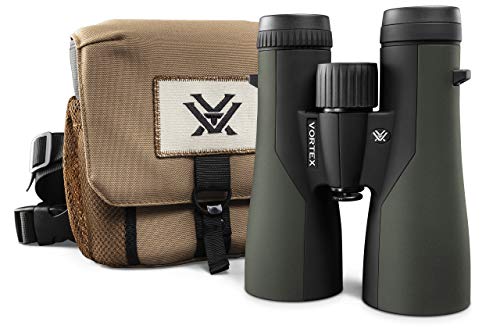
The Vortex Crossfire HD 12x50 suits hunters, boaters and wildlife watchers who want long reach and a bright view, at around $179. Vortex lists 12x magnification with 50 mm objective lenses, select glass elements for resolution and color fidelity, fully multi coated lenses, a roof prism design, adjustable eyecups, a center focus wheel with a right eye diopter, rubber armor and tripod adaptability. Nitrogen purging and o ring seals make it waterproof and fogproof, and Vortex's lifetime VIP Warranty covers it.
Two strengths stand out: strong reach with good brightness and a transferable lifetime warranty.
The limitation is weight for long hikes, and 12x requires steady hands.
Best Value: Bushnell Falcon 10x50
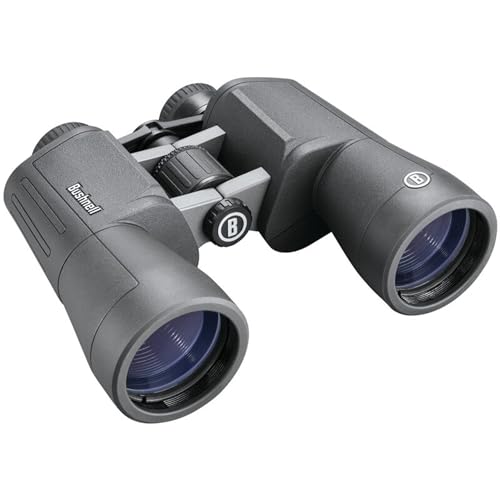
The Bushnell Falcon 10x50 suits beginners, sports fans and casual wildlife watchers who want big lenses on a small budget, at around $47. Bushnell lists a porro prism design, fully coated optics for light transmission, a wide angle view and an InstaFocus system for fast focusing on moving targets. It is suited to sports, sightseeing, nature study and concerts.
Its strengths are a very low price and a bright 50 mm lens.
The trade off is basic coatings and no waterproofing.

Best Premium Pick: Canon 12x36 Image Stabilization III
The Canon 12x36 IS III suits birders, boaters and travelers who want steady high magnification without a tripod, at around $739. Canon lists optical image stabilization derived from its EF camera lens technology, 12x magnification with 36 mm objective lenses, Porro II prisms, a doublet field flattener for sharp edge to edge views and improved battery efficiency. It is compact and portable.
The appeal is a steady image at 12x by hand, which reveals far more detail than a shaking view.
The limitation is a high price, battery dependence and no waterproofing.

Quick Buyer Checklist
Is magnification 10x to 12x for handheld use? Go higher only with a tripod or stabilization.
Is the objective lens 42 mm or larger? Bigger lenses are brighter at range.
Are the lenses fully multi coated? This boosts brightness and contrast.
Is it waterproof and fogproof? Look for nitrogen or argon purging.
Is it tripod adaptable? Essential for 15x and above.
Does it fit eyeglass wearers? Check eyecups and eye relief.
What does the warranty cover? Lifetime coverage is ideal.
Red Flags to Watch For
Very high magnification at a low price. 20x to 30x handheld binoculars are shaky and dim.
Ruby or red coated lenses. They often cut light rather than improve views.
Vague coating terms. Coated is weaker than fully multi coated.
No weatherproofing details. Fog inside the lens ruins a trip.
Night vision claims on regular binoculars. Standard optics cannot see in total darkness.
Setup and Care Tips
Set the interpupillary distance. Adjust the hinge until you see one circle.
Set the diopter. Focus with the left eye, then adjust the right eye diopter.
Use a lens pen or blower. Avoid wiping grit across glass.
Store with lens caps on. Keep binoculars in a dry case.
Frequently Asked Questions
What specs matter most for beginners?
Magnification, objective lens size and coatings matter most. A 10x42 or 10x50 pair with fully multi coated lenses and waterproofing suits most beginners. Bushnell's Falcon 10x50 is an affordable starting point, while Vortex's Crossfire HD offers better glass and a lifetime warranty.
How much should I spend on my first pair?
Most first time buyers should spend around $50 to $180. Around $50 buys a basic porro prism pair like Bushnell's Falcon, and around $120 to $180 buys waterproof roof prism binoculars like Vortex's Triumph HD or Crossfire HD.
What does 8x42 or 10x42 mean?
The first number is magnification and the second is objective lens diameter in millimeters. A 10x42 makes objects look 10 times closer through 42 mm lenses. For long distance, 10x to 12x with 42 to 50 mm lenses balances reach, brightness and steadiness.
Is a smartphone zoom enough instead?
A smartphone zoom is fine for quick snapshots but falls short for live viewing. Phone digital zoom loses detail fast, and phones are hard to hold steady at high zoom. Binoculars give a brighter, wider, three dimensional view, and you can still use a phone adapter for photos.
Which is better for low light?
Larger objective lenses and better coatings are better for low light. A 50 or 56 mm lens, like Vortex's Crossfire HD 12x50 or Diamondback HD 15x56, gathers more light than a 42 mm lens. Lower magnification also helps, since it creates a larger exit pupil.
The Bottom Line
The best long distance binoculars balance magnification with brightness and stability. Vortex's Crossfire HD 12x50 is the best overall for reach, glass and warranty, Bushnell's Falcon 10x50 is the best value and Canon's 12x36 IS III is the premium pick for steady handheld viewing.
For more outdoor and optics guides, see the best telescopes for beginners, the best bird feeders, the best compact cameras for travel and the best cameras for photo and video. Then compare current prices in the product table above.


