
Best Insert Range Hoods for 2026: A Buying Guide
Disclosure: We may earn a commission when you buy through links on this page, at no extra cost to you. As an Amazon Associate I earn from qualifying purchases. Learn more

A practical guide to choosing the best insert range hoods based on CFM rating, duct compatibility, and noise level.
An insert hood tucks behind custom cabinetry, leaving only the front trim visible while the housing and blower stay hidden. Finding the best insert range hoods means matching power to cooking habits and confirming the unit will actually fit inside an existing or planned cabinet shell. This guide covers the specs and features that matter most, from airflow strength to noise level, so the final choice keeps a kitchen clear of smoke and odors without becoming a design compromise.






How Insert Hoods Differ From Other Types
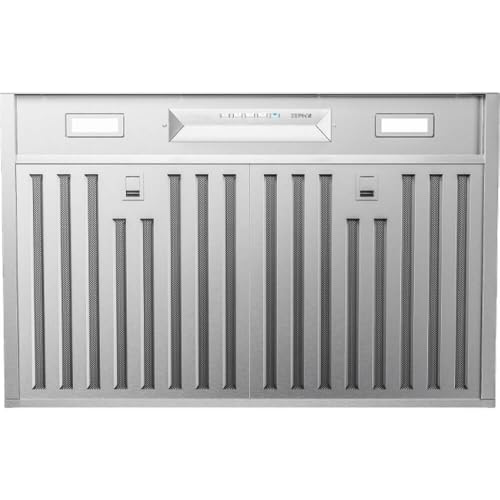
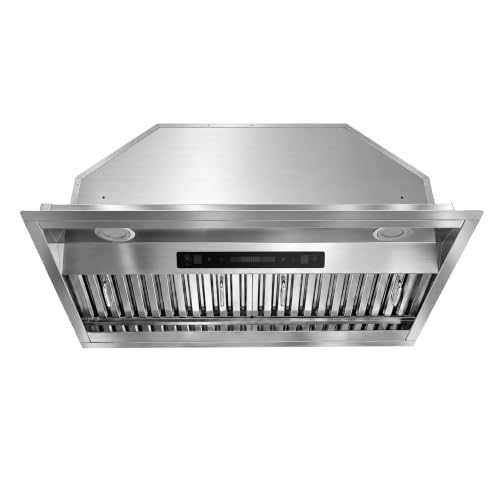
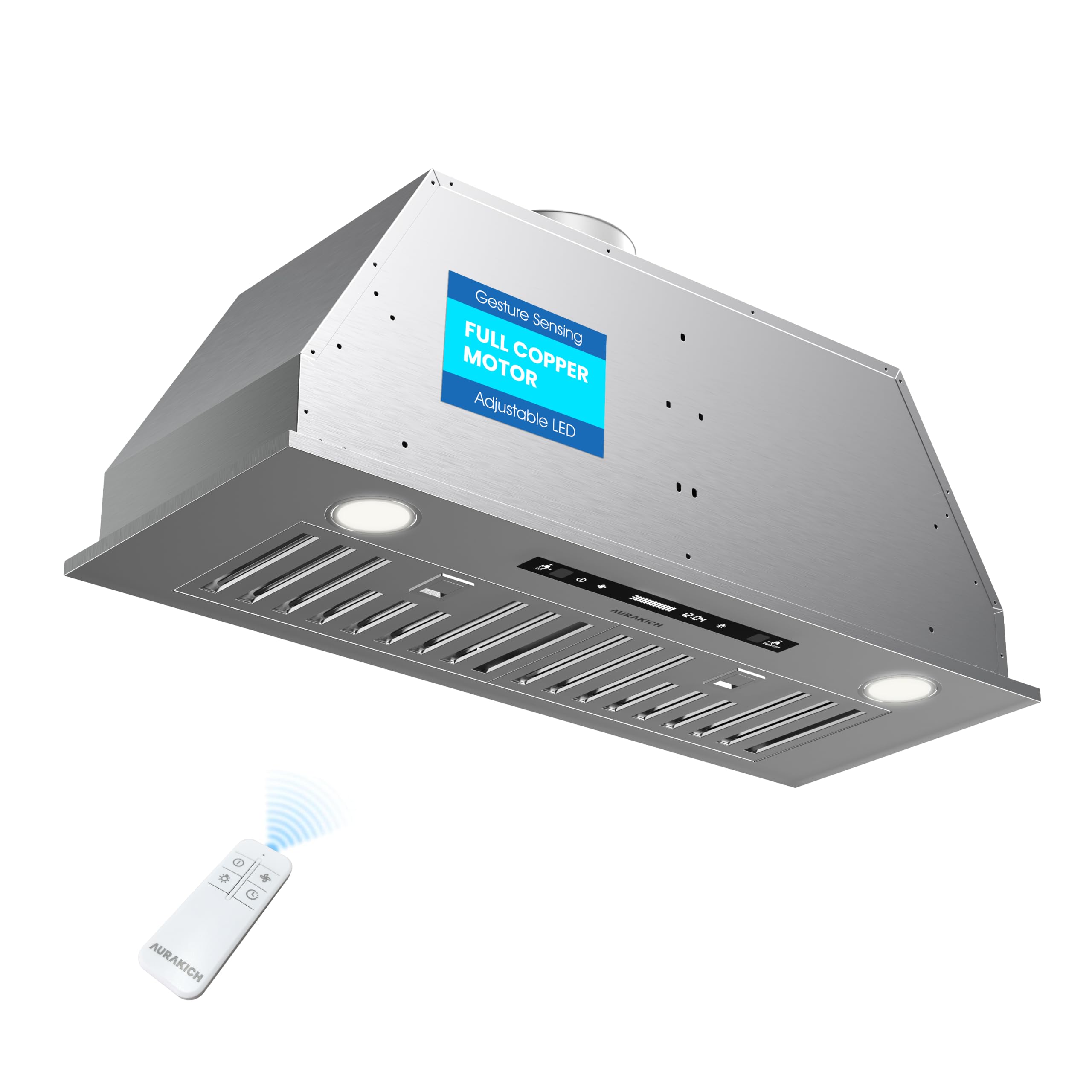
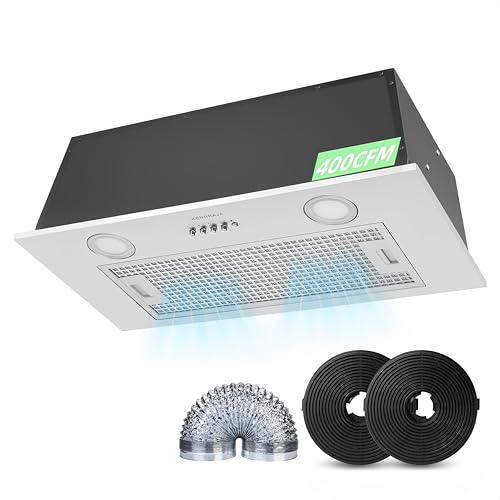
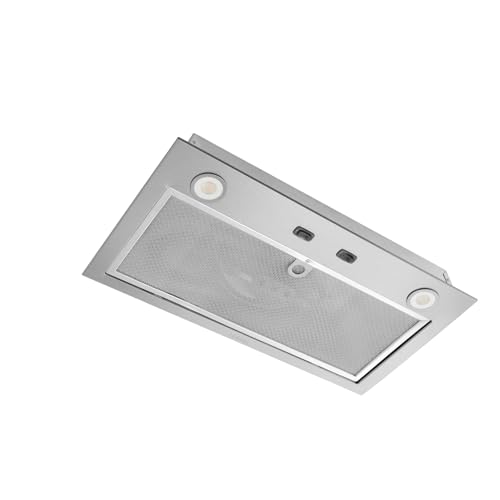
Unlike wall-mounted or under-cabinet hoods that stand as a visible fixture, an insert hood installs inside a custom-built cabinet or decorative shell, showing only a front control panel and vent opening. This lets homeowners match the surrounding cabinetry exactly, which explains why insert hoods are popular in kitchens where a seamless, built-in look matters more than a statement fixture. The tradeoff is that the surrounding cabinet must be built or purchased separately to the correct dimensions, which adds planning time compared to a standalone hood that mounts directly without any surrounding structure.
CFM Rating and Cooking Habits
CFM rating measures how much air the blower moves per minute, and it should scale with the type of cooking done most often. Light, occasional cooking can get by with a lower CFM rating, while frequent high-heat cooking, searing, or wok-style cooking generates more smoke and grease that calls for stronger airflow. A common guideline ties minimum CFM to cooktop width and burner output, so checking that math against a specific range avoids underpowering the hood.
Matching Power to Stove Size
Wider cooktops and higher-output burners generally need proportionally higher CFM to clear smoke effectively across the full width of the cooking surface. A hood rated for a narrow, low-output range will struggle to keep pace with a wide professional-style cooktop, leaving smoke and odors lingering in the kitchen well after cooking has finished.
Duct Size and Ventilation Path
Duct size compatibility is one of the most commonly overlooked details during planning. Using ductwork that is too narrow for the hood's rated airflow creates backpressure, reducing effective performance and increasing fan noise as the blower works harder to push air through a restricted path. Confirming duct diameter and the total run length, including any bends, against the manufacturer's specifications prevents this common installation mistake.
- Longer duct runs generally need larger diameter ducting to maintain airflow
- Each bend in ductwork reduces effective airflow somewhat
- External venting performs better than recirculating systems for heavy cooking
- Recirculating options exist for kitchens without external venting access
Noise Level During Operation
Noise level varies significantly between models at similar CFM ratings, largely due to blower design and insulation quality. A hood that is powerful but excessively loud often gets used less than it should, since the noise discourages running it consistently during cooking. Checking sone ratings, a standard measure of perceived loudness, alongside CFM gives a fuller picture than airflow numbers alone.
Filter Type and Grease Capture
Filter type affects both cleaning frequency and how effectively grease gets captured before recirculating or venting outside. Baffle filters are generally easier to clean and handle heavier grease loads better than mesh filters, which can clog more quickly under frequent high-heat cooking. Dishwasher-safe filters simplify maintenance considerably compared to filters requiring manual scrubbing or special cleaning solutions.
Liner Width and Cabinet Fit
Liner width must match the cabinet opening precisely, since insert hoods rely on a surrounding structure for support and finished appearance. Measuring the intended cabinet space carefully before ordering, including depth for the blower housing, prevents a costly mismatch that requires rebuilding cabinetry after the fact. Custom cabinet shops typically need exact liner dimensions well before installation day.
Control Panel and Lighting
A control panel with multiple fan speeds offers more flexibility than a simple on-off switch, letting cooks match airflow to the intensity of what is on the stove. Lighting options built into the hood illuminate the cooktop directly, which matters for evening cooking or kitchens without strong overhead lighting near the range. LED lighting has become standard and uses less energy than older halogen options while typically lasting much longer.
Choosing the Right Insert for a Kitchen
Among the best insert range hoods, the right choice depends on cooking intensity, duct access, and available cabinet space. A household that cooks lightly and has straightforward duct access can prioritize a mid-range CFM unit with simple controls, while a household doing frequent high-heat cooking should prioritize strong airflow and a durable baffle filter system. Planning cabinet dimensions around the hood, rather than trying to fit a hood into an already-built cabinet, generally produces a better final result.
Maintenance for Long-Term Performance
Grease buildup on filters and interior surfaces reduces both airflow and fire safety over time, making regular cleaning an important habit rather than an optional one. Baffle filters typically go through a dishwasher or a degreasing soak, while the interior housing benefits from periodic wiping to prevent grease from hardening into a harder-to-remove residue. Ductwork also deserves occasional inspection, since grease accumulation inside vents over years of use can become a fire hazard if left unaddressed.
Light bulbs and control electronics generally need little attention beyond occasional dusting, though it is worth checking that vents and seams around the liner stay sealed, since gaps can let smoke and odors escape into the surrounding cabinetry rather than venting properly outside.
Installation Considerations
Professional installation is often recommended for insert hoods given the combination of electrical work, ductwork, and precise cabinet fitting involved. A poorly sealed installation can leak air into the cabinet cavity, reducing effective suction and potentially causing heat or moisture damage to surrounding wood over time. Getting accurate measurements before ordering both the hood and the cabinet shell prevents costly rework once installation day arrives.
Frequently Asked Questions
Is a higher CFM rating always better for a kitchen?
Not necessarily. Excessive CFM for a small kitchen can create negative pressure issues and unnecessary noise, so matching airflow to actual cooking needs and room size works better than maximizing the number.
Can an insert hood be installed without external ducting?
Some models support recirculating operation, filtering air through charcoal filters before returning it to the room, though external venting generally performs better for heavy or frequent cooking.
How often do hood filters need cleaning?
Monthly cleaning is a common recommendation for regular cooking, though households that fry or sear food frequently may need to clean filters more often to maintain effective grease capture.
Does duct length affect how loud a hood sounds?
Yes, longer runs and additional bends increase resistance, which can make the blower work harder and run louder than the same unit installed with a short, straight duct run.
Should cabinet dimensions be finalized before selecting a hood?
Ideally the hood is chosen first, since liner width and depth requirements vary by model, and building cabinetry around a specific unit avoids a mismatch during installation.
Weighing airflow strength, duct compatibility, and noise level against a kitchen's actual cooking habits makes it much easier to choose one of the best insert range hoods for a built-in setup that performs well for years.
Related reading: best copper range hoods and best range hoods under cabinet.


