Best George Foreman Grill: A Complete Buying Guide
Disclosure: We may earn a commission when you buy through links on this page, at no extra cost to you. As an Amazon Associate I earn from qualifying purchases. Learn more
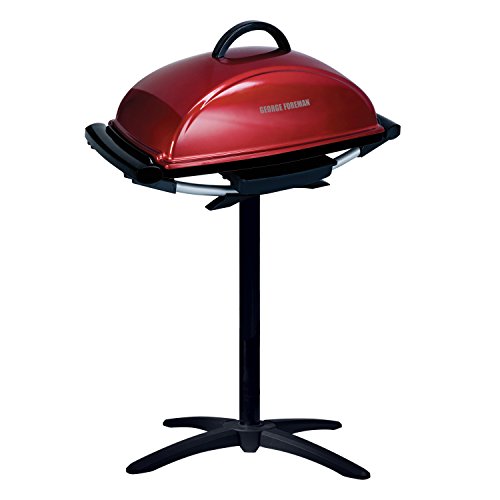
George Foreman grills all work on the same basic idea: two heated plates close over your food and cook both sides at once, so there's no flipping and no waiting around for a second side to brown. That single mechanical idea is also why this lineup behaves so differently from a flat-top indoor grill or an open outdoor burner, and why shopping for the best George Foreman grill means paying attention to a different set of details than you would for either of those. Plate size, hinge design, and how the drip tray handles rendered fat all matter more here than watts or grate material. Here's what actually separates a grill you'll use every week from one that ends up back in the cabinet.

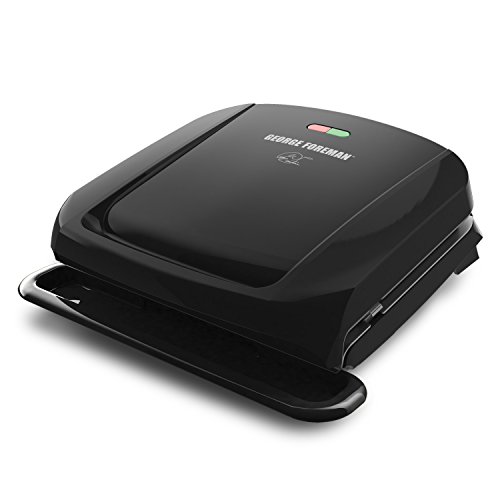
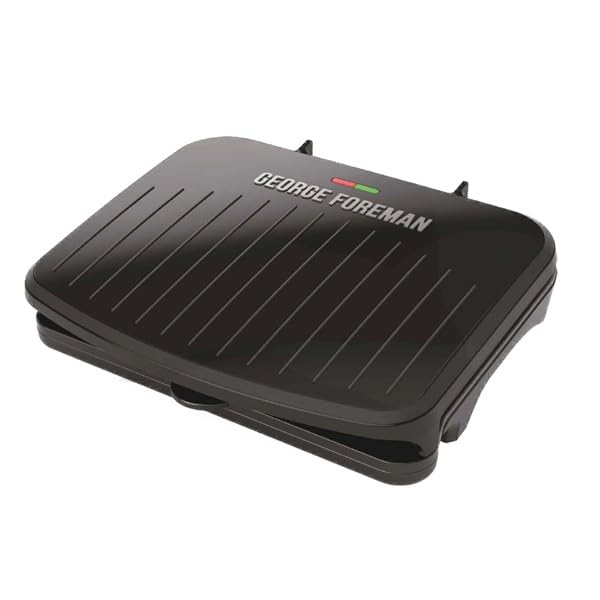
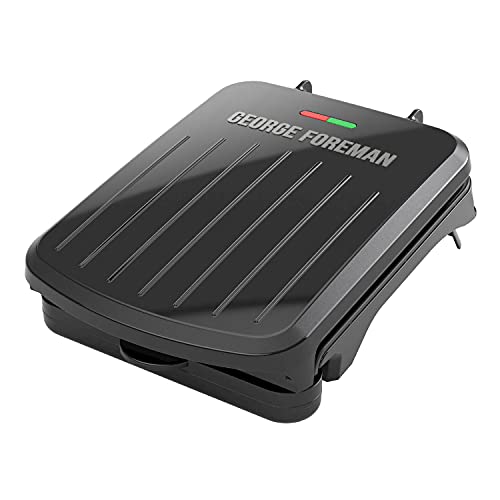
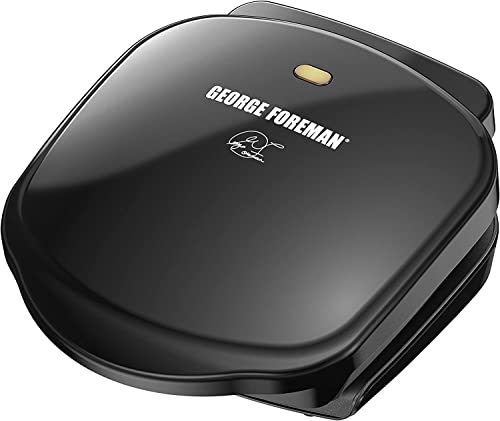
How the Double-Sided Design Actually Cooks Your Food
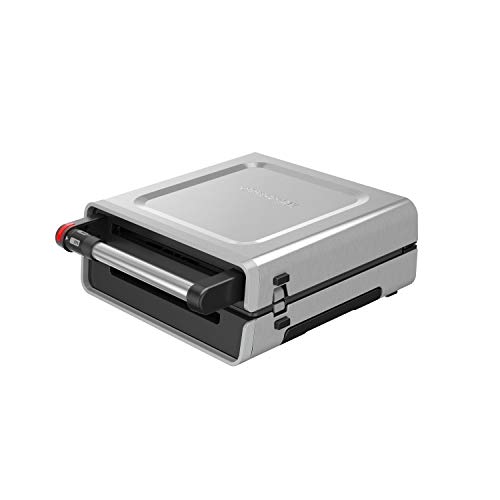
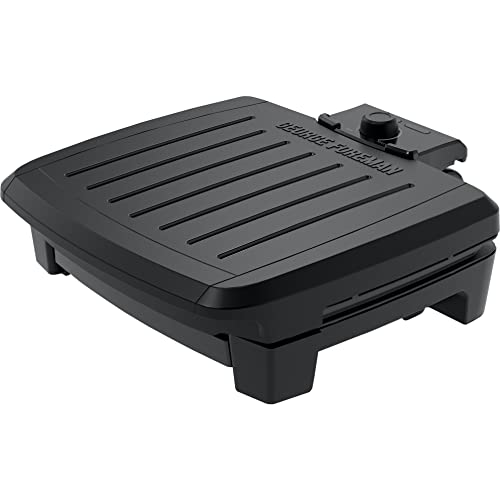
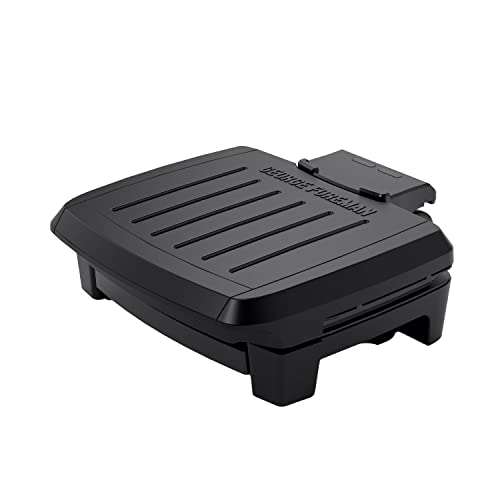
Because both plates make contact at the same time, a burger or chicken breast on one of these grills typically finishes in half the time it would take on a single-surface pan or griddle. The sloped ridges on the plates also do real work: rendered fat runs downhill and off the cooking surface into a separate drip tray instead of pooling under the food, which is the mechanical reason this style of grill is marketed as lower-fat compared to pan-frying.
The tradeoff is that steam and moisture released during cooking have nowhere to go either, since the food is sealed between two hot plates. On lean cuts like chicken breast or a 90/10 turkey burger, that can translate into meat that turns dry and slightly rubbery if it sits even a minute or two past done. This isn't a defect so much as a side effect of clamping two plates around thin food, and it's worth going in expecting it rather than being surprised by it later.
A Floating Hinge Matters More Than It Sounds
A floating hinge lets the top plate tilt independently instead of staying rigidly parallel to the bottom one, so it can press evenly against a thick, uneven piece of food like a bone-in thigh instead of squashing it flat or leaving a gap that undercooks one side. Fixed-hinge models are lighter and usually cheaper, but they work best on food that's roughly the same thickness throughout, like a standard burger patty or a sandwich.
Matching Plate Size and Servings to Your Household
This lineup is sized by serving capacity rather than exact dimensions, running from compact two-serving units meant for one or two people up through family-size plates built to handle five or six servings in a single batch. Buying bigger than you need just adds counter space and storage headaches; buying too small means cooking dinner in two or three batches on a weeknight.
Removable plates lift out for washing, often in the dishwasher if the manual allows it, and they make it realistic to deep-clean the grill after every use rather than just wiping it down. Fixed-plate models are simpler and lighter but need careful hand cleaning, since the base housing the heating element can never go near standing water.
Basic Clamshell, Grill-and-Griddle, or Indoor/Outdoor Convertible
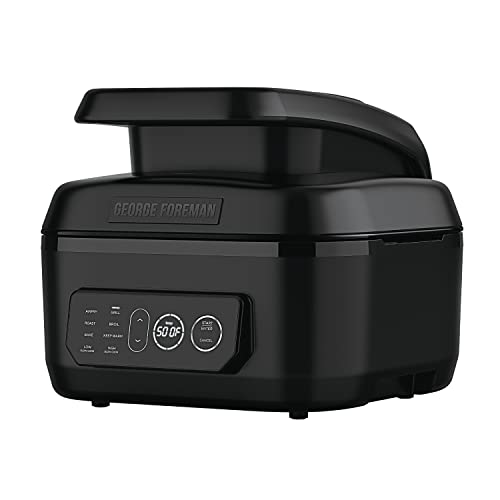
Not every model in this lineup is a plain clamshell. A basic contact grill is the fastest and usually the cheapest option, and it's the right call if burgers, sandwiches, and quick proteins cover most of what you cook. A grill-and-griddle version swaps in reversible plates, ridged on one side and flat on the other, so the same appliance handles pancakes and eggs in the morning and burgers at night.
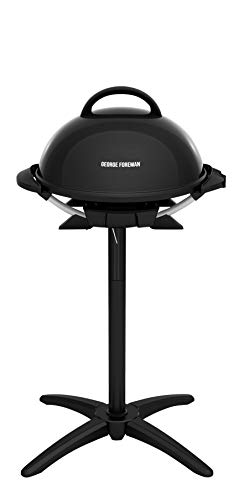
Indoor/outdoor convertible models open a full 180 degrees instead of clamping shut, turning into one large flat surface with roughly double the cooking area of a closed contact grill. That's a different animal from an outdoor electric grill built for a patio outlet or campsite power source, since a George Foreman convertible is still meant to live mostly on a kitchen counter and only occasionally move outside for a crowd. It's also a different mechanism entirely from a smokeless indoor grill, which uses one flat plate and a fan to pull smoke away as you flip food by hand rather than clamping both sides at once.
Does the Grease Trap Really Work, and Does It Dry Out Your Food?
The drip tray isn't just marketing. Independent testing and manufacturer specs on this style of grill commonly cite removing somewhere around 40 percent of rendered fat from food during cooking, since the sloped plates are angled specifically to channel it away rather than let it re-absorb. For anyone trying to cut down on added fat from pan-frying, that's a real and measurable difference, not just a claim on the box.
The dryness complaint that shows up repeatedly in forums and product Q&A sections is also real, and it's connected to the same design. Because moisture drains out alongside the fat, thin or lean cuts can go from perfectly cooked to noticeably dry in a narrow window. A few habits fix most of it: check thin cuts a minute or two before the guideline time rather than after, verify doneness with an instant-read thermometer instead of guessing by eye, and give lean meat a quick coat of oil or a short marinade before it goes on the plates. A reliable meat thermometer solves the guesswork better than any setting on the grill itself.
Preheating Changes the Outcome
Adding food before the indicator light signals a full preheat is one of the most common reasons people end up with sticking and uneven cooking. Waiting the extra minute or two for the plates to reach full temperature makes the difference between food that releases cleanly and food that tears apart when you try to lift it off.
Common Questions About George Foreman Grills
Are George Foreman grills actually healthier than a frying pan?
The sloped plates and drip tray do meaningfully reduce the amount of rendered fat that stays in your food compared to pan-frying with added oil, though the effect depends on what you're cooking. A fatty cut of meat will still lose more fat than a lean one that had little to drain in the first place.
Why does my food come out dry?
Because both plates cook simultaneously, thin or lean foods can go past done quickly, and moisture drains out along with the fat. Shortening cook time slightly, checking with a thermometer, and lightly oiling lean cuts before cooking all help.
Can the plates go in the dishwasher?
Only on models with plates specifically labeled removable and dishwasher-safe. Fixed-plate models should never be submerged or run through a dishwasher, since water can reach the heating element inside the base.
What's the difference between a clamshell and a grill-and-griddle model?
A clamshell has fixed ridged plates meant only for grilling. A grill-and-griddle version uses reversible plates, so you can flip to a flat griddle side for breakfast food and swap back for burgers later.
How long does a burger take to cook?
A standard beef patty usually finishes in about 4 to 6 minutes total with the lid closed, since both sides cook at once. Confirm doneness with a thermometer rather than the clock alone, aiming for 160 degrees Fahrenheit for ground beef.
None of this requires memorizing a spec sheet before you shop. Pick a serving size that matches how many people you actually feed, decide whether removable plates are worth the extra cleanup convenience, and go in knowing that lean cuts need a slightly shorter cook time than the guide suggests. Get those three things right and the rest of the lineup becomes a matter of personal preference rather than guesswork.