Best Pellet Grill Cover: A Complete Buying Guide
Disclosure: We may earn a commission when you buy through links on this page, at no extra cost to you. As an Amazon Associate I earn from qualifying purchases. Learn more
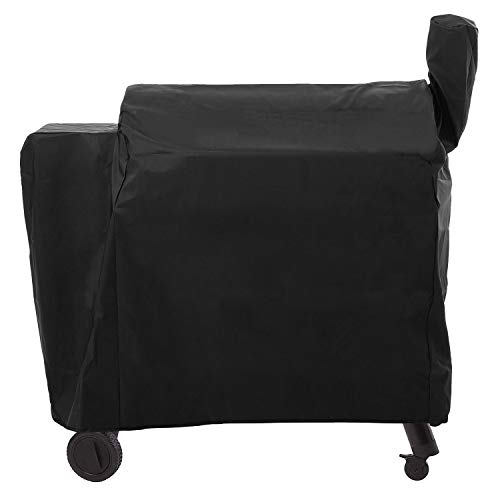
Cart-style pellet grills pack a firepot, an auger motor, and a digital controller into a wide, wheeled cabinet, and most of those parts sit closer to the ground than they do on a tall vertical smoker. Rain doesn't just land on the lid, it splashes up off the patio and pools around the wheels, the grease bucket, and wherever the hopper juts out from the back or side. A cover cut for a compact kettle rarely accounts for that low, wide footprint, which is why so many owners end up with a puddle sitting against the cart legs after every storm. The best pellet grill cover is shaped around this exact style of grill: a domed or flat hood, a rear or side hopper, a grease bucket hanging off one end, and a stance wide enough to catch wind like a sail. This guide walks through the fit, fabric, and hardware that actually matter for keeping a cart-style pellet grill dry and rust-free.
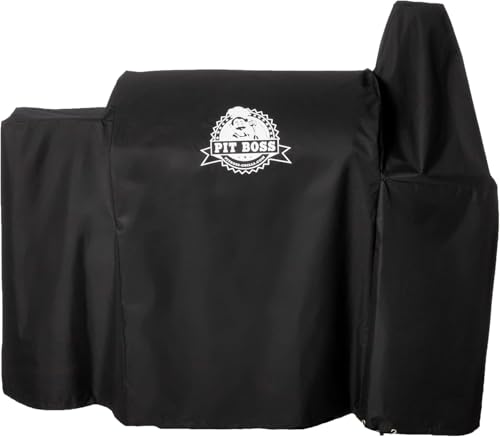
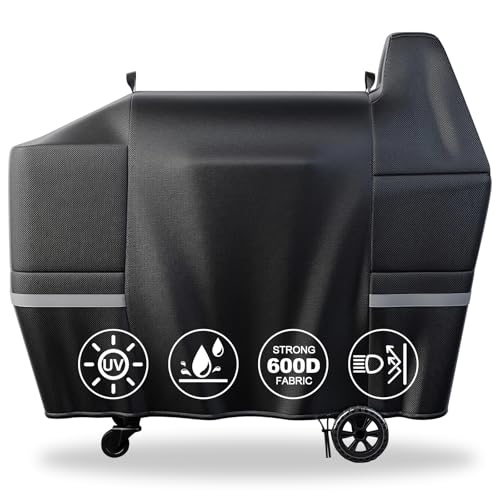
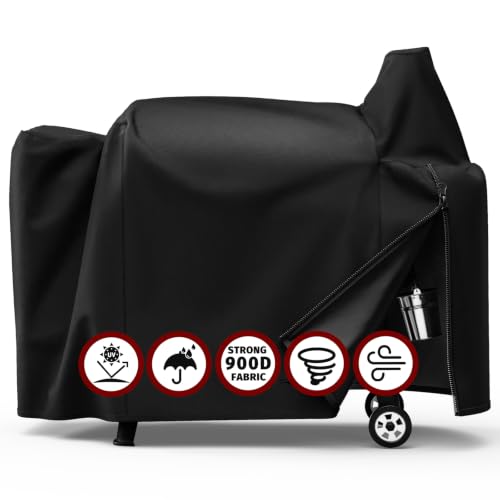
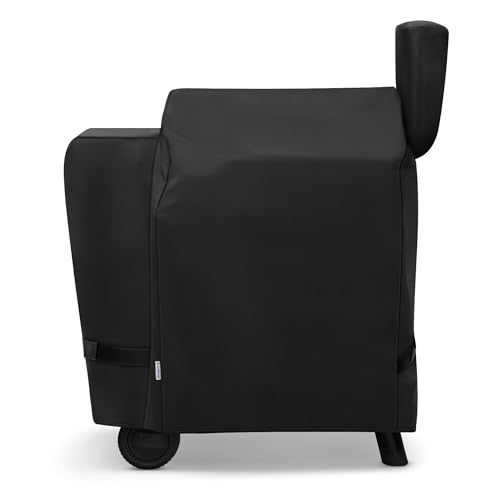
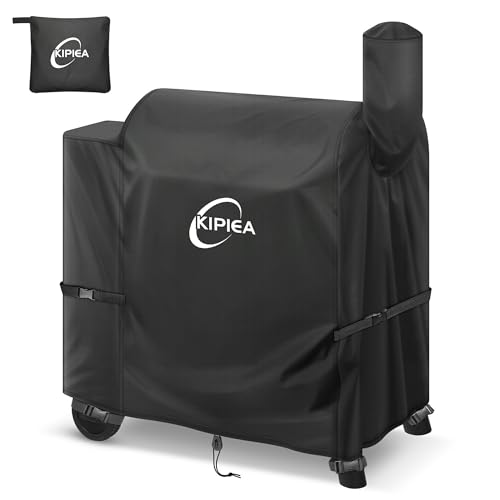
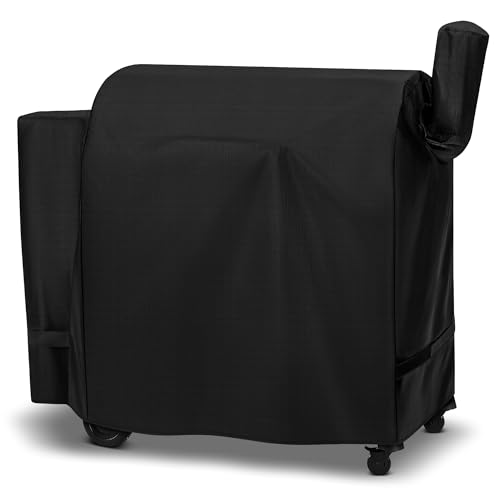
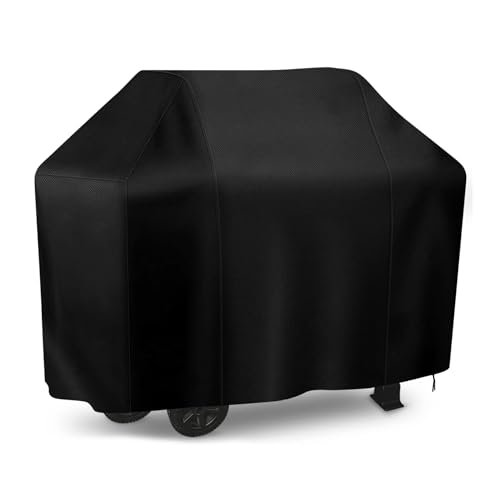
Getting the Fit Right on a Cart-Style Pellet Grill
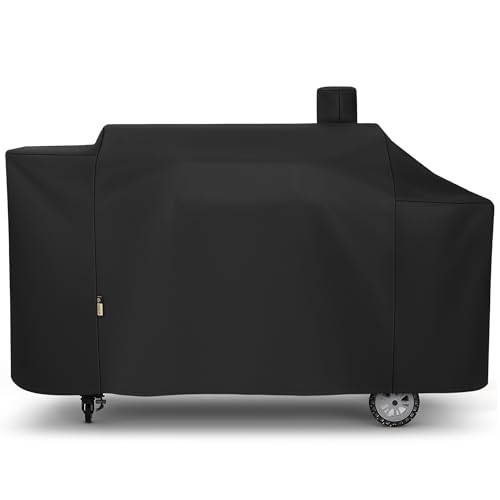
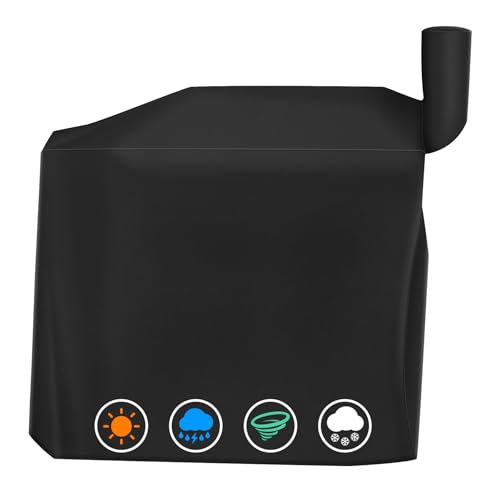
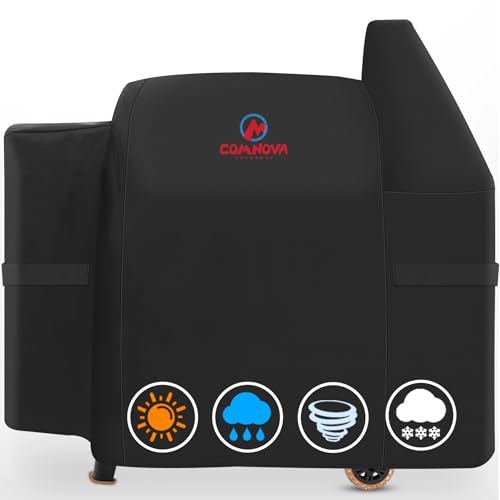
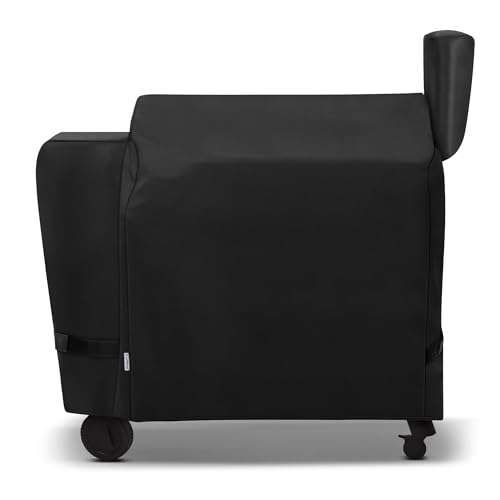
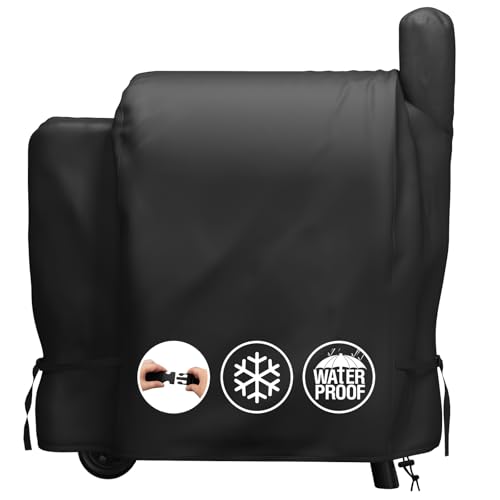
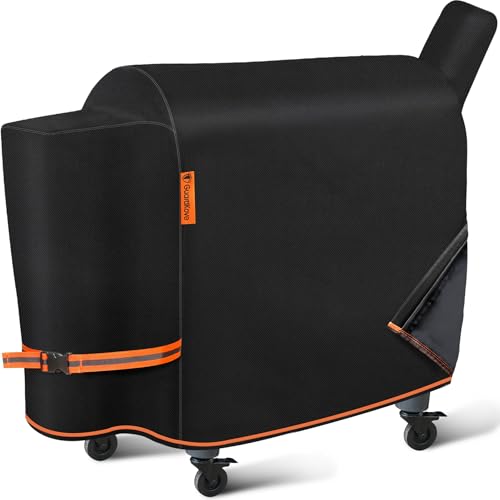
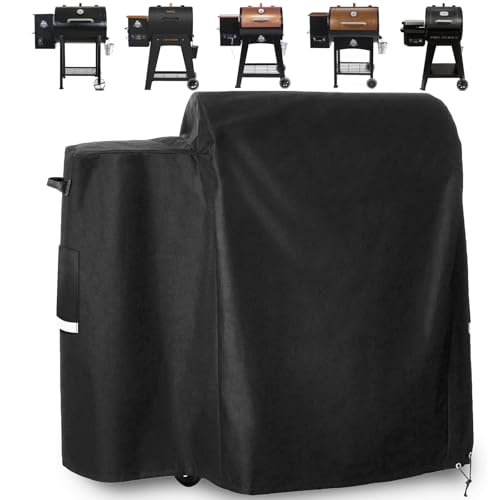
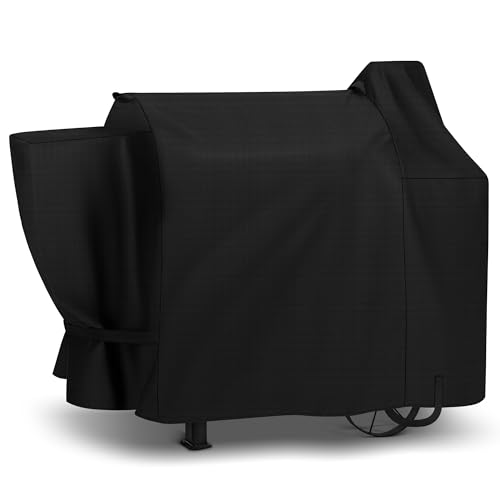
A basic BBQ grill cover is usually cut as a plain rectangle, which rarely accounts for a hopper bump, a hinged lid, or a grease bucket hanging off the cart. Getting the shape of a pellet grill cover right starts with measuring the parts that actually stick out, not just the width of the hood.
Measuring the Dome or Flat Lid
Most cart pellet grills use either a rounded dome or a flat hinged lid, and the two shapes need slightly different draping to avoid pooling water on top. Measure the tallest point of the hood, whether that's the peak of a dome or the hinge side of a flat lid, and round up rather than buying it tight. A flat lid also needs the cover to lay smoothly across the top instead of sagging diagonally, or rain collects right in the dip.
Hopper Cutout at the Back or Side
On most cart-style pellet grills the hopper bolts onto the back or one side of the cabinet rather than sitting flush on top, a different profile than the side-mounted hopper on a tall cabinet smoker. If you're weighing this shape against a taller unit instead, the vertical pellet smoker cover guide breaks down why that hopper placement calls for a completely different cutout. A gusseted panel that wraps the hopper bump without pulling the fabric tight keeps water from pooling right at the seam.
Room for the Grease Bucket and Cart Legs
The grease bucket usually hangs off the back or side of the cart, and a cover that stops short of it leaves the bucket, the drain tube, and the lower shelf exposed to rust. Look for a cover long enough to clear the wheels and legs entirely, since a wide cart base catches more ground splash than a narrow smoker stand.
Fabric That Handles Firepot Heat and Direct Sun
A pellet grill keeps a small fire burning in the firepot even at low settings, and the metal around the hopper and lower vents can stay warm well after the auger shuts off. That's different from what a propane unit deals with, since gas burns off heat almost immediately once the valve closes, while a pellet grill's firepot and auger tube can hold heat much longer. Combined with direct sun for a unit that lives outside all year, the fabric has to do more than just block rain.
Two-Layer Waterproof Construction
A single layer of coated polyester handles an occasional shower fine, but a grill left uncovered season after season benefits from a two-layer build, a woven outer shell paired with a waterproof inner backing. That combination sheds a long storm without wetting through the way a thinner single-layer cover eventually does.
Letting the Grill Cool Before Covering
Give the unit at least thirty minutes after the controller shuts off before covering it, longer if the hopper was full, since residual heat near the firepot and lower vents can glaze or stiffen cheap fabric that touches warm metal too soon.
UV Resistance for Year-Round Outdoor Storage
Fabric that isn't UV-stabilized fades and turns brittle within a season of full sun, especially on the top panel that takes the most direct exposure. A cover rated for year-round outdoor use holds its flexibility and color far longer than one meant only for occasional storage.
Keeping Wind From Getting Underneath a Wide Cart
A cart-style pellet grill has a wider stance than a compact kettle or a narrow vertical smoker, and that extra surface area gives a pellet grill cover more fabric for wind to grab onto.
Drawstring Hem Around the Base
A drawstring or elastic hem cinched snug around the base keeps wind from working its way up under the fabric, which is usually how a cover ends up torn or blown across the yard. A cover only draped over the top without cinching rarely survives a real gust.
Straps That Clip Beneath the Cart
Buckled straps that pass underneath the cart anchor the cover more securely than clips or Velcro tabs at the seams alone. This matters more on a wide, wheeled base than on a compact grill, since there's more fabric for wind to catch and lift.
Avoiding Trapped Moisture Around the Hopper
A pellet grill cover that seals too tightly traps the humidity that naturally rises off warm metal after a cook, and that trapped moisture is what causes rust on hinges and corrosion inside a digital controller over time.
Vents or Mesh Panels
A small vent or mesh panel near the top lets trapped humidity escape without opening the cover to rain, which matters most right around the hopper and controller, where corrosion does the most expensive damage. Skip covers with an open, unscreened hole, since that lets in dust and insects along with the airflow.
Drying Pellets and Hardware First
Leftover pellets left in a covered hopper can absorb condensation and swell or clump, so it's worth sealing extras in a separate airtight container rather than leaving them in the hopper for weeks. Choosing well-made hardwood pellets that resist crumbling also helps them hold up better to the humidity that builds up under any cover.
Frequently Asked Questions
Do pellet grills need to be covered?
Yes, more so than a simple charcoal grill. The hopper, auger motor, and digital controller are all vulnerable to moisture in ways a plain firebox isn't, and a properly fitted pellet grill cover protects components that are expensive to replace.
Is a waterproof cover necessary, or is water-resistant enough?
Water-resistant fabric slows moisture but eventually wets through in a long storm, while a taped-seam waterproof cover keeps water out entirely. For a grill that sits uncovered by a roof or awning, the waterproof build is worth the extra cost.
Can pellets be left in the hopper under a cover?
It's generally better not to, especially in humid climates. Condensation can build up inside a covered cabinet and cause pellets to swell or clump even if no rain gets through, so sealing leftovers in an airtight container is the safer habit.
Why does the grill still feel damp under the cover after it rains?
A cover with no vent traps the humidity that rises off warm metal, so the grill can stay wet underneath even when no rain actually got through. A cover with a mesh vent near the top lets that trapped moisture escape instead of sitting against the hardware.
How do you keep a pellet grill cover from blowing off?
Use a cover with a drawstring hem or buckled straps that clip underneath the cart, and cinch it snug around the base rather than just draping it over the grill. A wide cart-style base catches more wind than a compact kettle, so secure closures matter more here.
How often should a pellet grill cover be replaced?
A quality cover typically lasts a few years of regular outdoor use, longer for heavier two-layer fabric or a cover stored indoors during the off-season. Fading, stiff spots, or a torn hopper panel are reliable signs it's time for a new one.
The Fit Matters More Than the Price Tag
Finding the best pellet grill cover comes down to matching the fit and hardware to the specific parts of a cart-style grill that actually need protecting, not picking the thickest fabric on the shelf. A properly placed hopper cutout, a two-layer waterproof shell, and a drawstring hem around a wide cart base matter more here than they do on a compact kettle grill. Measure carefully before buying and give the firepot time to cool before covering it, and one cover should carry a cart-style pellet grill through several full seasons outdoors.