Best French Copper Cookware: A Complete Buying Guide
Disclosure: We may earn a commission when you buy through links on this page, at no extra cost to you. As an Amazon Associate we earn from qualifying purchases. Learn more

Walk into any well-stocked culinary shop in Paris and you will likely see rows of copper pans hanging by their handles, some dimpled with tiny hammer marks, others polished smooth as glass. That contrast is not just decoration. Choosing the best French copper cookware means understanding a tradition that goes back centuries, one built around specific shapes, finishes, and hardware that differ from the generic copper sets sold everywhere else. This guide walks through what actually makes cookware French in construction and style, the classic piece shapes worth knowing, and how to buy smart whether you want a single saucier or a full collection.
What Makes Copper Cookware Distinctly French
Not every copper pan with a French-sounding name follows the same construction rules. A handful of details, passed down from generations of coppersmiths, separate genuine French copper cookware from pieces that simply look similar on a shelf.
Hammered (Martelage) vs Smooth Finish
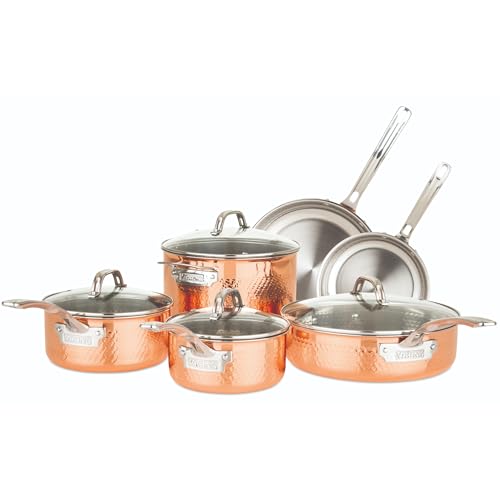
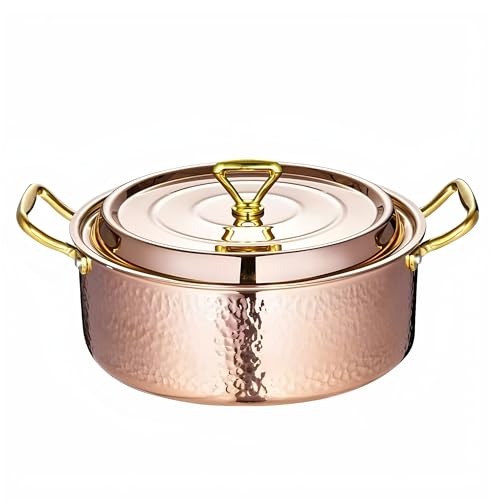
The dimpled, hand-tapped surface known as martelage is one of the most recognizable traits of traditional French copper. Historically, hammering served a structural purpose, since striking the metal repeatedly compresses and strengthens it, letting a coppersmith produce a piece that holds its shape under heat without needing extra-thick walls. A hammered exterior also hides small scratches and the natural patina that develops with age far better than a mirror-smooth surface does. Smooth-finished copper is not inferior, but historically it was more often reserved for table presentation pieces rather than pieces meant for hard daily cooking, so the finish can tell you something about how a piece was originally intended to be used.
Traditional Copper Gauge and Weight
French coppersmiths have long drawn a line between thin, decorative copper and copper built for the stove. Pieces under roughly 2mm were traditionally considered table or display grade, while cookware meant for real use started around 2mm and climbed toward 3mm for pieces that needed to withstand years of searing and reducing sauces. Thicker gauge copper heats a bit more slowly to start, but it distributes heat far more evenly once it gets going and resists warping much better over time. When you are comparing pieces, checking the listed millimeter thickness tells you far more than judging by weight alone.
Tin Lining, the French Standard
Copper reacts with acidic ingredients, so every cooking surface needs a barrier, and tin lining has been the traditional French choice for generations. Tin has a naturally slick, faintly nonstick quality that many cooks prefer for delicate sauces, custards, and eggs, and it responds to heat almost as quickly as the copper underneath it. The tradeoff is that tin is soft, so it wears down with metal utensils and high heat, and eventually needs to be professionally re-tinned. Some newer French-style pieces use a stainless steel lining instead, trading a bit of that classic glide for a surface that shrugs off metal spatulas and dishwasher cycles far longer.
Iron vs Brass Handles: The Extra Fort and Sur Table Divide
French copper has long followed an unwritten rule about hardware. Pieces built for serious cooking, sometimes labeled extra fort, or extra thick, traditionally carried cast iron or forged steel handles because iron stays cooler than other metals during long stovetop sessions. Lighter presentation pieces, called sur table, or table service, more often used brass or bronze handles, which look elegant but heat up quickly and are less practical over an open flame. If a piece you are considering will spend real time on a hot burner, an iron handle is generally the more sensible, and more traditional, choice.
Iconic French Copper Piece Shapes
Part of what makes French copper cookware distinct is a vocabulary of shapes, each engineered for a specific technique rather than general-purpose use. Recognizing these shapes helps you buy pieces that actually match how you cook rather than guessing from a generic product photo.
The Saucier
Named for the saucier, or sauce chef, on a professional line, this pan has gently rounded, sloped sides with no sharp interior corners for a whisk or spoon to catch on. That curved profile makes it the classic choice for reducing sauces, finishing risotto, and making custards where constant, even stirring matters. A true saucier is shallower and wider than a standard saucepan, which speeds up evaporation when you need a sauce to reduce quickly.
The Rondeau (Plat à Sauter)
Also called a plat à sauter, the rondeau is a wide, relatively shallow pot with two loop handles instead of one long handle, built for browning meat, building pan sauces, and braising. Its low sides let steam escape freely, which helps develop a proper sear instead of steaming food in its own moisture, while the wide surface area lets you brown multiple pieces at once without crowding the pan.
The Stockpot (Marmite)
The French marmite is a tall, straight-sided stockpot designed for stocks, soups, and anything that needs long, gentle simmering. Copper's fast response is less critical here than in a saucier, but the material still helps maintain a steady, even simmer without the scorched spots that can develop in thinner cookware over hours on the stove.
The Jam Pan (Bassine à Confiture)
Wide, shallow, and often unlined since it is used only briefly and with sugar rather than acidic proteins, the bassine à confiture is built specifically for making jams and preserves. Its flared, sloped sides maximize surface area for fast evaporation, which helps fruit and sugar reduce quickly into a proper set without scorching on the bottom.
Buying Individual Pieces vs a Full French Copper Set
French copper cookware is traditionally collected piece by piece rather than purchased as a matched set, and there is a practical reason for that habit. Different shapes suit different jobs so precisely that most French kitchens build a small, purposeful collection over time rather than buying eight pieces at once and only reaching for two of them. Starting with a single saucier or a rondeau lets you get comfortable with copper's fast heat response before committing to a larger investment. If a complete matched collection appeals to you more, it helps to first understand how copper cookware sets are typically built and lined, since that background makes it much easier to judge whether a French-style set includes pieces you will genuinely use.
Induction Compatibility for French Copper Cookware
Traditional French copper is not magnetic on its own, so it will not heat up on an induction cooktop without help. Some modern pieces solve this with a bonded magnetic base on the bottom, letting you keep the copper body and its heat response while still working on an induction range. If induction compatibility matters to your kitchen, run a simple magnet test against the base before buying, since manufacturers do not always make this detail obvious in a product description. It is also worth browsing cookware sets built specifically for induction cooktops to see how that bonded-base construction compares with traditional French pieces, so you know exactly what you are trading off for stovetop compatibility. On gas or standard electric ranges, this is a non-issue and any French copper piece will perform as intended.
How to Care for French Copper Cookware
Copper rewards routine care more than constant scrubbing. Hand washing is strongly preferred over a dishwasher, since harsh detergent cycles dull the exterior finish and speed up wear on a tin lining. A natural, darker patina will form on the copper exterior over months of use, and plenty of experienced cooks leave it alone since it has no effect on how the pan performs. If you would rather keep that bright, polished look, a simple paste of lemon juice and coarse salt restores the shine in a few minutes of gentle rubbing. Tin-lined pieces eventually need professional re-tinning once the lining thins out or copper starts showing through, while a stainless-lined piece, similar in principle to what you would find on a stainless steel cookware set, holds up to years of regular use with far less specialized maintenance.
Common Mistakes to Avoid
- Assuming a hammered finish alone guarantees a piece is genuinely built for heavy cooking use.
- Buying a full matched set before knowing which shapes you will actually reach for regularly.
- Choosing brass-handled pieces for stovetop work that involves long, hot cooking sessions.
- Ignoring the copper's gauge or thickness and judging quality by weight or shine instead.
- Putting tin-lined copper in the dishwasher or scrubbing it with abrasive pads.
- Overlooking induction compatibility when shopping for a modern kitchen with an induction range.
Frequently Asked Questions
What does a hammered finish actually do for copper cookware?
Hammering strengthens and compresses the copper, historically letting coppersmiths build a sturdier piece without adding extra thickness. It also helps hide small scratches and the natural patina that develops with age, though on modern, machine-made cookware the effect is mostly aesthetic.
Is tin lining or stainless steel lining better for French copper cookware?
Tin offers a naturally slick surface prized for delicate sauces and eggs, but it wears down with heavy use and eventually needs professional re-tinning. Stainless steel lining costs more upfront and lacks some of tin's glide, but it tolerates metal utensils and high heat for much longer without resurfacing.
Why do some French copper pans have iron handles and others have brass?
Cast iron and forged steel handles were traditionally used on pieces meant for serious stovetop cooking because iron stays relatively cool even during long sessions. Brass and bronze handles look elegant but conduct heat quickly, which historically made them more common on lighter, presentation-style pieces.
What is the difference between a saucier and a regular saucepan?
A saucier has rounded, sloped sides with no sharp interior corners, which makes constant whisking and stirring much easier when reducing sauces or making custards. A standard saucepan has straighter walls and a flatter interior, which works fine for basics but can trap ingredients in the corners.
Does French copper cookware work on induction cooktops?
Not unless it includes a bonded magnetic base, since pure copper is not magnetic on its own. Check the product details for induction compatibility, or test the base with a household magnet, before buying if you cook on an induction range.
How thick should French copper cookware be for everyday cooking?
Most cooks do well with copper in the 2mm to 3mm range, which balances quick heat response with even distribution and durability. Thinner copper, closer to 1mm, was traditionally intended for table presentation rather than daily stovetop use.
Can I buy French copper pieces individually instead of a full set?
Yes, and it is actually the more traditional approach. Many French cooks build a small collection over time, adding a saucier, a rondeau, or a stockpot as they identify which shapes genuinely fit their cooking style, rather than buying a large set upfront.
Final Thoughts
The best French copper cookware comes down to recognizing the details that separate authentic, cooking-grade pieces from decorative lookalikes: real gauge thickness, a lining suited to how hard you plan to use it, and handles built for the way you actually cook. Whether you start with a single saucier or work toward a full collection of classic shapes, understanding this tradition makes it much easier to buy pieces you will still be reaching for years from now.