
Best Stainless Steel Cookware Made in USA: A Complete Buying Guide
Disclosure: We may earn a commission when you buy through links on this page, at no extra cost to you. As an Amazon Associate I earn from qualifying purchases. Learn more

What made in USA actually means for stainless steel cookware, plus the construction details, materials, and care tips that separate long-lasting pans from the rest.
A stamp reading "Made in USA" on a stainless steel pot does not always mean what shoppers assume. Some manufacturers melt and finish their steel domestically, weld every seam in-house, and inspect each piece before it ships. Others import formed blanks, attach a handle at a U.S. warehouse, and print the same three words on the box. Telling the two apart takes more than a glance at the packaging.
This guide breaks down what a "Made in USA" claim is legally required to mean, whether the higher price actually buys better cookware, and which construction details matter more than the country stamped on the base. None of it depends on any single brand name. Once the standards behind the claim are clear, comparing sets side by side gets much easier.
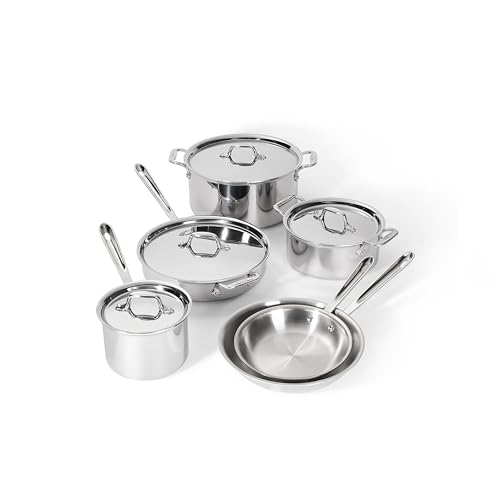

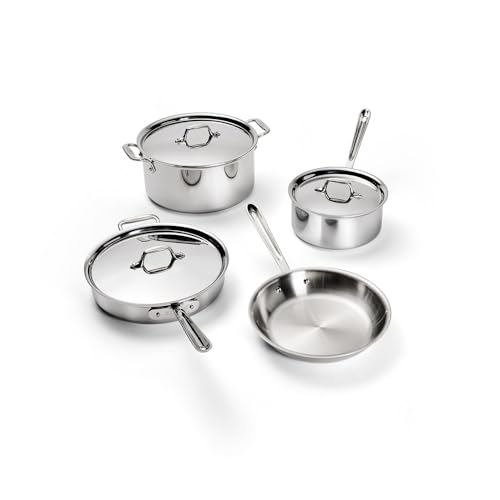

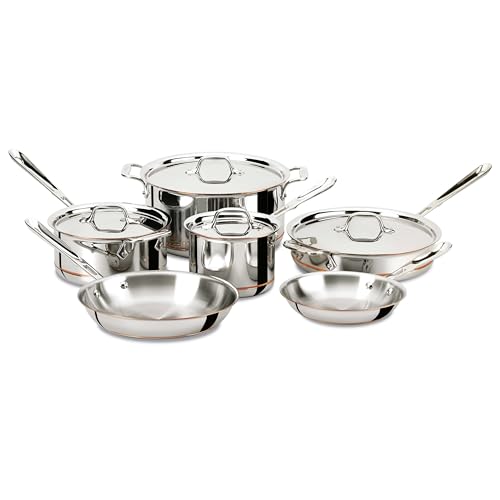


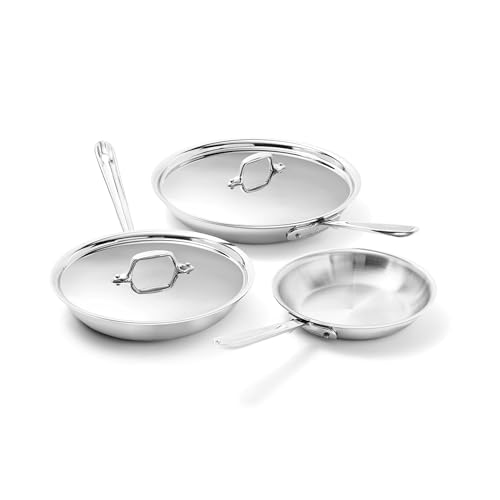
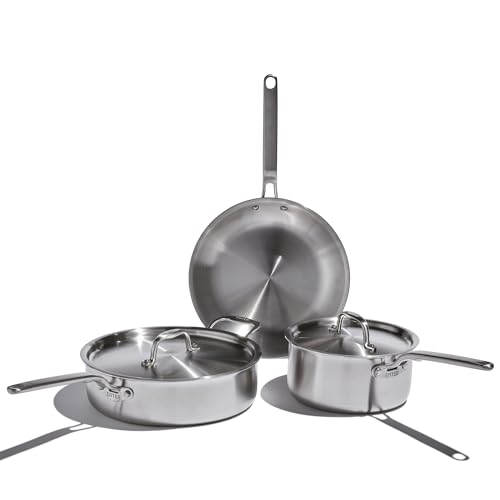
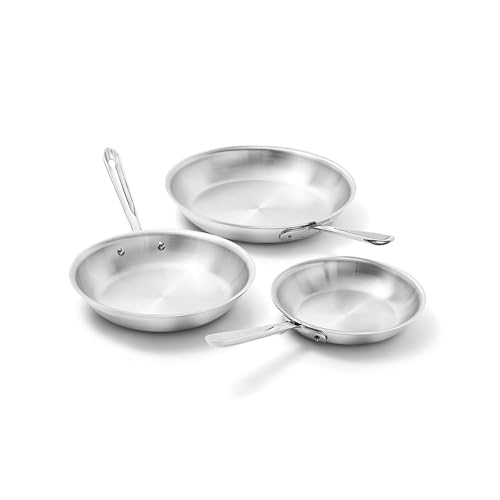
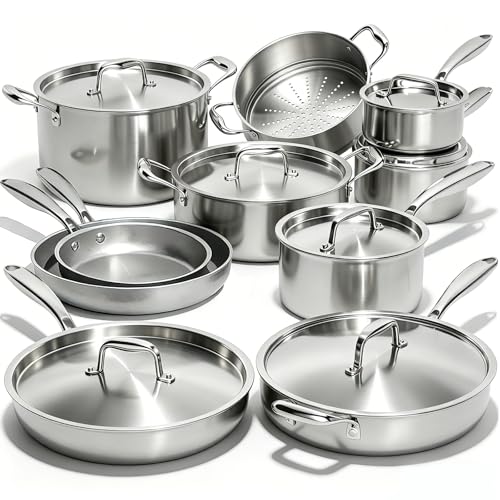
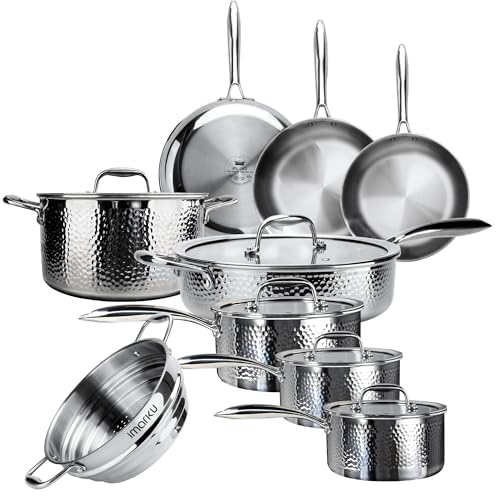


"Made in USA" vs "Assembled in USA": What the Label Actually Tells You
Federal Trade Commission rules set a specific bar for an unqualified "Made in USA" claim. The product must be "all or virtually all" made domestically, meaning the significant processing, the components, and the final assembly all happen inside the country. Regulators generally look for U.S. content near or above 95 percent of total manufacturing cost before that claim is allowed on a label without qualification.
Unqualified Claims vs Qualified Language
Watch for wording that softens the claim. Phrases like "assembled in USA with domestic and imported materials" or "crafted in USA from globally sourced steel" are legally distinct from a plain "Made in USA" stamp. They tell you final assembly happened locally, but the steel itself, the rivets, or the lid may have come from overseas. Neither claim is dishonest as long as the wording matches reality, but they describe very different supply chains.
Why Some Steel Is Imported Even in "Domestic" Sets
Cookware-grade stainless coil is a specialized product, and not every domestic mill runs the exact alloy specification a manufacturer needs at the volume they need it. A brand can still qualify for a full "Made in USA" claim if the imported content is negligible relative to total manufacturing cost, which is one reason two pans with the same label can differ slightly in where their raw material originated.
Is the Price Premium Actually Justified?
Domestic cookware typically costs more than comparable imported sets, sometimes significantly more. Whether that gap is worth paying depends on how the cookware is actually used, not just where it was made.
Where the Extra Cost Goes
Running production and inspection under one roof lets a manufacturer catch a thin weld or an off-spec base before it ships, rather than discovering the problem after a container arrives from overseas. That tighter feedback loop is part of what buyers pay for, along with longer warranty terms that domestic manufacturers can back more confidently since they control the entire build process. Shipping costs and labor rates also factor in, independent of quality.
When Imported Cookware Is the Smarter Choice
For a household that cooks occasionally or is furnishing a first kitchen on a tight budget, a well-reviewed imported set with solid tri-ply construction can outperform a cheap domestic piece with thin walls. Origin alone does not guarantee quality, and a poorly made pan is a poorly made pan regardless of where it was welded. The premium pays off mainly for cooks who use their pans daily for years and want the longest possible service life.
Reading the Steel Grade Stamp: 18/10, 18/8, and 18/0 Explained
Every legitimate stainless cookware piece carries a grade stamp on the base, and it says more about durability than any origin claim does. The numbers refer to the percentage of chromium and nickel in the alloy.
What the Numbers Mean in Practice
18/10 steel, with 18 percent chromium and 10 percent nickel, resists staining and pitting the best of the common grades and takes a brighter polish. 18/8 is close behind with slightly less nickel, still a solid choice for a cooking surface. 18/0 contains little or no nickel, which makes it magnetic and suitable for the exterior layer on induction-ready cookware, but it is less corrosion resistant on its own and rarely used for the interior surface.
Why the Interior and Exterior Grades Often Differ
A well-built pan frequently uses a nickel-rich grade for the food-contact surface and a magnetic, low-nickel grade for the exterior base, sandwiched around an aluminum or copper core. That layered approach is why checking the grade stamp tells you more than the country of origin does. Two pans made in the same factory can carry different grades depending on the product line.
Base Thickness and Ply Construction: Why They Matter More Than Origin
A domestic stamp says nothing about how many layers are bonded into the base or how thick the metal actually is, and both affect cooking performance far more directly than where the pan was welded.
Tri-Ply, 5-Ply, and Disc-Bottom Designs
Tri-ply cookware bonds aluminum between two steel layers across the entire pan, not just the base, which spreads heat up the sidewalls and reduces hot spots. Five-ply designs add extra conductive layers for even faster, more even heating, at the cost of extra weight. Disc-bottom construction, where a thick conductive base is welded only to the bottom, heats well directly over the burner but loses that even heating up the sides, a detail worth checking before buying a set for tasks like reducing sauces around the pan's edge.
Matching Construction to How You Cook
Someone doing a lot of high-heat searing benefits from thicker, fully-clad construction that resists warping under sudden temperature swings. Anyone cooking on an induction range should also confirm the base is magnetic before buying, since not every stainless pan qualifies even when the interior grade is correct; a dedicated look at induction-compatible cookware covers that distinction in more depth. Large-format pieces like stockpots need thicker gauge steel specifically to prevent scorching during long simmers, which a focused guide to a stainless steel stock pot walks through in more detail.
How to Verify Sourcing Claims Before You Buy
Marketing copy is easy to write and hard to verify from a product listing alone. A few concrete checks separate a genuine claim from a vague one.
Documentation Worth Asking For
Look for a manufacturer that publishes where its steel is melted and finished, not just where final assembly happens. Companies confident in their sourcing usually state it plainly on their site rather than relying on the label alone. A warranty registered directly with the manufacturer, rather than through a third-party retailer, is another sign the company stands behind its own supply chain.
Set vs Individual Piece Sourcing
A "Made in USA" claim on a set does not always apply evenly to every piece inside it. Lids, glass inserts, and certain specialty pieces are sometimes sourced separately from the core cookware. If a full multi-piece set matters more than a single pan, comparing options in a broader guide to stainless steel cookware sets can help confirm which pieces actually carry the domestic claim. Shoppers weighing stainless against another surface entirely may also want to look at a hard-anodized cookware set as a comparison point, since anodized aluminum sourcing follows a different set of rules altogether.
Frequently Asked Questions
Is stainless steel cookware made in the USA actually worth the extra cost?
For cooks who use their pans daily and plan to keep them for decades, the tighter quality control and stronger warranty backing usually justify the premium. For occasional cooking, a well-reviewed imported set can deliver similar results for less money.
How can shoppers tell if a claim is genuine rather than "assembled in USA"?
Check the exact wording on the label. An unqualified "Made in USA" claim must meet the FTC's "all or virtually all" standard, while phrases like "assembled in USA" signal that some materials came from overseas even though final production happened domestically.
Does a higher nickel content always mean better cookware?
Higher nickel content in the cooking surface, as in 18/10 steel, improves stain and corrosion resistance, but it is only one part of overall quality. Base thickness, ply construction, and handle attachment matter just as much for long-term performance.
Why do some domestic pans still list imported components?
Certain alloy specifications or hardware are not produced domestically at the volume manufacturers need. As long as the imported content stays negligible relative to total manufacturing cost, the product can still carry a full "Made in USA" claim.
Is tri-ply or 5-ply construction more important than country of origin?
For actual cooking performance, yes. Ply count and base thickness determine how evenly a pan heats and how well it resists warping, and those details vary between individual product lines regardless of where the factory is located.
What is the fastest way to check quality before buying?
Look at the base for a visible grade stamp, check the manufacturer's own site for sourcing details rather than relying on retailer copy, and confirm the warranty is registered directly with the maker rather than a third party.


