Best Component Speakers for Bass: Every Type Explained Side by Side for 2026
Disclosure: We may earn a commission when you buy through links on this page, at no extra cost to you. As an Amazon Associate I earn from qualifying purchases. Learn more

Component speakers for bass: how woofer size, cone stiffness, sensitivity and amplifier power decide how deep and clean car door bass sounds.
Component speaker sets come in several layouts, and the differences between them matter a lot when bass is your priority. A set that sounds full and deep in one car can sound thin in another, which leaves many buyers unsure where to start.
This guide compares the main types side by side so you can see what each one does well and where it falls short. By the end, you will know which layout fits your vehicle, your amplifier, and your budget, and you can use the comparison table below to check the best component speakers for bass against the criteria that follow.





Types of Component Speakers for Bass Compared
Every component set splits the sound between a woofer and a separate tweeter, with a crossover that sends each driver only the frequencies it handles best. What changes between types is how many drivers you get, how much control the crossover gives you, and how much installation work the set needs. Budget sets usually run around $60 to $120, midrange sets around $120 to $300, and premium sets around $300 and up.
Two Way Component Sets
A two way set pairs one woofer with one tweeter per side, and it is the most popular layout for bass focused upgrades. The woofer handles bass and midrange together, so woofer size and cone material decide most of the low end output. A 6.5 inch woofer is the common choice and fits most factory door locations.
These sets are the easiest to install and the easiest to power, and many run acceptably on a head unit alone, though an amplifier brings out far more bass. Choose a two way set if you want a clear step up from factory speakers without cutting new mounting holes or paying for extra drivers you may not need.
Three Way Component Sets
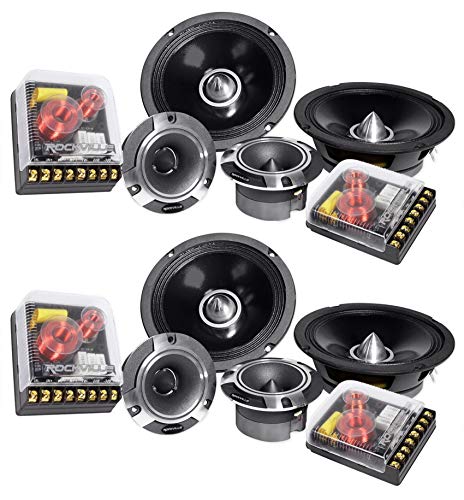
A three way set adds a dedicated midrange driver between the woofer and the tweeter. Because the woofer no longer has to reproduce vocals, it can focus on low frequencies, which often means cleaner and deeper bass at higher volume. The extra driver also lets each part of the sound sit closer to ear level when the midrange and tweeter mount high on the door or pillar.
The trade offs are cost, space, and tuning effort. You need a mounting spot for three drivers per side, and the crossover network is larger and more complex. Pick a three way set if your doors or pillars have room, you already own or plan to buy an amplifier, and you listen loud enough that a two way woofer starts to sound strained.
Convertible Component Sets
A convertible set lets the tweeter mount separately like a true component system or sit in the center of the woofer like a coaxial speaker. That flexibility helps when your vehicle has no good tweeter location, or when you want to start simple and move the tweeters later for better imaging.
Bass performance is similar to a comparable two way set because the woofer does the same job in both layouts. The small compromise is that a center mounted tweeter can block a little woofer cone area. Choose a convertible set if you are unsure about mounting locations, you lease your vehicle, or you want one set that can move to a different car later. For a broader look at low end focused options beyond component sets, see our guide to the best bass speakers.
Two Way vs Three Way Sets: Which Should You Choose?
Start with bass depth. A three way woofer dedicated to low frequencies usually plays deeper and stays cleaner at high volume, while a good two way woofer with a stiff cone can match it at moderate volume. Next, look at power. Three way sets almost always need an amplifier to sound their best, while many two way sets work as a first step on factory power.
Installation is the third factor. Two way sets fit factory locations in most cars, while three way sets may need custom pods or door work that adds real cost. Finally, consider price: the money saved with a two way set often buys the amplifier or sound deadening that improves bass more than an extra driver would. If sound quality across the whole range matters as much as bass, our guide to the best sounding component speakers explains the tuning side in more depth.
How to Choose the Right Component Speaker
Sound Quality and Tuning
Look at the frequency response range printed on the box, and pay attention to the low number. A set rated down to about 45 to 55 Hz will sound noticeably fuller than one that stops at 70 Hz, even before you add a subwoofer. Treat the number as a rough guide rather than a promise, because the door the woofer sits in shapes the real result.
Tweeter material shapes the top end. Silk and textile domes sound smooth and forgiving, while metal domes sound brighter and more detailed, which some listeners find harsh at high volume. For bass heavy music, a smooth tweeter keeps the balance pleasant because the low end already dominates the mix.
Woofer Size and Bass Output
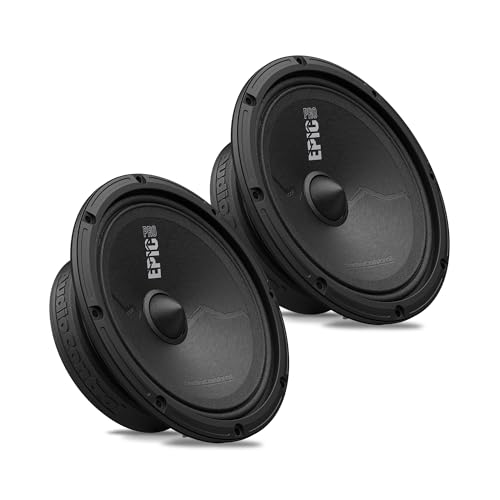
Woofer size is the single biggest factor in how much bass the best component speakers for bass can make. A 6.5 inch woofer moves far more air than a 5.25 inch woofer, and a 6 by 9 inch woofer, where the door or rear deck allows it, moves more still. Measure your factory speakers before you order, because adapters exist for many cars but not all.
Cone material matters too. Polypropylene cones resist moisture in doors and give solid, controlled bass at a fair price. Treated paper cones sound natural and light, while woven glass fiber and carbon fiber cones stay stiff at high excursion, which keeps bass tight when you turn the volume up.
Features That Matter for Bass
Bass places demands on a speaker that balanced listening does not, so a few specifications deserve extra weight. Sensitivity tells you how loud the set plays per watt: a rating of about 90 dB or higher helps bass stay strong on modest power. A rating near 87 dB means you should budget for an amplifier.
Check the rubber surround around the cone, since rubber lasts longer in hot doors than foam and allows the long cone travel that deep bass needs. Also look for a crossover with tweeter level adjustment, usually a switch with two or three settings. Turning the tweeter down a step often makes the bass feel stronger simply because the balance shifts toward the low end.
Power Handling and Amplifiers
Match the amplifier to the RMS power rating of the set, not the peak number printed in large type. A set rated at 75 watts RMS per side pairs well with an amplifier that delivers about 60 to 100 watts RMS per channel. Too little power is the more common problem: an underpowered woofer driven hard produces distortion that listeners often mistake for weak bass.
Impedance matters as well. Most component sets are 4 ohm, and some are 2 ohm or 3 ohm to draw more power from factory systems. Confirm that your amplifier or head unit supports the impedance before you buy, and use speaker wire of 16 gauge or thicker for runs from an amplifier in the trunk so the woofer gets the current it needs.
Tips to Get the Most From Your Component Speakers
Installation quality changes bass more than most buyers expect. Seal the gap between the woofer and the door panel with foam rings so air does not leak around the speaker, and add sound deadening sheets to the door skin to stop panel vibration from swallowing low frequencies. Even a small amount of deadening on the outer door skin makes bass tighter and reduces rattles.
Set the high pass filter on your amplifier or head unit to about 60 to 80 Hz if you also run a subwoofer, so the door woofers stop wasting energy on notes the subwoofer handles better. Without a subwoofer, leave the woofers full range but lower the bass boost, since boost adds distortion faster than it adds depth. If you also want low end outside the car for gatherings or a second room, our roundup of the best portable speakers with bass covers that separate job.
Frequently Asked Questions
What features matter most in component speakers for bass?
Woofer size, sensitivity, and cone stiffness matter most. A 6.5 inch or larger woofer with a sensitivity rating around 90 dB or higher and a stiff cone with a rubber surround gives you the strongest low end for the money. Door sealing and sound deadening then decide how much of that bass you actually hear, so budget a little for install materials too.
Do component speakers need an amplifier for good bass?
An amplifier is not required, but it makes a clear difference. Head units usually deliver about 15 to 20 watts RMS per channel, which can leave a woofer short of power on deep notes at highway volume. An amplifier matched to the RMS rating keeps bass clean and controlled, and it is usually the best single upgrade after the speakers themselves.
Will component speakers give me enough bass without a subwoofer?
They can satisfy many listeners, especially with 6.5 inch woofers in well sealed doors. What they cannot do is reproduce the lowest octave, roughly below 50 Hz, with real authority, because small door woofers run out of cone travel. If you love bass heavy electronic or hip hop music, plan on a small subwoofer later and treat the component set as the foundation.
What size component speakers fit my car?
Most cars use 6.5 inch woofers in the front doors, but 5.25 inch, 6.75 inch, and 6 by 9 inch sizes are also common. Check a fitment guide for your exact year and trim before ordering, and look at mounting depth as well as diameter, because window tracks and door panels limit how deep a woofer can be.
How long do component speakers last?
A quality set usually lasts five to ten years in daily use. Rubber surrounds and moisture resistant cones last longest in doors, which collect water and heat. Foam surrounds can crack after several years, and a woofer that starts buzzing on bass notes is often showing surround damage you can see once you remove the door panel.
Should the tweeters go in the doors or on the pillars?
Pillar or sail panel mounting usually sounds better because the tweeters sit closer to ear level and aim more directly at you. Door mounting low near the woofer keeps the sound image lower and can muffle detail when your legs block the path. If your car has factory tweeter locations high on the door, use them first before cutting new holes.
Wrapping Up
Choosing well comes down to three things: the largest woofer your doors accept, enough clean power to drive it, and an installation that seals the woofer to the door. Two way sets suit most cars and budgets, three way sets reward listeners with amplifiers and mounting room, and convertible sets keep your options open.
Whichever type you choose, the best component speakers for bass for your car are the ones that match your door size and power supply rather than the ones with the biggest numbers on the box. Compare the sets in the product table above against these criteria and you will end up with bass that sounds deep, clean, and worth the upgrade.