
Best Compact Freezers: Types Compared and How to Choose in 2026
Disclosure: We may earn a commission when you buy through links on this page, at no extra cost to you. As an Amazon Associate I earn from qualifying purchases. Learn more

The best compact freezers come as chest, upright and drawer types; this guide compares pros, cons, ideal users and price range for each.
A second freezer sounds simple until you start shopping and find chest boxes, slim uprights, and drawer units all sold under the same compact label. The types differ in how you load them, how much floor they take, and how much frost you will chip away each year, so the right choice depends on your space and your habits more than on any single spec. This guide to the best compact freezers compares each type side by side so you can match the shape of the freezer to the food you store and the corner you have.
Two ground rules apply to every type. Measure your space first, including the door swing and the ventilation clearance the maker requires, because a freezer that fits the tape measure but cannot open or breathe will run hot and die young. And expect manual defrost at this size, since it is the norm for compact models and it comes with a schedule you cannot skip. The comparison table in the next section gives the short version of each type before the details that follow.

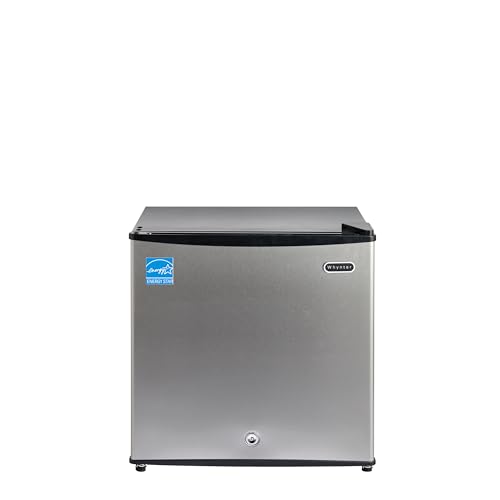


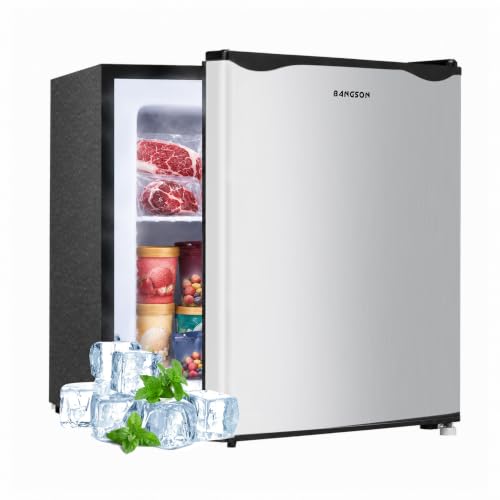


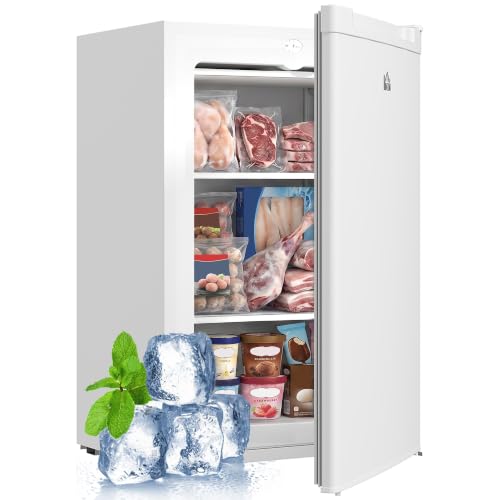

Types of Compact Freezers Compared
Compact freezers run from about 1 to 7 cubic feet, and within that range the shape matters more than the number. The table below sums up the three types, and the sections after it explain how each one works, who it suits, and what it asks of you in return.
| Type | Best For | Pros | Cons | Typical Price |
|---|---|---|---|---|
| Compact chest freezers | Bulk storage in a garage or basement | Cheapest per cubic foot, holds cold well, fits awkward large items | Food buries at the bottom, needs floor space and headroom to open | About $150 to $350 |
| Compact upright freezers | Kitchens and easy daily access | Shelves keep food visible, small footprint, no digging | Costs more per cubic foot, door storage is shallow | About $200 to $450 |
| Drawer and counter freezers | Under counter spots and small kitchens | Built in look, pull out access, quiet daily use | Smallest capacity, highest price per cubic foot | About $300 to $700 |
Compact Chest Freezers
A chest freezer opens from the top and stores food in one deep open box, usually with a wire basket or two riding on top. Cold air sinks, so very little of it spills out when you lift the lid, which makes this type the most efficient and the most forgiving during a power outage. It is also the cheapest way to buy frozen space, and the open box swallows bulky shapes like whole turkeys and pizza boxes that defeat shelved units.
The cost of that simplicity is organization. Food stacks in layers, and the item you want is reliably at the bottom under three months of newer shopping. Baskets, labeled bags, and a written list on the lid are not optional extras with a chest model; they are the system that keeps it usable.
Our dedicated guide to the best compact chest freezers goes deeper on sizes and basket layouts for this type. Choose a chest model if you buy in bulk, store for months, and have garage or basement floor space with room to stand in front of the open lid.
Compact Upright Freezers
An upright freezer stands like a narrow refrigerator, with a front door and shelves or bins that keep everything visible at eye level. You give up some efficiency, because cold air pours out of an open front door, and you pay more per cubic foot than a chest model of the same size. In return you get a footprint about the size of a dishwasher, a door that swings in a kitchen or laundry room, and an end to digging for buried food.
This type suits households that rotate food weekly rather than stockpiling for a season, and anyone whose only spare space is a narrow vertical slot. Frost free versions exist at this size but sit at the top of the price range, so most compact uprights still ask for manual defrosting. Shoppers who outgrow the compact class entirely can compare the full size range in our guide to the best upright freezers, where shelf layouts and frost free options widen considerably.
Drawer and Under Counter Freezers
Drawer freezers slide into a cabinet run like a wide drawer, and counter height models tuck under a worktop where a dishwasher might otherwise go. Access is the selling point: the drawer pulls the food out to you, so nothing hides at the back. Capacity is the smallest of the three types, often under 3 cubic feet, and the price per cubic foot is the highest, because you are paying for the built in fit and finish.
Pick this type when the freezer must live in a finished kitchen and be reached daily, for example for ice, baby food portions, or a small household overflow. Ventilation is the watch point, since enclosed cabinetry leaves little room for the cabinet heat to escape, and the maker clearance figures matter more here than for any other type.
Chest vs Upright: Which Should You Choose?
Most compact buyers narrow the field to these two, so here is the head to head. On running cost, the chest wins: its top opening design and thicker insulation sip electricity and shrug off short power cuts. On access, the upright wins clearly, since shelves beat stacking every day of the week.
On space, the upright takes less floor but needs door swing room, while the chest needs floor area plus headroom for the lid and for you to lean in. On storage style, the chest takes bulk and odd shapes; the upright takes labeled, dated, rotated everyday food. On price, the chest gives more cubic feet per dollar at every size.
The deciding question is how you shop. If you buy a side of beef, garden produce by the crate, or store bought deals by the case, the chest matches your life. If you freeze leftovers, meal prep portions, and weeknight ingredients you reach for daily, the upright matches yours. Neither answer is wrong, but buying the other household type is the most common compact freezer regret.
How to Choose the Right Compact Freezer
With the type settled, five factors separate a freezer that serves you for a decade from one that becomes a frost filled chore. Work through them in this order, because the first one can rule models out before the others matter.
Measure the Space First: Door Swing and Clearance
Measuring is the first rule, and it covers more than the hole the freezer slides into. Record the width, depth, and height of the space, then add the door swing for an upright or the lid lift and standing room for a chest. Check the delivery path too, including stair turns and door frames, because a freezer that cannot reach the room is a return waiting to happen.
Leave the ventilation clearance the manual states, usually a few inches at the back and sides, since a compact freezer sealed into a tight box of cabinetry runs its compressor far harder and wears out years early. Finally, confirm the floor is level, because a tilted unit can break the door seal and let frost build along one edge.
Capacity and Household Size
Compact freezers are rated in cubic feet, and a rough planning figure is about 1 to 1.5 cubic feet per person for overflow storage, rising toward 2 or more if you batch cook or buy meat in bulk. A 3 cubic foot model serves one or two people as a kitchen overflow. A 5 to 7 cubic foot model handles a family stock up or a keen gardener harvest. Buy for the fullest month of your year, not the average week, because an overfilled freezer blocks its own air circulation and freezes unevenly, while a reasonably filled one holds temperature steadier than an empty box, since the frozen food itself acts as cold storage.
Defrost Style and Temperature Control
Manual defrost is the compact class norm, and you should accept it with open eyes. It is a chore with a schedule: when frost on the walls reaches about a quarter inch, you empty the freezer into coolers, unplug it, let the ice melt, dry the cabinet, and reload. Done twice a year, it takes a morning.
Skipped for years, it steals capacity and forces the compressor to work through insulation made of ice. Frost free compact models exist but cost notably more and can dry out loosely wrapped food faster, since their fans move air constantly. On temperature, look for a dial or digital control that holds the cabinet at 0°F, and treat a cheap fridge thermometer inside the box as essential, because the dial markings on budget models are often vague.
Noise Level
A compact freezer in a garage can hum as it likes, but one in a studio apartment, bedroom corner, or open plan kitchen needs to be quiet. Compressor noise rises when the unit works hard, so a freezer placed with proper clearance in a cool room is quieter in practice than a hushed model stuffed into a hot cabinet. If the freezer will share your living space, look for models described with inverter compressors, which run at lower speeds for longer instead of clicking on at full power, and place the unit on a level, solid floor to stop vibration traveling through boards.
Energy Use and Build Quality
Every freezer carries an energy label with an estimated yearly electricity use in kilowatt hours, and that is the number to compare across models. Treat it as a comparison number: the figures come from standard conditions, so your real use will run higher in a warm garage or with a door opened twenty times a day, and lower in a cool basement. Beyond the label, build quality shows in the small parts: a door gasket that seals evenly all the way around, hinges that hold the lid without sagging, and interior walls that do not flex when you lean on them. Our guide to the best quality freezers explains how makers differ on compressors, insulation, and warranty cover when you are weighing two close models.
How to Make Your Compact Freezer Last Longer
Hold the temperature at 0°F, checked with a thermometer rather than trusted to the dial, because food quality and compressor life both depend on it. Vacuum the condenser coils twice a year if your model exposes them, since dust blankets the coils and forces longer run times. Keep the airflow space around the unit clear after installation, not just on day one, because boxes creep against the vents in every garage.
Keep the freezer reasonably full, adding jugs of water to fill gaps in a half empty box, since the frozen mass steadies the temperature and spares the compressor short cycling. Defrost on the schedule described above, and wipe the door gasket clean so it seals like new.
Frequently Asked Questions
What size compact freezer do I need for my family?
Start with about 1 to 1.5 cubic feet per person for general overflow, then adjust for how you shop. A couple that freezes leftovers and a few bulk buys does well with about 3 cubic feet. A family of four that batch cooks or buys meat on special should look at 5 to 7 cubic feet.
One detail the charts miss is shape: boxed and bagged food packs tightly, while whole birds and large roasts waste corners. If your storage is mostly bulky, step up one size from the number the math gives you.
Can I put a compact freezer in the garage?
Yes, if the model is rated for it. Not every freezer is built for a cold garage: the maker states an ambient temperature range for each model, and a standard kitchen model in an unheated garage can stop working properly in deep winter, because its thermostat reads the cold room and rarely calls for cooling, letting food soften. Look for garage ready wording in the maker specs and confirm the range covers your coldest nights. Place it out of direct sun, off any floor that floods, on a dedicated outlet rather than a shared strip.
How much electricity does a compact freezer use?
Most compact freezers carry a label estimate of yearly kilowatt hours, with chest models usually lower than uprights. To turn the label into money, multiply the kilowatt hours by your local rate per kilowatt hour. Your real figure moves with room temperature, how full the box is, and how often the door opens, so treat the estimate as a comparison tool between models rather than a promise about your bill.
How often do I need to defrost a manual defrost compact freezer?
Plan on about twice a year, and let frost thickness make the final call. When the frost layer reaches about a quarter inch on the walls, it is time, because past that point the ice starts to displace food space and insulate the cooling surfaces. Pick a low stock day, move food into coolers or a neighbor freezer, and never chip ice with a knife or screwdriver, since one puncture in a coolant line ends the appliance.
A plastic scraper and towels for melt water are the whole toolkit. Wipe the cabinet fully dry before restarting.
How long should a compact freezer last?
Around ten to fifteen years is a fair expectation for a compact freezer that is defrosted on schedule and kept with clear ventilation. The compressor is the part that decides the lifespan, and hard working conditions shorten it: a hot garage, blocked coils, and a door gasket leaking cold air all add run hours daily. When a unit starts running almost constantly, frosting in one corner, or struggling to hold 0°F on its coldest setting, it is nearing the end. At that point compare the repair quote with the price of a modern replacement, which will also use less electricity.
Final Thoughts
Pick the type by how you shop, the size by your fullest month, and the exact model by the space you measured twice. The chest freezer rewards bulk buyers with the lowest cost per cubic foot, the upright rewards daily cooks with food they can see, and the drawer type earns its premium only when the freezer must live inside a finished kitchen. Keep the product table above in mind as you compare, hold your choice to the maker ambient range if it is headed for a garage, and the best compact freezers decision becomes a measured one rather than a guess.


