
Best Compact Chest Freezers in 2026: Types Compared
Disclosure: We may earn a commission when you buy through links on this page, at no extra cost to you. As an Amazon Associate I earn from qualifying purchases. Learn more
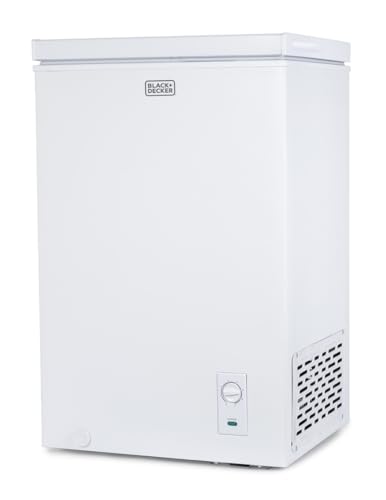
Capacity, lid clearance and garage placement matter most when choosing among the best compact chest freezers.
Chest freezers all look like white boxes with a lid, yet the right one depends on where it will live and what you freeze. This guide walks through the best compact chest freezers by type, so the differences in size, cost, and daily effort are clear before you buy. The comparison table below puts each type side by side with its best use, its strengths, and a typical price.
Start with capacity honesty: the cubic foot figure on the box describes the whole empty interior, not the food you will actually fit. Boxes, bags, and baskets pack with gaps, so the usable share is always smaller than the headline number. Plan the size from your shopping habits first, then check that the footprint and the lid swing fit the room.
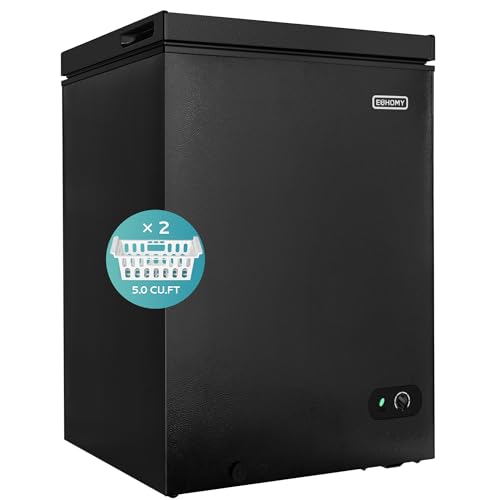
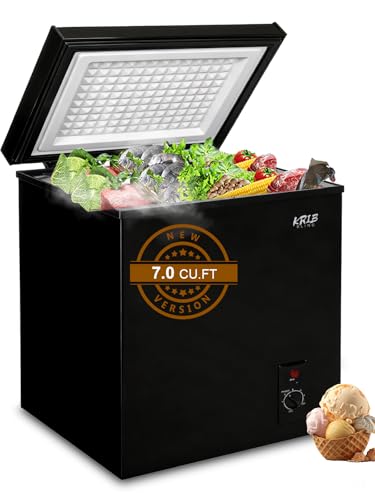

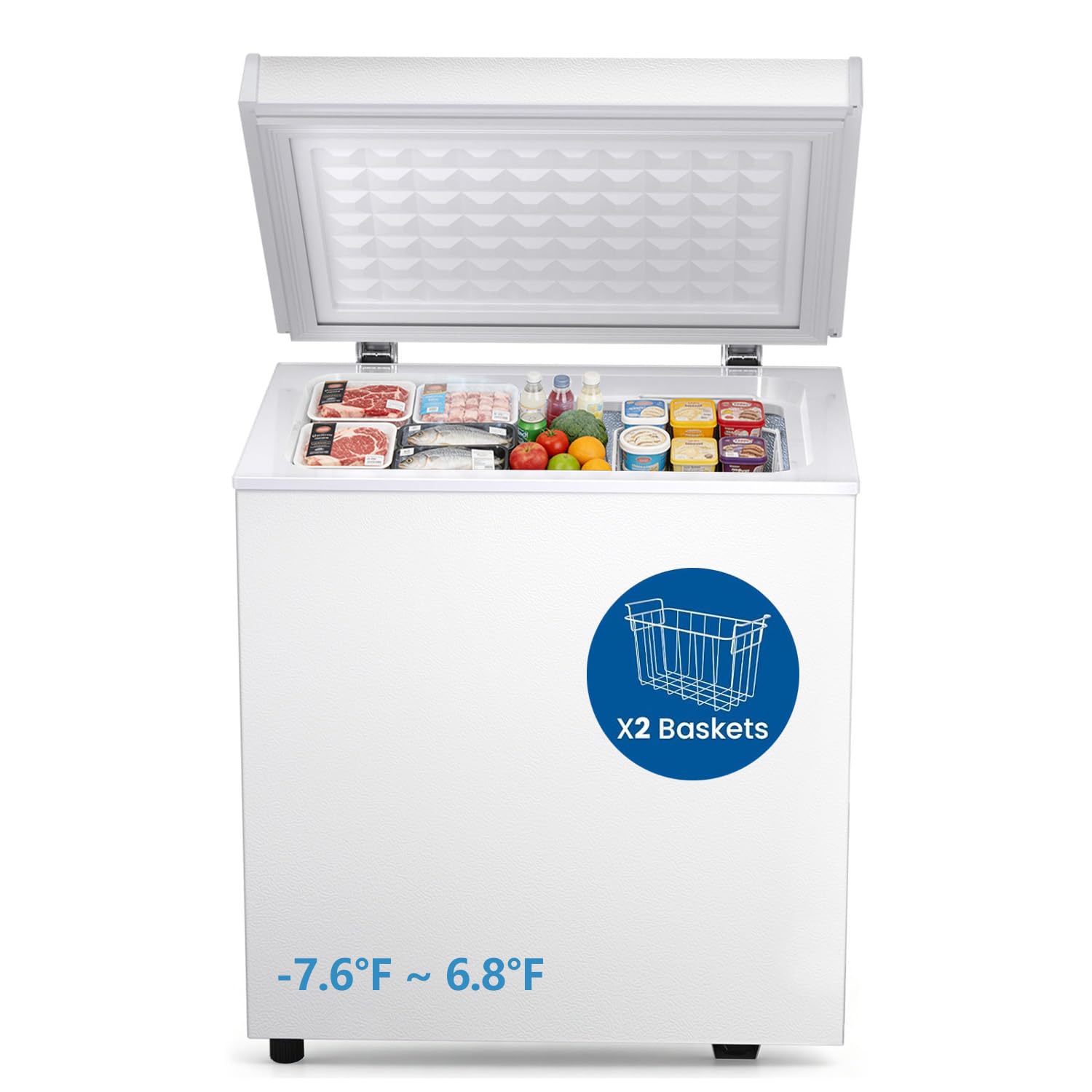


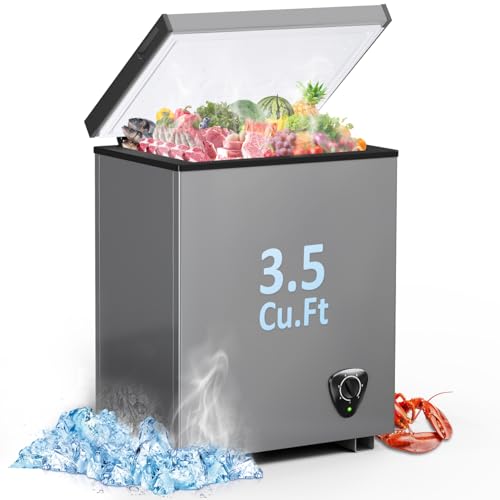

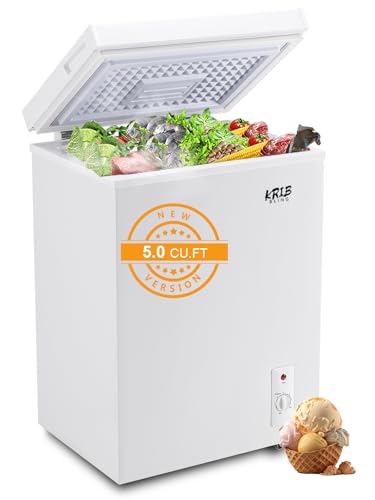
How Compact Chest Freezers Compare to Other Options
| Type | Best For | Pros | Cons | Typical Price |
|---|---|---|---|---|
| Compact chest freezer | Bulk storage in a small footprint | Low cost per cubic foot, holds cold well during outages | Food at the bottom is hard to reach, manual defrost | About $150 to $400 |
| Upright freezer | Frequent access and sorted shelves | Shelves and door bins keep food visible | Costs more per cubic foot, cold air spills when opened | About $400 to $900 |
| Top freezer refrigerator | Everyday fridge and freezer in one unit | No extra floor space, familiar layout | Freezer section is small for bulk buys | About $600 to $1,200 |
| Counter depth refrigerator | Kitchens built for a flush look | Sits level with counters, wide fresh food space | Freezer space is the smallest of the four | About $1,200 to $2,500 |
Each option below stores frozen food in a different way, and the honest pick depends on how often you open it and how much you store.
Compact Chest Freezers vs Top Freezer Refrigerators
A top freezer refrigerator keeps a modest freezer above the fridge, which suits weekly fresh shopping and a few frozen staples. It cannot match a chest freezer for bulk storage, since that freezer section is often only a few cubic feet. Choose the fridge alone if your frozen buying is light. Add a compact chest freezer when club packs and garden produce start crowding the kitchen freezer.
Compact Chest Freezers vs Upright Freezers
Upright freezers open like a fridge, with shelves that keep food visible and reachable. That order costs more per cubic foot, and cold air pours out each time the door opens. A chest design holds its cold better because the cold air sits low and stays put when the lid lifts. Pick the upright for daily access, and the chest for deep storage.
Compact Chest Freezers vs Counter Depth Models
Counter depth refrigerators trade freezer room for a built in look, sitting flush with kitchen counters. Their freezer drawers suit a household that cooks fresh most nights. They are the weakest choice for bulk freezing, and the most expensive way to store a side of beef. A separate chest freezer in a utility room solves the storage problem for far less money.
Who Should Choose Compact Chest Freezers?
The best compact chest freezers suit households that buy meat in bulk, freeze garden produce, or batch cook for busy weeks. They also fit small homes because the footprint starts at roughly the size of a washing machine. Shoppers who want storage value above all else often find the best compact freezers sitting in this chest class rather than in taller designs. For most families, the best chest freezers for home are the compact sizes rather than the giant ones.
Some buyers should look elsewhere. Shops and cafes that open the lid all day step up to the best commercial chest freezers, which add stronger compressors and locks for business use. Renters and anyone who reorganises food daily may prefer an upright, since digging to the bottom of a chest gets old. If your frozen food turns over every week, a bigger fridge freezer may be the simpler answer.
Seasonal buyers are a strong match too. A compact chest freezer swallows a whole hunting season, a bulk berry harvest, or a round of holiday baking in a way no fridge freezer can, then idles cheaply for the rest of the year. Households that host big gatherings a few times a year get the same benefit, since drinks, ice, and prepared dishes all have somewhere cold to wait.
How to Choose the Right Compact Chest Freezer
Five checks decide the purchase: space, capacity, temperature control, energy use, and placement.
Dimensions and Lid Clearance
Measure the floor spot first, then measure the path through doors and halls, because the freezer must arrive before it can be placed. The lid swings upward and needs clear headroom above the open top, roughly the height of the lid itself. Leave a few inches behind and beside the unit so air can move around the cabinet. A freezer that fits the room but blocks its own lid becomes a daily annoyance.
Capacity and Packing
Sizes run from about 3 to 9 cubic feet in the compact class. A household of two often lands near 3 to 5 cubic feet, while families who freeze meat in bulk lean toward 7 cubic feet or more. Baskets matter as much as volume, since one or two lift out baskets keep small items from sinking to the bottom. Freezing food flat in bags before it goes in stacks far tighter than round containers do.
Organisation Habits That Prevent Waste
A chest freezer hides its contents, so habits matter as much as hardware. Label and date every bag and box, because frozen food all looks the same after a month. Keep a running list on a card inside the lid and cross items off as you use them, which stops the deep dig through frozen layers. Put new food under the old so rotation happens naturally and nothing ages quietly at the bottom, and group food by meal type in separate bags so a long search becomes a quick grab.
Temperature Control and Defrost
Most compact chest freezers use a simple dial, and a separate thermometer tells the truth about the inside temperature. Frost honesty matters here: most chest classes are manual defrost, so a defrost day is part of ownership. Frost builds slowly on the walls, steals space, and makes the compressor work harder. Plan to empty, unplug, and scrape once or twice a year, using coolers to hold the food meanwhile.
Energy Use and Running Cost
A compact chest freezer typically draws modest power because the lid seals well and the cold air stays inside. The energy label lists estimated yearly kilowatt hours, and multiplying that figure by your local rate gives the yearly cost. Inverter compressor models sip power steadily, while basic models cycle on and off through the day. Either way, a full freezer runs more efficiently than a half empty one, since frozen food itself holds the cold.
Garage Placement and Room Temperature
Garages tempt every freezer owner, but room temperature decides whether the unit runs right. In a cold garage a basic freezer can stop cooling, because its thermostat reads the room as cold enough already. A garage ready class is built to keep freezing in unheated spaces across a wide temperature range. Owners comparing the best small chest freezers for garage use should confirm that rating first, then check the outlet and the floor level.
Noise and Everyday Running Behaviour
Chest freezers are among the quietest appliances in a home, since the compressor sits low and the thick walls muffle it. A soft hum while the compressor runs and a gentle click as it stops are normal sounds, not faults. Constant running with no pauses is the warning sign worth acting on, since it points to a tired gasket, dusty coils, or a room that is simply too hot. Light sleepers should still place the unit outside the bedroom wall where possible.
One boundary note: this guide covers the United States market, and listings for the best chest freezers canada describe a different shelf with its own plug, voltage, and model classes, so treat those pages as a separate buying topic.
Setup and Care Tips
Set the freezer to 0°F and confirm the reading with an appliance thermometer after the first day. A freezer holds a safe temperature only while it is powered, so keep an outage plan: during a power cut, leave the lid closed, since a full chest holds its cold far longer unopened. Vacuum dust from the coils or the rear grille twice a year so the compressor can shed heat. Wipe the lid gasket clean and check that it seals all the way around.
Give a new freezer a day to settle at temperature before the first big load, and add food in stages so the cold recovers between batches. Level the unit so the lid closes squarely and the gasket meets evenly on every side. If the freezer will live in a basement, measure the door and stair widths again before delivery day rather than during it.
Frequently Asked Questions
Can a compact chest freezer go in an unheated garage in winter?
Yes, if the freezer carries a garage ready rating, because standard models can stop freezing when the room drops near freezing. The rating plate or the manual lists the room temperature range the unit is built for, so check that range against your coldest garage nights. Summer heat matters too, since a hot garage makes any freezer run longer each day. Keep the unit out of direct sun and leave air space around it.
What size compact chest freezer does a family of four need?
A family of four usually lands between 5 and 7 cubic feet. A common planning guide is about 1 to 2 cubic feet per person, adjusted by how much of the weekly shop gets frozen. Families who freeze mostly leftovers and ice cream sit at the low end. A hunting season, a productive garden, or a shared beef order pushes the same family to the top of that range or beyond it.
How often does a compact chest freezer need defrosting?
Defrost when the frost layer reaches about a quarter inch thick, because that is when lost space and extra running cost become real. In most homes that point arrives once or twice a year. Never chip frost with a knife, since one slip can puncture a cooling line hidden inside the wall. Warm towels and a plastic scraper clear the walls safely and quickly.
How much electricity does a compact chest freezer use each year?
Most compact models use about 200 to 300 kilowatt hours per year, which is similar to a small television watched for a few hours daily. At common household rates the bill lands near a few dollars a month. Older freezers use noticeably more, so a very old hand me down can cost more to run than it saves. The yellow energy label on a new unit gives the fairest estimate for your home.
How long should a compact chest freezer last?
A compact chest freezer often lasts about 10 to 15 years with basic care. The compressor decides the lifespan, and it works hardest in hot rooms with dusty coils. Keeping the gasket sealing and the coils clean protects that lifespan more than any dial setting does. When frost builds within weeks or the motor runs without pauses, repair costs usually outweigh replacement.
Final Thoughts
The best compact chest freezers reward buyers who measure the room, count their real frozen food, and accept the defrost day as part of the deal. Type comes first, capacity second, and placement third. Look back at the product table above to compare the types and prices once more, then choose the size that fits both the food and the floor.


