Best Compact Countertop Dishwasher in 2026: Buying Guide
Disclosure: We may earn a commission when you buy through links on this page, at no extra cost to you. As an Amazon Associate I earn from qualifying purchases. Learn more

Small sink, shared kitchen or rental: choose the best compact countertop dishwasher by hookup style, capacity and fit.
The sink fills up fast in a small kitchen. Two mugs, a pan, and a few plates can cover the little drying space you have, and hand washing after every meal gets old quickly. If you rent or cook for one or two people, the best compact countertop dishwasher is the one that fits your counter, your daily dish load, and your budget.
This guide walks you through the choice in that order, from the space under your cabinets to capacity, water supply, and the features worth paying for. Use the product table to line up the main styles first.


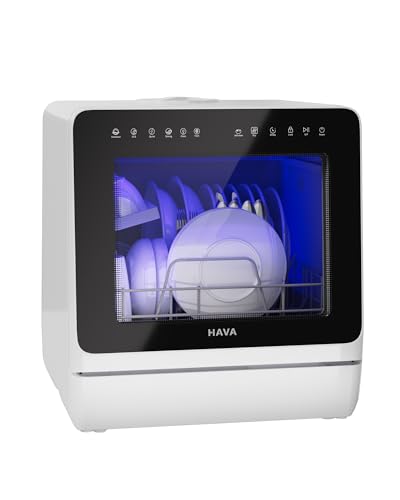

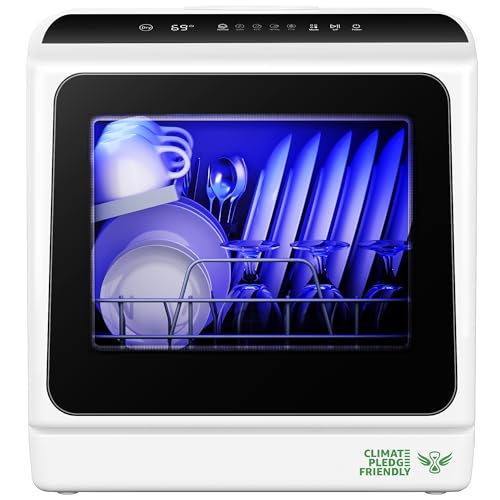


Quick Answer: Which Style Fits Your Home
Compact countertop models fall into three broad profiles, and your home usually points to one of them quickly.
- For most small households: a faucet connected model with room for about six place settings, enough for a full day of dishes for two people.
- For renters: a model with a built in water tank. You fill it with a pitcher and can store it in a closet between uses.
- For one person or an RV or cabin: the smallest tank fed designs leave more counter free, and our guide to the best portable countertop dishwasher covers that lighter end of the range.
Before You Buy: A Quick Checklist for Choosing
Which Type Fits Your Routine
The first decision is how the machine gets and drains water. Faucet connected models draw water through a hose and an adapter on your faucet, so they suit a fixed spot beside the sink. Tank models carry their own supply, often around five liters, and drain through a hose into the sink, so they work where the faucet will not accept an adapter or where you want to move the machine after each use.
If the tank route sounds right, see our guide to the best countertop dishwasher with water tank for the fill details that matter there. A built in 18 inch machine is a different purchase, since it needs a cabinet opening and a permanent water line.
Features Worth It, and Ones to Skip
A delay start, a choice of wash programs, and a drying function earn their keep in daily use. Heated dry helps plastics come out ready to put away, while an air dry finish uses less energy for overnight loads. A baby care or glass program can help households with bottles or delicate stemware.
Fruit wash modes sound appealing, but they use the same spray action as a gentle rinse and rarely change how clean dishes get. Skip paying extra for them, and put the money toward capacity or a quieter pump instead.
Wattage, Power and Energy Use
Most compact models plug into a standard outlet and draw roughly 600 to 1200 watts while heating water, so a normal kitchen circuit handles one as long as you do not run another heavy appliance on the same circuit at the same time. Heated dry is the biggest energy user in a cycle, while shorter and cooler programs cost less. Check the rating label, and remember that running full loads keeps the cost per dish low.
Safety Features and Certifications
Look for a UL or ETL listing, which means an independent certifier has checked the electrical safety of the design. A leak sensor and a float switch that guards against overfilling are worth having, because a countertop machine sits above your floor and cabinets. Keep the cord clear of the sink, never lift the unit while it holds water, and stop using it and call the maker if you see water pooling under the base or smell hot wiring.
Counter Space and Dimensions
Measure before you fall for a listing photo. Note the width and depth of the clear patch of counter, then measure the height to the bottom of your upper cabinets, because many kitchens offer only about 18 inches there and some models need nearly all of it once the tank lid lifts. Leave room behind the unit for hoses to bend without kinking, and confirm the door can open fully with space in front for pulling the rack out. The drain hose must also reach the sink without stretching tight.
Realistic Budget Ranges
Models under $300 usually cover the basics well, with a handful of wash programs and plastic interior parts. Spending about $300 to $500 tends to buy a larger rack, better drying, and lower noise. Above that range you mostly pay for finish, extra programs, and brand support rather than cleaner dishes. Set your ceiling after you know your size limit, since a machine that fits beats a larger bargain stored on the floor.
Three Compact Profiles Compared
Shop by profile rather than by award badge. Here is what each profile gives you and what it asks in return.
Faucet Connected Models With the Largest Racks
This profile holds about six place settings, in practice a day of dishes for two plus a small pan if you load with care. Because water comes straight from the faucet, loads can run back to back with no refilling pause. The trade off is placement, since the hose ties you to a spot near the sink and the adapter may not suit every faucet shape. Choose it if you have a permanent patch of counter.
Tank Fed Models for Flexible Placement
Tank fed models trade a little capacity for freedom. You can set one on a cart or a counter away from the faucet, as long as the drain hose reaches the sink. Filling the tank takes a minute or two before each load.
Many of these designs sit at the lower end of the price range, so they suit renters and anyone testing whether machine washing fits their habits before spending more. The smaller rack is the main compromise.
Larger Compact Models With Strong Drying
If you expect daily use for years, the upgrade profile adds a more durable interior, a stronger drying stage, and better rack coatings that resist rust at the tine tips. Replacement baskets and seals are also easier to source from makers with a steady parts supply. You pay more up front, and the footprint is often the largest of the three profiles, so measure with extra care. This route suits owners who plan to stay put.
How the Comparison Is Framed
When you judge any candidate for the best compact countertop dishwasher title in your own home, weigh six factors in order. Capacity comes first, then washing performance, ease of daily use, how simple the interior is to keep clean, noise in an open plan room, and finally safety listings and warranty length. These notes draw on maker specifications and patterns in verified buyer reports about fit, leaks, and loading.
Strengths and Limits of Compact Models
Compact models win on access. There is no cabinet work and no plumber in most cases, and you can take the machine with you when you move. They also use far less water per load than washing the same dishes under a running tap, and they free up a sink that doubles as prep space.
The limits are just as clear. Bulky stockpots, large sheet pans, and tall cutting boards often stay in the sink, so a compact machine reduces hand washing rather than ending it. Counter space is the real price, because the footprint you give up may be your only chopping spot. Noise carries in a studio, and small racks punish careless loading, since one misplaced bowl can shield everything behind it from the spray.
Common Buying Mistakes to Avoid
- Measuring the counter but not the cabinet height, so the lid or door cannot open fully once the unit is in place.
- Counting place settings like full size settings, then finding that your large dinner plates or tall glasses do not fit the smaller rack.
- Ignoring the faucet shape, since some modern faucets with pull down sprayers cannot take the adapter a connected model needs.
- Paying for novelty programs, while skipping the drying performance and rack quality you will notice every single day.
- Forgetting the drain path, because a hose that cannot reach the sink or that dips below the unit can leave dirty water sitting in the line.
- Skipping the parts check, so a worn seal or cracked basket later turns into a search with no ready replacement.
Cost of Ownership and Care
Running costs stay modest. A load uses a few gallons of water at most, and detergent adds only a small amount per wash, though pods cost more per load than powder. Electricity for heating is the main variable, and cooler programs trim it.
Over the years, budget for a hose washer, rack touch up if the coating chips, and descaling solution if your water is hard. Before your first load, our walkthrough of how to use a countertop dishwasher explains loading patterns and detergent amounts. Wipe the door seal weekly, leave the door ajar after the last load, and store a tank model empty with its lid open.
Your Questions, Answered
What is the most reliable countertop dishwasher brand?
No single brand owns reliability in this small category, and makers rarely publish repair rates you can compare. A better test is warranty length, whether the maker sells seals, baskets, and hoses separately, and whether buyer reports repeat the same fault. A fault repeated across reviews points to a design weakness, while scattered complaints usually reflect setup problems.
How do you clean a countertop dishwasher?
Start with the filter at the floor of the tub, since trapped food there is the usual cause of odors and weak washing. Rinse it under the tap, then run an empty hot cycle with a bowl of white vinegar on the rack to clear grease and light scale. Clear the spray arm holes with a soft brush if you see grit, and wipe the door edges where grime collects.
Is a countertop dishwasher worth it?
It is worth it when your sink is small, your household is one to three people, and dishes pile up daily, because the machine returns time and sink space every evening. It is harder to justify if you cook with many large pans or eat most meals out. Our deeper look at is a countertop dishwasher worth it weighs the water and cost side of that trade.
How long does a countertop dishwasher last?
With daily use, many owners get about five to seven years before a pump, heater, or control fault makes repair uneconomical. Hard water shortens that span as scale builds on the heating element, while prompt filter care stretches it. Early signs of decline are gritty dishes from a weakening spray and longer cycles, which gives you time to plan a replacement.
Are compact countertop dishwashers worth it for one person?
For one person, value rests on cooking style rather than dish count alone. If you cook from scratch, prep bowls, boards, and pans fill a small rack quickly, and a load every evening feels worthwhile. If your meals are mostly a plate, a mug, and a fork, hand washing takes minutes and the counter may serve you better as prep room. A small tank model stored away between uses splits the difference.
Final Thoughts
Start with your measurements, then pick the profile that matches your routine. Faucet connected models serve most small households best, tank fed models give renters the most freedom, and sturdier large compact designs reward daily use over years. The best compact countertop dishwasher is the one that fits your cabinets, your faucet, and your dish load at the same time. Check the options in the product table against your notes, and if your counter is roomier than you thought, our guide to the best countertop dishwasher covers the wider field.