Best Compact Dryer in 2026: Types and Buying Guide
Disclosure: We may earn a commission when you buy through links on this page, at no extra cost to you. As an Amazon Associate I earn from qualifying purchases. Learn more

Venting, outlet and door swing decide the best compact dryer: vented, condenser and heat pump types compared.
A compact dryer has to dry real laundry well while fitting a closet or a stacked corner that a standard machine would never enter. Finding the best compact dryer for your home means matching drum capacity, venting style, and power supply to your space before you fall for extra cycles you may rarely use. A model that looks perfect on a product page can still fail you if the door cannot open fully or the vent has nowhere to go.
This guide compares the three main compact dryer types by capacity, drying performance, ease of use, and price. The product table sums up the key differences, and the sections that follow explain how to measure your space and choose a venting style.


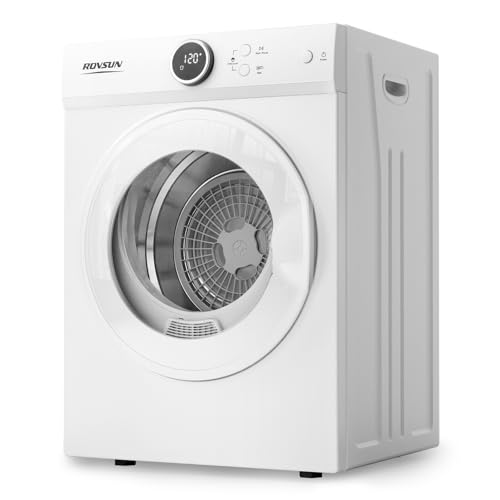


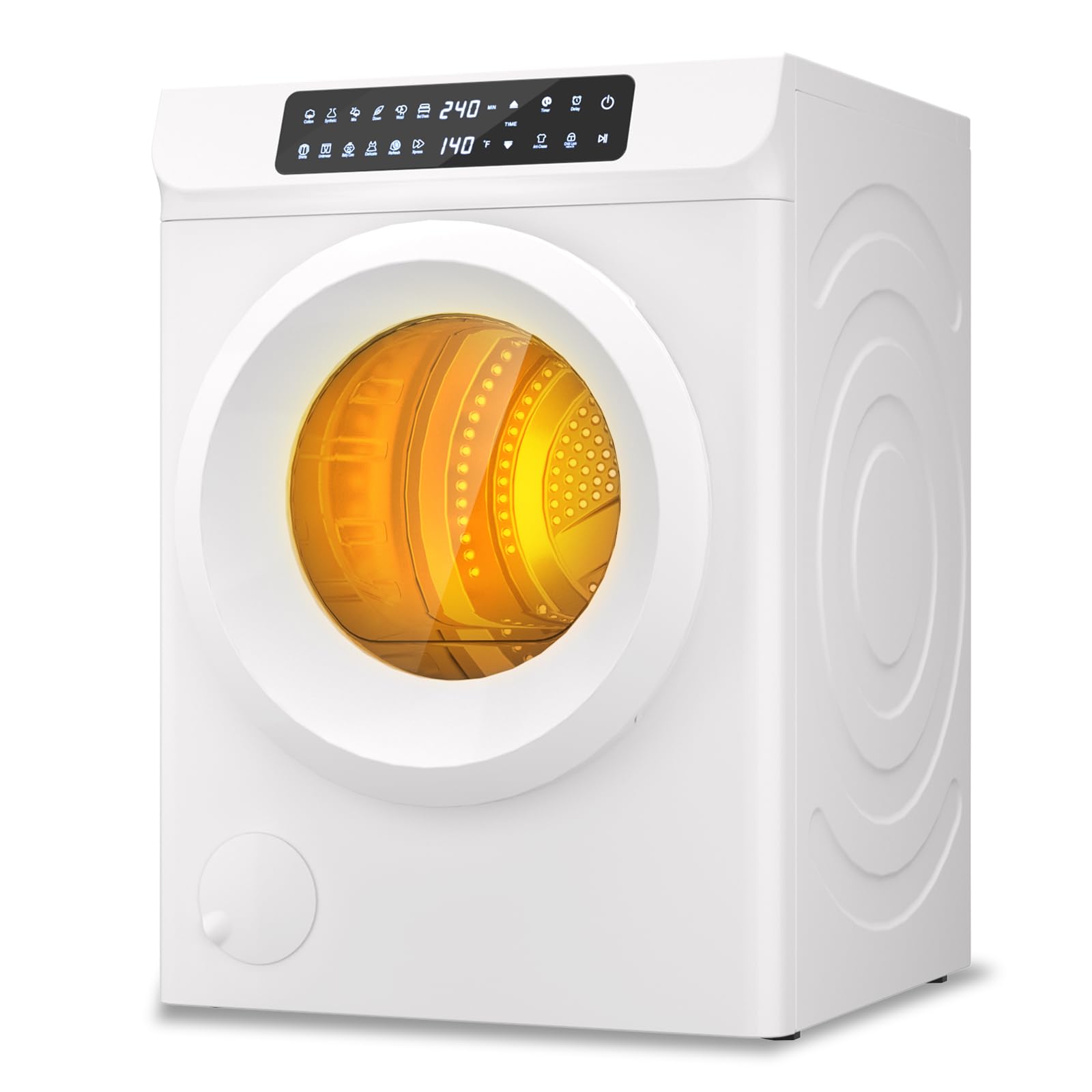

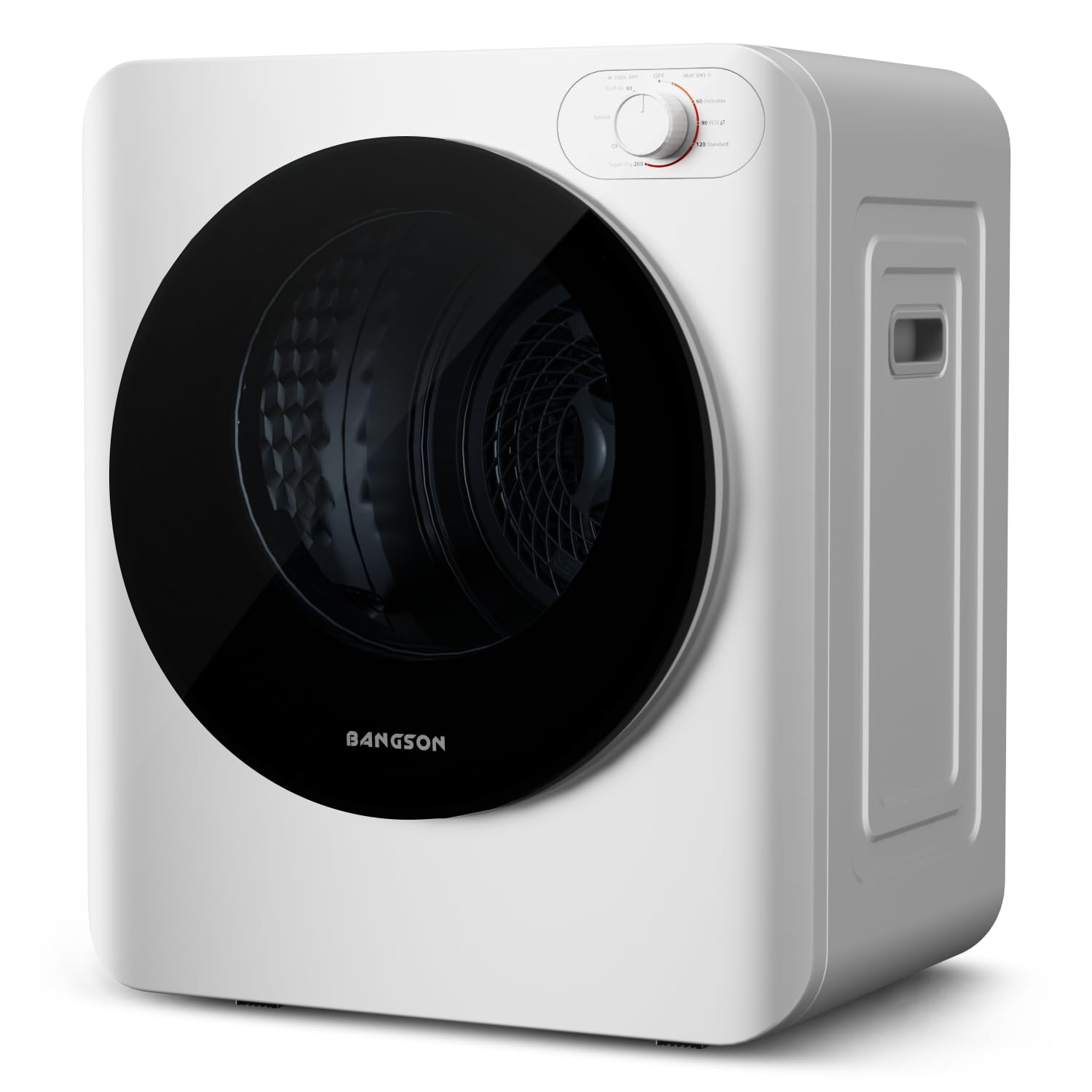
Compact Dryer Types at a Glance
Compact dryers fall into four types. Vented electric models push hot moist air outside through a duct and usually dry fastest. Ventless condenser models collect water in a tank or drain hose, so they need no duct but run longer. Heat pump models recycle warm air inside a sealed loop, using less energy and treating fabrics gently, at a higher price.
Compact Dryer Types Compared
The type you choose shapes drying time, installation cost, and how the laundry room feels while a load runs. If you are still weighing venting in particular, our ventless vs vented dryer comparison walks through the tradeoffs in more depth.
Vented Electric Compact Dryers
A vented electric model works like a smaller version of a standard dryer, with a heating element, a tumbling drum, and a duct that carries moist air outside. Loads tend to dry faster than in ventless models, and purchase prices are often the lowest of the three types. The catch is the duct itself.
You need an outside wall or an approved vent path nearby, and renters may not have permission to add one. If a vent is already in place, this type is usually the simplest route to quick drying.
Ventless Condenser Compact Dryers
A condenser model pulls moisture from the warm air inside the drum and collects it as water, either in a tank you empty or through a drain hose. No outside duct is needed, so you can place it in an interior closet or a bathroom alcove with the right hookups. Cycles run longer than vented cycles, and the room can feel warmer while the dryer runs. If a duct is impossible in your home, see our guide to the best ventless dryer options for more on how these models handle everyday loads.
Heat Pump Compact Dryers
A heat pump model reuses its own warm air instead of venting it away, drying at lower temperatures with notably less energy per load. The gentle heat suits delicates, activewear, and fabrics that shrink easily, and like a condenser model it needs no outside duct. Expect longer cycles, the highest prices of the three types, and a filter system that needs regular attention. If lower energy use matters most to you, our guide to the best heat pump dryer models explains what the extra cost buys.
Portable Plug In Dryers
Portable dryers run on a standard household outlet, take very little floor space, and cost far less than the other three types. Drums are smaller, cycles run longer, and many models use a short vent hose that you point at a window or a bucket, while some are ventless. They suit tiny apartments, dorm rooms, travel trailers, and people who dry only a few items at a time. They are not built for heavy bedding or a large family's laundry, so check the drum capacity against your usual load before you buy.
What Separates One Type From Another
The types differ on the factors that change daily use. Capacity decides how much laundry fits in one load. Drying performance covers cycle length and how evenly loads come out.
Ease of use includes controls and cycle choices. Cleaning covers lint filters and condenser care. Noise matters because compact dryers often sit near bedrooms and living areas, and safety listings and warranty round out the picture.
How to Choose the Right Compact Dryer
Size and Form Factor
Most compact dryers are about 24 inches wide, with drums of roughly 3.9 to 4.4 cubic feet, compared with about 27 inches wide and 7 cubic feet or more for a standard model. That smaller drum handles daily loads for one or two people well, but it means more loads per week for a family. Stackable models pair with a matching compact washer to use vertical space, while a portable style on casters suits very small rentals. Choose the form around your floor plan first.
Type and Venting
Start with what your room allows. A vented model needs a duct to the outside, a condenser model needs a tank emptied or a drain nearby, and a heat pump model needs only power and a way to remove collected water. Nearly all compact dryers are electric and gas compact models are rare, so if you are weighing fuel choices for a standard size pair, read our gas vs electric dryer breakdown before deciding whether compact still fits the plan.
Features Worth Paying For
Sensor drying is the feature most worth your money, since it stops the cycle when clothes reach the dryness level you set instead of running on a timer alone. A steam refresh cycle can loosen wrinkles from a shirt you need in a hurry. A reversible door helps when the dryer sits in a tight corner and the swing direction fights the wall. WiFi cycle alerts are a nice extra, but they should rank below sensor drying and door fit.
Power and Energy Use
Most compact dryers run on a 240 volt circuit, while some small portable models use a standard 120 volt outlet and dry more slowly in return. Check your laundry area before ordering, because adding a new circuit can cost as much as the dryer itself. Heat pump models use the least energy per load, vented electric models use the most, and condenser models sit between them. An ENERGY STAR label makes yearly energy use easy to compare within a type.
Safety Features and Certifications
Look for a UL or ETL listing on the model you choose, which shows the dryer meets recognized electrical safety standards. A vented dryer also needs a clear and short vent path, since lint buildup in a long or crushed duct raises fire risk and slows drying. Keep stored boxes and cleaning products away from the dryer. The lint filter check before every load, covered in the care section below, is your simplest safety habit.
Floor Space and Dimensions
Measure width, height, and depth of the space, then add room for the door swing, the vent duct behind a vented model, and at least a small gap for hoses and cords. Measure every doorway and hallway turn on the delivery path too, because a compact dryer that fits the laundry closet may still fail at a narrow bathroom door. Stacking adds height, so check ceiling clearance and whether you can reach the dryer controls on top.
How Much Should You Spend?
Basic vented compact models often cost about $600 to $900, while condenser models tend to run about $800 to $1,100. Heat pump models usually sit at about $1,000 to $1,400, with the higher price buying lower energy use and gentler drying. Portable plug in models cost much less, often well under $450, though they dry smaller loads more slowly. Set your budget by type first, then pay for sensor drying and a solid warranty before extra cycles.
Is a Compact Dryer the Right Size for You?
A compact dryer suits you if your laundry space is narrow, your building bans new vents, or your household runs small frequent loads. Apartment and condo owners gain the most, since a stacked compact pair can turn a closet into a full laundry area. Couples and singles usually find the drum plenty for daily clothing and towels.
A household of four or more that washes bulky bedding often will likely run the compact drum so many times a week that a standard pair saves real time. If you are comparing across all sizes, our guide to the best dryer models shows what stepping up in capacity changes.
Common Mistakes to Avoid
- Ordering before measuring the delivery path, so the dryer arrives but cannot pass a narrow doorway or tight turn.
- Choosing a vented model for a room with no vent and no permission to add one, which leaves you with a machine you cannot install.
- Packing the drum full to save time, which traps moisture and leaves thick items damp in the middle.
- Ignoring the outlet type in your laundry area, so the dryer needs an electrician visit before its first load.
- Stacking a dryer on a washer without the kit made for that pair, which can let the dryer shift during a cycle.
- Placing a condenser model in a sealed closet with no airflow, which makes cycles longer and the room hotter.
How to Make Your Compact Dryer Last Longer
Clean the lint filter before every load, since a coated filter slows airflow and forces longer and hotter cycles. Once a month, wash the filter screen with warm water if the manual allows it, because dryer sheet residue can clog the mesh. Condenser and heat pump models also have a secondary filter or condenser unit that needs rinsing on the schedule in the manual. For a full routine, follow our step by step guide on how to clean a dryer, and check a vented duct once a year for lint packed at bends and at the outside flap.
FAQ
What size compact dryer does a household of two need?
Most households of two do well with a drum of about 4 cubic feet, which holds a week of daily clothing in two or three loads. The point buyers miss is that mixed loads shrink usable space. A load that combines jeans, towels, and a sheet needs room for air to move, so fill the drum about three quarters full at most. A small midweek load keeps the drum size from ever feeling tight.
Can a compact dryer dry a queen comforter?
Yes, in most cases, as long as the comforter goes in alone and has room to tumble. Drum depth and door opening width matter as much as the stated capacity, because a comforter that barely squeezes through the door will bunch into a ball and dry unevenly. Pause the cycle once to shake it out and turn it over. Thin comforters dry fully in one cycle, while a thick winter one may need a second short cycle to finish the center.
Does a compact dryer need a special electrical outlet?
Most compact dryers need a 240 volt outlet on its own circuit, the same style a standard electric dryer uses. A smaller group of portable and plug in models runs on a 120 volt household outlet, and those dry noticeably slower because the heater draws less power. Check the plug shape in the product listing against your outlet before ordering, and never use an adapter to force a match. If the circuit is missing, price an electrician visit into the total cost.
Why does a ventless compact dryer warm up the room?
A ventless model keeps the heat of drying inside your home instead of sending it outside, so the laundry area warms up and can feel humid during a cycle. A condenser model with a drain hose sends the collected water away, which reduces the damp feeling compared with a tank model in a small sealed room. Cracking a door or running a small fan nearby helps. Heat pump models release less warmth than condenser models, one more reason they suit laundry closets near living space.
Can you stack a compact dryer on any compact washer?
No, stacking works safely only with a matched pair and the stacking kit made for those models. The kit locks the dryer feet to the washer top so vibration cannot walk the dryer forward. The washer must also be rated to carry the dryer weight, and the pair should stand on a level floor, ideally anchored in homes where movement is a concern. A top load washer can never take a dryer on top, since its lid needs clear access.
Final Thoughts
Start with your venting options and your measurements, then pick the type that fits both. Vented models win on speed and price, condenser models win on placement freedom, and heat pump models win on energy use and gentle care. Whichever type you choose, the best compact dryer is the one whose drum, door swing, and outlet match your space on day one. Check the product table once more, confirm your outlet and vent path, and order with those three checks done.