
Best Commercial Upright Freezers: What Actually Matters Before You Buy 2026
Disclosure: We may earn a commission when you buy through links on this page, at no extra cost to you. As an Amazon Associate I earn from qualifying purchases. Learn more

Compare the best commercial upright freezers by temperature holding, duty, capacity, and fit, with price bands, red flags, and a quick buyer checklist.
A commercial upright freezer earns its keep in the middle of a busy service, when the door opens again and again and the food inside still has to stay frozen hard. Choosing among the best commercial upright freezers starts with temperature: how steady the cold stays through constant openings matters more than any single figure on a spec sheet. The sections below cover the main classes so you can match size and door style to your kitchen.
This guide works through the checks that decide a good purchase: temperature holding, compressor and seal duty, usable capacity, and the footprint and door swing that decide whether the unit fits your line at all. Price bands, red flags, and care habits follow.

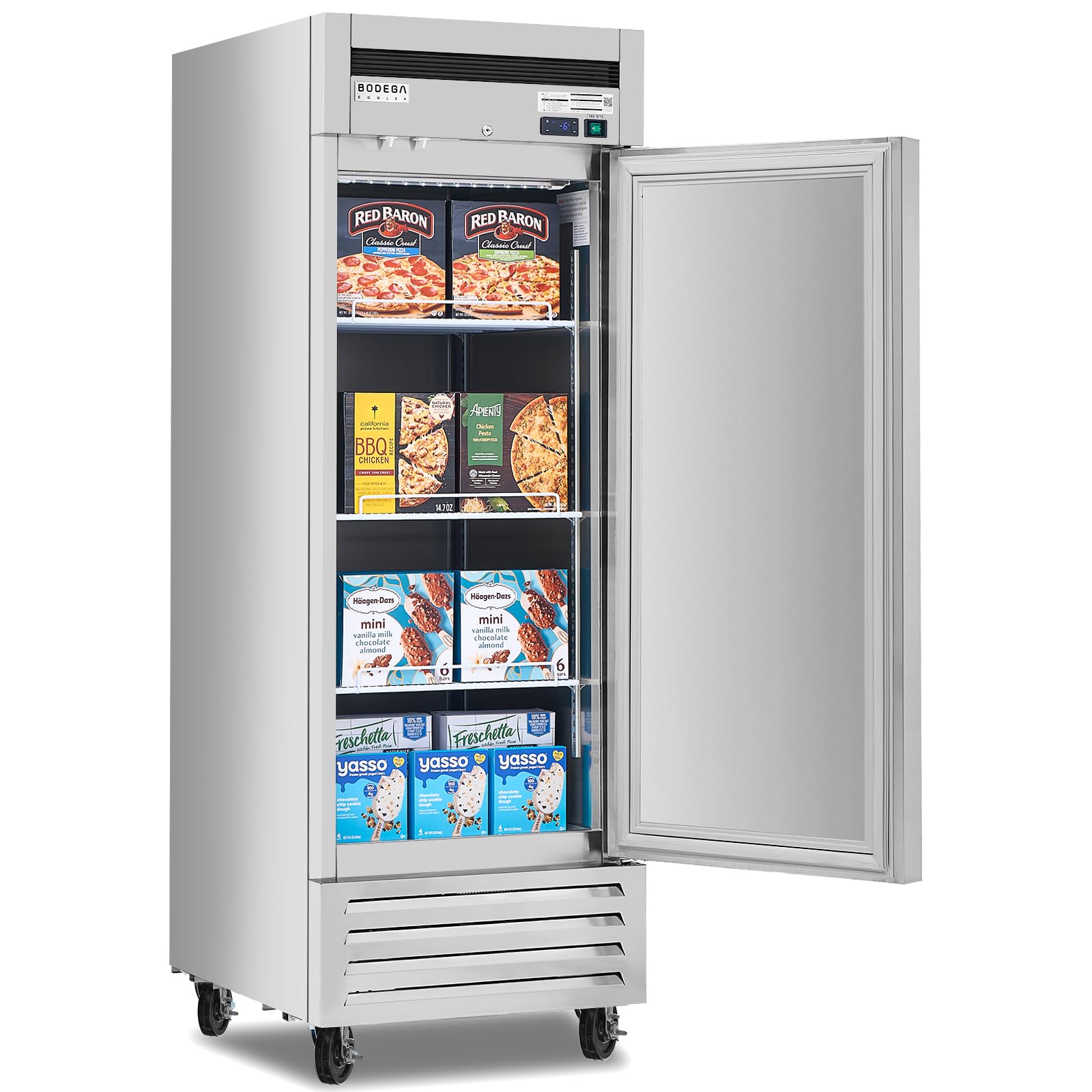


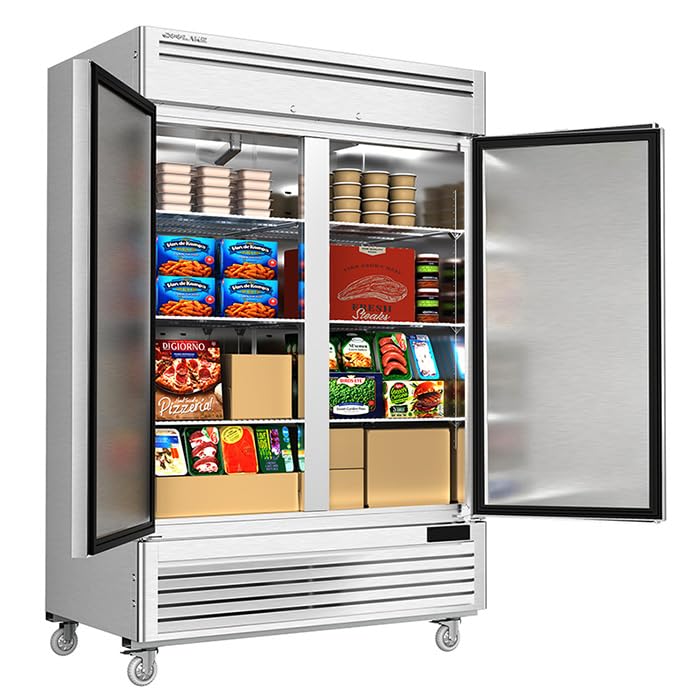


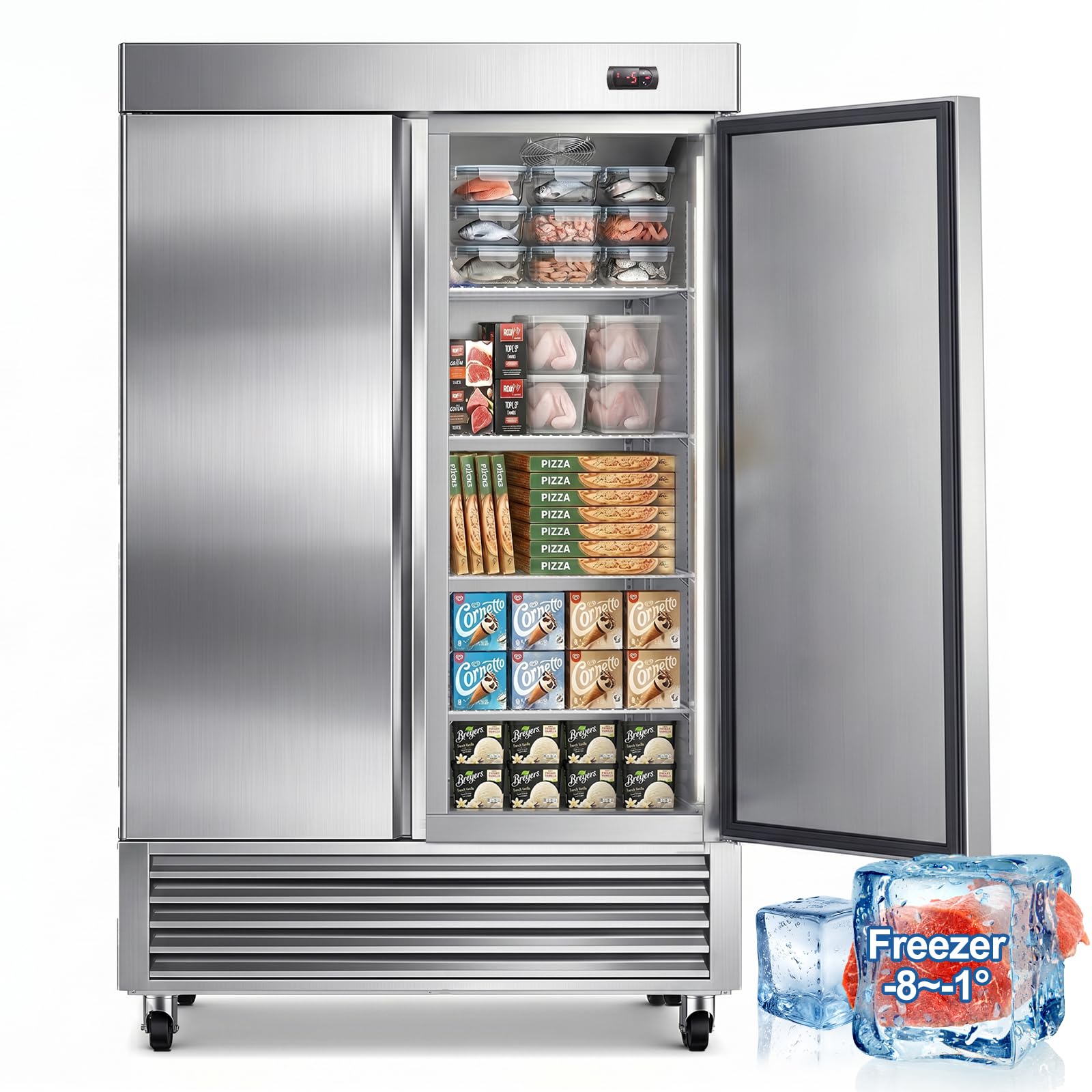
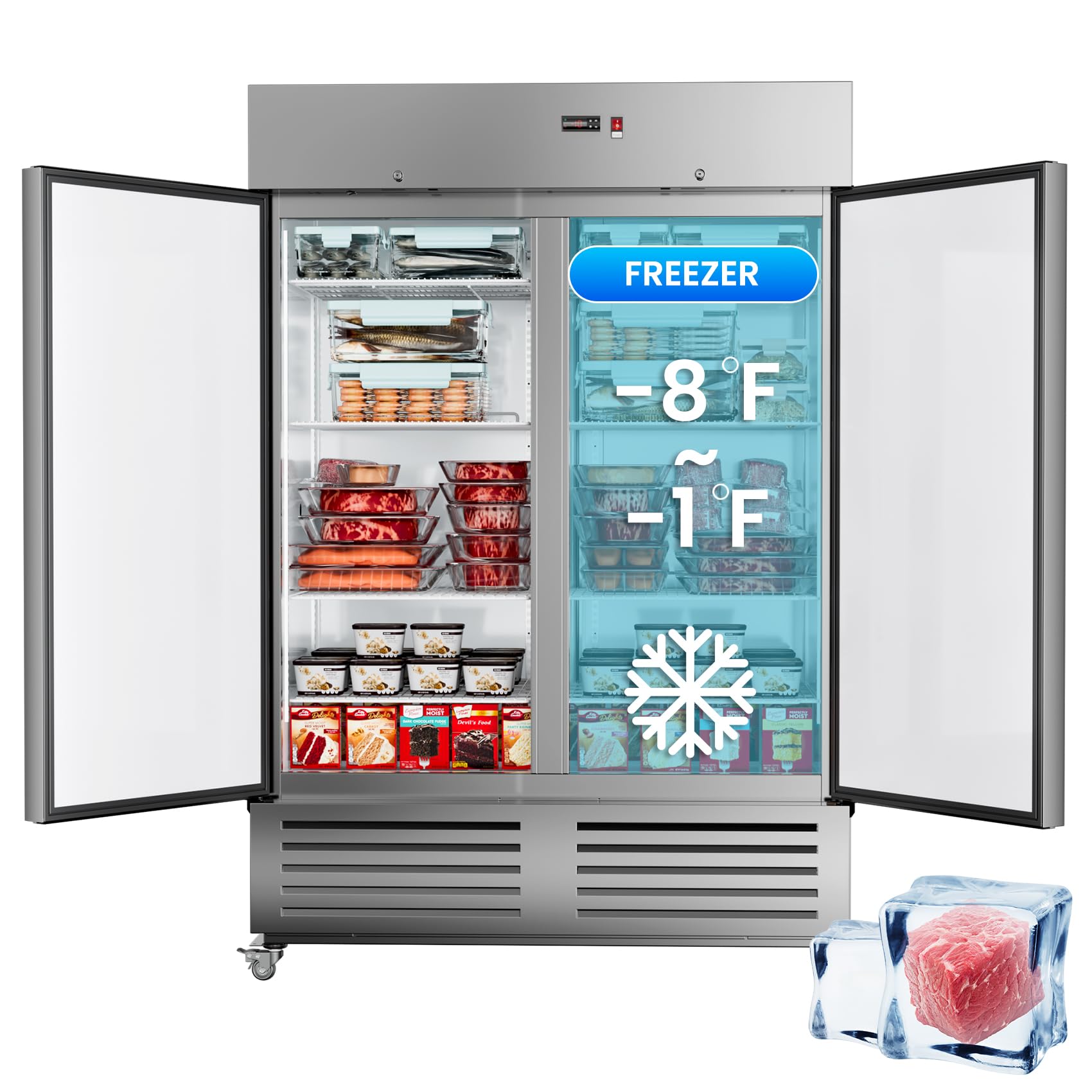
What Matters in the Best Commercial Upright Freezers
Temperature Holding Through a Busy Service
A commercial freezer is a temperature purchase before it is a storage purchase, and makers rate cold performance in still air with the door shut, so those figures describe the best case and not your Friday rush. What decides food quality is recovery: how fast the cabinet pulls back down to holding temperature after a run of openings. Look for a strong refrigeration system, a fan that moves air evenly, and a digital control you can set and lock. Plan to hold frozen food at about 0 degrees Fahrenheit.
Compressor and Seal Duty for Daily Openings
A home freezer might open a few times a day, while a working cabinet can open a hundred times, so the commercial class is built around duty. The compressor is sized for long run times, and the door gasket does the quiet work of sealing warm air out on every close. Self closing doors matter for the same reason: a door left ajar still swings shut instead of leaking cold all shift. Read the compressor warranty length as a rough sign of how the maker rates its own duty cycle, and check that replacement gaskets are easy to order.
Capacity in Cubic Feet and Shelf Layout
Capacity is sold in cubic feet, but usable space is what you actually buy. A single door cabinet usually runs about 10 to 25 cubic feet, while two door cabinets reach about 35 to 50 cubic feet. Adjustable shelves decide whether that space fits sheet pans, tubs, or tall stockpots, so count shelf positions, and measure your largest pan before you shop. Storage for a home rather than a business is a different class, covered by the guides to best upright freezers and best upright deep freezers.
Footprint, Door Swing, and Fit
An upright earns its place by using vertical room instead of floor room, but the fit still decides the purchase. Measure the doorway, the path from the loading door, and the spot itself, then check the door swing against counters and staff, because a door that opens into a walkway will be fought all day. Leave the maker stated clearance around the cabinet for condenser airflow, and confirm the floor is level, since a leaning cabinet stresses hinges and seals. Buyers weighing home garage storage instead can look at best garage freezers upright, built around home ambient swings.
Energy Use and Running Cost
A commercial upright runs all day and all night, so energy use is a real part of the price. Larger cabinets and glass doors cost more to run than smaller solid door units, and an undersized compressor works harder and uses more. Look for an energy rating figure you can compare across models, and favor solid doors unless staff truly need to see stock without opening up. Clean coils and tight gaskets, covered later in this guide, protect the running cost you planned for.
Doors, Locks, and Day to Day Details
Small details decide how a cabinet feels after a month of shifts. A lock matters where stock is valuable or the kitchen shares space with the public. Casters make cleaning behind the unit possible, while leveling legs suit a fixed spot.
A temperature display you can read at a glance and an alarm for a door left open both earn their place in a busy room. Automatic defrost designs save labor, while manual defrost units cost less and ask for a planned emptying day now and then.
Price Bands: What Each Level Buys
One shape question comes before the bands. The best commercial chest freezers cost less per cubic foot and hold cold well, but they ask for floor room and digging. Uprights cost more and give shelf level access, which is why the line almost always runs upright.
Entry Band: About $900 to $1,600
This band buys a single door cabinet with a solid door and a modest shelf count. It suits bakeries, small delis, and prep kitchens where one frozen station covers the day. Smaller kitchens that still need trade duty should also weigh the best small upright freezers, which trade capacity for a footprint that fits tight rooms. What you give up here is mostly convenience: fewer alarms, simpler displays, and less trim.
Middle Band: About $1,600 to $2,800
The middle band is where most cafes and midsize restaurants land. Expect stainless surfaces, stronger shelving, a clearer temperature display, and door alarms as standard fare. Compressors in this band are built for long daily runs in warm kitchens, and parts support is usually easier to find. For a kitchen that cannot afford a dead cabinet during service, this is the sensible default.
High Band: About $2,800 to $4,500
The high band buys two door capacity, glass door display options, and monitoring features that suit institutions and high volume kitchens. You also get heavier shelving and finer temperature control for sensitive stock like ice cream. Buy this band when the volume is real and the cost of a failure is high, not as a hedge for a kitchen a middle band unit would serve well.
Quick Buyer Checklist
- Does the cabinet hold about 0 degrees Fahrenheit through your busiest hour?
- Is the compressor warranty long enough for daily trade duty?
- Do your largest pans fit the shelf spacing with room to spare?
- Does the door swing clear your counters and your walkway?
- Is there clearance around the cabinet for condenser airflow?
- Can you order replacement gaskets and shelves without a long wait?
- Does the size match your delivery rhythm, with space left over?
Red Flags to Watch For
- A seller that lists capacity but hides the temperature range the cabinet can hold.
- A household unit marketed for trade use, with a warranty that goes void in a commercial kitchen.
- Energy figures missing entirely, so running costs cannot be planned.
- A door that does not swing shut on its own when you check the floor unit.
- No clear parts support for gaskets, hinges, or shelves.
Tips to Get the Most From Your Freezer
Keep the cabinet at about 0 degrees Fahrenheit and check the display against a simple freezer thermometer now and then. Vacuum dust from the condenser coils about twice a year, because a coated coil makes the compressor run longer. Load warm food in small batches so the temperature recovers fast, and wipe the gaskets weekly so the seal stays tight. Stage boxes before restocking, because a door propped open undoes all of it.
Frequently Asked Questions
How much electricity does a commercial upright freezer use?
A midsize commercial upright often uses about 800 to 1,500 kilowatt hours a year, which lands around $120 to $250 at common commercial rates, and large two door cabinets use more. The energy figure published for the unit gives the fairest comparison because test conditions match across makers. Glass doors, hot kitchens, and dirty coils all push real use above that figure. If a seller will not share energy figures at all, treat that silence as a cost you cannot plan for.
Can a commercial upright freezer work in a garage?
It can, if the space stays within the ambient range the maker states for the unit. Commercial cabinets are built for warm kitchens, so a cold garage in winter can trouble some controls, and a hot garage in summer makes any compressor work harder. Keep the unit out of direct sun, leave airflow clearance on every side, and expect higher running costs at the extremes. Home buyers with an unheated garage are often better served by garage rated household units than by a trade cabinet.
What size commercial upright freezer does a small cafe need?
Most small cafes land on a single door cabinet of about 15 to 25 cubic feet, which holds a week of frozen stock without crowding the line. Count your largest pans and your delivery rhythm before you decide, because a cabinet that is too small gets opened and restocked more often, which works the compressor harder. If you batch prep and freeze ahead, step up to the next size rather than packing a small cabinet solid, since packed shelves block the airflow that keeps temperatures even.
How long should a commercial upright freezer last?
A well kept commercial upright often serves about 10 to 15 years, with the compressor and the door gaskets deciding most of that span. Gaskets are wear parts and may need replacing well before the cabinet itself wears out, so factor them into running costs. Units in hot, greasy kitchens age faster than units in cool, clean rooms. A cabinet that starts needing frequent service calls, or that cannot hold temperature on a normal day, is telling you the end is near.
Is a commercial chest freezer cheaper to run than an upright?
Often yes, per cubic foot, because cold air stays inside when a chest lid opens, while an upright spills cold air down and out at every opening. The trade is access and floor space: chest cabinets ask you to dig, and they take a wide footprint. Many kitchens run both, with the chest holding bulk stock and the upright serving the line. If most of your frozen goods move daily, the upright layout earns its higher running cost back in saved labor.
Final Thoughts
Start with temperature, then duty, then fit, and let capacity come after those three. The product table above pulls the main classes together so you can compare door styles and sizes at a glance. Match the band to your menu and delivery rhythm, keep the coils and gaskets cared for, and the best commercial upright freezers question becomes simple: the unit that stays cold, fits the line, and asks the least attention. Prices and availability can change, so check the product page before ordering.


