Best Commercial Stand Mixer for Home: Bowl Size, Power and Care for 2026
Disclosure: We may earn a commission when you buy through links on this page, at no extra cost to you. As an Amazon Associate I earn from qualifying purchases. Learn more

The best commercial stand mixer for home suits your batch size and counter. Compare compact, mid size and large types, plus power, safety and care tips.
Saturday morning in a busy home kitchen can mean two loaves of bread, a double batch of cookie dough, and frosting waiting its turn, all before lunch. A standard home mixer may slow down or feel strained under that pace. Choosing the best commercial stand mixer for a house, rather than a shop, comes down to your counter space, the number of people you feed, and what you can spend.
This guide skips shop scale equipment that would crowd a normal kitchen. It compares three types that fit real homes, explains the specs that matter, and covers what ownership actually costs over time. Use the comparison table below to match each type to your space and routine.



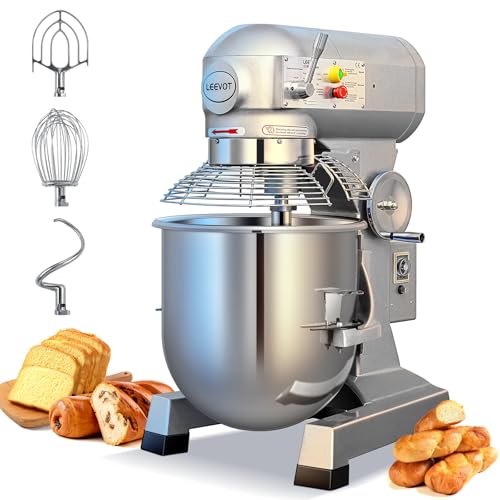
Quick Answer: Three Types at a Glance
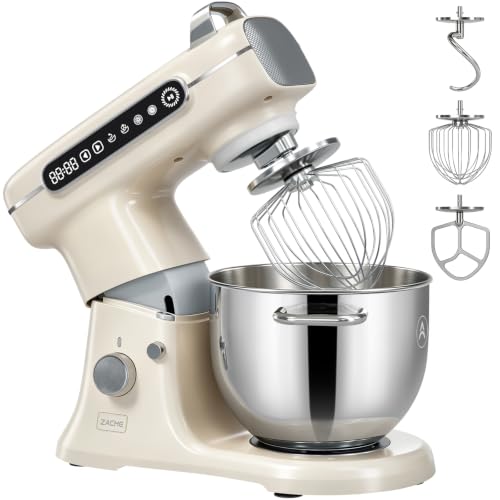
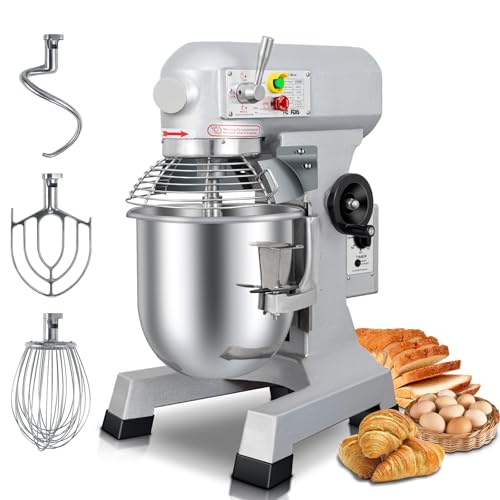
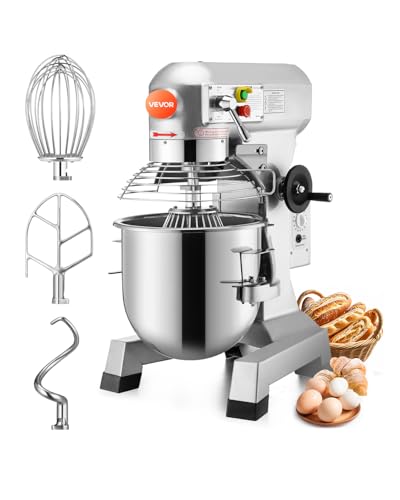
Most home buyers land on one of three types. A compact commercial mixer of about 8 quarts suits smaller households and tighter counters. A mid size model of about 10 to 15 quarts suits large families and frequent dough work. A large model of 20 to 30 quarts suits people who cook for gatherings or mix in bigger batches.
- Compact commercial style: easier to store, lower cost, best for moderate batches.
- Mid size bowl lift: steadier with stiff dough, the balanced choice for most larger homes.
- Large capacity: fewer split batches, but the tallest and heaviest option on the counter.
Who Should Buy a Commercial Stand Mixer?
Large Households That Cook in Batches
If you regularly cook for five or more people, single batches of mashed potatoes, meatloaf mix, or pizza dough can overflow a small bowl. A commercial size bowl lets you mix once instead of splitting a recipe and washing tools twice. You also gain a motor built for longer runs, which matters when three dishes in a row all need the mixer.
Home Bakers Who Mix Stiff Dough Often
Bread, bagel, and pretzel dough push a mixer harder than cake batter ever will. If stiff dough is a weekly habit, a bowl lift design with a strong low speed deserves your attention, since the bowl locks to a frame that flexes less under load. Shoppers focused on that one job should also see our guide to the best stand mixer for bread dough for dough specific advice.
Smaller Households That Bake in Bursts
A couple or a small family may only bake heavily around holidays, school events, or weekend projects. For you, a compact commercial style model gives most of the durability without taking over the counter all year. Be honest about frequency, though, since a heavy unit that needs carrying out of a cabinet for every use can quietly discourage you from baking at all.
Before You Buy: A Quick Checklist for Choosing a Stand Mixer
Size: Match Capacity to Your Batch
Bowl sizes in this category run from about 8 quarts to 30 quarts. An 8 quart bowl handles several loaves and a big cookie batch with room to spare. Sizes of 10 to 15 quarts suit double loaves and large cakes, while 20 quarts and up fit people who truly mix at gathering scale. Bigger is not automatically better, since an oversized bowl can leave small amounts of batter below the beater reach. If you are still asking what size stand mixer do i need, start from your largest regular batch.
Which Type Fits Your Routine
Tilt head models swing the head back so you can lift the bowl out and scrape it with ease, and they tend to be shorter. Bowl lift models raise the bowl on a lever and stay more stable with dense mixtures, but they need more vertical room, and almost every true commercial mixer uses this design. Planetary action, where the beater moves around the bowl while spinning, covers more of the bowl than a single fixed point. Spiral style mixing is gentler for dough but far less versatile for batters.
Read our guide on tilt head vs bowl lift stand mixer choices if you are torn between the two main designs, since cabinet height often settles the question.
Features Worth Paying For, and Ones to Skip
A stainless steel bowl is worth it for most homes because it handles dough hooks, chilling, and years of washing without cracking. A glass bowl lets you watch mixtures, but it is heavier and easier to chip. A dough hook, flat beater, and wire whip in metal rather than coated finishes tend to last longer. Attachments such as a pasta maker or meat grinder only earn their cost if you already make those foods often. A built in timer is pleasant, yet your phone already does that job.
Wattage, Power and Energy Use
Wattage alone is a poor shortcut, since gearing and motor design decide how much of that power reaches the dough. A mixer that holds its speed under load matters more than a high number on the box. Look for clear flour capacity guidance from the maker, which tells you how much stiff dough the machine can handle in one batch. In daily use these mixers draw power in short bursts, so energy cost across a year stays modest.
Safety Features and Certifications
Check for a recognized safety listing such as UL or ETL on the label, and for commercial models a sanitation certification may also appear. Useful protections include a motor that shuts down when it overheats and a bowl that locks in place before the motor starts. Stable feet matter too, because a mixer that walks across the counter under load is a hazard near a hot stove.
Counter Space and Dimensions
Measure three things before ordering: the footprint on your counter, the height with the head raised or the bowl lifted, and the depth with the cord included. Many kitchens have upper cabinets that leave less open height than buyers expect. Weight deserves equal attention, since a unit you cannot comfortably slide out from a wall will end up blocking workspace.
Realistic Budget Ranges
True commercial build quality rarely appears under about $300, and listings far below that point usually describe ordinary home mixers with bold wording. About $300 to $450 covers compact 8 quart models for lighter home use. About $450 to $650 is where sturdy mid size models with larger bowls and stronger motors cluster. Over $650 buys large capacity, metal drive parts and longer warranty coverage.
Three Types Compared: How to Choose Without Chasing Names
Best for Most Homes: The Mid Size Bowl Lift Type
This type pairs a 10 to 15 quart bowl with a frame that stays planted during dough work. It suits families who bake weekly and want one machine for bread, batters, and big holiday batches. You give up the easy head tilt of smaller models, and you need the counter height to match. For most larger homes, the balance of capacity, stability, and price makes this the safest default.
Best Value Approach: The Compact Commercial Style Type
Compact models around 8 quarts trade raw capacity for a friendlier price and a smaller footprint. They fit apartments, smaller kitchens, and households that bake in normal size batches. Expect to split very stiff dough recipes and to pause between heavy batches. If your baking is occasional but you still want stronger parts than a basic home mixer offers, this type protects your budget without crowding your kitchen.
Best Long Term Investment: The Large Capacity Type
Models of 20 quarts and up aim at people who mix for crowds, church suppers, or a small home baking business where local rules allow one. Stronger drive parts and longer warranties are the real reasons to pay more, not the bowl alone. The costs are size, weight, and price. Choose this type only when your batch sizes already demand it.
How to Evaluate a Commercial Stand Mixer
Compare models on the same short list: bowl capacity, stated flour capacity, ease of daily use, cleaning, noise, safety listings, and warranty length. Base your judgment on maker specifications and on patterns in verified buyer reports, such as repeated comments about walking on the counter. Treat any single glowing or angry review as a data point, not a verdict.
What We Like and What We Do Not: Commercial Compared With Other Mixers
Commercial models earn their place through stronger motors, tougher drive parts, and bowls sized for real batch cooking. They also tend to be repairable, with parts available for years. On the other side, they are heavier, louder at high speed, and often too tall for cabinet storage. A standard home mixer can be the smarter buy for light weekly baking, and our stand mixer vs hand mixer comparison explains when even a small handheld tool is enough.
Common Mistakes When Choosing a Commercial Stand Mixer
- Buying the largest bowl by default: small batches mix poorly in an oversized bowl, and the extra height may not fit under your cabinets.
- Judging power by wattage alone: a high wattage claim can hide weak gearing that stalls in stiff dough.
- Ignoring the weight: a mixer that is hard to move often stays unused in a far corner or a deep cabinet.
- Paying for attachment bundles you will not use: unused attachments still cost money and take up drawer space.
- Skipping the warranty terms: some warranties treat business use differently from home use, which can leave a home seller without coverage.
Cost of Ownership and Care
The best commercial stand mixer costs little to run but rewards regular care. Ongoing costs are mostly replacement beaters, a spare bowl, and attachments you add later, plus a small amount of electricity per batch. Wipe the body with a damp cloth after use, wash the bowl and tools promptly, and dry metal parts before storing them. Check the cord for cracks and keep vents free of flour dust. Our guide on how to use a stand mixer covers speed choices that reduce strain on the motor.
Your Questions, Answered
Are commercial stand mixers worth it for a home kitchen?
They are worth it when your batch sizes or dough frequency already strain a home model, or when you plan to keep one machine for many years. They are harder to justify for a household that bakes a few times a year, since the extra weight and size become daily annoyances. If you split batches or borrowed a bigger mixer more than once in recent months, the upgrade has a real job to do.
How do you clean a commercial stand mixer after dough day?
Unplug the mixer first, remove the bowl and tool, and soak them while the residue is still soft, since dried dough turns almost like cement. Wipe the head, hinge area, and speed lever with a damp cloth, and check the bowl mount for trapped flour. Avoid flooding the body with water, because moisture near the motor housing can cause damage over time.
How long does a commercial stand mixer usually last?
A well kept unit in home service often runs for many years, since home use is light compared with a bakery schedule. Lifespan depends most on how often you push it past its flour capacity and whether worn tools get replaced before they strain the drive. Keep the manual and model details safe, since that information makes ordering the right replacement part far simpler years later.
Can a commercial stand mixer fit under standard kitchen cabinets?
Many bowl lift models are taller than the space under typical upper cabinets, especially once you add room to raise the bowl. Measure your own clearance rather than trusting a product photo, and check the height with the bowl fully raised, not just the body height. If it will not fit, plan storage on an open counter run or a sturdy pantry shelf.
Is a commercial stand mixer too loud for an apartment?
At low dough speeds the sound is usually a steady hum that most neighbors will not notice through a floor. High speeds for whipping are louder, but those tasks last only a few minutes at a time. Time loud tasks for daytime hours and set the mixer on a stable, level surface, since vibration against a hollow counter amplifies the noise.
Final Thoughts
Start with your space, your batch size, and your honest baking frequency, and the right type becomes clear quickly. The best commercial stand mixer for a real home is the one that fits your counter, handles your stiffest dough without strain, and stays easy to clean on a busy weeknight. Compare your shortlist against the product table above, and for a broader view of standard models, browse our guide to the best stand mixer range before you decide.