
Best Commercial Gas Ranges: A Buying Guide for 2026
Disclosure: We may earn a commission when you buy through links on this page, at no extra cost to you. As an Amazon Associate I earn from qualifying purchases. Learn more

Compare the best commercial gas ranges by burner output, size and oven layout, plus the gas line, venting and clearance checks an install needs.
A home range copes with one pan at a time, while a working kitchen asks for six pans at once, an oven that never cools, and burners that relight fast after every spill. That gap is exactly what the best commercial gas ranges are built to close. This guide compares sizes, burner output, and oven layouts, plus the install checks that catch buyers out, and the comparison table below puts the main options side by side.
Commercial ranges differ from home models in more than power: grates are heavier, controls are simpler and easier to repair, and the whole unit assumes a vent hood, a proper gas line, and clearances set by code. Buy the range and the install as one decision.


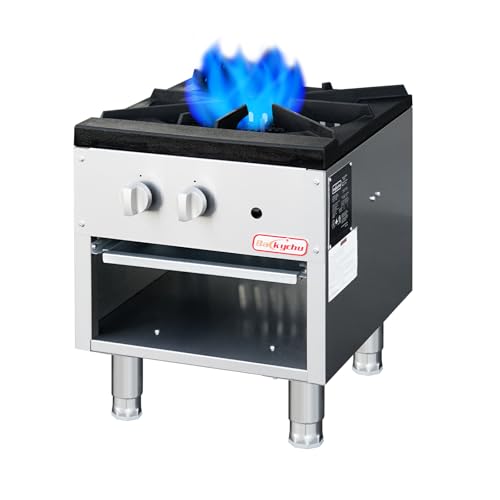
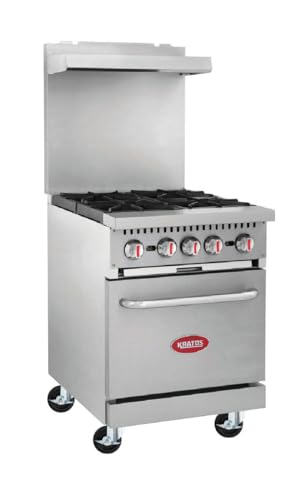

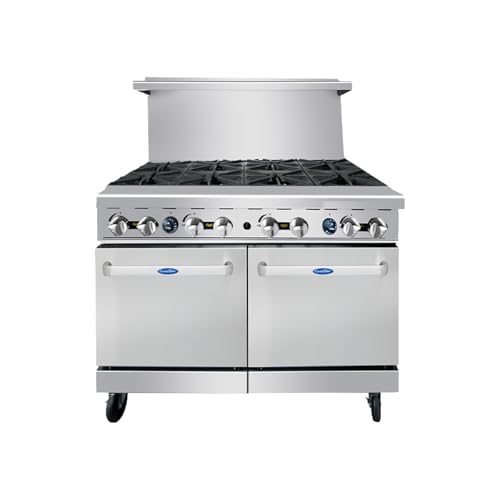


Sizes and Price Bands
Commercial ranges are sold by width, which decides burner count, oven size, and price in one move. Cafes and small restaurants form the core audience here, and kitchens planning full dining room service should also read our guide to best commercial gas ranges for restaurants before sizing a line. For a wider look across fuel types, see our overview of best commercial ranges.
Compact Ranges About 24 to 30 Inches
The compact class usually carries four burners over one standard oven, and prices run about $1,000 to $2,500. It suits food trucks, coffee shops adding a small hot menu, and small cafes. Output per burner matches the bigger classes, so the limit here is space, not strength, but check that a full size sheet pan still fits the oven before you commit.
Midsize Ranges About 36 to 48 Inches
Midsize ranges carry six to ten burners, and many add a raised griddle or a second oven at the wider end, with prices about $2,500 to $6,000. This is the working heart of most small restaurants and busy cafes, with burners for a lunch rush and oven room for batch roasting. If you expect growth, the 48 inch width leaves room to add burners later.
Wide Ranges About 60 to 72 Inches
Wide ranges pair ten or more burners with two ovens, and prices run about $6,000 to $15,000. They suit hotels, banquet kitchens, and restaurants that run two stations off one line, and the extra oven earns its keep during events, when roasting and holding happen at once. Plan the delivery route as carefully as the purchase, because these units are heavy and rarely pass a standard doorway without planning.
How to Choose: A Buying Guide
Spec sheets for the best commercial gas ranges lead with one big total BTU figure, and that number is close to useless. The checks below follow the order a kitchen feels them: fire first, then the install, then the oven and daily cleaning.
Burner Output, Read Per Burner
Read burner output per burner, never as a single total for the whole range, because a total can hide weak burners behind one strong one. Standard commercial burners deliver about 20,000 to 30,000 BTU each, which boils large stockpots quickly. Just as important is the low end: a simmer burner that turns down to about 3,000 to 5,000 BTU holds sauces without scorching.
Gas Line, Venting, and Local Code
The gas line and the vent hood are sized by your local code, not by the range catalog, and a commercial install is governed by licensed fitting work from start to finish. Your gas supply must feed every burner and oven at once, so an undersized line starves the far burners at peak service. Venting must capture heat, grease, and combustion gases, with make up air planned rather than assumed, so check local rules and clear the permit path before the range arrives.
Floor Space and Clearances
Floor space and clearance govern whether a commercial range can be installed at all, before any talk of burners. Makers publish minimum clearances to walls and nearby equipment, and inspectors measure them. The floor must be level and strong enough for a unit that can weigh several hundred pounds.
Oven Capacity and Convection
Judge an oven by the pans it swallows, not by cubic feet alone. A true commercial oven takes a full size sheet pan measuring 18 by 26 inches, and convection models add a fan that evens out hot spots, which matters most for baking and roasting full loads. Shoppers whose baking matters more than their burner count can also weigh the home oriented picks in our guide to best gas ovens and ranges.
Burner Design and Daily Cleaning
Open burners light fast and strip down for cleaning, while sealed burners keep spills out of the range body and wipe down quicker. Look for grates and burner caps that lift off without tools, plus a drip tray that slides out from the front. True commercial ranges rarely offer self cleaning ovens, so an interior your staff can scrub by hand beats a feature list, and cleaning that takes ten minutes happens daily while cleaning that takes an hour does not.
Commercial Gas Ranges vs Other Options
Commercial gas is one answer to high volume cooking, not the only one. If you cook family meals rather than covers, the home models covered by best gas ranges stoves fit your kitchen and budget far better, and the four alternatives below each win in the right setting.
Dual Fuel Ranges
Dual fuel pairs a gas cooktop with an electric oven, so you keep instant burner control and gain steadier oven heat for baking. Most dual fuel models are built for homes and pro style kitchens rather than full commercial lines, and sizes stop where commercial widths begin. Choose one when baking quality leads and your volume stays moderate.
Electric Ranges
Electric ranges suit kitchens with no gas supply and buildings that ban open flame. They cost less to install and keep the air cooler, but they respond slowly to heat changes and struggle with very large pans. For a cafe doing light duty, electric can be the sensible buy, but for a rush of saute pans, gas still wins.
Induction Ranges and Cooktops
Induction heats the pan directly, so it boils fast, keeps the kitchen cooler, and wipes clean fast. The limits are cookware, since pans must be magnetic, and price, since commercial induction costs more per burner. Kitchens chasing cooler conditions and precise low heat should price it seriously, but most will find gas gives more raw power for the money.
Portable Induction Cookers
Single portable induction burners fill gaps: a sauce station, a pop up event, a backup when a burner fails. They plug into a standard outlet and store on a shelf, but they cannot carry a service, since one burner at modest power is a helper, not a line. Buy them as support for a real range, never as a stand in for one.
How to Make Your Commercial Gas Range Last Longer
Commercial ranges are built to be repaired rather than replaced, and small habits stretch the years between repairs.
- Clean grates and burner caps monthly, and clear blocked burner ports so flames burn even and blue.
- Wipe spills once surfaces cool, because baked on grease near burners hardens into a fire risk.
- Check oven temperature with an oven thermometer twice a year, and book a calibration when readings drift.
- Keep vent hood filters degreased on a schedule, since the hood protects the range too.
- Book an annual inspection of gas connections and valves by a licensed fitter, and fix small leaks at once.
Frequently Asked Questions
What size commercial gas range do I need for my kitchen?
Count the pans you run at the peak of service, then buy one burner more than that number. A small cafe often peaks at four pans, while a lunch spot may need eight burners plus oven room. Width follows from that count, at roughly six inches of range per burner. One check buyers forget is the delivery route, so measure doors and turns before ordering.
Does a commercial gas range need a special gas line?
Yes, a commercial gas range needs a gas line sized for its full demand with every burner and oven running at once, because a line that feeds a home range will starve a commercial unit at peak service. A licensed fitter should size and fit the line. If your kitchen runs on propane rather than natural gas, order the correct conversion parts with the range, because the jets differ.
Is convection worth paying extra for on a commercial gas range?
Convection is worth paying for when your oven works full loads of roasting or baking through the day, because the fan evens the heat so full trays cook evenly on every shelf. For a kitchen that uses the oven mainly for holding and finishing, a standard oven saves money and has one less part to service. Match the choice to your menu, not the feature list.
Should I choose induction instead of a commercial gas range?
Choose induction when a cooler kitchen, fast boiling, and easy cleaning matter more than raw burner power, and when your pans are magnetic. A quick check settles that point: if a magnet sticks firmly to the pan base, the pan works. Gas remains the better buy for high flame work, wok cooking, and the lowest cost per burner, though many kitchens mix both.
How long does a commercial gas range last?
A commercial gas range lasts about 10 to 15 years in daily service, and often longer with steady maintenance. The design helps: burners, valves, and thermostats are standard parts a technician can swap in hours rather than days. Kitchens that clean ports and grates on schedule replace wear parts one at a time instead of facing a dead range, so ask about local parts supply when you compare prices.
Can I install a commercial gas range in a home kitchen?
Often you cannot, or at least not without changes. Commercial ranges need wider clearances, stronger venting, and more gas than most homes provide, and some insurers and local codes refuse them in houses outright. A home inspection can also flag an unpermitted unit when you sell, so look at pro style home ranges built to residential code and check local rules first.
Final Thoughts
Owner scores gathered under labels like best reviewed gas ranges are a fair starting point for research, but they say little about burner strength or fit. What settles this purchase is output per burner, an install your local code allows, and an oven sized to your pans. Shortlist two or three widths, confirm the gas line and hood with a licensed fitter, then compare the best commercial gas ranges in the product table above.


