
Best Commercial Kitchen Towels: Types Compared for 2026
Disclosure: We may earn a commission when you buy through links on this page, at no extra cost to you. As an Amazon Associate I earn from qualifying purchases. Learn more

A clear guide to the best commercial kitchen towels: bar mop, flour sack, terry and microfiber types matched to jobs, wash routines and budget.
Choosing best commercial kitchen towels sounds simple until you face bar mop, flat weave, herringbone, and microfiber options that all claim strong absorbency. In a working kitchen the wrong towel slows service, leaves lint on glassware, and falls apart after repeated hot washes. The right towel matches its station, survives daily laundering, and keeps costs predictable across dozens of towels at once.
This guide compares towel types by job rather than by brand, then covers weight, size, color coding, and care. Use the comparison table below to narrow your shortlist, then read the sections that match your kitchen and your laundry routine.





Who Should Buy Commercial Kitchen Towels
Commercial towels differ from home towels in volume, washing demands, and shared use by a whole team. The groups below face different pressures, so buy for your busiest service, not for a quiet weekday.
Restaurants and Cafes With Daily Hot Washing
You need towels that tolerate hot water, frequent bleaching of white stock, and fast turnaround between services. Buy in large packs, keep a clean reserve for mid service swaps, and favor sturdy hems that will not fray when towels are pulled, wrung, and folded hundreds of times.
Bakeries and Prep Kitchens That Handle Flour and Dough
Flour dust, sticky dough, and hot trays call for flat weave towels that shake clean and dry quickly between tasks. You also need enough stock to keep dry towels ready for handling warm pans, since a damp towel transfers heat to hands fast.
Food Trucks, Caterers, and Small Teams With Limited Storage
Space is tight and laundry may happen off site, so compact towels that dry fast and pack flat earn their place. Count how many clean towels one full service uses, then buy at least double that number so a delayed wash never leaves you short.
Types of Commercial Kitchen Towels Compared
Each type below suits a clear set of jobs. Most kitchens do best with two types in service at once, one thirsty towel for spills and one smooth towel for finishing work, rather than forcing a single style to do everything. As a starting point for dishes, see our guide to the best kitchen dish towels and note how their jobs overlap with the flat weave styles below.
Bar Mop Towels for Spills and Heavy Prep Work
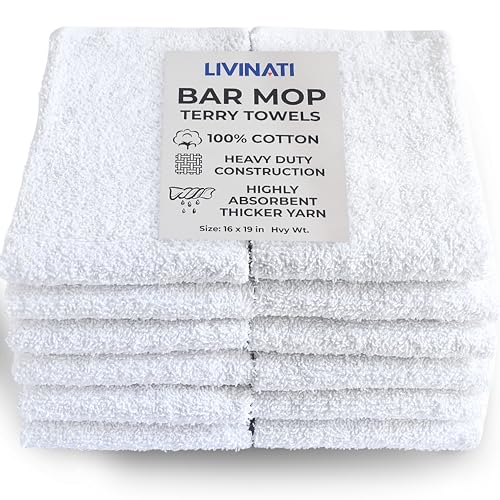
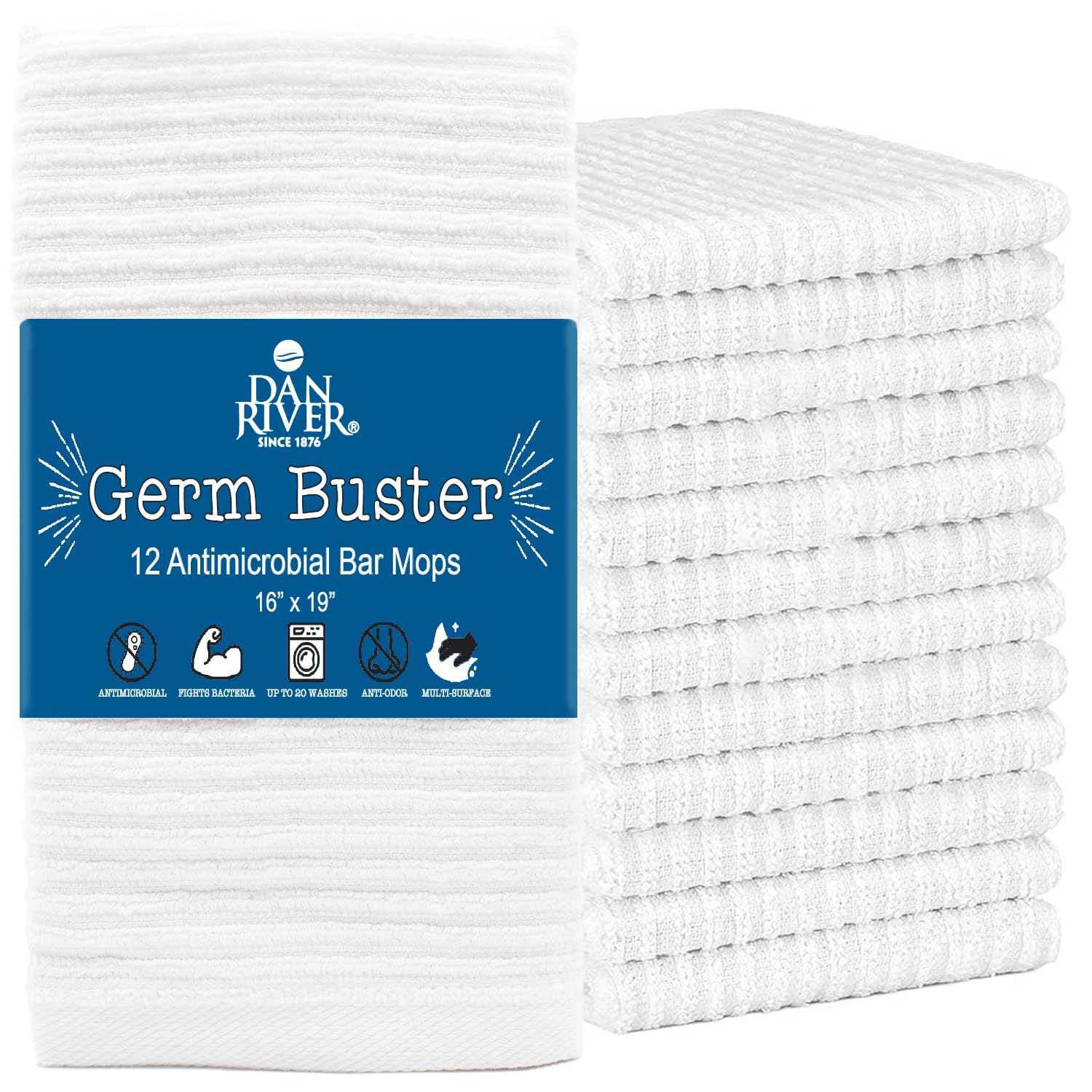
Bar mop towels are thick, ribbed cotton towels built to soak up large spills and to scrub prep surfaces. Their raised ribs add surface area, so one towel pulls in liquid fast and keeps working after thinner towels feel saturated. They suit line stations, dish areas, and any spot where water, stock, and sauce hit the counter often.
The tradeoff is bulk and drying time. A soaked bar mop is heavy, takes longer to dry on a rack, and can feel clumsy for glassware. Rotate them often and send damp ones to laundry promptly.
Flat Weave and Flour Sack Towels for Glass and Dishes
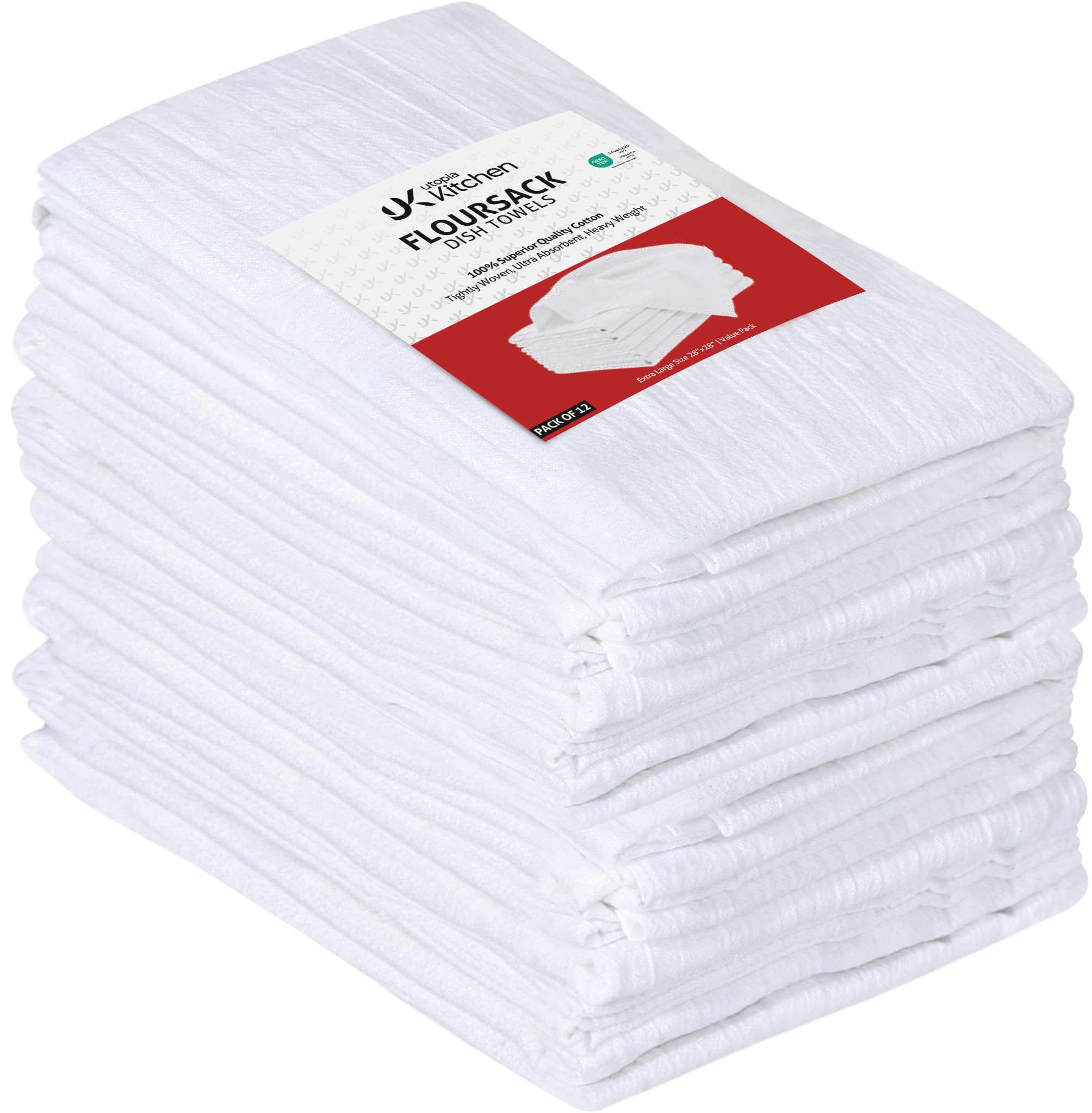
Flat weave towels, including flour sack styles, have a smooth surface that leaves very little lint. That makes them the natural choice for drying glasses, cutlery, and plates that go straight to the table, where a stray fiber is easy to spot.
Because the weave is thin, these towels saturate sooner than bar mops on big spills. Use them for finishing work and light drying, not for mopping a flooded station. For readers focused mainly on drying, see our guide to the best kitchen drying towels for more detail on lint and drying speed.
Herringbone and Terry Towels for Everyday Station Work
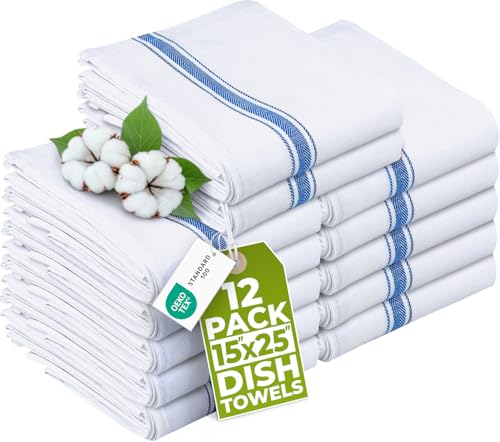
Herringbone towels use a woven zigzag pattern that balances absorbency with a fairly smooth face, while terry towels carry small loops that trap liquid. Both work as general purpose towels for wiping counters, drying hands at a station, and handling warm pans with a folded dry layer.
For hand drying at sinks, placement and frequent swaps matter as much as weave, so see our guide to the best kitchen hand towels when you set up that station. Change station towels often during service, since a towel used for hands should never move on to food contact surfaces.
Microfiber Towels for Polishing and Front of House Detail
Microfiber towels split fibers into fine strands that pick up grease films and polish glass, steel, and display surfaces to a clear shine. They excel at final wiping in dining areas and on equipment fronts, where streaks are visible to guests. A small set can cover all polishing work without adding much laundry bulk.
Keep microfiber separate from cotton stock in the wash, since it grabs lint from other fabrics and loses its polishing edge. Avoid high dryer heat, which can damage the fine fibers over time. Keep them away from raw food prep areas.
Thick Premium Weight Towels Compared With Compact Thin Towels
Thick towels absorb more per pass and cushion hands around warm pans, but they cost more, dry slowly, and fill laundry loads fast. Thin towels cost less, dry quickly, and suit finishing work, yet they saturate sooner and may wear out faster under heavy scrubbing.
Choose thick towels for wet, messy stations and thin towels for drying, polishing, and backup stock. Most kitchens land on a simple mix. If you shop by overall build standards across styles, see our guide to the best quality kitchen towels for the markers that separate sturdy stock from flimsy stock.
How to Choose the Right Commercial Kitchen Towel
Shoppers comparing the best commercial kitchen towels should work through the factors below in order. Match material first, then weight and size, then build a color and laundry system your whole team can follow without thinking.
Material and Construction
Cotton remains the workhorse fiber because it absorbs well, tolerates hot washing, and stays comfortable in hand all shift. Cotton and polyester blends dry a little faster and resist shrinking, though very high polyester shares can feel less thirsty on plain water spills. Turkish cotton and other long staple cottons feel softer, which suits guest facing use more than rough line work.
Look at hems and weave density as closely as fiber. Tightly woven fabric with stitched edges on all sides survives commercial laundering far better than loose fabric with a single turned edge. For a deeper look at blends, see our guide to the best fabric for kitchen towels before you commit to a large order.
Absorbency, GSM, and Drying Speed
Absorbency depends on fiber, weave, and weight together. GSM, meaning grams per square meter, gives a rough guide to fabric weight, and towels sold by the dozen often list total pack weight instead, so compare like with like. Heavier fabric usually holds more liquid, while open flat weaves release moisture faster in the air.
Quick dry performance matters when laundry turnaround is tight. A towel that dries fully between services is less likely to develop sour odors and is ready for the next shift without extra dryer time.
Size, Hem, and Color Coding
Common commercial sizes run from small bar mop squares to larger towels that fold over a shoulder or an oven handle. Larger towels cover more counter per pass and protect hands better around trays, while smaller towels are easier to wring and swap often.
Color coding is a food safety tool, not decoration. Assign one color to raw protein prep, another to ready to eat areas, and keep white towels for general work that will be bleached.
Certifications and Food Service Safety
OEKO TEX certification means the fabric was screened for harmful substances, which is a useful baseline when towels touch surfaces that later hold food. It does not certify absorbency or durability, so treat it as a safety check alongside the practical factors above.
Hygiene habits matter more than any label. Swap towels that have wiped raw juices right away, launder soiled stock promptly, and store clean towels away from chemicals and raw storage.
Durability and Commercial Laundering
Commercial towels earn their cost over many wash cycles, so judge value by cost per use rather than pack price alone. White cotton tolerates bleach and hot water well, while colors may fade under the same routine, which is one more reason to reserve colors for coding rather than for every towel. Bulk packs often cost around $40, with pack counts varying widely.
Before a large order, buy one pack and run it through your normal wash for two weeks. Check for frayed hems, shrinking, and any loss of absorbency. That small trial, checked against the product table above, prevents a costly mismatch.
Common Mistakes to Avoid
- Using one towel for raw protein, counters, and hands spreads contamination across the whole station.
- Buying only thin towels for every job leaves staff pushing liquid around instead of soaking it up.
- Skipping the first wash leaves new towels less absorbent, so early shifts feel disappointing and messy.
- Adding fabric softener coats the fibers, so towels repel water and need replacing sooner.
- Ordering a huge bulk pack before a wash trial risks a full stock that frays or shrinks badly.
- Leaving damp towels in a closed pile overnight builds sour odors that survive into the next service.
Care and Maintenance Tips for Commercial Kitchen Towels
Wash new towels before first use to remove surface finishes and loose fibers, and expect absorbency to improve over the first few washes. Wash soiled towels promptly in hot water with a detergent suited to greasy loads, and skip fabric softener and dryer sheets, since their coating cuts absorbency. Whites can take bleach as your local food rules allow, while colors wash better separately.
Dry towels fully before folding and storing them in a ventilated spot, because trapped moisture is the main source of lingering odor. Retire any towel that stays sour after washing, shows holes, or has frayed edges that shed fibers. Rotating stock evenly, with the oldest clean towels used first, spreads wear across the whole set.
Frequently Asked Questions
How often should commercial kitchen towels be replaced?
Commercial kitchen towels should be replaced when they stay sour after washing, feel thin, or show holes and frayed edges. Under daily hot laundering, many kitchens retire heavy use towels after a few months, while light duty polishing towels last longer. Date each new batch with a laundry marker on one hem, so age is visible at a glance.
Are premium commercial kitchen towels worth the higher cost?
Premium commercial kitchen towels are worth the cost at wet stations where absorbency and long wash life cut swaps and waste. They are harder to justify for light wiping, where thin towels do the same job for less money. Compare cost per use across your trial pack rather than pack price.
What GSM is best for commercial kitchen towels?
A mid to heavy GSM suits commercial kitchen towels at busy stations, while lighter fabric works better for glass and polishing. Because sellers also list weight per dozen, convert carefully and compare towels of the same type side by side. As a practical extra check, weigh one dry towel from a sample pack on a kitchen scale and compare it with your current stock before ordering in bulk.
How do you keep commercial kitchen towels fresh for longer?
You keep commercial kitchen towels fresh by washing them promptly, drying them fully, and storing them in moving air. Rinsing greasy towels before they sit in a laundry bin also helps, since dried grease is harder to remove and holds odor. If a sour smell returns as soon as a clean towel gets wet, retire that towel rather than adding stronger chemicals to every load.
Final Thoughts
Start with the jobs your kitchen does most, then match towel type, weight, and color coding to each station. A small wash trial tells you more than any listing, and the product table above helps you compare pack sizes and prices on equal terms. Chosen well, best commercial kitchen towels become the quiet system that keeps service clean, fast, and safe every single shift.


