
Best Compact Dish Drying Rack in 2026: Sizing and Buying Guide
Disclosure: We may earn a commission when you buy through links on this page, at no extra cost to you. As an Amazon Associate I earn from qualifying purchases. Learn more

Measure the counter strip beside your sink first: how to choose the best compact dish drying rack.
A compact rack earns its keep in a kitchen where every inch of counter already has a job. Maybe your sink sits in a short run of counter between the stove and the wall, or your household washes a modest stack of dishes after each meal and never needs a full size rack. Either way, the best compact dish drying rack for your home fits your counter, drains into your sink, and holds your real daily load without crowding the space you cook in.
This guide walks you through sizing, rack types, materials, and budget ranges so you can match a rack to your space, your household size, and your routine. The product table sums up the main style options side by side, and if your counter turns out to be roomier than you thought, our overview of the best dish drying rack options covers the full size range.





Who Should Buy a Compact Dish Drying Rack?
Small apartment and studio kitchens
If your counter run is short, a standard rack can swallow the only surface you have for chopping and plating. A compact model with a footprint around 12 by 16 inches leaves working room beside the sink, and a design that drains over the sink edge keeps puddles off that small work area. Measure the depth from the wall to the sink rim before you shop, because backsplash clearance is the limit most small kitchens hit first.
One and two person households
When a meal produces two plates, two glasses, a pan, and a handful of utensils, a large rack sits mostly empty yet still takes up its full footprint every day. A compact rack sized for that load dries everything from a typical dinner with room to spare, and it is quicker to wipe down and put away.
RV, dorm, and shared kitchen users
Space in an RV galley or a dorm kitchenette is tighter still, and the rack often has to move for travel or storage. Folding and collapsible compact racks suit this life well, since they flatten into a drawer or cabinet between uses. A small rack also claims a modest, agreed corner of counter in a shared kitchen instead of spreading across space everyone uses.
Before You Buy: A Quick Checklist for Choosing a Dish Drying Rack
Size: Match It to Your Space
Start with the tape measure, not the product photos. Note the width and depth of the counter strip beside your sink, then subtract a little breathing room so the rack does not overhang the edge or crowd the faucet swing. Compact racks generally run about 10 to 17 inches long, and the shorter end suits galley layouts while the longer end fits a standard counter run. Also check any second tier against your tallest glasses and the cabinet doors above, since a tier that blocks a door quickly becomes a daily annoyance.
Which Type Fits Your Routine
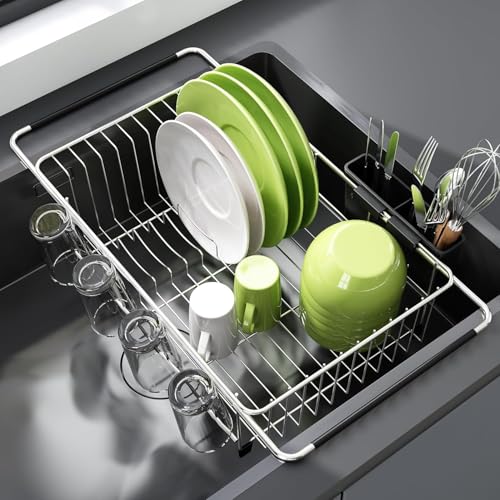
Countertop racks are the simplest choice and work anywhere you have a flat strip beside the sink. In sink racks sit inside the basin and free the counter entirely, and our guide to the best in sink dish drying rack explains that layout in depth. Over sink roll up racks unroll across the basin and roll away when you need the sink back. Two tier racks stack plates below and cups above, doubling capacity on the same footprint, while collapsible racks fold flat for homes that only need a rack part time.
Features Worth Paying For, and Ones to Skip
A sloped drainboard with a spout that reaches the sink is worth real money, because it moves water off the counter instead of pooling under the rack. A removable utensil holder with divided sections keeps forks from nesting and staying wet, and plate slots spaced for your thickest dinnerware matter more than a high slot count. You can usually skip decorative finishes that cost more but drain no better, and oversized cutlery caddies on a rack meant for two people.
Materials and Food Contact Safety
Stainless steel resists rust and wipes clean, and it suits homes that leave the rack out full time; our roundup of the best stainless steel dish drying rack models covers grades and finishes. Plastic racks cost less and feel gentler on delicate glassware, so look for BPA free plastic on parts that touch dishes. Bamboo looks warm and light but needs regular drying to avoid mildew, and coated wire racks sit in the middle on price, with the coating worth inspecting because chips can expose metal that rusts.
Realistic Budget Ranges
Under about $20, expect simple plastic or coated wire racks that handle daily basics and may need replacing sooner. Around $20 to $30 buys sturdier frames, better drainage slopes, and removable utensil holders. About $30 to $50 is where stainless steel frames, two tier layouts, and spouts that actually reach the sink become common. Above about $50, you are mostly paying for premium finishes and very solid frames, and drying performance rarely jumps in step with the price.
Compact Rack Types Compared: Which Style Fits Your Home?
The countertop rack with a drainboard
This is the default choice for most small kitchens. It sits beside the sink, holds plates upright in slots, and sends water along a sloped board into the basin. It suits households that wash up after every meal and want a fixed home for dishes. The trade off is that it always occupies its footprint, so pick the smallest size that fits your typical load.
The folding or collapsible rack
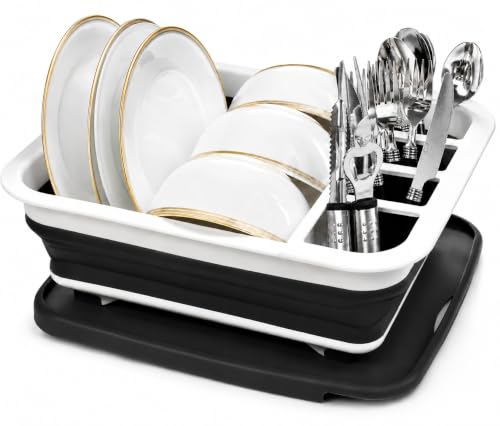
Folding racks open for wash up time and flatten for storage in a cabinet or between the sink and the wall. They suit cooks who value clear counters, RV owners who must stow gear before driving, and anyone whose dish load is small and occasional. The trade off is capacity, since hinges and thin frames hold fewer heavy items. If you regularly dry a stockpot and a stack of plates at once, a rigid rack will serve you better.
The two tier vertical rack
When counter width is the hard limit but cabinet height is generous, a two tier rack grows upward instead of outward. Plates and bowls go on the lower level while cups and utensils dry above, roughly doubling what the same footprint can hold. Check that the upper tier clears your faucet arc and that the rack still feels stable when a wet pan lands on the bottom level.
How the Criteria in This Guide Were Chosen
The styles and criteria here were chosen around four things: fit on real counters, honest drainage into the sink, materials that hold up to daily water, and ease of cleaning. They draw on manufacturer specifications for dimensions and materials and on patterns in verified buyer feedback about rust, stability, and drainage, so you can judge any compact rack against the same yardsticks.
Is a Compact Dish Drying Rack the Right Size for You?
Count your biggest regular wash up load, not your holiday load. If a normal day means a few plates, bowls, glasses, and one pan, a compact rack handles it and gives you counter back the rest of the time. Host a large family dinner every week, though, and dishes will queue on the counter waiting for rack space. In that case step up a size, and our guide to the best large dish drying rack covers racks built for bigger households.
A practical test is to stack one typical load on a tray or towel beside the sink and measure the area it covers. If that area is close to the footprint of the rack you are eyeing, drying space will feel tight once items need air gaps between them. Leave roughly a third of the rack free in your estimate, because airflow is what actually dries dishes, and a rack packed edge to edge stays damp for hours.
Common Mistakes to Avoid
- Guessing the size from photos: product images rarely show scale, so skipping the tape measure often ends with a rack that blocks the faucet or hangs off the counter edge.
- Ignoring the drain direction: a rack that drains toward the wall or onto the counter leaves standing water under it, which invites mildew and mineral marks.
- Buying capacity for guests, not for weekdays: sizing for the biggest meal of the year means living with a crowded counter for the other 360 days.
- Forgetting utensil drainage: a holder without drain holes keeps a pool of water around handles, so cutlery comes out spotted and the holder grows slimy.
- Setting a bamboo or coated rack in constant damp: materials that need air to dry out will mildew or chip and rust if the spot beside your sink never dries.
Cost of Ownership and Care
A dish rack has no running costs, so ownership cost is mostly about how long it lasts before rust, mildew, or a cracked holder ends its service. A well made compact rack can serve for several years, while thin plastic in hard daily use may need replacing far sooner. There are no filters or parts to buy on a schedule, though a replacement utensil holder is sometimes sold for modular designs.
Weekly care takes a few minutes. Wash the drainboard and utensil holder with hot soapy water, clear the spout of trapped debris, and let every part air dry fully before reassembling. Hard water leaves white scale on boards and frames, and a wipe with diluted vinegar lifts it before it builds up. For a full routine by material, see our walkthrough on how to clean a dish drying rack.
Your Questions, Answered
What size dish drying rack do I need for a small kitchen?
Measure the counter strip beside your sink first, then choose a rack that leaves an inch of clearance on each side and does not block the faucet swing. For most small kitchens that lands between about 10 and 17 inches long. A useful cross check is your dinner plate diameter, since slots must hold your largest plate upright without it leaning past the rack edge and dripping onto the counter.
Can a compact dish drying rack hold pots and pans?
Yes, within limits. Most compact racks handle a saucepan or a small skillet laid across the plate slots, but a wide stockpot or a heavy roasting pan is usually better dried on a towel. Place heavy items low and centered so the rack does not tip when you add glasses to one side.
Do roll up over sink racks work for everyday use?
They work well if your sink is a single bowl of standard width and you value reclaiming the basin in seconds. The rods hold plates and pans flat rather than upright, so water sheets off instead of draining from vertical slots, and drying can take a little longer. They suit kitchens where counter space is nearly zero, less so households that wash tall stemware often.
Is a dish drying rack worth it if I own a dishwasher?
For most homes, yes, because some items never go in the dishwasher. Knives, wooden utensils, travel mugs with vacuum seals, and oversized pans are usually washed by hand even in dishwasher households, and they need somewhere clean to dry. A compact rack covers that steady trickle without claiming full size space, and it doubles as a landing spot for washed produce.
How long does a compact dish drying rack last?
Lifespan depends mostly on material and on whether the rack dries out between uses. Stainless steel frames kept reasonably clean can last many years, plastic racks often serve a few years before holders crack or surfaces stain, and bamboo needs the most consistent airing to reach a similar span. A musty smell that survives a thorough wash signals that replacement time has come.
Final Thoughts
The right compact rack is a sizing decision first and a style decision second. Measure your counter, count your typical load, pick a drainage setup that sends water into the sink, and choose a material that matches how much upkeep you will honestly do. Do that, and the best compact dish drying rack for your home will quietly clear your sink every day without stealing the counter you cook on. The product table gathers the key specs in one place to make that last check easy.


