
Best Kitchen Towels: What to Know Before You Buy
Disclosure: We may earn a commission when you buy through links on this page, at no extra cost to you. As an Amazon Associate I earn from qualifying purchases. Learn more

Grab the towel hanging on your oven door and give it a sniff. If you winced, you already know that not all kitchen towels are created equal. A towel that looks fine on the shelf can turn sour after two uses, shed lint on your glassware, or barely soak up a spill before you're wringing it out. Finding the best kitchen towels for your household comes down to a few specific choices: the fabric, the weave, the size, and how you wash them. This guide walks through what actually separates a towel you'll reach for every day from one that ends up as a rag under the sink within a month.
![Utopia Towels Blue Dish Towels [12 Pack - 15 x 25 in]...](https://images-na.ssl-images-amazon.com/images/I/41GnvDITdwL.jpg)
Material Matters More Than You Think
Before you look at weave or size, the fiber itself sets the ceiling on how a towel performs. Most kitchen towels are made from cotton, linen, or a blend of the two, and each brings a different balance of softness, absorbency, and drying speed to the counter.
Cotton: Soft, Absorbent, Familiar
Cotton is the default for a reason. Its fibers swell when wet, which lets a cotton towel soak up moisture fast and hold onto a lot of it. That makes cotton a strong pick for mopping up spills or drying dishes right out of the rack. The trade-off is drying speed, cotton towels stay damp longer after use than linen does, which matters more than people expect once you get to the section on odor below. Preshrunk cotton towels also hold their size better through repeated hot washes, so check for that label if shrinkage bothers you. If you're curious how the same fiber performs outside the kitchen, our guide to Egyptian cotton towels breaks down what makes that grade of cotton different.
Linen: Slower to Soak, Faster to Dry
Linen fibers are less absorbent than cotton right out of the package, but they release moisture quickly, so a linen towel dries out between uses far faster than a cotton one. That quick turnaround is exactly what keeps bacteria from settling in. Linen also gets noticeably softer and more absorbent with every wash, so a linen towel that feels a bit stiff on day one can outperform cotton after a few months of regular use.
Cotton-Linen Blends: Splitting the Difference
A cotton-linen blend tries to capture both strengths at once, cotton's immediate absorbency and linen's quick-dry, odor-resistant nature. These blends tend to cost a bit more than plain cotton, but for a towel that lives on your oven handle and gets used constantly, the extra durability and faster drying time are why many shoppers consider blends among the best kitchen towels for daily rotation.
Weave and Construction: Why Waffle, Terry, and Flour Sack Towels Perform Differently
Two towels made from the same fiber can behave completely differently depending on how they're woven, which is a big part of why picking the best kitchen towels really comes down to weave as much as fabric. This is where most of the confusing terminology on packaging actually comes from.
Terry Cloth for Heavy-Duty Absorption
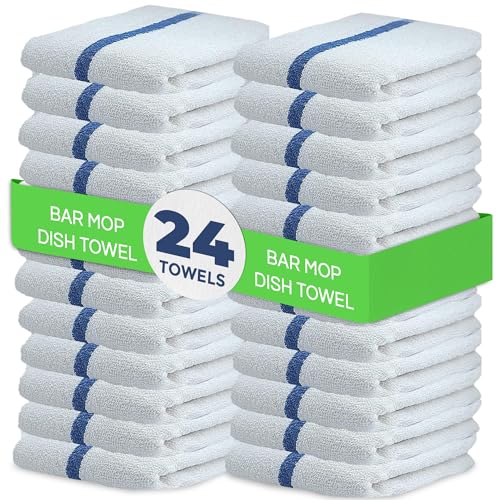
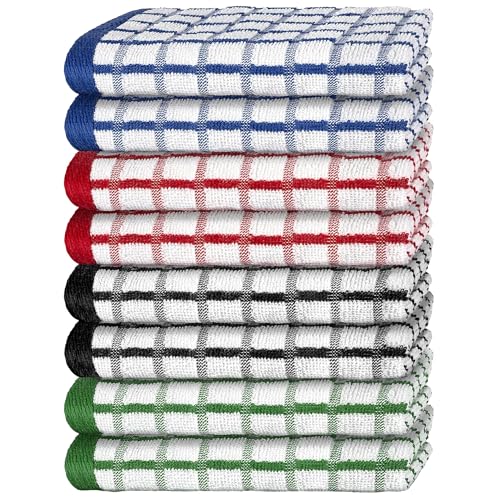
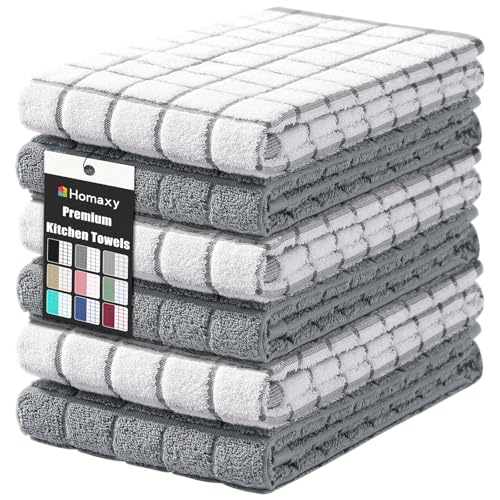
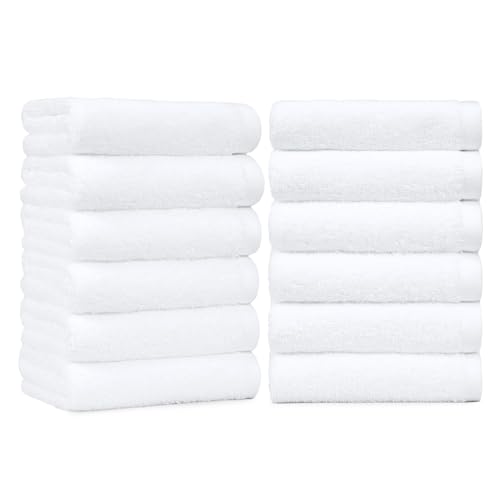
Terry cloth uses looped fibers that dramatically increase surface area, which is why it holds more total water than almost any other weave. That makes it a solid choice for wiping up a real spill or drying a stack of dishes. The trade-off is that those loops can shed lint over time, and terry towels take longer to fully dry between uses than a flatter weave. Pairing a terry towel with a dish drying mat under the rack helps catch overflow when a spill is bigger than one towel can handle.
Waffle Weave for Fast Drying and Less Odor
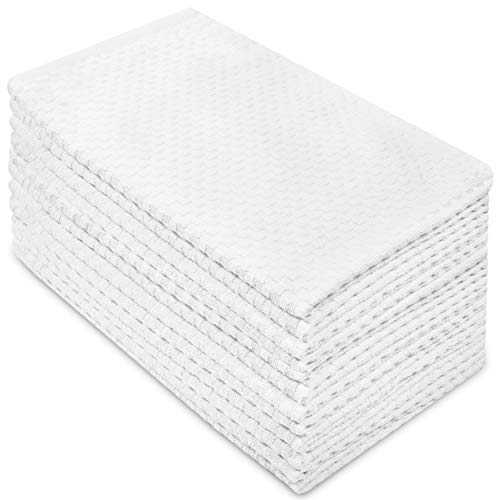
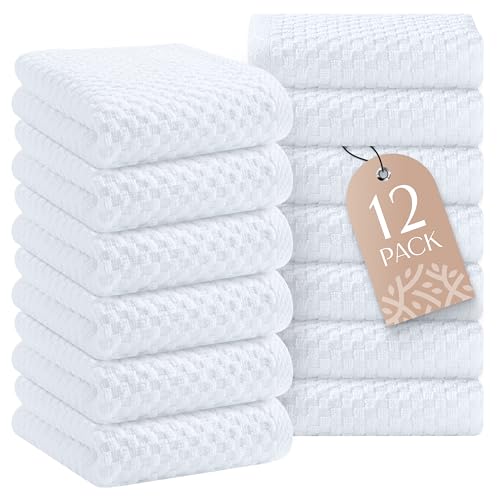
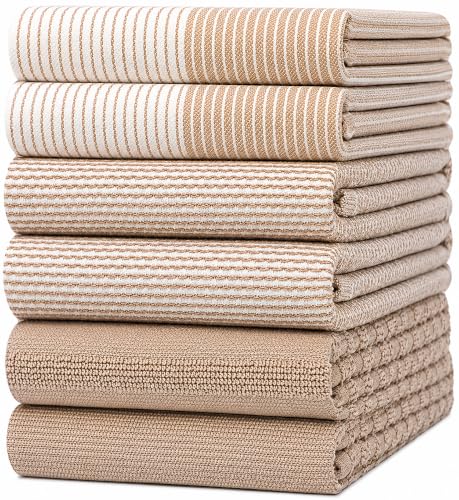
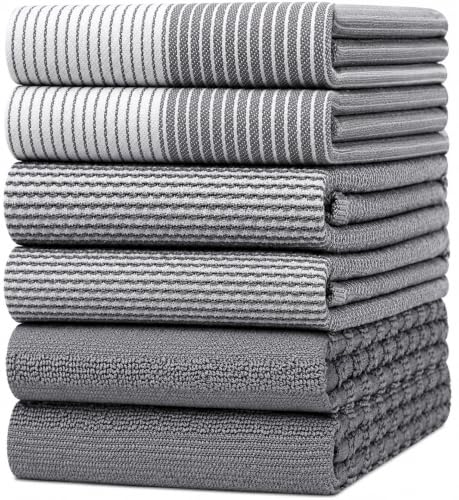
Waffle weave towels use a honeycomb pattern of raised and recessed pockets that increases surface area without adding bulk. They hold slightly less water than terry cloth per square inch, but the air pockets let them dry two to three times faster, which goes a long way toward preventing the musty smell that damp towels tend to develop.
Flour Sack Towels for Lint-Free, Multi-Purpose Use
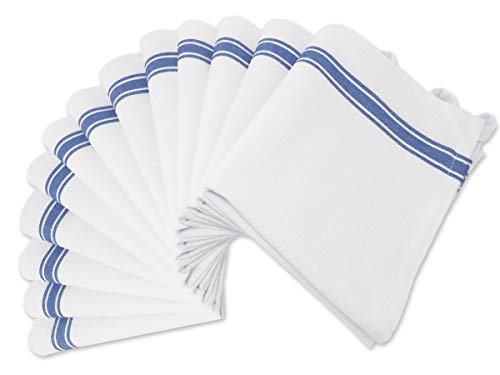
Flour sack towels are thin, flat-woven cotton cloths that don't shed the way terry cloth does. That lint-free quality makes them useful well beyond drying dishes, covering rising dough, straining stock, or polishing glassware streak-free. They aren't the most absorbent single towel in a drawer, but their versatility is why so many home cooks list flour sack towels among the best kitchen towels to keep in a full drawer alongside a heavier towel.
Sizing and How Many You Actually Need
Kitchen towels aren't a one-size product, and buying the wrong size for the job is a common reason people end up frustrated with a set they otherwise like.
Standard Sizes and What They're Best For
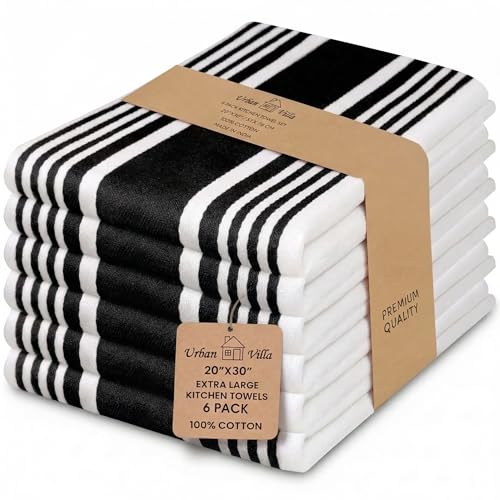
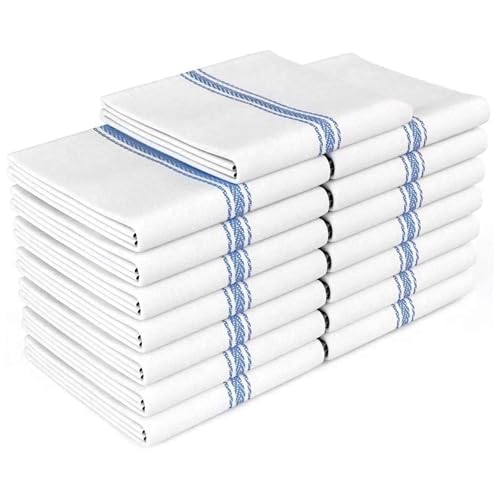
Smaller hand towels, usually in the 15 by 25 inch range, are sized for quick hand drying near the sink and work well alongside a hook mounted close to where you wash up. Larger dish towels or tea towels, often 20 by 28 inches or bigger, give you enough surface area to dry a full stack of dishes or cover a bowl of rising dough.
If you're also stocking separate cloths for wiping counters rather than drying dishes, it's worth keeping those tasks on different towels, our guide to choosing dishcloths for the kitchen covers that distinction in more detail. In practice, the best kitchen towels for most people end up being a mix of both sizes rather than one style doing every job.
How Many Towels a Rotation Really Requires
A single towel in daily use gets damp, dries out, then gets damp again, and that cycle is exactly what breeds odor-causing bacteria. Most households do best with somewhere between four and eight towels in rotation, enough to swap one out daily, keep a spare for wash day, and still have something clean on hand during a busy cooking session. Smaller households cooking a few nights a week can get by on the lower end of that range, while anyone baking or cooking daily will want closer to eight.
Washing Habits That Stop the Sour Smell
Even the best kitchen towels will start to smell if they're washed and dried the wrong way, so care habits matter almost as much as the material and weave you chose in the first place.
Why Damp Towels Turn Sour So Fast
A cotton towel left damp on a hook can stay wet for four to six hours, and that window is plenty of time for bacteria to take hold in the fibers. The smell you're noticing isn't the fabric itself, it's bacteria that built up because the towel never fully dried between uses. Hanging towels so air can move around them, rather than balling them up on the counter, makes a real difference.
Wash Settings and Products to Avoid
Hot water does most of the work of killing bacteria and breaking down grease, so kitchen towels generally hold up better to hot cycles than delicate laundry. Skip the fabric softener though, it coats the fibers with a residue that actually reduces absorbency over time, which defeats the purpose of the towel. If a batch has already started to smell despite regular washing, a soak in hot water with a splash of white vinegar before the normal cycle usually resets them.
Frequently Asked Questions
What is the most absorbent material for kitchen towels?
Cotton generally holds more water than linen right out of the package, thanks to fibers that swell and trap moisture. Terry cloth cotton towels in particular are built for maximum absorption, which is why they're frequently recommended among the best kitchen towels for heavy spills, though they take longer to dry between uses than a waffle weave or linen towel.
Is cotton or linen better for kitchen towels?
It depends on what you value more. Cotton wins on immediate absorbency and softness, while linen dries faster and resists odor better over time. A cotton-linen blend is a reasonable middle ground if you don't want to choose between the two.
What is a flour sack towel used for?
Flour sack towels are thin, flat-woven, lint-free cotton cloths originally used to sew flour bags. In the kitchen, they're handy for drying glassware without streaks, covering dough while it rises, straining broth, and general multi-purpose wiping where you don't want fibers left behind.
How many kitchen towels should I own?
Most households are comfortable with four to eight towels in regular rotation. That's enough to change towels daily, keep a spare for laundry day, and avoid reaching for a damp, smelly towel mid-cook. Even the best kitchen towels won't stay fresh if you only own one or two.
Why do my kitchen towels smell even after washing?
Residue from fabric softener or too much detergent can coat the fibers and trap odor-causing bacteria even through a wash cycle. Washing in hot water without fabric softener, and occasionally adding a vinegar soak, usually clears up lingering smells.
How often should you replace kitchen towels?
Most experts suggest replacing kitchen towels every six months to a year with regular use, sooner if they're fraying, staining, or losing absorbency no matter how they're washed.
Can fabric softener ruin kitchen towels?
Yes. Fabric softener leaves a coating on the fibers that reduces how much water a towel can absorb, which is the opposite of what you want from a kitchen towel. It's best skipped entirely for towels that need to stay absorbent.
Putting It All Together
There's no single towel that's right for every kitchen, but narrowing down material, weave, and size makes the decision much easier. If odor and quick turnaround matter most to you, lean toward linen or waffle weave. If soaking up spills fast is the priority, terry cloth cotton is hard to beat. Whatever you land on, the best kitchen towels for your home are the ones you actually rotate and wash properly, since even a great towel underperforms if it never gets the chance to dry.