Best Absorbent Kitchen Hand Towels for 2026: A Guide to Truly Dry Hands
Disclosure: We may earn a commission when you buy through links on this page, at no extra cost to you. As an Amazon Associate I earn from qualifying purchases. Learn more

Compare the best absorbent kitchen hand towels by fiber, GSM, weave and size, with care tips to keep kitchen hand towels soft and quick to dry each day.
A kitchen hand towel has one job it repeats all day. It must take water off wet hands fast, feel pleasant against skin, and dry before the next use. The best absorbent kitchen hand towels do all three without leaving lint or a damp smell by evening. This guide shows how fiber, weight and weave change that result, so you can read the comparison table below with confidence.
Think first about your kitchen rhythm. A towel by the sink in a busy home may be used thirty times a day, while one in a quiet kitchen sees lighter duty. That pace decides how thick the towel should be and how many you need in rotation.




Who Should Buy Which Kitchen Hand Towels?
Match the towel to the hands and habits in your home. For sizes and sets, see our guide to the best kitchen hand towels.
Busy Cooks Who Dry Their Hands All Day
You wash your hands before cooking, after handling raw food, and between tasks, so your towel rarely rests. Choose a midweight terry towel with dense loops that pull water off skin in one or two pats. Keep at least three in rotation, because a towel that starts the morning damp cannot absorb well. For more on this sink side role, see our guide to the best kitchen towels for drying hands.
Home Bakers and Frequent Dish Washers
Your towel meets flour dust, sink splashes, and hands that go straight back to dough. A slightly larger towel gives you dry surface to turn to as one side gets wet. Flat or low loop weaves shed less lint and release flour more easily in the wash. Pick darker colors if tomato sauce and turmeric are regular guests in your kitchen.
Small Households That Launder Towels Often
You wash towels several times a week, so durability under frequent washing matters more than plush thickness. Choose towels with firmly stitched hems and a weave that holds its shape in hot water. A thinner towel also suits you, since it dries on the rack overnight. Buy a matched set so every towel in the drawer behaves the same way.
Key Features to Compare
When you compare best absorbent kitchen hand towels side by side, work through fiber, weight, weave, size and finish in that order.
Fiber and Staple Length in Cotton Towels
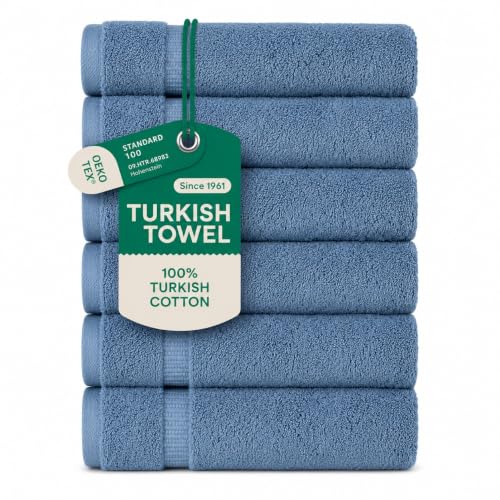
Cotton absorbs because water clings inside the fiber and between its loops, and longer staple cotton does this with a softer, stronger yarn. Turkish cotton stays smooth after many washes, while Egyptian cotton feels plush but can dry slowly in thick towels. Standard short staple cotton costs less and still absorbs well in a dense weave, though it may shed more lint early on.
If cotton is your priority, see our guide to the best absorbent cotton kitchen towels. Linen blends absorb less at first but dry very fast.
GSM and What Towel Weight Really Tells You
GSM means grams per square meter, and it tells you how much material sits in a given area of towel. Kitchen hand towels around 300 to 450 GSM feel light, dry quickly on a hook, and suit frequent laundering. Towels around 450 to 600 GSM feel fuller and hold more water per use.
Above that range a hand towel can feel heavy and stay damp for hours. Treat GSM as a balance point, not a score where the highest number wins.
Weave, Loop Height and Drying Speed
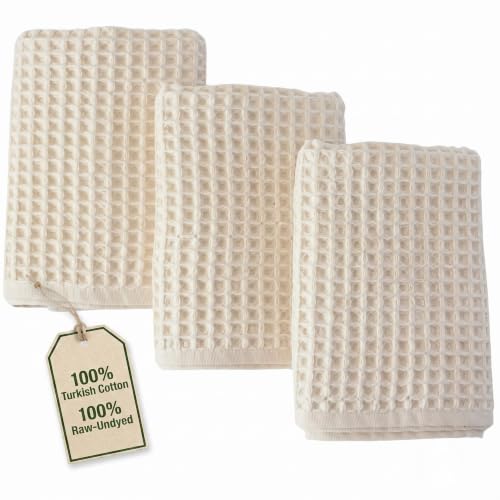
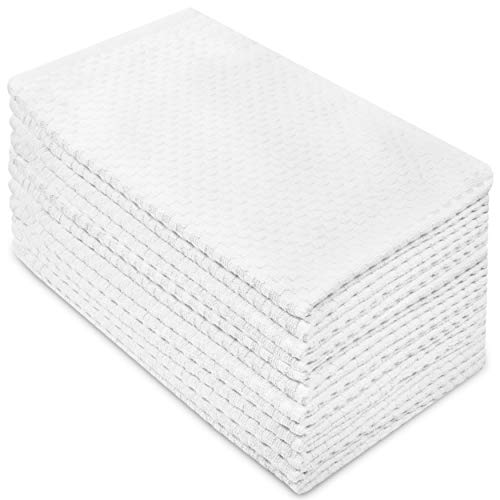
Terry weave raises loops of yarn that trap water, so it gives the strongest absorbency and the softest feel for hands. Taller loops hold more water but need more air flow to dry, while shorter, tighter loops dry sooner and snag less on rings. Waffle weave forms small pockets that spread water across the surface and then release it to the air, which is why waffle towels feel light yet dry hands well. Flat weave towels absorb the least per touch but dry fastest and leave almost no lint.
Size, Thickness and Where the Towel Hangs
Most kitchen hand towels measure about 16 by 28 inches, with smaller options near 13 by 18 inches and larger ones near 18 by 30 inches. Measure where the towel will hang, on an oven door bar, a cabinet handle or a hook, and make sure the folded towel clears the cabinet below. A towel that pools on a counter stays wet and picks up crumbs. A sewn hanging loop helps in small kitchens where bar space is taken.
Certification, Dyes and Finishes That Block Water
An OEKO TEX label means the finished textile was tested for substances that concern skin contact, which matters for a towel that touches your hands many times a day. It does not rate absorbency, so read it as a safety check alongside fiber and weave. Be wary of a heavy softening finish, since coating on the yarn can make a new towel feel silky while pushing water around instead of taking it in. Color fast dyes matter too if you wash towels in warm water.
Types of Absorbent Kitchen Hand Towels Compared
Many kitchens keep two types for different jobs. A towel made only for hands differs from a bath hand towel in size and lint behavior, a point covered in our guide to the best absorbent hand towels.
Dense Terry Cotton Towels for Maximum Absorbency
This is the classic sink side choice. Dense loops give you the most water uptake per pat, and the towel feels kind to hands washed many times a day. The tradeoff is drying time, so hang terry towels spread open rather than bunched. Choose this type if absorbency comes first and you can rotate towels.
Waffle Weave Towels for Fast Drying Between Uses
Waffle towels suit humid kitchens and homes without a tumble dryer, since the open texture lets air pass through. They feel less plush than terry, yet they dry hands well because the pockets spread moisture thin. They also fold flat for a narrow drawer. Choose this type if your towels smell musty by evening.
Linen and Cotton Blend Towels for Low Lint Work
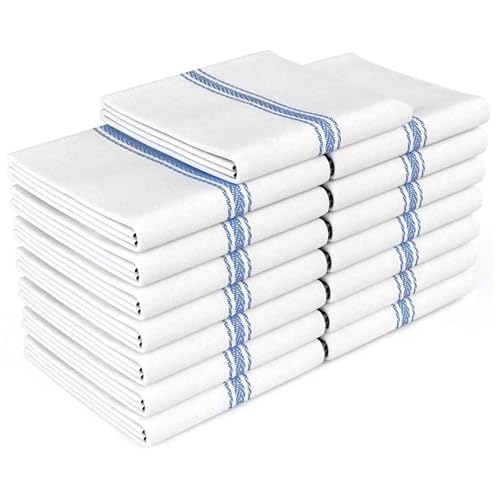
Blends that mix linen with cotton start out a little crisp, then soften with washing while keeping a smooth surface. They leave very little lint, which helps when you dry hands and then handle glasses right away. Absorbency builds over the first several washes. Choose this type if lint bothers you more than plushness pleases you.
Common Mistakes to Avoid
Most absorbency problems come from these habits.
- Buying the thickest towel in the store leaves you with a towel that stays damp and smells sour by dinner.
- Judging a towel by its softness in the shop misleads you, because a surface coating can hide poor absorbency.
- Hanging a folded towel in a tight bunch traps moisture inside and invites a musty odor.
- Keeping only one towel by the sink overloads it, so later users get a wet towel that only moves water around.
- Using a rough, worn towel on chapped hands makes frequent hand washing feel harder on your skin.
Care and Maintenance for Absorbent Kitchen Hand Towels
Wash new towels before the first use to remove loose lint and any finish left from making and packing. Wash them on their own for the first few cycles, since fresh cotton sheds fibers that would cling to other laundry. Warm water with a measured amount of detergent is enough, and rinsing well matters because leftover detergent stiffens loops over time.
Skip fabric softener and dryer sheets, because the coating they leave on yarn blocks water uptake. Dry towels fully before they go back on the hook, in a dryer on medium heat or spread open on a rack. Replace a towel when its loops look flat and thin, or when a sour smell returns right after washing.
FAQ
What GSM is best for absorbent kitchen hand towels used many times a day?
For heavy daily use, about 400 to 550 GSM usually gives the best balance of absorbency and drying speed. That range feels substantial without holding moisture all afternoon. If your kitchen is humid, lean toward the lower end and add one extra towel to the rotation, since air flow limits drying at that point.
How often should absorbent kitchen hand towels be washed?
Wash an absorbent kitchen hand towel every one to two days in a busy kitchen. Hands carry food residue and sink splashes into the fibers each time. A simple rule helps: if the towel feels damp at the start of the day or smells faintly sour, it goes in the wash that day.
Can fabric softener make absorbent kitchen hand towels less absorbent?
Yes, fabric softener can make a towel noticeably less absorbent after only a few washes. The coating smooths each fiber, so water beads on the surface instead of soaking in. If your towels already feel slick, wash them once or twice with no softener, and check whether a plain splash of water sinks in faster.
Why do new absorbent kitchen hand towels leave lint on wet hands?
New cotton towels shed loose surface fibers left over from weaving, and wet skin picks those fibers up easily. The shedding drops sharply after three to five washes, especially if you wash the towels separately at first. Shaking a dry towel outdoors before folding also removes lint.
Are absorbent kitchen hand towels and dish towels interchangeable?
No, the two towels do different jobs and work best kept apart. A hand towel is sized and textured for skin, while a dish towel is usually flatter and made to dry smooth surfaces. Using one towel for both spreads dish water onto hands, so most kitchens do better with a marked hook for hands and a separate spot for dishes.
Final Thoughts
Start with fiber and weave, then check GSM against how fast a towel can dry in your kitchen, and pick a size that hangs clear of the counter. Add enough towels to rotate, and care for them without softener. The product table above lets you check those points set by set.
Chosen that way, the best absorbent kitchen hand towels for your home will dry your hands in a couple of pats, dry themselves before the next round, and stay fresh far longer than a towel picked on softness alone.