Best Commercial Cookware Sets: Everything to Know Before Your First Purchase for 2026
Disclosure: We may earn a commission when you buy through links on this page, at no extra cost to you. As an Amazon Associate I earn from qualifying purchases. Learn more

A first time buyer's guide to the best commercial cookware sets: materials, oven ratings, set sizes and mistakes to avoid.
Outfitting a kitchen with commercial grade cookware for the first time raises questions that a product box never answers well. What does tri ply mean, how many pieces do you actually need, and which material suits the way you cook? This guide explains the best commercial cookware sets in plain language, from the basic terms to the first meal you cook in them.
You will learn how materials behave on the stove, what oven safe ratings really allow, and which rookie mistakes shorten the life of good pans. Keep the comparison table below in mind as you read, because the sets listed there are easiest to judge once you know what each feature means for your cooking.




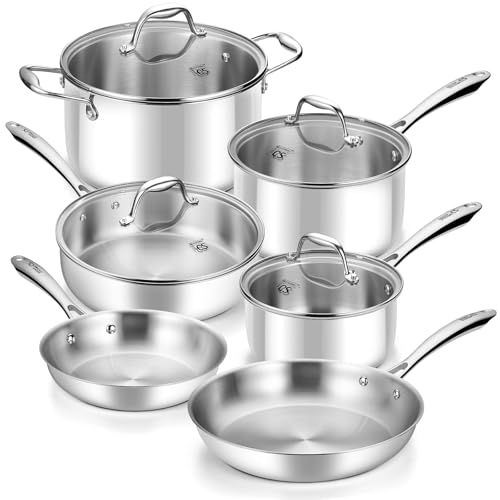
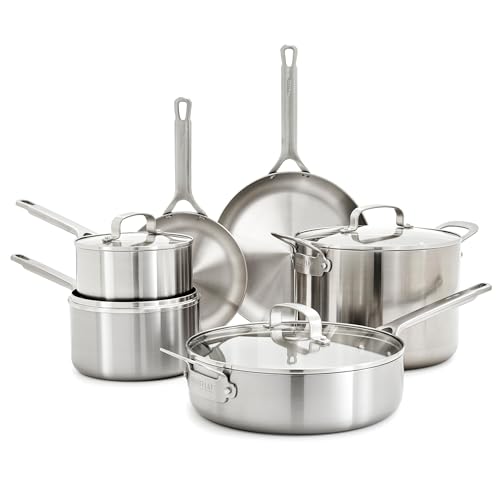
Commercial Cookware Sets 101: The Basics
A commercial cookware set is a matched group of pots and pans built for heavy daily use, whether that means a small restaurant line or a home kitchen where cooking happens twice a day. Compared with basic home sets, commercial pieces use thicker metal, stronger handles, and construction meant to survive years of high heat and constant washing without warping.
The vocabulary is simpler than it looks. Cladding means layers of different metals bonded together, so a pan might pair stainless steel surfaces with an aluminum core for even heating. A fully clad pan has those layers through the whole body, while a disk bottom pan has them only in the base. Gauge describes metal thickness, and lower gauge numbers mean thicker, sturdier pans.
A set usually combines skillets, saucepans, a stockpot, and lids, counted as individual pieces. If you are furnishing a whole kitchen rather than upgrading a stove top, our guide to the best kitchen cookware sets looks at the broader picture of what a complete kitchen needs.
Key Features Explained in Plain English
Material: Stainless Steel, Nonstick, Cast Iron, Carbon Steel, and Copper
Stainless steel is the workhorse of commercial kitchens because it sears well, resists rust, and tolerates any utensil. On its own it heats unevenly, so quality sets bond it to aluminum or copper cores for even heating across the base. Nonstick pans release eggs and fish with almost no fat, but the coating wears and cannot take the same heat or abuse.
Cast iron holds heat superbly and lasts for decades, though it is heavy and needs seasoning to stay rust free. Carbon steel pans behave like lighter cast iron and are the classic choice for high heat searing in professional kitchens. Copper conducts heat fastest and responds instantly to burner changes, but it costs the most and needs polishing. Many cooks mix materials across a set rather than forcing one material to do everything.
Oven Safe Temperature and Handles
The oven safe rating tells you the highest temperature the pan, its handles, and its lid can tolerate under a broiler or in a hot oven. All metal pans with metal handles often rate to about 500°F or higher, while pans with coated or plastic handles may stop near 350°F. Glass lids usually carry lower limits than metal lids, so check the lid rating separately.
Handles matter for safety and comfort. Riveted handles, attached with metal studs through the pan wall, are the commercial standard because they stay tight under heavy loads. Welded handles leave a smoother interior but vary in strength. A helper handle on the far side of large pans makes lifting a full pot of pasta water far safer with two hands.
Nonstick Coatings: PTFE, PFOA Free, and Ceramic
Many modern nonstick sets state on the box that they are made without PFOA, so check the label. PTFE coatings suit normal cooking at the heat the maker recommends, but they break down when overheated, so follow the maker's instructions and keep nonstick pans at low to medium heat and never preheat one empty on a high burner. A pan left smoking on high heat belongs in the trash, not back on the stove.
Ceramic style coatings are a different material, a slick mineral based layer that tolerates somewhat higher heat but tends to lose its release sooner than PTFE. Whichever coating you choose, use wooden or silicone utensils, skip cooking sprays that leave sticky residue, and replace the pan when food starts clinging despite gentle care.
Set Size and Pieces You Actually Need
Piece counts can mislead, because makers count every lid as a piece, so a 12 piece set may hold only seven vessels. Read the actual list instead of the headline number. The essentials most kitchens use daily are a 10 or 12 inch skillet, a 2 to 3 quart saucepan with a lid, a large stockpot, and a wide Dutch oven or saute pan.
Sets cost less per piece than buying pans one by one, and they give you matched lids and a uniform look. The risk is paying for specialty pieces you never touch. If you are still deciding between formats, our guide to the best home cookware sets compares set sizes for household cooking in more detail.
Cleaning and Dishwasher Safety
Many sets claim dishwasher safety, yet hand washing keeps cookware looking and performing better for longer. Dishwasher detergent is harsh, and it can dull stainless steel, fade hard anodized exteriors, and age nonstick coatings quickly. Cast iron and carbon steel should never soak or go in the dishwasher, because water strips their seasoning and invites rust.
For stuck on food in stainless pans, simmer water in the pan for a few minutes and the residue usually lifts with a wooden spoon. A paste of baking soda handles most discoloration. Dry cast iron on the stove over low heat, then wipe on a drop of oil while it is warm to keep the surface protected.
Mistakes to Avoid When Buying the Best Commercial Cookware Sets
- Buying the biggest set on sale. Extra pieces you never use waste money and cabinet space, so count vessels, not lids, and match the set to your real cooking.
- Heating nonstick pans on high. High heat destroys coatings and can warp thin pans, so reserve high heat for stainless, cast iron, and carbon steel.
- Using metal utensils on coated pans. One careless scrape at a time, the coating thins until eggs stick everywhere. Keep silicone and wood tools near the stove.
- Skipping the stovetop check. Not every pan works on induction, and finding out after delivery is a frustrating return. Check your needs against the set details first.
- Stacking pans without protection. Nested pans scratch each other, especially nonstick. Slip a cloth or paper towel between stacked pieces in the cabinet.
Getting Started: Setup and First Use
Wash every new piece in warm soapy water to remove factory oils and dust, then dry thoroughly. Cast iron and carbon steel pieces may need a first seasoning: wipe on a very thin layer of oil, heat the pan until the oil bonds, and let it cool. Check each lid fit and handle now, while returns are still easy, not after the first dinner rush.
For your first cooking sessions, practice heat control. Preheat stainless pans before adding oil: heat the empty pan on medium, flick in a few drops of water, and when the drops bead and roll like marbles, the pan is ready for oil and food. This simple check prevents sticking better than any gadget. Use wooden or silicone utensils on nonstick pieces from day one so good habits form early.
Frequently Asked Questions
Is it better to buy a cookware set or individual pieces?
A set is better when you need the core pieces at once, because the per piece price is lower and the lids fit across pans. Individual pieces win when your kitchen is mostly equipped and you only lack one great skillet. A hybrid path works for many cooks: buy a modest set for the basics, then add one specialty pan later. Readers comparing everyday options can also see our guide to the best cooking cookware sets.
Can commercial cookware sets go in the oven?
Most can, as long as every part of the piece tolerates the temperature, including handles and lids. All metal construction usually allows about 500°F, while coated handles and glass lids set lower ceilings. Broilers are the toughest check, since the element sits close to handles and lids. When a recipe runs close to a limit, choose the plain all metal pan and leave the lidded one for the stovetop.
How long does nonstick cookware last?
Nonstick cookware typically lasts about 3 to 5 years with daily use before the coating wears and food starts to stick. Gentle heat, hand washing, and soft utensils push toward the long end of that range. Commercial kitchens treat nonstick pans as consumables for eggs and fish only. Budget for eventual replacement when you choose a set built entirely around nonstick pieces.
Why do foods stick to stainless steel pans?
Food sticks to stainless steel mainly when the pan is too cool or too hot when the food goes in, or when protein is moved before it releases naturally. Cold food on a cold pan bonds as the metal heats. The fix is proper preheating, enough oil, and patience: a chicken breast or steak lets go on its own once a crust forms. Sugary marinades also glue themselves down, so wipe off excess before searing.
How do I know if a pan works on induction?
A pan works on induction if a magnet sticks firmly to its flat bottom, because induction burners heat cookware through magnetism. Sets state induction compatible in their descriptions, and stainless steel with a magnetic base layer is the common design. Pure aluminum, copper, and glass pieces will not respond unless they include a bonded magnetic plate. Try pans you already own with a fridge magnet before assuming a new burner forces a full replacement.
Which cookware material lasts the longest?
Stainless steel, cast iron, and carbon steel are the long term choices because they have no coating to wear away and they tolerate high heat. Nonstick works best at low to medium heat and needs replacing once the coating wears. Follow the maker's instructions for any material, and ask your doctor if you have personal concerns about cookware. For a deeper look at steel options, see our guide to the best stainless cookware sets.
The Bottom Line
Choose the material that matches your cooking style, confirm the oven and stovetop compatibility you need, and buy the smallest set that covers your daily meals. The product table above lays out pieces, materials, and ratings so you can compare with fresh eyes. Get those basics right and one of the best commercial cookware sets will quietly serve your kitchen for many years.