
Best Home Cookware Sets for 2026: What Actually Matters Before You Buy
Disclosure: We may earn a commission when you buy through links on this page, at no extra cost to you. As an Amazon Associate I earn from qualifying purchases. Learn more
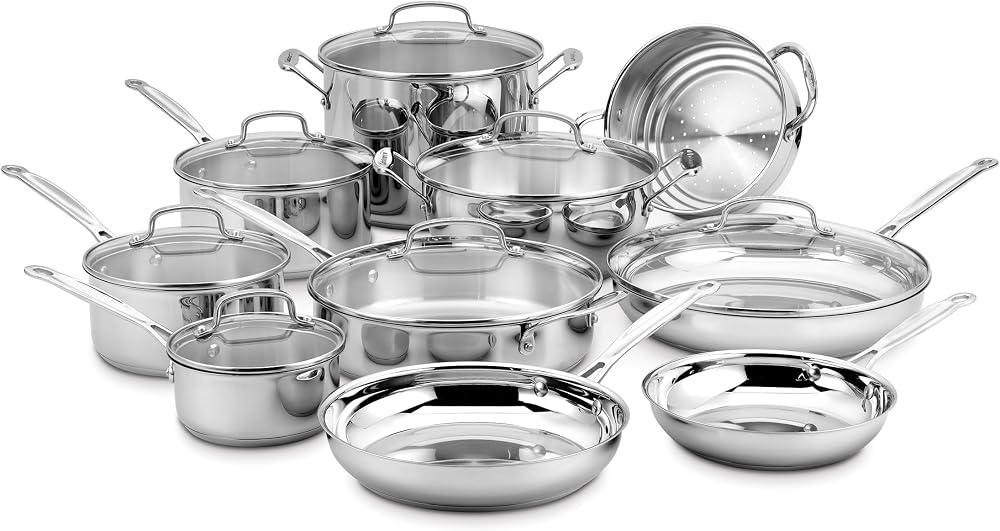
Equipping a household kitchen? Compare the best home cookware sets by core thickness, safe coatings, oven ratings and cabinet footprint before you buy.
Outfitting a residential kitchen often feels like choosing between shiny showroom bundles that scorch thin sauces and heavy restaurant pans that overwhelm small cabinets. Choosing the best home cookware sets takes a clear checklist covering core thickness, coating longevity, handle comfort, and stovetop fit before you spend a dime. The table below shows how the picks compare on construction and piece count.
A smart kitchen setup prioritizes everyday versatility over inflated piece numbers. Whether you cook on a gas range, a radiant glass top, or an induction unit, judging a set against objective build benchmarks keeps you from replacing warped skillets two years later.






Who Should Buy Which Home Cookware Set?
Daily Scratch Cooks Upgrading From Starter Pans
If you cook fresh meals five or six nights a week, a bonded tri ply stainless steel set is the natural upgrade. Thin stamped aluminum pans burn garlic on one side of the skillet while leaving the other side pale, whereas an aluminum core around 2.6 to 3.0 millimeters thick gives steadier browning from the center to the rim. Look for a wide three or four quart straight walled saute pan, which handles shallow frying of chicken cutlets and simmering pasta sauces equally well.
Health Conscious Households Prioritizing Easy Release
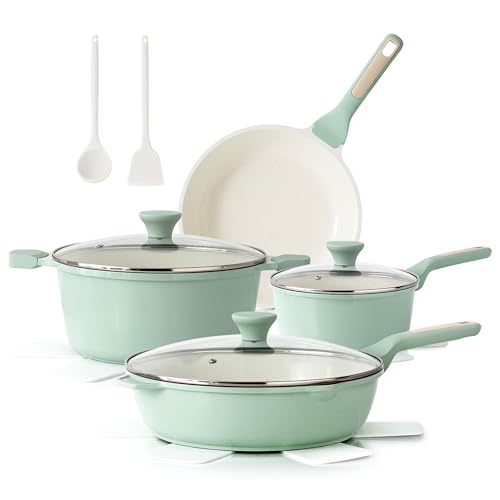
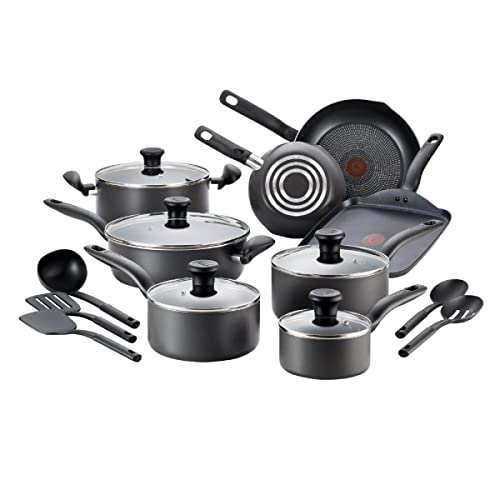
If you cook oatmeal, egg white omelets, tofu scrambles, and delicate fillets with little butter or oil, choose a low friction surface. Ceramic coated aluminum and PFOA free hard anodized nonstick bundles keep delicate foods from tearing without high fat preheating. Because nonstick surfaces wear faster under extreme heat, pick thicker forged aluminum bases that spread gentle medium heat evenly.
Multi Burner Family Kitchens and Batch Meal Preppers
When you are boiling potatoes, browning ground beef, and steaming broccoli across four burners at once, pan geometry and lid interchangeability matter. Family meal preppers should look for ten to twelve piece sets with flared pouring rims, quart markings etched inside the saucepans, and wide helper handles on the stockpot and large saute pan. Lids that fit more than one pot also cut down on clutter.
Key Features to Compare on Your Buyer Checklist
Core Construction: Bonded Cladding vs Disc Bottoms
The biggest performance separator is how the heat conducting aluminum or copper layer is built into the pot. Fully clad pans bond a continuous sheet of aluminum between two layers of stainless steel from base to rim, so soups and reductions heat evenly along the sidewalls. Disc bottom sets weld an aluminum puck onto the base of a thinner steel body, which works well for boiling water in tall stockpots but can create a hot ring at the bottom corner of a skillet.
Metallurgy and Surface Reactivity
Every cookware metal interacts differently with acidic foods like lemon juice, wine, and crushed tomatoes. Uncoated aluminum and bare cast iron can react with acids over long simmers, adding a metallic tang and dulling bright sauce colors. 18/10 stainless steel and porcelain enameled cast iron have nonreactive interiors that keep flavors clean during a three hour Sunday ragu. Hard anodized aluminum seals the reactive core under a dense oxidized shell, which is why it suits everyday frying.
Nonstick Surface Chemistry and Thermal Ceilings
If you prefer coated pans, check the topcoat type and the maximum temperature rating before putting a skillet under the broiler. PTFE coatings made without PFOA resist abrasion well and commonly keep eggs sliding for a few years when kept below about 500 degrees Fahrenheit. Sol gel ceramic coatings use a mineral silica matrix without fluoropolymers, which appeals to eco minded buyers, though their release usually fades sooner. Ask for the maker's stated certifications rather than relying on vague "safe" labels. Our guide to the best nonstick cookware goes deeper on coatings.
Oven Temperature Ratings, Rivets, and Handle Design
Finishing a thick pork chop or frittata under the oven element requires every part of the pan to survive sustained dry heat. Stainless steel handles secured with dual rivets generally tolerate 500 to 600 degrees Fahrenheit, while molded phenolic plastic or silicone cushioned grips typically cap oven use between 350 and 400 degrees. Handle shape matters too, since a long hollow metal handle stays cooler on a gas burner than a short solid bar.
Cleaning Effort, Sealed Rims, and Dishwasher Durability
A dishwasher safe label does not mean a set is unaffected by it, because repeated exposure to strong detergent pods can dull coatings and pit exposed aluminum. On multi ply stainless sets, check whether the outer rim is rolled and sealed with steel to hide the aluminum layer; unsealed edges can corrode into sharp ridges after many hot wash cycles.
Weight Balance and Cabinet Storage Footprint
Before ordering a heavy ten piece set, think about who will lift the pans out of the oven and where they will live between meals. Enameled cast iron retains heat wonderfully for braising, but a five quart Dutch oven can exceed fifteen pounds and strain wrists when draining hot liquid at the sink. Nesting stainless or hard anodized sets with flat lid knobs stack into two compact towers, which saves shelf height in standard base cabinets. If space is tight, look at the best stackable cookware sets.
Quick Buyer Checklist Before You Order
Run any candidate set through these practical points to confirm it fits your stove, storage space, and cooking habits.
- Does the base pass the magnet check for induction? If you own or plan to buy an induction cooktop, confirm that the bottom exterior layer is magnetic 430 stainless steel or iron.
- Are at least 60 percent of the pieces actual cooking vessels? Subtract all lids, trivets, and nylon turners from the advertised piece count to confirm you get at least five or six real pots and pans.
- Does the set include a twelve inch skillet or wide saute pan? Eight and nine inch fry pans crowd quickly when cooking for more than two people.
- Is the aluminum core at least 2.5 millimeters thick? A thicker core resists warping on radiant glass tops and prevents scorching when simmering dairy or tomato sauces.
- Do the lids and handles match your oven habits? Verify that handles and lids are rated to at least 400 or 500 degrees Fahrenheit if you bake or broil in your pans.
- Are the rims flared and sealed on clad stainless sets? Flared lips pour broth without dribbling, and sealed rims protect the aluminum layer from dishwasher corrosion.
Evaluation Benchmarks: Strong vs Weak Cookware Specs
Comparing build details side by side shows where budget sets cut corners and which upgrades add lasting value.
| Build Feature | Strong Residential Standard | Weak Corner Cutting Sign |
|---|---|---|
| Wall and Base Thickness | 2.6 to 3.2 mm tri ply clad or 3.5 mm forged aluminum | Under 2.0 mm stamped metal or thin disc base |
| Interior Steel Grade | 18/10 or 304 food grade nonreactive stainless steel | Unspecified steel alloy prone to salt pitting |
| Handle Attachment | Dual stainless steel rivets or flush hygienic welds | Single screw attachment that loosens over time |
| Oven Heat Tolerance | 500 degrees F for pans; 400+ degrees F for glass lids | 300 to 350 degrees F due to plastic knobs and grips |
Red Flags to Watch For When Shopping
- Vague thickness and metal grade claims: Listings that advertise "heavy duty surgical steel" or "space age alloy" without a millimeter gauge or stainless series often hide thin walls that warp on high heat.
- Sets padded with six or more cheap plastic utensils: When half the piece count is spatulas, measuring spoons, and mini prep bowls, the maker may be masking a weak three pot lineup.
- Screw attached handles with exposed interior threads: A single screw tends to loosen after months of heating and cooling cycles, which is a spill hazard with boiling water.
- Nonstick claims promising permanent release: Any coating claiming it never scratches or lasts forever is overpromising, because all polymer and ceramic release layers wear gradually.
- Rough unfinished bottom plates: Coarse unmachined bases can scratch ceramic glass stovetops when you slide a skillet across the burner ring.
How to Make Your Home Cookware Set Last Longer
Matching your daily care habits to the cookware material prevents warping, staining, and coating breakdown. With stainless steel, wait until water reaches a rolling boil before adding kosher salt, since salt dropped into cold water can settle on the steel and cause tiny permanent white pits. If rainbow heat tints or chalky mineral spots appear after boiling hard tap water, wipe the cool pan with a splash of white vinegar or a mild oxalic acid cleanser to restore the shine.
For coated nonstick and ceramic sets, avoid stacking bare metal pan bottoms inside another coated skillet, as the rough exterior abrades the release layer each time you pull a pan from the cupboard. Slip felt pan protectors, silicone mats, or folded paper towels between nested skillets. Let pans cool on the stove before washing, and hand wash coated cookware with warm sudsy water rather than abrasive dishwasher detergent.
Metal utensils are another common cause of early wear. Use silicone, nylon, or wooden tools on coated surfaces, and save metal spatulas for stainless steel and cast iron. Keep cooking heat at medium or below on nonstick pans, because most coating damage comes from preheating an empty pan on high.
Frequently Asked Questions
Can home cookware sets go straight from the stove into the oven?
Most can, as long as you check the temperature limit of the handles and lids first. All metal stainless steel and cast iron sets tolerate 500 degrees Fahrenheit or higher, while sets with rubberized grips or tempered glass lids usually top out around 350 to 400 degrees.
Why do proteins stick to stainless steel pans even with oil?
Food sticks when the pan or the oil is too cold at the moment of contact, so moisture from the meat bonds with the metal surface. Heat the dry skillet over medium heat for two minutes, add oil until it shimmers, and wait for a browned crust to form, which lets proteins release naturally.
How long does a nonstick home cookware set last before needing replacement?
A well maintained PFOA free PTFE skillet often lasts about three to five years in a typical kitchen, while ceramic nonstick coatings usually keep peak slickness for one to three years. Once food sticks regularly despite proper oil use, or deep scratches expose the gray aluminum underneath, retire the pan.
How can I tell if a cookware set is compatible with an induction range?
Hold a household magnet against the bottom center of the pot. If it clings tightly, the base has the ferromagnetic content needed to heat on induction; nonmagnetic aluminum, copper, or 304 steel bottoms without a bonded 430 steel plate will not heat. You can browse the best induction cookware if you are shopping for one.
Which cookware material is the most nonreactive for family meals?
Food grade 18/10 stainless steel and porcelain enameled cast iron are the most stable, nonreactive choices for home cooking. Neither relies on a synthetic coating, and both handle acidic tomato sauces, citrus marinades, and wine reductions well over long simmers.
Should a home cook buy a full set or build a collection piece by piece?
A full set usually makes sense if you are equipping a kitchen from scratch or replacing a cabinet of worn out pots, since sets often cost noticeably less than open stock pieces. You can then add one standalone nonstick egg pan or a cast iron skillet to cover specialty tasks.
Final Thoughts
Picking the best home cookware sets comes down to verifying build thickness, oven safety, and usable vessel sizes before ordering. For long term durability and crisp searing across gas, electric, and induction stoves, a tri ply clad stainless steel set with sealed rims and riveted metal handles is a strong all around choice. For quick weeknight meals and easy egg release, a heavy gauge hard anodized nonstick bundle keeps cleanup simple. Check the product table above to compare the picks side by side.


