Best Clad Cookware Sets (2026): Builds That Fit Real Homes
Disclosure: We may earn a commission when you buy through links on this page, at no extra cost to you. As an Amazon Associate I earn from qualifying purchases. Learn more

Shopping for the best clad cookware set? Compare three ply, five ply and copper core builds by stove type, household size and budget, with a quick checklist.
A crowded cabinet and one pan that heats unevenly can make weeknight cooking harder than it needs to be. If you cook most meals at home and want one set that covers breakfast, soups, and Sunday sauces, the best clad cookware set gives you layered metal that spreads heat across the base and up the sides. This guide helps you choose by cabinet space, household size, stove type, and budget, and the comparison table below sums up the main clad builds side by side.
Clad means layers of metal bonded together, usually a stainless steel cooking surface around a core of aluminum or copper. That core softens hot spots and helps food cook at a steadier pace. Work through the checklist below before you count pieces, because layer count and piece mix matter more than a long list of extras.




Quick Answer: The Three Clad Builds in 30 Seconds
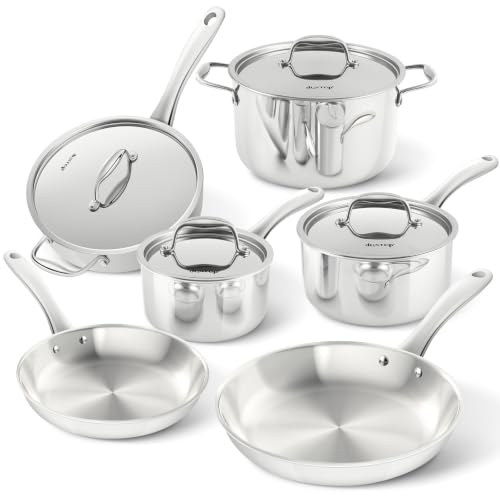
Most shoppers land on one of three builds. Three ply stainless steel suits most homes and balances cost, weight, and heat control. Value three ply sets trim the piece count or finish to lower the price while keeping the same basic construction. Five ply and copper core sets add layers for steadier heating, and they cost and weigh more. If you are still weighing a clad set against a plain set, our guide to the best cookware set shows how the broader categories compare.
Before You Buy: A Quick Checklist for Choosing a Cookware Set
Use this checklist in order. Space and stove type rule sets out fast.
Size: Match It to Your Space
Count pieces the way makers do, and remember that lids count as pieces, so a 10 piece set may hold only six actual vessels. A 3 piece or 5 piece starter set suits a single cook or a small apartment with one cabinet. A 7 piece or 10 piece set covers a family of three or four without crowding storage. A 12 piece set adds stockpots and extra skillets that help only if you cook several dishes at once and have room to store them.
Which Type Fits Your Routine
Clad sets are almost always stainless steel on the cooking surface, and that surface sears well, handles metal utensils, and goes from stove to oven with ease. If you mostly cook eggs and fish and dread cleanup, compare our guide to the best nonstick cookware set before you commit, since a clad skillet asks for preheating and a little fat. Coated and ceramic styles feel easier at first, but their surfaces wear out, while a clad stainless surface can be scrubbed and kept for many years.
Features Worth Paying For, and Ones to Skip
Pay for flared rims that pour without dripping, handles that stay balanced when a pot is full, and lids that fit snugly enough to hold steam for rice and grains. Clear glass lids help you check simmering food, though steel lids tolerate higher oven heat. Skip detachable handles unless storage is truly tight, because moving parts add a failure point. Skip a bundled storage rack if your cabinets close fine, and skip utensils that duplicate what you own.
Is Clad Stainless Steel Non Toxic?
Shoppers often ask about safety because coatings raise questions that bare metal does not. A clad stainless surface has no PFAS or PTFE coating to wear away, and nothing flakes into food as the pan ages. If coatings concern you and you want the full picture, the discussion of ceramic vs stainless steel cookware lays out how the two surfaces differ in use. Cast iron and carbon steel are also coating free, but both need seasoning, while stainless needs no such upkeep.
Induction, Gas, and Glass Top Compatibility
Clad only works on induction if the outer layer is magnetic stainless steel, so check the base marking rather than assuming every stainless set qualifies. On gas, clad sides help because flame can lick up the walls and the layers spread that heat instead of scorching one ring. On a glass top stove, look for flat, smooth bases and lift pans instead of sliding them, since grit trapped under a heavy base can scratch the surface. A warped base rocks and heats poorly on any flat stove.
Oven Safe Temperature and Handles
Most clad stainless sets tolerate oven heat of about 500 to 600 degrees, but glass lids and handle materials often carry a lower limit, so check the lid rating before broiling. Steel handles stay safe at high heat yet get hot on the stove, so keep a towel or mitt within reach. Silicone wrapped handles feel cooler during stovetop use but usually cap the oven limit lower. Broiler use is the strictest case, and many makers exclude lids from broiler approval entirely.
Realistic Budget Ranges
Under about $100, expect a small starter set or thinner layers, which can still cook well for one or two people. About $100 to $300 is where full three ply sets with a sensible piece mix usually sit, and this range fits most homes. About $300 to $500 buys thicker cores and larger stockpots. Above about $500, you pay for five ply or copper cores and finer details, which improve feel more than they change what you can cook.
Three Clad Builds Worth Your Money
Instead of naming models, compare the builds themselves, since the best clad cookware set for one kitchen is the wrong weight or size for another. The construction, piece mix, and finish explain nearly all of the price gap between sets on the product table above.
Fully Clad Stainless Steel for Most Homes
A three ply set with layers running through the base and walls, not just a disk on the bottom, is the default choice for most kitchens. It sears meat with an even crust, holds a gentle simmer for sauces, and shrugs off scrubbing. Weight stays manageable for daily lifting, even with a full pot. Choose this build if you cook varied meals four or more nights a week.
Three Ply Value Sets for Tight Budgets
Value sets keep the same three ply idea but cut cost through fewer pieces, simpler lids, or a plainer finish. Cooking results stay close to pricier sets because the core construction drives heat spread. The trade off shows up in details, such as handles that feel less shaped or rims that pour less cleanly. Choose this build for a first apartment or a careful budget.
Five Ply and Copper Core Sets as a Long Term Investment
Extra layers slow down temperature swings, so a sauce holds its pace when you add cold ingredients and a sear stays steady across a full pan. Copper cores react fastest, which rewards cooks who adjust heat often. These sets weigh more and ask for more money up front. Choose this build if you cook daily, value fine heat control, and plan to keep the set for a decade or longer.
Our Selection Process for Clad Cookware Sets
We judge clad sets on heat distribution, durability, material safety, stove and oven compatibility, and cleaning and storage. We rely on maker specifications for layer makeup and temperature limits, and on patterns in verified buyer feedback about warping and handle comfort. A set scores well when its piece mix matches real meals, not when it lists the most pieces.
Clad Compared With Other Cookware Types
Against a plain stainless set with only a base disk, fully clad walls heat food more evenly at the edges, which matters for sauces and grains. Against nonstick, clad lasts far longer and sears better, but food sticks more until you learn preheating. If easy release is your top priority, our guide to the best ceramic cookware set covers the coated route in depth. Against cast iron, clad is lighter and reacts faster to heat changes, while iron holds heat longer once hot.
Stainless clad also asks little of you over time. There is no seasoning to maintain and no coating to baby with soft tools only. If you want the stainless only view of this choice, see our guide to the best stainless steel cookware set, which focuses on sets built entirely around that material.
Common Buying Mistakes to Avoid
- Buying a 12 piece set for a small kitchen, then stacking pans so tightly that rims bend and lids get lost.
- Assuming every stainless set works on induction, then finding the base is not magnetic after the first meal fails to heat.
- Judging a set by piece count alone, when two of those pieces are lids and one is a steamer insert you may never use.
- Ignoring the oven limit of glass lids, which can crack under a broiler even though the pan itself is rated far higher.
- Paying for five ply weight when a wrist or shoulder problem makes a heavy full pot hard to lift safely.
Cost of Ownership and Care
A clad set has almost no running cost beyond your normal stove energy, and there are no filters, pads, or liners to replace. The real cost of ownership is time, since stainless shows heat tint and stuck on spots that a coating would hide. Warm water, a soft sponge, and a gentle powdered cleanser handle most marks. For the full method, including rainbow tint and cloudy film, follow our guide on how to clean stainless steel cookware rather than scrubbing with steel wool.
Store pans with a cloth layer between stacked pieces to guard the cooking surface from scratches. Dry pans before putting them away so water spots do not bake on later. Let a hot pan cool a little before rinsing, since a sudden plunge can warp even a thick base. With that basic care, a clad set should serve daily cooking for many years.
Your Questions, Answered
Are clad cookware sets worth it for home cooks?
Yes, if you cook often and keep pans for years, because the layered build spreads heat evenly and the stainless surface does not wear out the way coatings do. If you cook only a few simple meals a week, a value set captures most of the benefit without the full cost, so match the spend to your routine.
What pieces should a clad cookware set include?
Look for a small and a large skillet, a saucepan with a lid, a sauté pan, and a stockpot, since those five vessels cover most recipes. A Dutch oven style pot is the next most useful addition for soups and braises. Extra pieces help only when they match dishes you already cook. Count lids carefully when you compare sets, because makers include them in the headline piece number.
Can clad cookware go in the dishwasher?
Most clad stainless sets are labeled dishwasher safe, and an occasional wash will not ruin them. Still, detergents can dull the finish over time, and crowded racks let other items nick the rims. Hand washing takes only a minute after a brief soak. Treat the dishwasher as a backup for busy nights, and your set will keep its shine longer.
Why does food stick to clad stainless steel pans?
Food sticks most often when the pan is too cool or too hot when the food goes in. Preheat the empty pan over medium heat, add fat, and let it shimmer before adding food, and proteins will release once a crust forms. Cold food straight from the fridge sticks more, so let meat rest on the counter briefly. Once food releases on its own, flipping is easy and cleanup stays simple.
How long should a clad cookware set last?
A well made clad set can last for decades because there is no coating to fail and the bonded layers do not peel under normal use. Warping from extreme heat or sudden cooling is the most common way owners shorten that life. Handles and lids usually set the practical limit, so check that rivets stay tight and lids still sit flat each year, and address a loose handle before it worsens.
Final Thoughts
Start with your space, your stove, and how many people you feed, then pick the clad build that fits those facts. Three ply suits most homes, value sets protect a tight budget, and five ply rewards cooks who want the steadiest heat. Whichever route you take, the best clad cookware set is the one whose pieces you reach for daily, so compare your shortlist against the product table above and choose the set you will still enjoy using years from now.