Best Cooking Cookware Sets for 2026: Matching the Right Model to Your Routine
Disclosure: We may earn a commission when you buy through links on this page, at no extra cost to you. As an Amazon Associate I earn from qualifying purchases. Learn more

Choose the right pots and pans for your stove and cooking style with this guide to the best cooking cookware sets, from clad stainless to nonstick.
No single box of pots and pans fits every cook or stovetop. A high heat sear on a thick ribeye demands heavy metal that holds thermal energy, while flipping delicate crepes or scrambled eggs on a Tuesday morning calls for an effortless release surface. Finding the best cooking cookware sets means matching pan metals and piece counts to the meals you actually prepare every week. Use the comparison table to see how the picks stack up across materials and piece configurations.
Many shoppers overspend on oversized bundles packed with miniature butter warmers, steamer inserts, and plastic spoons that sit untouched in the back of a cabinet. Focusing on core skillets, a versatile saute pan, and two well proportioned saucepans gives you better heat distribution per dollar.




Who Should Buy Which Cooking Cookware Sets?
Serious Technique Focused Cooks
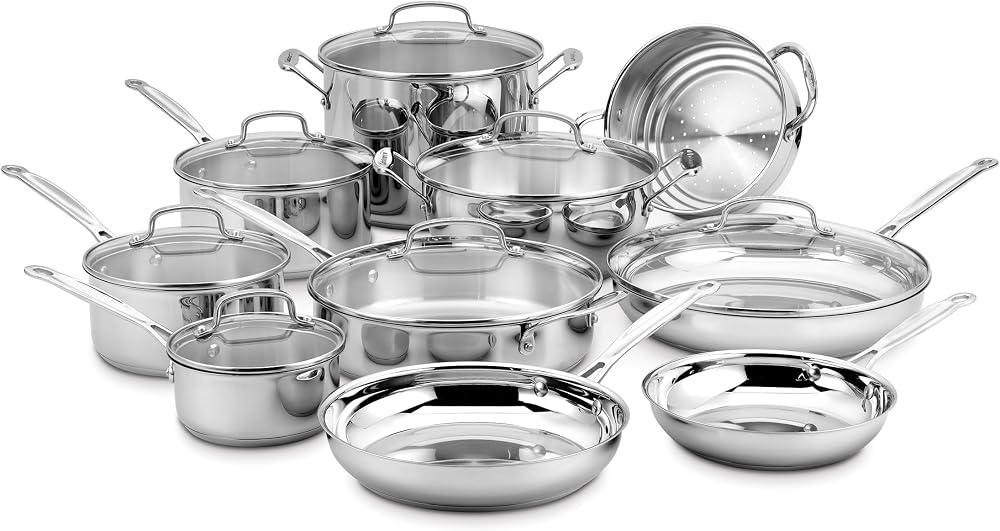
Cooks who brown proteins, build pan sauces, and move skillets from the burner into a hot oven are best served by multi ply clad stainless steel. Bare stainless lets you deglaze the browned bits called fond for deep flavor that slick coatings cannot replicate. Look for three or five bonded layers around an aluminum core, with riveted metal handles rated to at least 500 degrees Fahrenheit.
Occasional Cooks on a Practical Budget
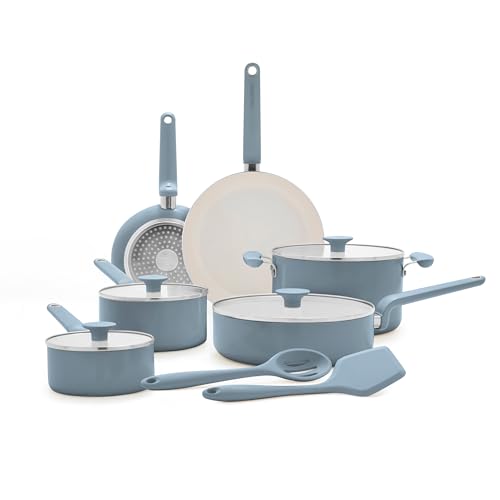
Occasional cooks do best with a light, easy to clean set rather than heavy commercial cladding. A hard anodized aluminum nonstick set around $100 to $180 heats quickly on gas or electric coils and wipes clean with a soft sponge. Choose a smaller eight or ten piece bundle with two fry pans, a medium saucepan, and a five quart Dutch oven so every dollar goes toward usable vessels.
Busy Families Cooking Full Dinners Daily
Families cooking for four to six people need capacity, because crowding food into small skillets traps steam and turns roasted vegetables soggy. A twelve to fourteen piece set with a wide twelve inch fry pan, a deep four to five quart straight sided saute pan, and a six to eight quart stockpot for batch soups covers most dinners. Tempered glass lids let you monitor simmering grains without lifting the cover and losing steam.
Small Kitchens, Studios, and Apartment Cooks
Small kitchens need fewer, smarter pieces, since storing ten separate pots and lids becomes a daily frustration with limited cabinet space. Target compact nesting sets or modular cookware with detachable handles that stack inside a single twelve inch footprint. Our guide to stackable cookware sets covers space saving designs in more detail.
Key Features to Compare Before Buying
Set Size and the Pieces You Actually Need
A ten piece set usually gives you only five or six real cooking vessels, because makers count every lid, steamer basket, and slotted turner as a piece. Before paying extra for a fourteen or sixteen piece collection, verify the core lineup. It should include a ten inch and twelve inch skillet, a two quart and three quart saucepan, a three to four quart saute pan, and a six to eight quart stockpot. If the box skips any of these, you will likely end up buying them separately.
Cooktop Compatibility Across Gas, Electric, Glass, and Induction
Each stove type heats pans differently, so check compatibility before you buy. Gas flames wrap up the sides of a pot and reward fully clad walls that spread heat evenly from rim to rim. Flat glass ceramic ranges need a dead flat, warp resistant base so the pan keeps full contact with the element. Induction cooktops only heat magnetic metals, so an induction kitchen needs a set with a magnetic stainless steel or iron bottom layer. Our guide to induction cookware goes deeper on that last case.
Nonstick Coating Chemistry and Temperature Limits
Modern nonstick sets use either PTFE coatings or sol gel ceramic surfaces derived from silica. Reputable PTFE pans made today are advertised as free of PFOA, and they usually give the longest lasting food release for eggs, pancakes, and flaky fish. Ceramic nonstick appeals to cooks who want to avoid fluoropolymers, though its release layer typically wears down faster under daily washing. Look for the maker's stated certifications, never preheat an empty nonstick skillet over high heat, and follow the temperature limit printed in the manual.
Metallurgy: Stainless Steel, Nonstick, Cast Iron, Carbon Steel, and Copper
Every cookware metal balances heat conduction against heat retention and upkeep. Bare stainless steel is tough and nonreactive with acidic tomato sauces, but it conducts heat poorly alone and relies on an aluminum or copper core to reduce hot spots. Hard anodized aluminum heats rapidly and stays light in the hand, making it the usual backbone for coated nonstick sets. Cast iron and carbon steel hold intense heat for steakhouse crusts and build a natural oil seasoning over time, while copper responds instantly to burner changes for delicate sauce work.
Clad Construction vs Impact Bonded Disc Bases
Fully clad pans carry the conductive core up the sidewalls, while impact bonded pans have it only in a thick disc on the bottom. Full cladding prevents scorching along the lower corners when you reduce thick marinara or risotto. Disc base pans cut manufacturing costs while still delivering flat stability on electric coils and induction zones, so they suit lighter use and tighter budgets.
Handle Ergonomics, Rivets, and Lid Material
Handle shape directly affects safety, since a full six quart stockpot of boiling pasta water weighs more than fifteen pounds. Long skillets and saute pans should have contoured stainless steel handles with a finger groove or V shaped cutout near the pan body that slows heat transfer. Choose stainless steel lids for high heat oven braising, or tempered glass lids if you prefer to see the food and cook below about 400 degrees Fahrenheit.
Warranty Coverage and Realistic Lifespan
Warranties hint at how long a material is built to last in a home kitchen. Fully clad stainless steel, enameled cast iron, and carbon steel often carry limited lifetime warranties against defects like delaminating layers or loose rivets, and they commonly last twenty years or more. Coated nonstick sets, regardless of price, are consumable tools whose release layer gradually fatigues after roughly two to five years of heat and friction. Read what the warranty excludes, since many skip coating wear and dishwasher damage.
Comparing Cookware Set Materials Side by Side
The right primary material depends on how much maintenance you will trade for searing power or easy cleanup. Many experienced cooks start with a foundational stainless or nonstick bundle and add a single specialty skillet later. Our guide to stainless cookware sets is a good starting point for the first path.
| Material Type | Heat Response and Retention | Max Oven Rating | Daily Maintenance | Expected Lifespan |
|---|---|---|---|---|
| Tri Ply Clad Stainless Steel | Fast, even heating across base and walls | About 500 to 600 degrees F | Dishwasher safe; soak or polish for fond | 20+ years to lifetime |
| Hard Anodized PTFE Nonstick | Fast heat up; moderate retention | About 400 to 500 degrees F | Hand wash with soft sponge; no metal tools | 3 to 5 years |
| Ceramic Coated Aluminum | Fast heat up; moderate retention | About 400 to 550 degrees F | Hand wash with mild soap; low to medium heat | 1 to 3 years |
| Enameled Cast Iron | Slow heat up; superior heat retention | About 500 degrees F | Hand wash recommended; no seasoning needed | 20+ years |
Price Tiers: Where Spending More Pays Off
Starter Sets for First Apartments (Under $120)
Sets under $120 typically use thin gauge aluminum with basic PTFE or ceramic coatings, or stainless pots with thin disc bottoms. They handle boiling water, scrambled eggs, and simmering stock without trouble, and often include silicone grip handles that stay cool. However, thin bases can warp with sudden temperature shifts, and glass lids in this bracket usually max out near 350 degrees Fahrenheit in the oven. See our starter cookware sets for more entry level ideas.
Everyday Workhorse Collections (About $120 to $350)
In this range you step up to heavy gauge hard anodized nonstick sets and entry level tri ply clad stainless bundles. Aluminum cores here are often around 2.5 to 3.0 millimeters thick, which smooths out burner hot spots and keeps thin sauces from burning in a ring around the flame. Handles are usually secured with flush or heavy duty stainless rivets, and induction ready bases are common.
Heirloom Multi Ply and Specialty Sets (About $350 to $800+)
Spending about $350 to $800 or more brings five ply cladding, copper core construction, flared drip free pouring rims, and sealed edges that protect internal aluminum from harsh detergents. Lids tend to fit tightly enough to trap moisture for low water vegetable steaming, and balance is tuned so twelve inch skillets do not tip forward when empty. For brand specific options at this level, read our Le Creuset cookware reviews.
Common Mistakes to Avoid When Buying Cooking Cookware Sets
- Counting lids and cheap utensils as cooking pots: A sixteen piece box that includes five nylon spoons and four glass lids only gives you seven actual pans, often leaving you short on wide skillets.
- Buying nonstick pans for high heat steak searing: Pushing a coated skillet past 500 degrees Fahrenheit to crust a strip steak can damage the coating and ruin the release surface within months.
- Ignoring flat bottom stability on glass electric stoves: Lightweight sheet aluminum pans can bow when heated, causing them to spin on flat glass cooktops and lose contact with the element.
- Forgetting to check handle and lid oven limits separately: A stainless pot body may tolerate 600 degrees Fahrenheit, but plastic handles or glass lids on the same set can crack or melt above 350 to 400 degrees.
- Washing unsealed aluminum clad rims in the dishwasher daily: Dishwasher detergents are harsh on exposed aluminum edges of clad pans, leaving rough rims and gray residue over time.
Tips to Get the Most From Your Cooking Cookware Set
A few simple stovetop habits extend the life of your pans and improve food release regardless of metal. On bare stainless skillets, preheat the dry pan over medium heat for two minutes before adding oil. Add the oil once a drop of water glides across the steel as a single bead, then lay down your protein for a clean sear.
For coated nonstick and ceramic sets, stick to low and medium burner settings and use wooden, silicone, or nylon tools so you never gouge the topcoat. Let hot pans cool before washing to prevent thermal shock. A good spatula for cooking protects coatings and makes turning food easier.
Storage matters too. Stack pans with a paper towel or felt protector between them, and hang lids separately so they do not chip rims. Check rivets and handle screws every few months and tighten any that feel loose.
Frequently Asked Questions
Is it better to buy a cookware set or individual pieces?
A set is usually the better value if you are starting from scratch, since buying the same pans individually often costs noticeably more. Sets also give you matching lids that interchange across vessels of the same diameter. If you already own a favorite cast iron skillet and a Dutch oven, buying two or three open stock pans lets you mix metals without storing duplicates.
What cookware material is the safest for everyday health?
Food grade stainless steel, enameled cast iron, and fully ceramic vessels are generally considered stable choices that do not react with acidic ingredients under normal cooking. Modern PTFE and ceramic nonstick pans are also widely used when kept at low to medium heat and replaced once scratched. Look for the maker's stated certifications and follow the care instructions.
How do I know if a cookware set works on an induction stove?
Hold a refrigerator magnet against the bottom of each pan to check. If the magnet sticks firmly to the flat base, the pan contains enough magnetic metal to work with an induction coil. If it slides off or pulls weakly, the pan will likely not heat, so also look for an induction symbol on the box.
Can cooking cookware sets go directly into the oven?
Most sets can go into the oven, but the limit is set by the weakest part, usually the handle grip or the lid. All metal stainless and cast iron vessels commonly handle 500 to 600 degrees Fahrenheit. Pans with silicone wrapped handles or glass lids are typically restricted to about 350 to 400 degrees, so check the manual.
Why do eggs and fish stick to stainless steel pans?
Food sticks to stainless when the pan or oil is not hot enough before the food goes in. Stainless has microscopic texture that grips proteins when cold food hits a cool surface. Preheat the dry pan, add oil until it shimmers, and let the food form a golden crust before flipping so it releases cleanly.
How long does a nonstick cookware set realistically last?
Most nonstick cookware lasts roughly three to five years with regular use, and ceramic coatings often wear out sooner, around one to three years. Hand washing with a nonabrasive sponge and cooking with butter or liquid oil instead of aerosol spray can stretch that lifespan. Storing pans with felt protectors between them also helps.
Final Thoughts
Choosing the best cooking cookware sets comes down to matching your core pan material to your stove type and cleanup preferences. If you love high heat searing, pan sauces, and long term durability, invest in an eight to twelve piece tri ply clad stainless set and add one inexpensive nonstick skillet for morning eggs. If fast weeknight cleanup and low oil cooking top your list, choose a heavy gauge hard anodized nonstick bundle with oven safe metal handles. Review the picks in the table above to find the right set for your kitchen.