
Best Coffee Distributor and Tamper for 2026
Disclosure: We may earn a commission when you buy through links on this page, at no extra cost to you. As an Amazon Associate I earn from qualifying purchases. Learn more
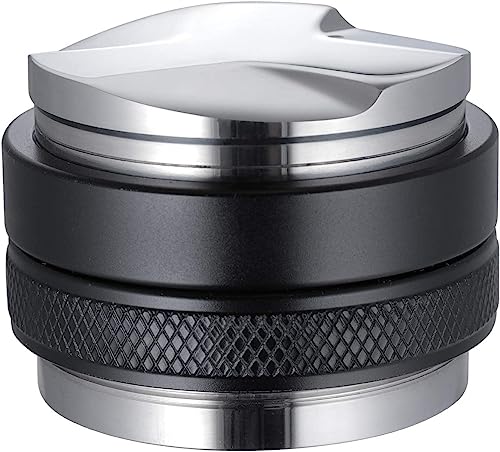
Compare distributor and tamper types, base sizes, weights, and materials in this practical buying guide for steadier, more even espresso preparation.
A best coffee distributor and tamper set helps you spread grounds evenly and press them into a level puck before brewing. Uneven grounds can let water find easy paths through the coffee, which may lead to sour or bitter notes in the cup. The product table shows the main types side by side, so you can compare their shapes, sizes, and uses at a glance.
This guide focuses on the tools themselves, not on coffee beans or brewing recipes. You will learn how distributor styles differ, which base size fits your portafilter, how weight affects pressing, and what to check before you spend. Keep your basket size and your daily routine in mind as you read, since the best choice depends on both.
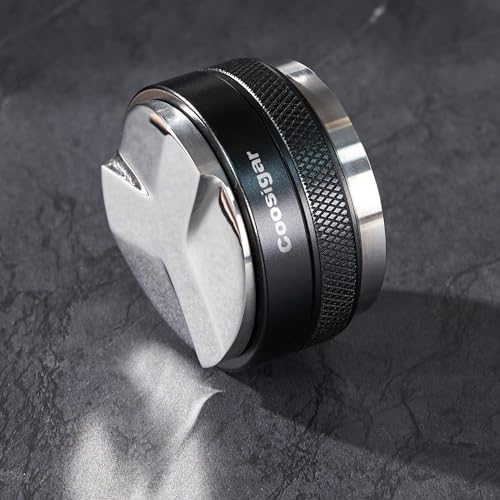


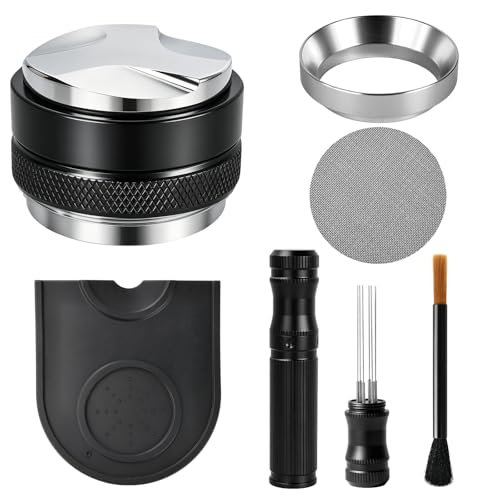
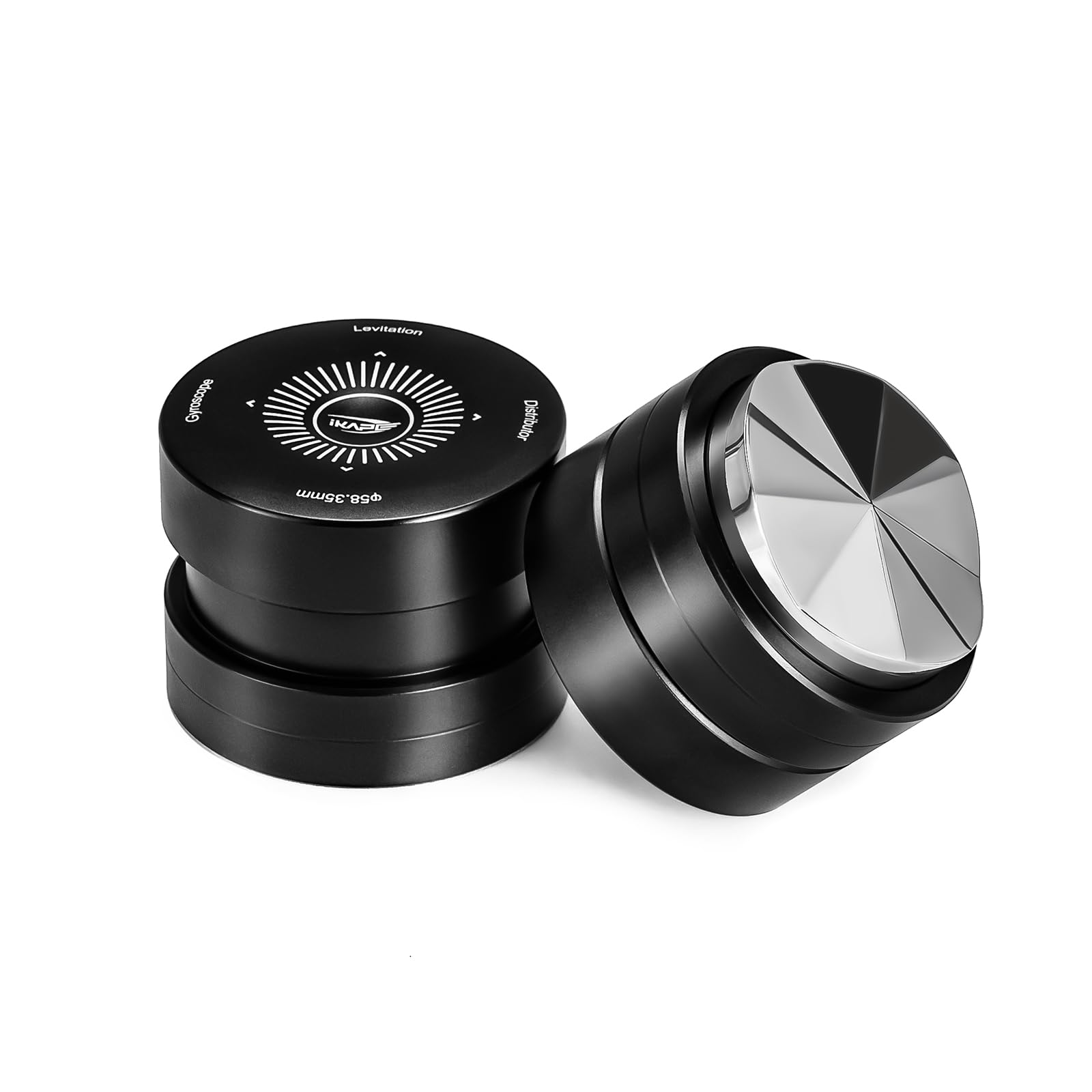
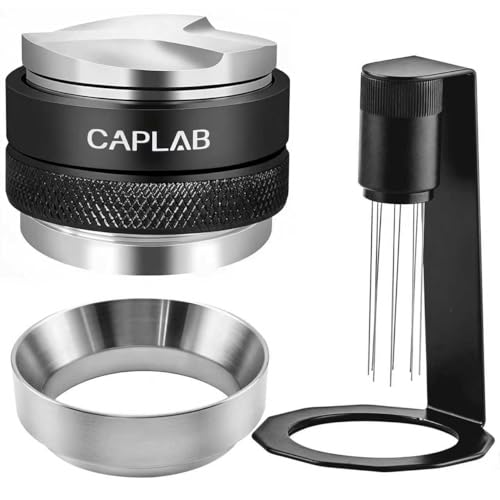
Who Should Buy Which Distributor and Tamper
New Home Espresso Makers
If you are still learning puck preparation, a simple set with clear leveling cues may help you build a steady routine. Look for a distributor that sits flat on the basket rim and a tamper with a comfortable handle height. A forgiving design lets you focus on dose and grind before you worry about finer technique details.
Daily Espresso Drinkers
People who brew every morning often value speed and repeatability more than extra adjustments. A combined tool or a matched pair can shorten preparation, since you do not need to swap parts or reset settings between steps. Durable materials and easy cleaning also matter when the tools are used and rinsed often.
Careful Hobbyists
If you enjoy fine tuning extraction, you may prefer separate tools with adjustable depth or interchangeable bases. Separate tools let you change one variable at a time, such as distribution depth, while keeping tamp pressure steady. This approach suits readers who already understand dose, grind size, and basket capacity.
Key Features to Compare
Distributor Style
Distributors work in different ways. A needle style tool stirs the grounds to break up clumps, while a wedge style tool sweeps the surface level. A spinner style tool twists across the top and can give a smooth finish with little effort. Needle tools suit clumpy grounds, wedge tools suit fast routines, and spinner tools suit readers who want a level surface without much practice.
Base Size and Fit
Base size must match your basket. A base that is too small leaves an unpressed ring near the edge, while a base that is too large will not enter the basket. Common home sizes include about 51 mm, 53 mm, and 58 mm, so check the basket maker guidance before ordering. Measure the inside of your basket if you are unsure, and choose a base close to that width.
Tamper Shape and Weight
Tamper bases are usually flat or slightly convex. A flat base presses the whole surface at once, which many beginners find easier to keep level. Weight matters because a heavier tamper can help you apply steady pressure without pushing hard with your wrist. If you have wrist discomfort, a lighter tamper with a wider handle may feel more comfortable during daily use.
Handle Comfort and Height
Handle shape affects control more than many buyers expect. A short handle keeps your hand close to the basket, while a taller handle can suit larger hands. Wood, metal, and shaped resin handles each feel different, so consider grip size and how the handle sits in your palm. A handle that slips when wet can make leveling harder, so a textured or wider grip may help.
Materials and Cleaning
Stainless steel bases resist staining and wipe clean, while aluminum bases are lighter and often cost less. Handles made from wood need drying after contact with water, while metal and resin handles are easier to rinse. Check whether small parts can be removed for cleaning, and follow the maker guidance for any coating. A tool that is simple to clean is more likely to stay in daily use.
Fit, Leveling, and Setup
Start by checking that the distributor and tamper fit the same basket. Place the distributor on the basket rim and confirm that it rests level before you turn or press it. After distribution, place the tamper straight down and press with steady force, then lift it without twisting.
If the puck looks tilted, check your hand position and the surface under the portafilter before changing tools. A stable tamping stand or a flat counter can help you keep each press level.
When you use a best coffee tamper mat, the portafilter can rest in a groove that keeps it steady during pressing. This is useful if your counter is slick or your portafilter tends to slide. A mat also protects the counter from scratches and catches stray grounds, which makes cleanup faster after brewing.
Spending Levels to Consider
At a lower spending level, about $20 to $40, you can find simple matched sets that cover the basics of leveling and pressing. These sets suit new brewers who want to improve consistency without a large outlay. At a middle level, about $40 to $90, you may find better materials, adjustable depth, and more comfortable handles.
At a higher level, about $90 to $160, you may find precision machining, interchangeable bases, and heavier builds. Higher cost does not guarantee better coffee, so match the level to your routine and basket size.
If you prefer a powered option, see our guide to the best automatic coffee tamper for a comparison of hands free pressing. Powered tampers can suit busy routines, but they still need the right base size and a level surface. Compare their size, power needs, and cleaning steps with a manual set before deciding.
Common Mistakes to Avoid
- Choosing a base size without checking basket width, which can leave an unpressed edge or block entry.
- Pressing at an angle, which can tilt the puck and lead to uneven water flow.
- Changing dose, grind, and tamping force at once, which makes it hard to know what helped.
- Skipping distribution, which can leave clumps and channels in the puck.
- Buying a set for looks alone, without checking handle comfort or base fit.
Care and Maintenance
Wipe the base after each use to remove coffee oils and fine grounds. Wash handles only as the maker directs, and dry wood handles promptly to avoid swelling. Check screws and adjustable parts from time to time, and tighten them gently if they loosen.
Store the tools in a dry place away from heat, and keep small parts away from children. Following maker safety guidance helps the set last longer and stay pleasant to use.
Frequently Asked Questions
Do I need both a distributor and a tamper?
No, you do not need both, but each tool does a different job. A distributor levels and breaks up grounds, while a tamper presses them into a firm puck. Many brewers start with a tamper alone and add a distributor later if channeling persists. If your grinder already gives fluffy, even grounds, a tamper alone may be enough for a steady routine.
How do I choose the right base size for a distributor and tamper set?
Choose a base size that matches the inside width of your basket. Check the basket maker guidance first, since basket sizes vary even within the same brand family. If your basket measures about 58 mm inside, a 58 mm base is a common match, while smaller baskets need smaller bases. A base that is slightly smaller still works, but a base that is too large will not fit at all.
Can a distributor replace careful grinding?
No, a distributor cannot fix a very uneven grind on its own. It can level the surface and break up surface clumps, but coarse and fine particles will still extract at different rates. Use a grinder setting suited to espresso, then use distribution as a finishing step rather than a rescue step. Fresh grounds also help, as stale grounds may clump more and taste flat.
How much pressure should I use when tamping?
Use firm, steady pressure rather than maximum force. Many guides suggest about 30 pounds of force, but consistency matters more than an exact number. Press straight down, pause briefly, and lift without twisting the tamper. If your shots vary, keep pressure the same for several days and change only one other variable at a time.
Does a heavier tamper make better espresso?
A heavier tamper does not automatically make better espresso. Weight can help you press steadily without straining your wrist, but a level puck and a suitable grind matter more. Some brewers prefer a lighter tamper for control, while others prefer weight for repeatability. Choose a weight that feels balanced in your hand during a full pressing motion, not just when held still.
Final Thoughts
The right set is the one that fits your basket, feels comfortable in your hand, and helps you repeat the same preparation each day. Check base size first, then compare distributor style, handle comfort, and materials. A best coffee distributor and tamper set should make preparation calmer, not more complicated. Check the product table once more, and choose the option that matches your routine and budget.


